Search Result For "self driving"

Waymo v. Uber trial looks at Kalanick's push for 'cheat codes'

The second day on the stand for Uber ex-CEO Travis Kalanick gets off to a riveting start as Waymo lawyers grill him about what he knew and when he knew it.

It's been a tough morning for Uber's former CEO, Travis Kalanick, who faced a second day of grilling Wednesday from Waymo's lawyers about his efforts to compete against Google's self-driving car program.

That included being shown the minutes of a meeting held April 28 that read: "Top priorities from [Travis Kalanick] ... cheat codes, find them, use them."

Waymo attorney Charles Verhoeven: "You said this in a meeting, didn't you?"

Kalanick: "It's quite possible."

Verhoeven: "The golden time is over. It's war time?"

Kalanick: "It sounds like something I would say."

Kalanick is the highest-profile executive to speak so far in the Waymo v. Uber trial at San Francisco's federal courthouse. The case revolves around allegations from Waymo, the self-driving car spinoff of Google parent Alphabet, that Uber stole trade secrets to use for its own self-driving program. If Uber loses, it may be forced to pay nearly $2 billion in damages and halt its self-driving program.

Travis Kalanick leaves the San Francisco federal courthouse Tuesday with his father, Donald Kalanick
Travis Kalanick leaves the San Francisco federal courthouse Tuesday with his father, Donald Kalanick.
James Martin/CNET
After being grilled by Waymo's attorneys Tuesday and early Wednesday, Kalanick got his chance to give Uber's side of the story. That included being shown a text exchange between Kalanick and Anthony Levandowski -- whom Kalanick had hired to run Uber's self-driving program -- in which both agreed that "second place is first loser" in the race to win the autonomous vehicle market.

Under Kalanick's leadership, Uber became known for an overly aggressive culture rife with gender bias, unprofessional business practices and even a secret tool, called Greyball, that it used to identify authorities trying to crack down on the ride-hailing service. After months of scandals, Uber's top investors forced Kalancick to resign in June.

Throughout the first few days of the trial, Verhoeven has painted a picture of Uberas a company that would do anything to win. He's presented emails, interview transcripts and meeting minutes showing Uber's efforts to "leapfrog" over Google.

Center to the case is Waymo's allegations that its former engineer, Levandowski, pilfered about 14,000 files from it before quitting in 2016 to form his own self-driving truck startup, Otto, which Uber later acquired. Uber says it never received these files from Levandowski.

Levandowski is expected to take the stand during the trial, but so far he's pleaded the Fifth Amendment. So it's unclear if he'll answer questions about Waymo's allegations.

Before acquiring Otto, Uber had commissioned forensics firm Stroz Friedberg to conduct due diligence on Levandowski and his startup. The firm reported that Levandowski possessed Google information, encouraged Google employees to join Otto, met with Uber executives while still working at Google, and had destroyed proprietary information -- "including source code, files, and software pertaining to self-driving cars" -- he had stored on five disks.

Kalanick testified Wednesday that he never read the Uber-commissioned report. But he did say that Uber agreed to indemnify Levandowski if Google ever sued.

Levandowski has a long history of working on self-driving cars. He joined Google as a software engineer in 2007 and helped pioneer the tech giant's self-driving-car project. Much of his work dealt with lidar, formally known as "light detection and ranging." Lidar is one of the main technologies used in both Waymo and Uber's self-driving cars and lets vehicles "see" their surroundings and detect traffic, pedestrians, bicyclists and other obstacles.

Explaining 'cheat codes'

Finally, after more than an hour Wednesday under Waymo's glare, Kalanick got a chance to explain why he wanted to compete against Google, under questioning from Uber lawyer Karen Dunn.

Uber's former CEO said he originally wanted to partner with Google, "kind of like little brother with the big brother," but got worried after hearing rumors of Google getting into ride sharing. He said he tried to meet with Alphabet CEO Larry Page, but Page was angry at Uber for acquiring 40 researchers from Carnegie Mellon's robotics lab.

"Generally, Google was super not happy, unpumped, about us doing this," Kalanick told the court.

Dunn also asked Kalanick to explain the meaning of "cheat codes."

"Cheat codes are like elegant solutions to problems that haven't yet been thought of," he said.

Waymo's Verhoeven challenged that definition, asking Kalanick about gaming. "I think I read in the news you've been playing a lot of video games," he said.

Kalanick: "When I'm between gigs I play iPhone games sometimes."

Verhoeven: "You know what a cheat code is. You don't have the game but you can cheat and get to the next level."

Kalanick: "No."

And with that, the judge allowed Kalanick to leave the court.

source:CNet

Judge William Alsup presides over a packed courtroom in the Waymo v. Uber trial, which is about alleged stolen trade secrets for self-driving cars

On day one of Silicon Valley's highly anticipated trial, lawyers make claims of theft and conspiracy.

The first day of the Waymo v. Uber trial over self-driving car trade secrets had it all: a packed courtroom, comical technical glitches and the creation of a fake Twitter account in the judge's name.

And that's aside from the testimony.

The high-profile Silicon Valley case pits Waymo -- the self-driving car unit of Google's parent company, Alphabet -- against Uber, the world's most highly valued startup. Waymo claims Uber's former star engineer stole 14,000 "highly confidential" files to develop its own technology. Uber calls the claim "baseless."

Monday was the first day of the trial, which is expected to last at least three weeks. Lawyers for the two companies presented their opening statements, aiming to toss barbs into each other's cases.

"It's unconscionable that there are this many lawyers in the room," said Judge William Alsup, who is presiding over the case in San Francisco's District Court for the Northern District of California. "Nine lawyers per side is a world record, for my courtroom anyway."

It's on Waymo's lawyers to prove that not only did Uber get its hands on the 14,000 files, but also that it actually used the documents to develop its self-driving cars. If Uber is found to have pilfered the files, it may be forced to halt its autonomous-vehicle program and hand nearly $2 billion over to Waymo.

Watch this:Waymo v. Uber trial kicks off with opening statements

Waymo: Uber will stop at nothing

Waymo laid out its side of the case, painting Uber as a cut-throat company that would do anything to win, including stealing, taking shortcuts and breaking the law.

"This case is about a company making a decision that it had to develop this technology in order for its business model to survive," said Waymo's lawyer Charles Verhoeven. "It made a decision that winning is more important than obeying the law."

He outlined the history of Waymo, which started in 2009 as Google's self-driving car project formerly known as "Project Chauffeur." He talked about the work of the company's star engineer, Anthony Levandowski, who allegedly stole the 14,000 files before forming his own self-driving truck startup Ottomotto that was then acquired by Uber.

Verhoeven showed slides detailing secretive text messages and coded language that people at Uber used to talk about getting Levandowski on the team -- even though he was still working at Google.

"Plan is to pull Anthony and team into Uber instead of working with them as a separate company," one email sent to former Uber CEO Travis Kalanick read. "Laser is the sauce (AL laser ends up being critical to AV success - no clear substitute)."

Verhoeven explained that what that email meant is Levandowski's self-driving car laser is what was necessary for Uber to achieve autonomous vehicle success.

Uber: Waymo has it all wrong

When it came time for Uber to recount its story for the jury, it called Waymo's rendition pure fiction.

"That was quite a story we just heard," said Uber lawyer Bill Carmody. "I want to tell you right up front it didn't happen. There's no conspiracy, there's no cheating. Period. End of story,"

Uber said it never got the 14,000 files that Levandowski allegedly stole and its motive in getting him on the team was to acquire one of the world's top self-driving car engineers. The development of autonomous vehicles is a competitive space, Carmody said, and all companies involved vie for the best talent.

"What they're looking for, what Google is looking for, what Uber is looking for is the most talented engineers," Carmody said. Levandowski is "a pioneer in the autonomous vehicle business."

Uber's lawyer presented slides with a 2015 email from Chauffeur's head, Chris Urmson, to Google's co-founders, Larry Page and Sergey Brin. The emails illustrated the company's fear of losing to Uber.

"Uber is acquiring the people I suggested we hire 1.5 years ago but was denied the opportunity to do so," Urmson wrote. "We have a choice between being the headline or the footnote in history's book on the next revolution in transportation. Let's make the right choice."

The day wrapped up with Waymo calling its first two witnesses -- its CEO John Krafcik and Vice President of Engineering Dmitri Dolgov. Both men talked about the work Waymo has done to develop its self-driving car program and aimed to show the central reason the company is suing Uber is because of the allegedly stolen trade secrets.

"We believe in competition, we believe in fair competition," Krafcik said. "What we came to find was that aspects of our technology were taken from us in an unfair fashion."

Dolgov's testimony will continue on Tuesday. Several other witnesses who will be called to the stand include Google security engineer Gary Brown, Waymo's self-driving systems architect abd William Grossman. Uber's Kalanick is also expected to testify as early as Tuesday. Others, including Levandowski and Page, have been listed as potential witnesses as well.

source:CNet

Nissan and DeNA will begin testing a self-driving taxi service in Japan next month
Nissan Motor and DeNA announced today that field tests of Easy Ride, the self-driving taxi service they developed together, will begin next month in Japan. This means that Nissan and DeNA now rank among Uber, Lyft, GM, Didi Chuxing and other companies pioneering self-driving taxi pilots, with the goal of launching commercially within the next few years.

DeNA is a Tokyo-headquartered online services company that is probably best known outside of Japan for a partnership with Nintendo that has produced mobile games like “Fire Emblem Heroes.” Its other services, however, encompass a wide range of verticals, including e-commerce, entertainment, healthcare, social networking and automotive tech. Two years ago, DeNA launched its first production vehicles with French autonomous vehicle company EasyMile, which are used to provide a driverless shuttle service called Robot Shuttle in Japanese cities.

Easy Ride’s first field test will begin on March 5 in Yokohama, the city to the south of Tokyo where Nissan’s global headquarters are located. Its self-driving taxis, which the companies call “robo-vehicles,” will take passengers along a 4.5 kilometer set route between the Yokohama World Porters shopping center and Nissan’s corporate complex. During the ride, passengers can try out Easy Ride’s concierge features by using a mobile app to ask for suggestions about local sightseeing destinations, which are then displayed on an in-car tablet screen, with coupons available for download. A remote monitoring center will oversee the cars during the field test and passengers will be asked after their ride to complete a survey about their experiences and how much they would be willing to pay for Easy Ride when it launches.

Nissan is one of several Japanese automakers that want to get self-driving vehicles on the road by the beginning of the next decade, motivated by the country’s aging population, which needs more transportation options, and the 2020 Summer Olympics in Tokyo. Prime Minister Shinzo Abe has said he wants self-driving vehicles to help with transportation during the games and also serve as a showcase for Japan’s manufacturing and technological prowess. The government is currently in the process of drawing up laws meant to make the process of testing and commercializing autonomous vehicle systems more efficient.

Nissan and DeNA say they plan to launch full service of Easy Ride in the early 2020s, after a limited rollout. The fields tests will be used to “develop service designs for driverless environments, expanded service routes, vehicle distribution logic, pick-up/drop-off processes and multilingual support,” the companies said in a release.

The taxi industry in major Japanese cities like Tokyo is heavily regulated and cab drivers are required to have special licenses, so companies there must focus on other services instead of ride-sharing. For example, earlier this week Sony announced that it will launch an AI-based taxi-calling app, while Uber chief executive officer Dara Khosrowshahi said the company wants to form partnerships with a taxi companies to put new life into its Japanese expansion strategy.

source:TechCrunch

Russian search and internet services giant Yandex has been working on its autonomous driving program, and its most recent achievement is a public self-driving pilot of its self-driving test car in Moscow, the first such test on public roads in the Russian capital.

Yandex had an additional degree of difficulty to contend with, too: Their recent testing, which kicked off in December of last year, included some days following heavy snowfalls, which are difficult conditions for any autonomous vehicle to navigate because of how they obscure road markers and other guiding indicators used by optical cameras systems, among other challenges.

As you can see, the car handled snow, ice, parked cars, traffic and even pedestrians even amid the wintery conditions, which is a key use case that autonomous vehicle technology providers will need to solve before the tech can be broadly adopted.

Beyond the snow, Yandex notes that Moscow also provides a terrific test bed for its AVs because of factors including high traffic volume, as well as pedestrian density on top of the variable weather patterns that come to the city across seasons.

source:TechCrunch

Local Motors CEO Jay Rogers, center, shows off the Accessible Olli's giant outside display

Accessible Olli was designed from the ground up to help people with disabilities get where they need to go.

Jay Rogers stood a few feet from his company's futuristic-looking shuttle bus, called the Accessible Olli.

The all-electric, partially 3D-printed, autonomous vehicle, sitting in the middle of the bustling Las Vegas Convention Center during the CES tech show, packs features to help people with disabilities and the elderly get around.

There's a retractable wheelchair ramp, software that can process sign language, and displays inside offering simplified information and reminders for people with cognitive disabilities like memory loss.

"We did this with a lens of of accessibility to show that what people would've called niche can lead," Rogers, the radio-announcer-voiced CEO and co-founder of Local Motors, said earlier this month while wearing a bow tie and a zip-up Local Motors jacket.

The bus, which Rogers said will be on the road in a few months in places including Copenhagen and Buffalo, New York, offers a new approach to mass transit, in which a driverless shuttle could someday pick you up at any hour of the day and you wouldn't need to own a car. It's part of a broader trend of companies dabbling in self-driving vehicles as a new form of transportation. At CES, Toyota unveiled its e-Palette autonomous shuttle, while the French company Navya is manufacturing the Arma shuttle, too.

Watch this:Here are the top car stories from CES 2018

The difference with the Accessible Olli is that it can provide many more capabilitiesto help people with disabilities get to work, attend school or do errands. And it may be able to do all that much faster than a typical bus system or paratransit service. It may also address transportation needs that have been overlooked, since the shuttle was developed with the input of people with disabilities.

The nonprofit National Organization on Disability, which has been tracking the gaps between people with and without disabilities since the 1980s, said it's found that transportation options are often lacking for people with disabilities, which results in severely limited job opportunities for them.

"We are eager to learn more about the Accessible Olli because it seems to have the potential to close that pervasive gap," NOD President Carol Glazer said in a statement. "We particularly like that the shuttle was designed by people with disabilities, for people with disabilities."


Hannah Rankin, director of growth at Incight, which help people with disabilities with their education and employment, said many public bus and light rail systems offer wheelchair ramps and scheduled routes, which can be useful. But people can't expect every bus driver to know sign language. That's where the Olli may be able to provide more uniformity to help people communicate, Rankin said.

Bringing Watson to your morning commute

On the CES show floor, Rogers walked me through the compact Accessible Olli. Inside, digital displays fill nearly every inch of window, showing map directions and messages to prospective passengers, like "Katherine, this is your stop." There's cushy seating all around that fits up to 10 people. But most noticeably, the interior looks something like a tiny room, not a vehicle, since there's no steering wheel or space for a driver.

The first iteration of the Olli shuttle, which doesn't have accessibility features, debuted in June 2016. Local Motors, which was founded in 2007 and recently moved its headquarters from the Phoenix area to San Francisco, used crowdsourcing to work with more than 200,000 volunteer designers, engineers and customers to create the Accessible Olli. The startup also partnered with IBMand the charitable arm of the Consumer Technology Association, which runs CES, on the project.

IBM built its Watson artificial intelligence software into Olli to communicate with passengers and hopes to use Olli as a way to bring its AI into more people's lives and show the software's benefits.

Watch this:Autonomous vehicles that can fly and use mind control

"When you get in a car that doesn't have a driver, you have to establish trust, so you need to know that Olli understands what you want and it gives you feedback along the way," Bret Greenstein, IBM's vice president of the Watson Internet of Things business, told me earlier by the Olli. "We have to make Olli, or any other self-driving car, feel like a trusted driver."

Ideally, the things IBM and Local Motors learn from helping people with disabilities will benefit anyone using an Olli.

"My hope, as we continue to learn about all the accessibility use cases, is we're learning all the other ways we can better understand people and support them," Greenstein said. "People shouldn't have to learn how to talk to machines."

source:CNET

Volkswagen’s head of electric mobility says China will drive autonomy roll-out
What’s the biggest motivating factor behind automakers embracing autonomous vehicles and self-driving? You might think ‘safety’ or maybe even consumer demand, but in truth the biggest driver might be China and its incentivization programs for automakers.

Much like China’s rules for qualifying for subsidies and restrictions on selling vehicles in market have led to automakers around the world investing massively in building out and maturing their electric vehicle operations, Volkswagen’s head of its eMobility model line Christian Senger says that China’s forthcoming rules will spur autonomy’s introduction to the market, too.

During a journalist roundtable at the 2018 Geneva Motor Show in Switzerland, Senger noted that indicators suggest an upcoming intelligent vehicle rules from Chinese regulators will provide big incentives in the way of subsidies to automakers who includes specific levels of automation in their production cars. For VW in particular, that’s a huge motivator, since the automaker has 13 percent market share in China as a brand, and 20 percent if you could the Volkswagen Group at large, including sub-brands like Audi and others.

“Right now you need to have electric drive train, a minimum range, and local production and then you get subsidies,” Senger explained. “There are a lot of indicators that this will now change that also the level of automated driving is a required premise to get subsidies. So the future of our market success is also dependent on our self-driving abilities.”

Every automaker in the world right now is rushing to shape up their electric program, even if in past they’ve been a bit laggard in this regard (Toyota is a great example) and the specific cause is the relatively hard line China is taking in this area with regards to subsidies, incentives and in-market sales rules. Per Senger, we should watch very closely for the very same thing to happen with automated vehicles of all levels over the course of the next few years.

The bottom line here is interesting: Where goes China, so goes the automotive industry, at least for the foreseeable future.

source:TechCrunch

Piccolo is building a gesture-based smart home ‘vision assistant
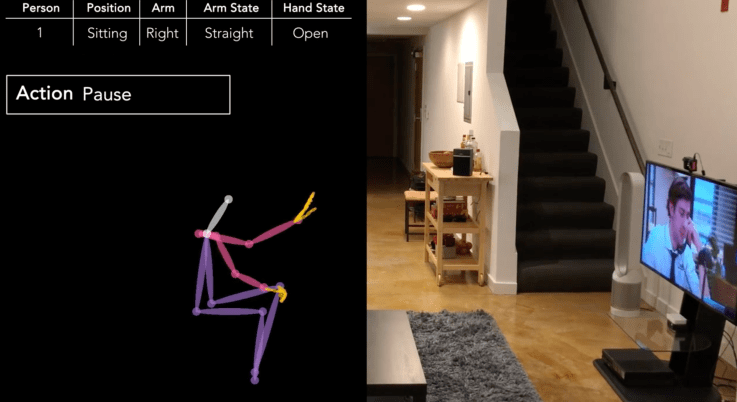
Voice assistants may be the hottest thing since sliced bread when it comes to controlling your $60 wifi light bulbs, but Piccolo is launching out of the latest Y Combinator class with a desire to put a camera in every smart home that can translate your physical motions and gestures into commands.

The company’s “Vision Assistant” product works pretty simply, users place the camera in their house and then once they get it fixed in position, they fire up the app and drag boxes over the internet-connected appliances or TVs or lights. From there, the Piccolo camera is basically looking to record your geometry through what’s called skeletal tracking — don’t worry it’s not using an X-ray or anything — which puts your movement into a model that tracks your body position. From there, the device will know where you’re pointing your hand and can interface with the compatible smart home item. It does more than just turn stuff on and off, they’re experimenting with gestures to fast forward through a Netflix show, change modes on the fan, etc. etc.

Founders Marlon Misra and Neil Raina started studying the technologies behind Piccolo through an interest in self-driving cars. The pair of buddies emerged from taking Udacity’s self-driving program in 2016 with an interest in perceptual engines and their far-flung capabilities, an interest which eventually turned to controlling the smart home with body movements.

Piccolo is building a gesture-based smart home ‘vision assistant
The team isn’t aiming to replace your Echo or Google Home, this product would very much be sitting in parallel as a camera that can also control your home. This also means that they have to build support for each smart home product they want to control. The startup is currently in the pilot program phase and they’re hoping to launch via a crowdfunding campaign in the future. (You can join a waitlist on their site to get deets on when exactly)

There are definitely limitations from the existing setup, namely that it’s all pretty 2D at the moment and because of this, things seem like they would get pretty wonky if you had a bunch of smart home products stuffed into your casa. The team said that a hefty chunk of what they’re working with is subject to change and that they’re looking at the possibility of adding something like a depth camera.

One of the company’s biggest hurdles is likely getting people to feel comfortable tossing an internet-connected camera in their homes, but while people are skeptical of Google and Amazon because they have a pronounced interest to tailor ads as tightly as possible, the founders tell me they feel like they may have an advantage simply because they are a scrappy upstart that doesn’t have the scale or diverging interests of their competitors.

Piccolo is building a gesture-based smart home ‘vision assistant
Other like Leap Motion have attempted (time and time again) to get hand movement controls for tech products to take off. Where Piccolo says its advantage is, is that their technology works from a further distance so you won’t need one of these things attached to every appliance in your home. In an effort to cut down on false positives, the team is currently leading users to raise their hand straight up and then point straight to the object. This is ultimately not that much lower-effort than telling Alexa to kill the lights, but the team’s ultimate ambitions are focused on getting the tracking tight enough that they can tell what you want from minor hand movements.

It’s early days but as computer vision advances bring new functionality to things like smart security cameras, there’s reason to see that the indoor camera could be the key to finding the full potential of the smart home assistant as well.

source:TechCrunch

5G is going to change our lives...eventually

The next generation of cellular technology comes with its own vocabulary. Here's a handy glossary of the key terms that keep popping up.

Those crazy-fast 5G networks are right around the corner.

Unfortunately, they also come with their own vocabulary of tech jargon and buzzwords that wireless industry executives throw around a little too casually.

First off, a quick definition of 5G: It's the next (fifth) generation of cellular technology which promises to greatly enhance the speed, coverage and responsiveness of wireless networks. How fast are we talking about? Think 10 to 100 times speedier than your typical cellular connection, and even faster than anything you can get with a physical fiber-optic cable going into your house. (You'll be able to download a season's worth of "Stranger Things" in seconds.)

Watch this:What the heck is a 5G network?

It's not just about supercharging your phone's connection to the network either; 5G is seen as the underlying technology allowing self-driving cars to talk to each other, or for people to wirelessly stream super high-definition virtual reality content into their headsets.

In other words, it's going to be huge.

Early 5G networks will pop up as soon as this year, but expect broader availability in closer to 2019 to 2020, as network equipment gets upgraded and 5G-compatible phones are released.

But as the hype and reality of 5G crashes upon us now, you're going to start to hear references to words that don't sound like they belong in the English language. Fortunately, CNET is here to decipher the wonkiest of words for you.

5G NR: The 5G bit is pretty obvious, but the NR stands for New Radio. You don't have to know a lot about this beyond the fact that it's the name of the standard that the entire wireless industry is rallying behind, and it just came out in December.

That's important because it means everyone is on the same page when it comes to their mobile 5G networks. Carriers like AT&T and T-Mobile are following 5G NR as they build their networks. But Verizon, which began testing 5G as a broadband replacement service before the standard was approved, isn't using the standard -- yet. The company says it will eventually adopt 5G NR for its broadband service, and intends to use NR for its 5G mobile network.

Here's what Verizon's 5G field test looks like


Mm wave: All cellular networks use airwaves to ferry data over the air, with standard networks using spectrum in lower frequency bands like 700 megahertz. Generally, the higher the band or frequency, the higher the speed you can achieve. The consequence of higher frequency, however, is shorter range.

In order to achieve those crazy high 5G speeds, you need really, really high frequency spectrum. The millimeter wave range falls between 24 gigahertz and 100 gigahertz.

The problem with super-high frequency spectrum, besides the short range, is it's pretty finicky -- a leaf blows the wrong way and you get interference. Forget about obstacles like walls. Companies like Verizon are working on using software and broadcasting tricks to get around these problems and ensure or stable connection.

Sub-6GHz: Given how troublesome really high-band spectrum can be (see "Mm wave" section), there's a movement to embrace spectrum at a much lower frequency, or anything lower than 6 gigahertz. The additional benefit is carriers can use spectrum they already own to get going on 5G networks. T-Mobile, for instance, has a swath of 600 mhz spectrum is plans to use to power its 5G deployment. Prior to sub-6Ghz, that would've been impossible.

That's why you're seeing more carriers embrace lower frequency spectrum.

But lower frequency spectrum has the opposite problem: while it reaches great distance, it doesn't have the same speed and capacity as millimeter wave spectrum.

The ideal down the line will be for carriers to use a blend of the two.

Latency:
You'll hear this word mentioned A LOT. Latency is the response time between when you click on a link or start streaming a video on your phone, sending the request up to the network, and when the network responds and gives you your website or starts playing your video.

It doesn't seem like much, but that lag time can last around 20 milliseconds. With 5G, that responsiveness, or latency, gets reduced to 1 millisecond, or about the time it takes for a flash in a normal camera to finish.

That responsiveness is critical for things like streaming a live sports game in virtual reality or for a surgeon in New York to control a pair robotic arms performing a procedure in San Francisco.

Gigabit LTE: You're hearing more about Gigabit LTE as a precursor to 5G. Ultimately it's about much higher speeds on the existing LTE network. But the work going towards building a Gigabit LTE network provides the foundation for 5G.

For more on Gigabit LTE, read our explainer here.

MIMO: An acronym for multiple input, multiple output. Basically, it's the idea of shoving more antennas into our phones and on cellular towers. And you can always have more antennas. They feed into the faster Gigabit LTE network, companies are deploying what's known as 4x4 MIMO, in which four antennas are installed in a phone.

Carrier Aggregation: Wireless carriers can take different bands of radio frequencies and bind them together so phones like the Samsung Galaxy S8 can pick and choose the speediest and less congested one available. Think of it as a three-lane highway so cars can weave in and out depending on which has less traffic.

QAM: This is a term that's so highly technical, I don't even bother to explain the nuance. For instance, it stands for quadrature amplitude modulation. See? Don't even worry about it.

What you need to know is it allows traffic to move quickly in a different way than carrier aggregation or MIMO. Remember that highway analogy? Well, with 256 QAM, you'll have big tractor trailers carrying data instead of tiny cars. MIMO, carrier aggregation and QAM are already going into 4G networks, but play an important role in 5G too.

Beam forming: This is a way to direct 5G signals in specific direction, potentially giving you your own specific connection. Verizon has been using beam forming to for millimeter wave spectrum, getting around obstructions like walls or trees.

Unlicensed spectrum: Cellular networks all rely on what's known as licensed spectrum, which they own and purchased from the government.

But the move to 5G comes with the recognition that there just isn't enough spectrum for anyone when it comes to maintaining wide coverage. So the carriers are moving to unlicensed spectrum, similar to the kind of free airwaves that our Wi-Fi networks ride on.

Network slicing: This is the ability to carve out individual slivers of spectrum to offer specific devices the kind of connection they need. For instance, the same cellular tower can offer a lower power, slower connection to a sensor for a connected water meter in your home, while at the same time offer a faster, lower latency connection to a self-driving car that's navigating in real time.

source:CNet

Verizon added a net 1.2 million post-paid wireless connections

The nation's largest wireless carrier posts decent fourth-quarter results as it shifts its focus to faster next-gen wireless tech.

Get ready to hear more about 5G from Verizon.

The company is preparing for the commercial deployment this year of its next-generation wireless network, which will eventually serve as a replacement for broadband internet service. The company is set to spend $17 billion to $17.8 billion this year on capital projects, which includes its work on 5G.

5G has become a favorite topic for Verizon because, well, it gets people excited about wireless service again. And Verizon needs a little excitement, as the company posts another decent, but unremarkable, financial quarter.

The telecommunications giant's growth exceeded Wall Street expectations, but signaled that competitive pressures persist. The company added a net 1.2 million post-paid wireless connections -- or accounts in which customers pay at the end of each month -- in the fourth quarter.

Those post-paid connections included 431,000 mobile phones, 193,000 tablets and 550,000 other connected devices, which Verizon noted were "led by wearables." Verizon's 431,000 net mobile-phone customers included a loss of 216,000 basic mobile phones, offset by a gain of 647,000 smartphones. The growth from tablets and connected devices like the Apple Watch appears substantial but often yields less revenue because the monthly charges are lower than for phones.

The numbers underscore the trend of competitors T-Mobile and, increasingly, Sprint starting to win business from Verizon through more aggressive offers and promotions. T-Mobile throws in a myriad of freebies into its service, while Sprint touts plans that are half the price of Verizon's offerings. Verizon has long touted its network superiority, but customers are increasingly factoring price into the equation.

Still, the customer growth numbers for the fourth quarter suggested Verizon weathered the iPhone switching storm. The fourth quarter typically sees a flurry of movement from consumers as they consider new carrier options when upgrading to a new iPhone. But this past quarter saw few jaw-dropping promotions, such as 2016's free iPhone promotions, that caused people to jump ship. Considering wireless growth, it's no wonder Verizon is so excited about 5G. The next-generation wireless technology could get the company into new businesses, from expanding the number of people who can be offered a broadband connection to longer term projects focused on smart cities and self-driving cars.

But for now, Verizon's business focuses on its core telecom efforts and its expansion into the media world with its AOL and Yahoo assets, now rebranded Oath.

In total, Verizon reported a fourth-quarter profit of $18.8 billion, or $4.56 a share. Excluding one-time items, the company reported earnings of 86 cents a share, in line with a year ago. Revenue rose 5 percent from a year ago to $34 billion.

Analysts, on average, forecast earnings of 88 cents a share and revenue of $33.3 billion, according to Yahoo Finance. Investors liked the results. Verizon shares rose 2.6 percent to $54.85 in pre-market trading.

source: CNET

As net neutrality rules expire, changes may start to creep into how your internet works. Not everything you hear is quite true though.

AT&T has opposed the FCC's 2015 net neutrality rules. And as the rules are set to expire, some supporters of the regulation are nervous AT&T and other ISPs could abuse their power on the net
The Federal Communications Commission's 2015 net neutrality rules will officially be dead in a matter of weeks. So naturally, people are anxious about what that means for the internet as we know it today.

It's this anxiety and fear that's likely fueling recent blog posts stating that AT&T is rolling out so-called "internet fast lanes."

But is it true? Is AT&T carving out lanes on the internet and offering the speediest service to the highest bidder, while leaving all other internet traffic relegated to "slow lanes"?

Not exactly. AT&T hasn't introduced a new service that explicitly prioritizes one type of traffic over another.

"The author is getting the two distinctly different concepts mixed up," an AT&T spokesman said by email.

But that doesn't mean that it isn't offering other services that might run afoul of the strict net neutrality restrictions that are set to expire next month.

CNET has put together this FAQ that explains what's really going on and why consumers should still keep an eye on whether AT&T is playing nice with competitors on the internet.

What is net neutrality again?

Net neutrality is the idea that all traffic on the internet is treated equally. In 2015, the FCC under then-President Barack Obama adopted a set of rules that made sure broadband companies couldn't block or slow down access to websites. The rules also prevented internet service providers from creating fast lanes.

Watch this:Beer helps explain battle brewing over net neutrality

What exactly are internet fast lanes, anyway?

Internet fast lanes could be created if ISPs charge internet companies like Google or Netflix so that their services reach customers faster than other services on the net. That is, they'd be giving priority access to some services and not others.

Net neutrality supporters fear that anyone who can't or won't pay a fee will be relegated to congested "slow lanes." Think of it like priority boarding on an airplane. People who pay for first class get the best, roomiest seats and are guaranteed space for their luggage, while everyone else who could only afford coach is crammed in the back of the plane and can barely carry on a toothbrush, let alone a bag.

It's this idea of creating an internet of haves and have-nots that led the FCC in 2015 to ban these paid priority services as part of its net neutrality rules.

But is paid priority always bad?

Not necessarily. AT&T and others point out that some services are so time- and delay-sensitive, they just don't work if packets are held up by network congestion. Self-driving cars, remote surgery and virtual reality are all examples of real-time interactive technologies that would require guaranteed levels of service. AT&T's executive vice president of government affairs Bob Quinn argued in a blog post this week that the 2015 ban on these services meant companies couldn't experiment with services that require end-to-end network management, which he said is bad for innovation.

"I think we can all agree that the packets directing autonomous cars, robotic surgeries or public safety communications must not drop. Ever," he said. "So, let's address concerns around paid prioritization without impacting those innovations."

What about those reports suggesting AT&T is starting to offer paid priority services?

This is where things get confusing. AT&T doesn't currently and hasn't yet announced any service that offers priority over the internet. What AT&T announced last week -- and what some news outlets confused as paid priority-- was an expansion of a program it calls "sponsored content."

Under this business model, AT&T allows a company to pay it for data charges that a customer incurs while using that company's service. So instead of the customer paying for the data, the company pays for it.

"Sponsored content is delivered in the same manner as other third-party content," an AT&T spokesman explained. "The only thing that changes under this model is that the sponsored content does not impact the user's data plan."

Here's how it works. Let's say you offer a streaming video service. Video eats up tons of data. Since mobile customers pay for the data they use, you as a video provider may want to pay for your customers to stream your service without having to worry about paying for the data charges, thus providing customers an incentive to use your service over someone else's that incurs data charges.

AT&T began offering this service for its postpaid customers (those who pay at the end of every month) in 2014 before the 2015 net neutrality rules were adopted. And it just expanded the program to its prepaid customers last week.

Do sponsored content services violate the 2015 net neutrality rules?

No. In fact, the FCC specifically said sponsored content, in a practice known as "zero rating," is not prohibited under the rules. It recognized that there could be benefits to consumers, such as lower cost of service. But the agency also realized that depending on how the plans were structured, it could also put competitors at a disadvantage.

This is especially concerning since broadband companies like Comcast and AT&T own a lot of content, which means they also compete with companies like Amazon or Netflix. So a broadband company, which also owns the network, could offer its services free of charge to customers, while competitors might not be able to afford to offer the same low price because they don't own the underlying infrastructure.

The FCC saw this potential conflict and included a broadly defined "general conduct" rule, so it would have the authority to examine any practice that causes "unreasonable interference" or that "disadvantages" competitors.

Did the FCC ever think AT&T's service was problematic?

Yes. Within a year of the rules being adopted, the FCC, then controlled by Democrat Tom Wheeler, launched an investigation into programs offered by AT&T, T-Mobile and Comcast. It later added Verizon to the investigation. In January 2017, the agency issued a report stating AT&T and Verizon had violated the general conduct rule.

The biggest problem the FCC had with AT&T's sponsored data program was that it had priced its own DirecTV Now service so aggressively that it unfairly disadvantaged competitors. Since AT&T controlled the network, it didn't have to "charge" DirecTV, its own streaming service, the same rate it would charge a company like Netflix to deliver the same amount of data streams. And because Netflix would likely have to pay more to offer its video streams for free on AT&T's network, customers would end up paying more for Netflix than they would DirecTV.

"All indications are that AT&T's charges far exceed the costs AT&T incurs in providing the sponsored data service," the report stated.

AT&T argued it didn't violate the net neutrality rules and also said that the general conduct rule was way too broad.

Why is AT&T still offering this service if it violates the rules?

The short answer is that the Democrats lost the White House. The FCC's report came out in January 2017, just days before Donald Trump was inaugurated as president and Republicans took over the agency. After Ajit Pai became chairman of the agency, one of the first things he did was close the investigation into AT&T and the other companies over zero rating. And the agency took no action.

"Going forward, the Federal Communications Commission will not focus on denying Americans free data," Pai said in a statement at the time. "Instead, we will concentrate on expanding broadband deployment and encouraging innovative service offerings."

And then late in 2017, the Republican-led FCC voted to overturn the earlier net neutrality rules.

Why should I care about this now?

As the 2015 net neutrality regulations are erased from the rule books, net neutrality proponents fear there will be no rules of the road to prevent AT&T and other large broadband companies from doing whatever they want online. This could mean offering paid priority services that might devolve into internet fast lanes. And the company could develop other business models, like sponsored content, that favor their own businesses over competitors' offerings.

AT&T and others argue they have no plans to discriminate against competitors or limit their customers' internet access. They argue that customers will benefit if the companies can experiment with different business models.

The question consumers must ask is whether we can take broadband companies at their word. Republicans on the FCC seem to believe we can. Democrats, net neutrality advocates, and a slew of online companies, from Google to Etsy, say no way.

One thing is clear: Everyone will be watching very closely what AT&T and others do next.

source:CNet News

Alphabet launches Chronicle to turn machine learning on hackers

The latest company to evolve out of Alphabet's X moonshot program hopes it can mark the spot where hackers are breaking in. The project is entering a crowded market.

It's not a self-driving car or a smart contact lens, but the latest project to graduate from Alphabet's X moonshot program is still trying to solve a big technical problem.

Called Chronicle, the venture is developing technology that finds hackers faster than humans currently can. Alphabet, the parent company of Google, said Wednesday that Chronicle would become its own company. The company will continue to build tools that use machine learning to identify the signs of hackers in company systems and shorten the amount of time it takes to stop a breach.

"The information that security teams need to identify and investigate attacks is right there in an organization's existing security tools and IT systems, but it's hidden in enormous volumes of data and therefore can't easily be seen, understood, or used," said Astro Teller, CEO of X whose alternate title is Captain of Moonshots.

Chronicle isn't the first to turn to machine learning to solve this problem. The company joins a crowded field of cybersecurity firms that are trying to help companies find hackers sooner. Right now, computer security teams have plenty of tools that flag unusual behavior on their companies' networks and other signs that something is wrong, but there's a high rate of false alarms. Several companies hope their machine learning technologies will help identify the real problems amidst all the chaff.

Though it's not the first company to the field, Chronicle thinks it might have an advantage, Teller said in his blog post. "Chronicle is starting by trying to give organizations a much higher-resolution view of their security situation than they've ever had by combining machine learning, large amounts of computing power and large amounts of storage," he said.

Chronicle, the moonshot, took hold at X two years ago when Chronicle CEO Stephen Gillett, then at Google Ventures, teamed up with Mike Wiacek and Shapor Naghibzadeh, both longtime engineers on Google's security team. They worked closely with Virus Total creator Bernardo Quintero, whose malware reporting network was acquired by Google in 2012 and has been incorporated into Chronicle.

source: CNET

This is the first concept in the I.D. lineup to rock a sedan body.

Volkswagen's electric MEB platform is versatile enough to support a wide variety of bodies. We've seen a crossover, a hatchback and a van already, and soon, we'll see a sedan enter the fold -- with a few tricks up its sleeve.

Volkswagen announced this week that it will bring a new I.D. electric concept to the 2018 Geneva Motor Show. The I.D. Vizzion concept sports a swoopy sedan body, not too far removed from the style seen on the new Arteon sedan, but with a pure-electric powertrain underneath the sheet metal.

I'm never going to complain when suicide doors are involved
I'm never going to complain when suicide doors are involved.
Volkswagen
The most important part of the I.D. Vizzion isn't the body, though -- it's what's inside. Namely, there isn't a steering wheel to be seen, because this concept is meant to embody VW's vision for a world when human controls are unnecessary. The Vizzion is totally autonomous and meant to enhance mobility options for folks who might not be able to drive any longer.

If you're playing 21st Century Car Tech Bingo at home, place a marker over "AI" while you're at it. The I.D. Vizzion packs what VW calls a "digital chauffeur," which uses artificial intelligence to take note of occupants' preferences and tailor the in-car experience to match. Since it's a concept, though, VW didn't go into too much detail -- plus, it needs to hold some details back for the show.

While explanations of its in-car tech are light, Volkswagen did discuss the electric powertrain. Sporting a set of 111-kWh batteries, larger than any offered on a modern passenger car, VW believes the Vizzion could go as far as 413 miles between charges. It won't be slow, either, with an output around 300 horsepower thanks to two electric motors, one positioned at each axle.

We'll find out more when we see the I.D. Vizzion in person at the Geneva Motor Show in the first week of March. Keep your eyes peeled to Roadshow for pictures, video and more.

Need to seat more than four? Perhaps it's best to take the I.D. Buzz, then
Need to seat more than four? Perhaps it's best to take the I.D. Buzz, then.
Volkswagen

VW's I.D. Buzz concept creates smiles for miles

source:CNet Roadshow

The Trump administration is worried about China spying on US phone networks

The idea is that a centralized network could protect US communications from Chinese spying. But it might prove a hard sell.

National security officials working for President Donald Trump are considering building a superfast 5G network as an option to counter Chinese spying on US phones, according to a report published Sunday.

Details of the plans come courtesy of a PowerPoint presentation and memo produced by a senior National Security Council official seen and reported by Axios. An unnamed senior administration official confirmed the accuracy of the information late Sunday to Reuters.

A nationalized 5G network is currently under discussion at a low level in the Trump administration and won't be considered by the president for six to eight months, according to Axios. The network would be designed to counter Chinese threats to US economic and internet security, with emphasis on protecting emerging technologies reliant on 5G, such as self-driving cars and the internet of things.

Watch this:What the heck is a 5G network?

Such a network could be built and owned by the government, with infrastructure rented out to US carriers. This would be a significant departure from the current system, in which network providers build their own infrastructure and lease airwaves from the government.

The telecommunications industry has already been busy getting ready for a future built on 5G, the next-generation wireless technology that promises significantly better speed and coverage than current 4G networks.

While widespread implementation is likely still several years off, Verizon, the largest carrier in the US by number of subscribers, expects to begin commercial 5G operations as a broadband replacement service later this year. It's set to spend around $17 billion in 2018 on capital projects, which includes its work on 5G. AT&T said it plans to launch a mobile 5G network in a dozen markets by the end of the year.

China companies have their own 5G ambitions. Last week, mobile chip giant Qualcomm announced plans to build 5G phones as early as 2019 with some of the largest Chinese phone makers, including Lenovo (Motorola's parent), Xiaomi, ZTE, Oppo (OnePlus' owner) and Vivo.

'A costly and counterproductive distraction'

On Monday, FCC Chairman Ajit Pai -- a Republican appointed by Trump -- spoke out against the idea of a nationalized US network.

"I oppose any proposal for the federal government to build and operate a nationwide 5G network," Pai said in a statement. "Any federal effort to construct a nationalized 5G network would be a costly and counterproductive distraction from the policies we need to help the United States win the 5G future."
Fellow FCC Commissioner Michael O'Rielly likewise blasted the plan. Across the aisle, Sen. Mark Warner, a Democrat from Virginia, questioned the need for such a network.
While I'm glad that the Trump Administration recognizes that maintaining American leadership in the information age requires a significant investment commitment, I'm concerned that constructing a nationalized 5G network would be both expensive and duplicative, particularly at a time when the Administration is proposing to slash critical federal investments in R&D and broadband support for unserved areas,

he said in a statement.
Representatives of the White House didn't respond to a request for comment.

The plan also raises a number of questions, including how the government would build the network and what airwaves it would use to power the service. The next-generation network requires extensive amounts of wireless spectrum to enable its high speeds, as well as a comprehensive array of cellular radios, and it's unclear where it would get those resources. The FCC has actually auctioned off spectrumto private companies willing to build their own networks.

Still, a government-run network could theoretically let smaller companies rent capacity and offer competitive services, according to NewStreet Research analyst Blair Levin. The risk is that wireless providers may re-evaluate their own 5G investment plans with the prospect that the government could become a source of competition.

Pai says the best way forward is to push spectrum to the private sector and encourage companies to do their own thing.

"The market, not government," he said, "is best positioned to drive innovation and investment."

source:CNet

At the aptly named Drive A Tank you can jump into the driver's seat of some of the most iconic military hardware of the 20th century. You can even shoot at targets, safe in the knowledge that no-one's going to shoot back.

It's nice when something lives up to its name. The Ferrari Superfast is super fast, the White House is a white house and at Drive A Tank you can actually drive a tank.

Watch this:Tank fans rejoice! You don't have to enlist to drive..

I had never considered going to the great state of Minneapolis and my knowledge of it was limited to lakes, Prince and something about Vikings. But some 70 miles south of the Twin Cities in a small town called Kasota, there turned out to be a place that should have been on my bucket list all along.

The vehicle interiors remind you that they're built for a serious purpose, not for recreation.
Tanks, self-propelled guns and APCs represent some of the most formidable military hardware on the battlefield and have been an imposing presence in combat for over a century. Drive A Tank's hangar contained a selection of the most iconic examples of the breed.

Upon arrival there's a brief history lesson that gives the uninitiated an insight into the history of these incredible machines. It also serves as a warm-up to the day's activities ahead.

I drove a tank without having to enlist
Even with a decommissioned gun, staring down this barrel can be intimidating.
What follows was a day full of experiences in vehicles that span the entire history of tanks. My tentative first go at the driving controls soon progressed to tearing through the landscape and driving using a periscope. Eventually I was sitting in the gunner's seat and tracking down targets for shooting practice. You'll have to watch the full film to see what else happens. But put it this way -- it doesn't end well for a Buick.

source:CNet Roadshow

Black Panther rules Marvel's world. Literally

Chadwick Boseman -- known for playing characters forging new ground -- takes on another trailblazing role as Marvel's king of Wakanda.
C
hadwick Boseman has made a career playing pioneers who've had to fight to make their way in the world. In "42," he showcased the quiet dignity of baseball's first black major league player, Jackie Robinson. In "Get On Up," he gave us the man behind the music legend James Brown. And in this year's "Marshall," he brings life to Thurgood Marshall, the first black Supreme Court justice, during his crusade for civil rights early in his career.

So it's no surprise Boseman, 41, would play another trailblazer -- T'Challa or Black Panther, the first black mainstream comic book hero, created in 1966 by Stan Lee and artist Jack Kirby. In Marvel Studios' "Black Panther," which hits theaters this month, Boseman plays the king of the fictional African nation of Wakanda, the world's most technologically advanced, and secretive, country.

T'Challa rules a country grappling with whether to make its presence known to the world and whether to allow in outsiders, eager to exploit its cache of vibranium, a strong, vibration-absorbing metal used to create Black Panther's suit. At the same time, he has to fend off enemies who want to remove him from the throne.


"Everybody has heard the line, 'It's hard for a good man to be king,'" the actor tells me. "Sometimes you have to do bad things or you maybe need to do bad things so there's justice, so there's peace."

Boseman and I had two conversations this summer, in which he talked about creating a new role model for kids, how "Black Panther" may get people to rethink women in tech, and why he's a cautious fan of smart technologies. Here's an edited transcript of our conversations.

Watch this:Chadwick Boseman loves a good challenge

Q: When we saw Black Panther in "Captain America: Civil War," he had become king of Wakanda after seeking to avenge his father's death. You've called him an antihero. Why is that?

Boseman: He has the attributes of a hero, but has difficult decisions, difficult choices. Sometimes there's no right answer. Everybody has heard the line, "It's hard for a good man to be king." I think there's a sense of all the complications of being a good leader. At times it feels like "The Godfather." It's complicated to do what's right. It's complicated to follow the traditions. It's complicated to do something new. It's complicated when you have to deal with who should live and who should die.

Mark Mann

Sometimes you have to do bad things or you maybe need to do bad things so there's justice, so there's peace.

So like "The Godfather," it's a story of people trying to figure out a place for themselves in a complex world? What kind of a movie is this to you?

Boseman: It is definitely a superhero movie. There are going to be action scenes, and some stuff is going to blow up. [laughs]

The thing I love about Marvel in general is that they deal with people. They deal with the human being first: Who is inside the suit? Who is the person that obtained this power or this ability?

This movie is about how you use power. What do you do when you get power? In this case, you're talking about someone taking the throne. But all superhero movies are about a person who has extreme power. They can disappear. They do tricks or they can jump really high. Whatever it is, that ability gives them an advantage. The only difference between a hero and the villain is that the villain chooses to use that power in a way that is selfish and hurts other people.

Chadwick Boseman
Mark Mann

What do you like about this character?

Boseman: I love that he thinks about other people. He's not afraid to hear wise counsel. I think there is some fear of being wrong. I identify with that, with his plight, his personality. And I love him because the fantasy of playing a ruler -- you never get to do that. You never get to explore what that is. It's fun having power and having a say in what happens to the people around you.

Black Panther is notable for being the first black superhero in mainstream comics, and now the star of a big-budget action film. You've said this is a good moment in history for this movie to be made. Why?

Boseman: It's just this tremendous opportunity, not just for me but for all of us really to get out of our boxes. It's not just black people getting out of their boxes. Everybody is excited about the opportunity to do something that we should have already done. People are excited about seeing new stuff, but I think they're extra excited about seeing stuff they should have seen already.

It pulls from various ideologies. It pulls from the blacks-in-science idea, from a nationalist idea, it pulls from a collective-world idea. There's something that will influence people in a particular way. It took all of this time to come to fruition in a larger way, but now the world is right, the world is able to receive that. It's just a special thing.

When they call you and say, "So you want to play Black Panther?" if you know what Black Panther is, there's no way in the world you're going to say no because there's a lot of opportunity for magic to happen.

Chadwick Boseman
Mark Mann

Were you a comic book fan when you were a kid?

Boseman: Not when I was a kid. Unfortunately for some reason that didn't come into my sphere. But in college, that's when I first was put on to Black Panther. Even before I got the role, there was the idea I would love to play that one day.

Did you miss having role models like Black Panther when you were growing up?

Boseman: You don't know what you're missing if you haven't experienced it. People of African descent, most of us grew up accepting and loving Spider-Man. I still love Spider-Man. I still love the Incredible Hulk. I still have those characters that were white role models, superheroes, heroes -- whatever you want to call it. You basically had no choice but to accept those. You might have created other superheroes in sports or in politics, but there was never that renowned, widely accepted superhero in the same way.

But you don't know if you've never experienced it. In the same way, kids now [won't] say, "There will never be a black president." There are kids that that's all they know.

And now you're a role model and an action figure.

Boseman: I love it. You see how much it means. There was one kid [fighting cancer] who used the Black Panther as sort of his inspiration. He saw himself as a Wakandan, he saw himself as having the spirit of Wakanda in his fight. The fact that he chose you, that's the world he lives in. It does mean a lot.

Watch this:Stan Lee's "revolutionary spirit"

What do you think it says that Black Panther was created in 1966 by two white men -- Stan Lee and artist Jack Kirby?

Boseman: Yes, the idea came from Stan Lee, and it came at a time ironically that the totem of the panther was actually part of our revolutionary spirit. It was just something right about that time that these men were on that wavelength. What I think it speaks to is the fact that Stan Lee is just open enough to catching the revolutionary spirit, even as a white man.

Mark Mann

You spent a lot of time thinking about how the king of an advanced African nation speaks, specifically your accent, your intonation. Tell us about it

Boseman: People think about how race has affected the world. It's not just in the States. Colonialism is the cousin of slavery. Colonialism in Africa would have it that, in order to be a ruler, his education comes from Europe. I wanted to be completely sure that we didn't convey that idea because that would be counter to everything that Wakanda is about. It's supposed to be the most technologically advanced nation on the planet. If it's supposed to not have been conquered -- which means that advancement has happened without colonialism tainting it, poisoning the well of it, without stopping it or disrupting it -- then there's no way he would speak with a European accent.

If I did that, I would be conveying a white supremacist idea of what being educated is and what being royal or presidential is. Because it's not just about him running around fighting. He's the ruler of a nation. And if he's the ruler of a nation, he has to speak to his people. He has to galvanize his people. And there's no way I could speak to my people, who have never been conquered by Europeans, with a European voice.

Describe Wakanda to people who don't know anything about Black Panther.

Boseman: It's a utopia. It's not just an African utopia -- it's a utopia. It's a place where spirituality and science do not war with each other.

Black Panther is surrounded by strong women. There's a long-running debate in the tech industry about whether women are smart enough to be in tech.

Boseman: Do they really think that women are not smart enough? [laughs] Women are so much smarter than men most of the time. [laughs] It's crazy to think that you go to work and all of a sudden you get smarter. When you go home, your wife is obviously smarter than you. [laughs] She gives better directions. She can multitask better. You know you can't beat her, whatever it is. It's like, "I'm not going to argue with any of that." Your woman is always smarter. She can catch you in your lies. [laughs]

You've said that Letitia Wright, who plays your sister Princess Shuri in this movie, will change people's perception of women in tech. How?

Boseman: If anyone doesn't think there's a place for women in tech, it's completely demolished in this movie.

Her role is the most important. In the comic book, T'Challa is a scientist and a king, but my sister is the whiz kid. She is the one with that gift. She's the Tony Stark of Wakanda. She's witty, she's cool, she's funny. Now, T'Challa is good in science too, but she's the whiz. That's the way the story's been told forever. T'Challa is technologically sound. He's a scientist as well, but she's the minister of technology.

Nakia (Lupita Nyong'o, left) rounds a corner with Princess Shuri (Letitia Wright), whom Boseman calls the Tony Stark of Wakanda.
Nakia (Lupita Nyong'o, left) rounds a corner with Princess Shuri (Letitia Wright), whom Boseman calls the "Tony Stark of Wakanda."
Marvel Studios

When you think about the most technologically advanced society, what do you imagine?

Boseman: For me, technology is not about gadgets. Technology is essentially your ability to enhance your lifestyle beyond the norm. What I would love to see is for technology and nature to find a way to merge. If that happens in our society, we will have gone to a different place and we can advance the species.

What do you mean?

Boseman: If we're going to build a rocket to go to outer space and go to the moon, how do we do that in a way where it doesn't destroy the Earth? How do we build weapons that won't destroy the Earth? Or the better way, how do you live in a society that doesn't need weapons at all? How can we advance in this computer age without having landfills filled with the parts from those things? That to me, that's advanced.

Are you a gadget guy? Do you have a smart house?

Boseman: I don't have a smart house. My house is very dumb. [laughs] I do use my phone often -- I have no choice. I'm not one of those guys who walks around with a flip phone who doesn't want to be connected. There are times when I'm tech-friendly and there are times when I personally do want to shut everything off because I'm more creative when I shut off.

Looking forward to self-driving cars?

Boseman: I'm not so keen on letting my car drive itself. But I like the idea that it can catch me if I sleep. Even simple things like the fact that we have apps where we can call cars for ourselves instead of getting in the car and driving drunk. I love that. That's really dope stuff.

This story appears in the winter 2017 edition of CNET Magazine.

source:CNet

iPhone X: Five things I absolutely love

Other than the big screen and slim bezels.

One of the most daring -- and expensive -- phones of 2017, the iPhone X has some great design and software features that attempt to justify the stratospheric $1,000 price. It's got ultraslim bezels and an all-screen face, an excellent camera and cutting-edge face-scanning technology.

Of course, the iPhone X has more than a few maddening feature flaws that make me shake my head in disappointment, but after using the X for over two months, I've come to really love some of the subtler changes. They successfully make it much smoother and more useful than previous iPhones. And when you're using the phone for hours a day, every day, even small conveniences add up.

Here are the five that made the biggest impression on me, plus one runner-up that needs a little work.

Lock screen notifications for your eyes only

iPhone X gets cryptic with messages until you make eye contact
iPhone X gets cryptic with messages
until you make eye contact.
Jason Cipriani/CNET
Your notifications and alerts aren't anyone's business but your own, which is what makes this anti-Peeping Tom feature so great.

Give the lock screen a sidelong glance and your list of notifications simply shows you the apps that are alerting you: Gmail, text, Facebook Messenger and so on.

But when the iPhone X's depth-sensing Face ID camera recognizes you, the details of the alert fill in. You suddenly see the sender and the actual message; either the full text if it's short or an excerpt if it's long.

When Android phones begin adding similar advanced face-scanning technology -- remember, Qualcomm is making this technology available to all phones that use its Snapdragon 845 chipset -- I expect to see them adopt this approach, too.

Face ID saves time logging into websites

Face ID doesn't always work when I want it to, but when it does, it can whisk me right into password-protected websites such as Amazon and my bank. That saves me from having to type my password a million times. It works similarly to registering your fingerprint to access a site -- except you literally never have to lift a finger.

This is a feature you opt in to, so you don't have to use it if you prefer tight password control. You can also use Face ID to authenticate purchases, but that'll happen on a seller-by-seller basis.

Fancy portrait selfies

You can take selfies with the same cool lighting effects as you can with the rear cameras
You can take selfies with the same cool
lighting effects asyou can with the rear cameras.
Óscar Gutiérrez/CNET
With the iPhone X, Apple wants you to take even more portrait shots.

Both the iPhone 8 Plus and iPhone X give you new portrait lighting options (in beta) to give bokeh-effect photos some additional theatrical drama. But only the iPhone X extends the same courtesies to the front-facing camera.

Flip over to selfie mode and you're able to tap Portrait to gently blur the background and make your mug pop. You'll also be able to choose from lighting options: natural, studio, contour, stage and stage light mono. These can make a big difference in rounding out your self-portrait.

One thing to keep in mind: While Apple uses two rear cameras to achieve portrait mode on the iPhone X, 8 Plus and 7 Plus, portrait mode selfies rely on a single camera lens, assisted by software. Don't expect the same level of quality and detail as dual-camera portrait mode.

Check out what happens when you try taking portraits with the front-facing camera.

Easier app switching

The typical way to flip from one open app to another is to swipe up from the iPhone X's bottom edge until a carousel of apps appears, and then swipe right to leaf through those.

Another way that I find faster is to place your finger at the edge of the bottom bezel and then flick right. That opens your latest apps in full-screen mode -- the above carousel method shows you shrunken "thumbnail" versions that you can then expand once you've selected the one you want. This is especially useful if you want to go to an app you opened immediately before.

Tap to wake

Taking a page from Android phones, the iPhone X introduces tap-to-wake features, which means that when the screen is locked, you can tap the display to see the lock screen. (You can also raise the phone to wake the iPhone 6S and newer models, and the iPhone SE.)

When your iPhone's buddied up to you on a table or desk, tap-to-wake is a convenient way to see the time and date or the battery and Wi-Fi status. Plus you can peep your (obscured) notifications without having to unlock the phone, or even lift it.

Runner-up: Maps navigation shortcut

When you're in Google or Apple Maps, in the phone app or in voice memos and open any other app, a colored indicator bubble appears around the iPhone X's clock.

You can tap this bubble from any screen you're in to immediately return to your ongoing navigation, phone call or voice memo. It's a terrific, time-saving shortcut that I absolutely love.

Watch this:9 iPhone X tips and tricks

Here's a good example of why you might want to toggle between two screens. Say you're navigating for someone, and most of the route is freeway driving. You may want to pop out of the navigation to read an article then pop back in to give the driver prompts about the next turn ("5 more miles, then exit Page Mill Road").

The missing step is getting back to whatever you were doing before. Instead of being able to press the same shortcut button to flip back to your other task, you'll have to swipe out of the map and open your browser again or use one of the above task-switching methods. None of this is hard, but once you get used to a timesaving shortcut, you'll absolutely want to use it both ways.

Apple could have pushed just a little harder to make this feature that much better. Let's hope two-way shortcuts make it to the next iPhone.

source:CNet

MKRdezign

Contact Form

Name

Email *

Message *

Powered by Blogger.
Javascript DisablePlease Enable Javascript To See All Widget