Articles by "Apple"

Even with double the subscribers, Spotify says Apple will always have an edge owning the app store
Spotify just filed for a direct listing in the U.S., sidestepping the traditional IPO process, and now we’re starting to see some of the true financial guts of the company — and some of the significant risks it faces from challenging services from Apple and Google.

Apple, for example, charges apps a percentage of revenue for subscriptions processed through the App Store. Apple Music, meanwhile, will always deliver Apple 100% of the subscription revenue that it receives from subscribers (sans record fees and all that kind of stuff, of course). Apple, too, has a direct integration with its iOS devices and also a huge amount of brand recognition even though Spotify is a massive service. Spotify says it has 159 million monthly active users and 71 million premium subscribers, while Apple has 36 million paying subscribers as of February 2018.

Here’s the full boilerplate from the filing:
Our current and future competitors may have higher brand recognition, more established relationships with music and other content licensors and mobile device manufacturers, greater financial, technical, and other resources, more sophisticated technologies, and/or more experience in the markets in which we compete.

In addition, Apple and Google also own application store platforms and are charging in-application purchase fees, which are not being levied on their own applications, thus creating a competitive advantage for themselves against us. As the market for on-demand music on the internet and mobile and connected devices increases, new competitors, business models, and solutions are likely to emerge.
As owners of the platforms themselves, Apple and Google will always be able to dictate the terms. And while Spotify is a massive service, its success still hinges on users listening on their mobile devices. It may be able to build a strong brand and create some inertia against potential changes from Apple that could incite user backlash, but at the end of the day, Apple runs the system where its users actually get the service.

As Apple begins diversifying its revenue streams to create a services branch that the company likes to say will be the size of a Fortune 100 company, music is increasingly becoming a core part of that. Google, too, owns its app store platforms, and will recognize 100% of the revenue from its own service. We haven’t seen the full potential of these companies’ approaches to the music space, in particular with Apple Music which appears to be steadily growing, but Spotify is clearly recognizing it as an existential threat.

source:TechCrunch

Apple adds an M. Night Shyamalan thriller to its roster of original shows
Apple will apparently have every kind of show from anyone with any kind of name working in Hollywood when it launches its updated approach to original video content: The latest original on its slate is a 10-episode, half-hour thriller series order that will be executive produced by M. Night Shyamalan, who is also going to direct the first installment (via Variety).

The thriller is being written by writer Tony Basgallop, who wrote 24: Live Another Day and 24: Legacy (so he is familiar with action-packed TV productions). There’s not much else we know about the show at this stage, beyond that it’s described as a “psychological thriller,” which makes sense given that Shyamalan is attached.

The Unbreakable director’s latest foray into TV, ‘Wayward Pines,’ just ended after a two-season run, but last year’s Split was a hit and will lead into the forthcoming sequel Glass.

Meanwhile, Apple’s upcoming original TV slate is looking positively packed, and includes a Reese Witherspoon/Jennifer Aniston hour-long drama about morning news shows, a sci-fi show from the creator of ‘Battlestar Galactica,’ an ‘Amazing Stories’ reboot from Steven Spielberg and a bunch more.

source:TechCrunch

Apple now relies on Google Cloud Platform and Amazon S3 for iCloud data
It’s no secret, Apple has been relying on third-party cloud companies for iCloud. And CNBC spotted an interesting tidbit in Apple’s own documents. The company now relies on Amazon S3 and Google Cloud Platform’s storage product to store iCloud data.

Back in 2016, CRN reported that Apple signed with Google for cloud storage. But Apple’s document represents the first official confirmation that this deal happened.

You can find the information in Apple’s iOS 11 security guide that was published in January 2018. The company mentions that user files are divided into tiny chunks and encrypted. The encryption keys and metadata information are stored on Apple’s own servers. But the encrypted files are stored on third-party services.

While users have no idea that Amazon and Google are managing their iCloud data, Amazon and Google can’t do anything with those files without the encryption keys. So it seems highly unlikely that Amazon and Google are looking at your data.

“The encrypted chunks of the file are stored, without any user-identifying information, using third-party storage services, such as S3 and Google Cloud Platform,” you can read in the document.

In the past, Apple has mentioned Microsoft Azure in its partners. The wording of the document isn’t really clear. Apple could be using more storage services without naming them directly.

In all cases, this is a great example of asymmetric competition. While Apple and Google are fighting really hard to grab market share of the smartphone market, Apple is also Google’s client. Apple also competes with Amazon and Microsoft in other areas. So Apple would need to step up its cloud hosting game to cut ties with its competitors altogether.

source:TechCrunch

Apple is launching its own medical clinics for its employees
Apple isn’t just a tech company as the company is now hiring doctors and other medical staff to create its own medical clinics. CNBC first spotted Apple’s new subsidiary, AC Wellness.

While AC Wellness’ website is still sparse, it doesn’t try to hide its connection with Apple, Inc. On the about page, there’s a big photo of Apple’s new spaceship campus. If you look at the source code on the contact page, it sends an email to an @apple.com email address.

“AC Wellness Network, LLC. is a subsidiary of Apple, Inc. and is the dedicated management services organization (MSO) for AC Wellness Network, a dedicated independent medical group that serves Apple Wellness Centers in Santa Clara Valley,” you can read in job ads on Indeed.com. “Our mission is to deliver the world’s best healthcare experiences for Apple employees.”

CNBC found two clinics in Santa Clara County, not far from Apple’s offices in Cupertino. In addition to making sure that your employees have everything they need to remain healthy, Apple could use this subsidiary to test new devices and services.

This isn’t the first time private companies form healthcare companies for their own employees. Amazon, JPMorgan Chase and Berkshire are teaming up to form their own healthcare company.

It’s yet another example that the healthcare system in the U.S. is broken. Big tech companies are now taking matters into their own hands. If you’re working for a big company, you’re going to be fine because they can help you with a wide range of benefits.

But everyone else is left behind. You don’t want to get laid off, work as a freelancer, work for a small and scrappy company or retire.

Apple is launching its own medical clinics for its employees

Source:TechCrunch

China-based iCloud users are facing a change in  how Apple handles the privacy of their data

Apple is moving encryption keys for China-based users' data from the US to the Asian country. Some say that's bad for dissidents. Apple says the keys are safe.

China-based iCloud users are facing a change in  how Apple handles the privacy of their data
China-based iCloud users are facing a change in
how Apple handles the privacy of their data.
James Martin/CNET
Apple has privacy advocates worried over a change in how it protects the data of iCloud users in China, according to a pair of reports.

The data, such as messages, emails and photos, is shielded from prying eyes by encryption, which means it's coded. But Apple will begin storing the keys for the code not in the US, as it's done till now, but in China, say reports this week by Reuters and The Wall Street Journal.

That means Chinese authorities won't have to go through US courts to compel Apple to give them access to data. The move is a response to new laws in China, which say cloud services offered to citizens there must store data in the country and be operated by Chinese companies.

At the end of the month, Apple will begin shifting the data to China and partner with a local company with ties to the Chinese government. Apple hasn't said when the encryption keys themselves will be moved overseas.

Privacy advocates say the switch could mean trouble for political dissidents and others. Apple says, though, that the keys will be kept in a safe location and that Apple itself will maintain control of them. The company says it will hand over data only in response to valid legal requests from Chinese authorities and that it hasn't built in any backdoors for access.

An Apple representative told the news outlets that the company advocated against iCloud being subject to the new laws but was unsuccessful. The rep also said Apple decided that discontinuing the iCloud service in China would make for a bad user experience and "less data security and privacy for our Chinese customers."

Amazon and Microsoft also partner with China-based companies to offer cloud storage services there and tap in to the huge Chinese market. The two US-based tech giants declined to tell the Journal where encryption keys will be stored for those businesses.

Apple told the news outlets that it's sending warning of the switch-over to iCloud users in China. Users there can opt out of iCloud to avoid having their data stored in the country. The company also said it won't move anyone's data until they accept the new China terms of service. Users whose settings are configured for a different country, or for Hong Kong or Macau, won't have their data stored on Chinese servers. Reuters includes Taiwan on that list; The Journal doesn't.

Neither Apple nor Amazon immediately responded to CNET's request for additional comment. Microsoft declined to provide added comment.

Security: Stay up-to-date on the latest in breaches, hacks, fixes and all those cybersecurity issues that keep you up at night.

source: CNET

Google needs to give the AirPods better competition
In the race for in-ear AI, Apple has the clear advantage despite the fact that their intelligent assistant is one of the dumbest of the bunch.

Yesterday, reports emerged that Apple was working on a pair of follow-ups to its Airpods headphones that could bring them always-on Siri functionality as well as a splash-proof design. As we think about all the things that Apple could do right with its next set of wireless earbuds, it’s easy to reflect on all that Google did wrong with its Pixel Buds and how much of an opportunity they still have.

Google Assistant lends so much potential to a pair of smart wireless earbuds from Google. The fact is that Siri doesn’t hold a candle to Google Assistant in many ways, and while the functionality of voice control on the AirPods is largely focused on music and calls, the superior intelligence of Google Assistant should make them a much clearer companion for a set of earbuds.

Hardware is still very much a side project for Google, but as the company prioritizes home assistant hardware, it really doesn’t make sense that they’re not putting more resources into a pair of wireless headphones. The Pixel Buds need a more purposeful design that minimizes friction and delivers Assistant insights more effortlessly in a package that feels like more than just a follow-on.

Google needs to give the AirPods better competition
The AirPods are an engineering marvel, and while some of the functionality of the Pixel Buds was interesting — mainly their ability to interface with the Pixel 2 for language translation — they fell flat on design. Google needs to rethink its wireless earbuds from the ground-up and focus more on creating something with the sleekness of the Pixel phones rather than the fabric-obsessed friendliness of their Home devices. Cutting the woven cord and moving to a truly wireless form factor is a necessary step, as is shrinking down the size of the Bud part of the product. It’s really not about the sound quality as much as it is about the connectivity and the lack of friction. While FastPair has been a great step in simplifying the bluetooth pairing, there are still some quirks that aren’t present with Apple’s W1 chip.

While Siri is always quick to refer you to search results when it doesn’t have an answer (a frequent occurrence), Assistant’s optimization for its display-free Home devices has led it to order functionality around the assumption that there’s not always a screen available to default to. Today, Google announced that it was bringing location-based notifications and voice-optimized routine functionality to its Home devices so it could complete regular custom tasks without you having to pepper it with commands, stuff like this would be ideal for earbuds that are always-listening, something that Google could do much more with than Apple.

Even as features take months to roll out, Google has still shown a degree of nimbleness on the voice assistant front that Apple can’t match in annual WWDC keynotes. While Amazon is just as quick with Alexa, Google Assistant’s deepening integration with Android establishes an arena where they should be the clear champion.

AirPods are clearly the best wireless earbud that an Apple user can own and even with the reduced functionality that still might be true of Android phones. People are building tools to bring iOS-only feature sets to Android and that fact alone should suggest Google take a more serious look at its own hardware and the opportunity that it’s losing out on.

source:TechCrunch

Apple devices are butt dialing 911 from its refurbishing facility – 20 times per day
Since October, emergency responders in Elk Grove and Sacramento County, California have received over 1,600 false alarm 911 calls coming from an Apple repair and refurbishing site in the area.

It’s not clear if the calls are coming from Apple’s iPhones or Watches but each time a call originates out of the Elk Grove facility, there’s no one on the other end of the line and it’s gumming up the emergency response system in the area, draining resources and possibly slowing down response teams in actual emergencies.

Apple devices are butt dialing 911 from its refurbishing facility – 20 times per day“The times when it’s greatly impacting us is when we have other emergencies happening and we may have a dispatcher on another 911 call that may have to put that call on hold to triage the incoming call,” police dispatcher Jamie Hudson told Sacramento CBS Local News, which first reported these incidents.

The Sacramento County Sheriff’s Department says it has also received these false calls, telling CBS Local dispatchers sometimes heard technicians in the background.

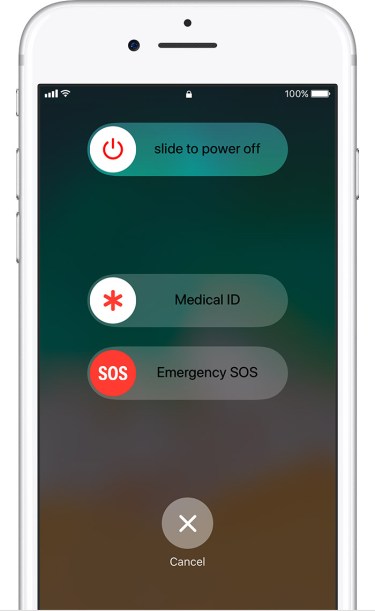
iPhones and Apple Watches are easily triggered to call emergency response services with an accidentally long touch of a button. iPhone X, iPhone 8, or iPhone 8 Plus call up the SOS emergency service by holding down the side button and one of the volume buttons for an extended period. The Watch triggers a call to 911 just by pressing and holding the side button.

Though Apple Watches and iPhones make it easier for individuals to get hold of 911 dispatchers quickly, the Watch’s accidental calls issue has been a known problem for a while now. In early 2017, Tolland County, Connecticut emergency responders reported a series of accidental calls coming from Apple Watches in the Tolland and Hartford areas. Earlier this month, a dispatcher in Ottawa County, Michigan told Newsweek his local branch had been receiving accidental butt dials from Apple Watches at least 10 times a day.

Apple has told CBS Local it was aware of the problem and was “working closely with local law enforcement to investigate the cause and ensure this doesn’t continue.”

We’ve reached out to Apple to find out what specific measures it is taking to stop these false alarm calls from causing havoc on the emergency systems in the area and possibly slowing down responders from getting to a real life and death situation. So far, we have yet to hear back but will be sure to update you when we do.

source:TechCrunch

MKRdezign

Contact Form

Name

Email *

Message *

Powered by Blogger.
Javascript DisablePlease Enable Javascript To See All Widget