Articles by "Sports"

NBA all-star Baron Davis wants to prep athletes and entertainers for the startup game
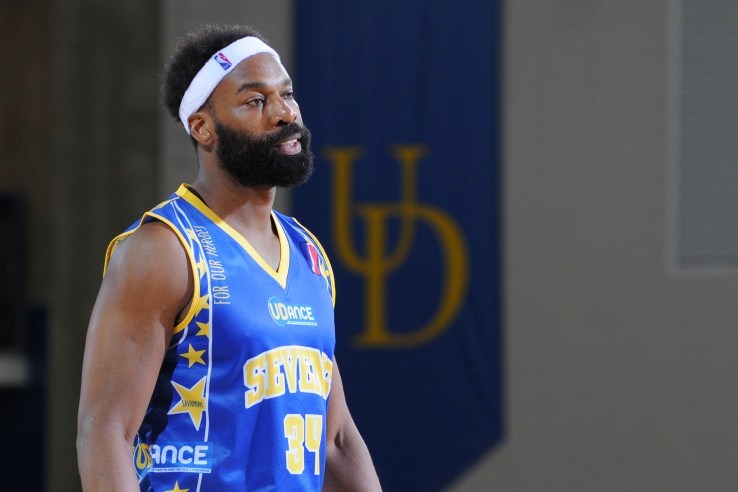
Last Saturday afternoon in the penthouse suite of the London West Hollywood, two-time NBA all-star Baron Davis was providing assists in a different kind of court.

In front of a gathering of entrepreneurs, athletes, artists, designers, musicians, and members of the Los Angeles investment community and business elite, Davis was putting on a show designed to encourage, educate and inspire collaboration among the attendees.

The Business Inside the Game (BIG) Power Summit, which took place during the NBA All Star Game weekend extravaganza in Los Angeles, saw Ice Cube and Lyft co-founder John Zimmer talk about disruption with Upfront Ventures board partner and Moviepass co-founder Hamet Watt; basketball stars Chris Paul and Chris Robinson and mega-producer Chris Budnick (the producer of “The Hangover” and “Old School”) shared insights on making an impact beyond sports and entertainment; and a panel of rising startup stars discussed how new technology trends are changing things for sports, entertainment, and culture at large.

“I wanted to start BIG to give athletes, artist, musicians, creatives, and business minds a platform and network they can trust and make change with,” Davis wrote in an email. “I feel sports has a enormous opportunity to be the next great industry to realize its true value in connection and bringing different people and backgrounds together. Athletes learn how to fight through adversity and develop unparalleled work ethics along with their ability to learn on the fly and create. This is a unique combination of skills that prepares them specifically and to greater advantage for the world of business.”

John Zimmer and Ice Cube kicked off the conference with a spirited conversation about the nature of disruption and the breadth of challenges that innovators face in any field — especially if those innovators are minorities. Zimmer, the co-founder of Lyft, talked about receiving threats and the push back the company dealt with from the taxi industry and governments as his company was getting off the ground.

And while Ice Cube has already reaped the rewards of a fruitful career as a musician, entrepreneur and actor, challenging the status quo in each field — Zimmer says the changes that Lyft and Uber will bring are still mostly unrealized.

“Most people believe it’s going to happen and most people underestimate what’s about to happen,” Zimmer said of the changes that ride-sharing will bring to the world. In the U.S. alone, Lyft and Uber only represent one half of one-percent of all miles traveled. In ten to twenty years, Zimmer said that ride-sharing would be the majority of all rides.

Zimmer also articulated Lyft’s mission in a not-so-subtle jab at its biggest competitor. “Our mission is to improve people’s lives with the world’s best transportation,” Zimmer said. “Not to createth world’s best transportation, because that would lack soul.”

Impact was key to what Chris Paul, David Robinson and Scott Budnick had to say about their work. Paul, taking a page from Robinson’s playbook, was focusing his efforts on philanthropies and investments that had a personal significance. Robinson himself was using his wealth and prestige to continue funding his educational activities, while Budnick turned from a lucrative career producing comedies to producing socially meaningful films.

Finally, the day came to end with a collection of startup founders and investors sharing some of the things that were on the horizon for technology, sports and media.

Two Bit Circus founder Brent Bushnell talked about his company’s vision for a new kind of live event space that could leverage the latest technology to be a proving ground and test bed for the latest and greatest in experiential entertainment. Bushnell’s vision of a test bed for the latest and greatest entrepreneurs had to offer around everything from robotics and virtual reality to new food and drink brands was matched by the revolutionary approach to storytelling from companies like Ryot (a sister company to TechCrunch owned by our corporate overlords at Oath) and Blavity — which is tapping into the power of the African American cultural capital to create a new platform for those voices to be heard (by consumers and brands).

Ultimately, the conversations revolved around the hustle and determination that make for great athletes, entertainers, and entrepreneurs.

Against the backdrop of a Hollywood hills sunset, the interconnection between commerce, art, athletics and culture were laid bare. source:TechCrunch

This is what it looks like when the airbag goes off inside a motorcycle jacket

It automatically inflates when it senses a crash. The technology was originally designed to protect motorcycle riders, but is now used by downhill skiers like Lindsey Vonn.

But it's hiding a neat safety feature inside. The D-air system by Italian company Dainese detects when a crash is about to happen and inflates an airbag inside the jacket. It covers my torso, shoulders and back to protect against injury. (Watch the video on this page to see how it feels.)

This is what it looks like when the airbag goes off inside a motorcycle jacket
This is what it looks like when the airbag goes off
inside a motorcycle jacket.
Lexy Savvides/CNET
It's the same technology that's being used by some downhill skiers to protect against injury during the Winter Olympics. Called D-air Ski, the version for athletes is integrated into a protective back plate that fits underneath a spandex ski suit, rather than in a motorcycle jacket.

Using three accelerometers and three gyroscopes, the sensors communicate with GPS at a rate of 1,000 times per second to detect an imminent crash.

The secret sauce is the algorithm that decides when a crash is about to happen. But it needed to be fine-tuned between motorcycle riding and skiing because of the different dynamics.

"When you have a crash in motorcycling, it's pretty clear," Dainese Executive Vice President Roberto Sadowsky explains as he demonstrates the technology at the company's showroom in San Francisco.

In downhill skiing you can be in the air for an extended period of time, but that's considered a jump, not a crash. "It's a big secret how our algorithm is developed but it has proven to work pretty much 100 percent," he says.

The airbag deploys in 45 milliseconds and adds around 800 grams, or 1.7 pounds, of extra weight. It's already being used by Alpine Ski World Cup racers from Austria, Italy, Canada and the US, and Olympic champion Lindsey Vonn.

"It's really a safety support tool," says Sadowsky. "It's something that [skiers] adopt naturally because they want to be protected."

D-air Ski is not available for sale to the public, but the motorcycle version and jacket costs around $1,700. Airbags are single-use and once deployed, need to be replaced. They cost $250 each.

source:CNet

Can't get enough of watching the 2018 Winter Olympics? Check out this collection of sports movies currently on Netflix.

Everyone has their favorite movie genres, but there's something about a good sports film that lets you bask in the glow of accomplishment through overcoming obstacles. Maybe it's seeing the underdogs fight to have their day, but sports movies always seem to have the greatest feel-good plot lines.

If you're looking for a pick-me-up, these are some of the best sports movies on Netflix right now, including a couple of comedies that may not be as focused on the sports themselves, but are still great.

'Cool Runnings' (1993)

Metacritic score: 60

Cool Runnings
"Cool Runnings"
Walt Disney Pictures
Just in time for the Winter Olympics 2018, this comedy features John Candy as Irving "Irv" Blitzer, a former bobsledder who left the sport in scandal when he was caught cheating. After retiring in disgrace and moving to Jamaica, he's discovered by Jamaican athletes played by Leon Robinson, Doug E. Doug, Rawle D. Lewis and Malik Yoba, who convince him to be their coach for the 1998 Olympics Jamaican bobsled team. Filled with great one-liners and the late Candy's incredible charm, this feel-good flick is great for getting you in the Olympic spirit.

'Field of Dreams' (1989)

Metacritic score: 57

Arguably one of the greatest sports movies ever made, "Field of Dreams" stars Kevin Costner as Ray Kinsella, a corn farmer who one day finds his fields haunted by baseball players of the past. It's a beautiful story for the whole family with great performances from Costner, Amy Madigan, James Earl Jones, Ray Liotta and Burt Lancaster playing Archibald "Moonlight" Graham.

'Endless Summer' (1966)

In this documentary, filmmaker and narrator Bruce Brown follows Mike Hynsonand Robert August around the globe as they attempt to follow the warm weather and share the sport they love with the world. Complete with a surf rock soundtrack performed by the Sandals, it really brings you to the roots of carving up the waves. Other big names in surfing from the era, Butch Van Artsdalen, Miki Dora and Phil Edwards, also make appearances.

'Icarus' (2017)

Metacritic score: 68

Icarus
"Icarus"
Alex Productions
More of a behind-the-scenes type of sports documentary, Oscar-nominated "Icarus" follows Bryan Fogel as he researches "doping" in an amateur bike race and accidentally uncovers a major international scandal. Helped by Russian scientist Dr. Grigory Rodchenkov, the two uncover evidence of a Russian state-sponsored doping program dating back to the 2014 Sochi Olympics. Excellent for getting background on the tone of the current Olympics, "Icarus" shows how deep the doping scandal actually went.

'42' (2013)

Metacritic score: 62

This biography tells the story of the legendary Jackie Robinson as racial integration was coming to professional baseball. It chronicles his start with the Kansas City Monarchs, follows his transition to Brooklyn farm affiliate the Montreal Royals, and finally his trip to the National League pennant as a part of the Brooklyn Dodgers. It features an excellent performance from Chadwick Bosemon as a fiery and intense Jackie Robinson struggling against racism from all angles -- even his own team. Some strong racist language may leave you uncomfortable, but this movie is important for its candid look at racism and overcoming obstacles through unwavering determination.

'Southpaw' (2015)

Metacritic score: 57

"Southpaw" hits all the usual boxing movie plot points we've seen so many times before, but it really digs in when showing how much sacrifice goes on behind the scenes to bring you the sport to spectators. Jake Gyllenhaal tones down his acting somewhat (understandably) to fit the determined boxer role, and while "Southpaw" won't make you rethink how boxing movies are made, it's still an entertaining movie.

'Pumping Iron' (1977)

Pumping Iron
"Pumping Iron"
White Mountain Films
There's nothing deep about this first look into the lives of competitive bodybuilding, but it paints a picture of a young Arnold Schwarzenegger back when nobody knew he'd be a famous action movie star. The film captures his wilder days as a young man in a sport that hadn't yet gotten a lot of attention. It's probably not for the whole family because of the language, but it's still fun if you're a Shwarzenegger fan and want to see how he got his start.

'Bring it On' (2000)

Metacritic score: 52

OK, I get it. You're wondering why this silly cheerleading movie is even on the list. It's certainly not going to win any awards, and it's definitely not going to make you think when you get to the end. With that said, it's high energy and fun to watch as a team of cheerleaders, led by Kirsten Dunst as Torrance Shipman, claw their way to try to win the national championship.

'Talladega Nights: The Ballad of Ricky Bobby' (2006)

Metacritic score: 66

One of Will Ferrell's best comedies (though it's perhaps not true to classic sports movies), "Taladega Nights" follows Ricky Bobby's (Ferrell) absurd and hilarious rise to the top of the Nascar standings, bringing Cal Naughton Jr. (John C. Reilly) along for the ride. The biggest challenge comes when Formula One champion Jean Girard (Sacha Baron Cohen) joins Nascar and starts winning races, forcing Ricky Bobby to turn up the heat. Honestly, there are so many quotable moments, but "If you're not first, you're last!" has one of the best payoffs.

source:CNet

USA Luge welcomes risk both on the Winter Olympics sliding track and in investments as it gathers bitcoin donations.

Chris Mazdzer of the US luge team on his way to a silver medal in luge men's singles during the PyeongChang 2018 Winter Olympic Games
Team USA athletes are representing their country at the Pyeongchang Winter Olympics in South Korea thanks in part to donors who help fund their training and travel. USA Luge, which made a splash with Chris Mazdzer's silver medalin men's single luge, welcomes donations of the high-tech kind, namely bitcoin.

In December, the USA Luge Foundation launched a bitcoin fundraising campaign, saying "the sport of luge has always been one to reward innovation and technology." Bitcoin investors can donate through the campaign page.

The luge team's push reminds us of that time when dog-themed cryptocurrency dogecoin sponsored a Nascar racer in 2014. You won't see Team USA sporting a Shiba Inu pupper on its gear, though.

The bitcoin logo could one day appear on USA Luge gear
The bitcoin logo could one day
appear on USA Luge gear.
Satoshi Nakamoto
USA Luge is still far from its initial funding goal of 5 BTC, which it hoped to hit by the middle of January. The organization promised to offer luge team hats emblazoned with the bitcoin logo if it reached that level. The team is currently sitting at 0.673 BTC in donations, which works out to around $6,200 (£4,400, AU$7,800).

Gordy Sheer, director of marketing and sponsorship for USA Luge and a 1998 Olympics silver medalist in the men's double event at Nagano, says the team will still happily offer BTC logo merchandise and add the logo to its training gear if it reaches its cryptocurrency funding goals.

Beyond hats, the team will add a bitcoin patch to its outerwear for the 2018-19 season if it pulls in 10 BTC. Jumping up to the 100 BTC level would give us the delightful sight of BTC logos on the team's skin suits for the next four years. The only place you wouldn't see the BTC logo is at the Olympics, which restricts that sort of sponsorship.

The bitcoin push ties in nicely with USA Luge's willingness to test tech, including 3D-printing tools used in the making of its sleds, which can reach ludicrous speeds nearing 90 mph (145 km/h).

While bitcoin's volatility means its value fluctuates, here are some general guidelines for how much BTC it takes to sponsor various luge activities based on current prices:
  • 0.00270 BTC: One run down the track
  • 0.00539 BTC: Buy a pair of luge gloves
  • 0.00809 BTC: Cover a night at the Olympic Training Center for one luger
When asked if bitcoin's capriciousness worries USA Luge, Sheer says, "Not at all. We are obviously an organization comfortable with the notion of risk. We are in for the long term with our BTC investments."

source:CNet

How Do Winter Olympians Stay Warm?
Nearly three thousand athletes have made their way to the Winter Olympic this month, and probably at least a couple are cursing the day they ever decided to become world-class bobsledders: Reports out of Pyeongchang list the temperature at or around a murderous subzero, putting this year’s games on track to be the coldest since 1994—with matters not much helped by the fact that, in their haste to get a stadium in shape, South Korea’s builders neglected to include a roof.

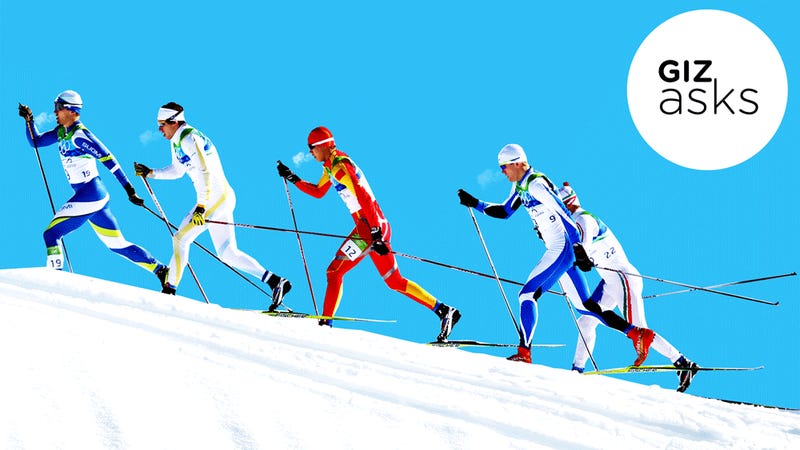
The athletes have devised a couple of novel coping methods—many have been seen plastering their cheeks with athletic tape—but you can’t properly luge in a scarf and huge puffy coat. Which brings us to the subject of this week’s Giz Asks—namely, how are these people not freezing, dressed like that? According to the kinesiologists, physiologists and extreme weather experts we spoke to, they almost certainly are freezing—but the human body apparently has ways of warming itself when engaged in strenuous physical activity, Olympic-level competition very much included.

Stephen S. Cheung

Professor of Kinesiology, Stony Brook University

In the cold, your body temperature is a function of the heat you are losing to the environment on the one hand, and the amount of heat your body is producing on the other. If the cooling becomes too much, you can risk your body temperature dropping to the point of hypothermia. Not only can this affect your athletic performance, but it can ultimately lead to death. Therefore, you can manage your body temperature by the level of insulation (amount of clothing) you have, and also how hard you are exercising. There’s a surprising amount of high-tech insulation built into many of the skin-tight clothing (e.g., Alpine skiers, sliding sports). The athletes are working extremely hard, and therefore generating a massive amount of heat (e.g., Nordic skiing, biathlon). Whenever you exercise, only about 20% of the energy is in the form of mechanical energy to move your body, and the remaining 80% is converted to heat. Therefore, you can stay very warm and even overheat during exercise in the cold if you are working hard.

Guillaume Millet

Professor, Kinesiology, University of Calgary

Take, for example, a car engine. In Europe, we have lots of vehicles that run on diesel gas. There’s a risk, with diesel gas, that it will freeze. But this risk only exists when the car is at rest. As soon as you start driving, you’re good. The same thing applies to the human body: If you don’t contract your muscles, you’re definitely at risk, but that changes as soon as you start exercising: Only one of every four calories spent is used to actually contract your muscle, and the rest produces heat. It depends on the intensity, of course, but Olympians are competing at full-speed, so they’re producing lots of heat.

If you start to get below minus twenty, that’s a different story, because then the extremities are at risk. The extremities don’t have much muscle contraction, so there’s not much heat produced. As long as you have glycogen, as long as you’re not tired and you can maintain the base, then there is no issue. Bu, of course, the longer the exercise, the lower the intensity, so at some point the intensity wont be high enough to produce enough heat. It’s a compromise between how much heat you produce and how cold it is.

The 1994 Olympics were in Lillehammer, Norway; I remember that because one of my best friends in France [participated] as a cross-country skier. He didn’t do very well, [partly] because he was too skinny, and was shaking with cold. But I remember after the race the winner was basically naked—he didn’t have any shorts on. That was at the end of the race, right after crossing the finish line. He’d produced so much heat that he was able to stay like that for several minutes.

Mike Tipton

Professor, Extreme Environments Laboratory, University of Portsmouth

They are wearing a lot of clothing insulation (more static sports) or they are generating a lot of heat (e.g. cross country skiers). Humans can generate up to 2 kW of heat through exercise, which is about the same a two bar fire. We are about 20% efficient (same as a car engine), that means that 80% of the energy we consume is converted and released as heat.

Frostbite, non-freezing cold injury, and hypothermia are unlikely to be problems in athletes exercising, but possible problems include discomfort (distraction), local/extremity cooling, impairing neuromuscular function (e.g. grip strength, dexterity), cold-induced diuresis and respiratory water loss leading to dehydration.

The best way to mitigate [these risks] is to maintain skin blood flow by maintaining average skin temperature and deep body temperature

Other interventions can help in one way or another, but it depends on the problem (i.e. comfort vs. functionality). So heated pads, balms, sock and drinks may increase comfort and local skin temperature (tape on face), but will do little to increase local blood flow or body temperature.

Carl Foster

Professor of Exercise Science and Director of the Human Performance Lab at the University of Wisconsin

Well, depending on the weather, sometimes they are quite cold.

However, uniform design, particularly over the last few years, focuses on the aerodynamic qualities of the surface of the racing suits, which sometimes sacrifices the breathability of the suit, which can make it warmer than you might expect. Speed skaters, for instance, are often quite sweaty inside their suits—it’s the combination of the suit being designed to reduce air friction (even at the expense of not breathing well) and a very high rate to heat production.

Also, in almost all the [winter] sports the heat production from exercise is quite high. Even in alpine skiing, where the speed work is done by gravity, the muscle work required to control the skis is enormous.

Lastly, remember that high level athletes can produce a lot more work with their muscles than normal people. They were selected from very talented athletes, who have trained very hard. In an elite endurance athlete, like a cross country skier, they can work at essentially double the rate of a normal person of the same age. And, because 75% of energy production results in heat production, they produce a lot of heat.

John Emmett

Professor, Exercise Science, Eastern Illinois University

There are a few things that the body does, acclamation-wise, when people are exposed to the cold over time. One is there’s an increase in basal constriction of the blood vessels, which helps keep the heat the body makes inside, rather than letting it go to the skin where it can be lost to the environment—it kind of increases the thermal layer, the skin-level, and that keeps some of the heat locked in a little better. This would happen gradually over time—it doesn’t make a huge difference, but every little bit helps. (The opposite happens in the heat, where the blood vessels will dilate so that all that heat is transferred through the bloodstream to the skin and lost.)

There’s also a response called non-shivering thermogenesis. One way to keep warm in the cold is through shivering, which generates heat. It’s a good first response to try to keep the body temperature elevated, but you can’t do that all the time—you just wear out. But non-shivering thermogenesis is where the cells of the body, on their own through repeated cold exposure, carry a little bit more heat than usual, which helps keep body temperature elevated.

The biggest risk in the cold is obviously your core temperature—your internal temperature—getting too low, but when you exercise you produce heat to keep you warm, so it’s probably easier for the athletes to tolerate the cold, as opposed to the spectators, who just have to stand or sit there and watch (although they have the option to wear more layers).

Sometimes that cold dry air can provoke respiratory irritation, causing people to have a little bit of a cough or something like that—but then extremes like frostbite take pretty prolonged exposure to severe cold.

source:Gizmodo

Members of the US ski team, including Lindsey Vonn and Laurenne Ross, have been using virtual reality to help prepare for the Olympics. Here's what it feels like.

This is by far two of the fastest minutes of my life.

My heart is pounding. My forehead and palms are sweating as I go through the same training exercise the US women's ski team uses to prepare for the Jeongseon ski course, site of the competition for this year's Winter Olympics in South Korea.

"Whoa, whoa! Ahhh, this is much faster than I thought," I scream, while crouching low and bobbing my head from side to side. "Am I going straight? Can I get a little help here? Can anybody hear me?"

Here's the catch: None of this is real.

US Olympic alpine skier Laurenne
Ross uses virtual reality as part of
training to prepare for the
Winter Games in Pyeongchang, South Korea.
US Ski and Snowboard Association
Instead of being 5,500 miles away in Pyeongchang, where the games opened on Friday, I'm in a virtual reality demo room Wednesday at the Menlo Park, California, offices of VR startup STRIVR. I'm still pumped when I pull off the VR headset. Knees aching, I decide to do it again.

Laurenne Ross knows the feeling. The US alpine skier regularly trains using VR.

It's been almost a year since Ross tore her ACL and the meniscus in her right knee, which should have kept her out of action for about 18 months. Ross would have none of it. Instead, she put herself through a grueling rehab regimen that included hundreds of VR sessions. She made it back to the slopes in nine months.

The US alpine ski team's embrace of virtual reality underscores how athletes are looking to technology to get an edge. VR, which transports you to a digital world through a special headset, has attracted heavy hitters such as Facebook, Google and Samsung. But everyday consumers -- the ones not aspiring for gold medals -- have been slow to embrace the technology.

With VR, skiers can react to different conditions and deviously designed Olympic courses at 80 miles per hour.

"They hopefully will be much more prepared, and not so distracted and caught up in the moment," said Brian Meek, STRIVR's chief technology officer. "Playing sports is intense. We replicate the intensity."

Ross said VR keeps her mentally sharp.

Watch this:VR could give US Olympic skiers the edge

"It's so easy to forget some of the tiny details about preparing for a race that can really make a difference," she told me via email while at a World Cup event in Cortina d'Ampezzo, Italy, last month. "VR has been a big part of keeping me focused and ready to return."

The US ski team is the first Olympic squad in the world to use VR technology in training, said Troy Taylor, high performance director of US Ski & Snowboard, who was familiar with STRIVR's work with other sports. More than 20 members of the ski team now use VR, including stars Lindsey Vonn and Mikaela Shiffrin.

The skiers join more than a dozen NFL, NBA and college sports teams that use VR to hone performance. It helps pro and college football quarterbacks, for example, run through and memorize hundreds of plays.

Detroit Pistons' all-star center Andre Drummond, a notoriously bad free throw shooter, increased his success by almost 30 percent this season in part by using STRIVR and a rigorous program with the Pistons' trainer, the team told me.

In 2016, Drummond was tired of being benched during close basketball games because of his inability to hit free throws in the clutch, he said. He's making 61 percent of his free throws this season, a big leap from an anemic 35 percent two years ago.

"These athletes want extra reps to hone their mental decision-making," STRIVR co-founder Jeremy Bailenson said. "We don't ever want to take their time away on the field or on the court."

Ross said she practices in VR as much as three times a week. And, unlike some teammates, Ross said she doesn't suffer from motion sickness.

"It's invaluable because we sometimes have limited time to practice," she said. "It can be the difference between winning and losing."

source:CNet

Comcast is inventing more than 50 "virtual channels" that string video together like a playlist, an experiment it may roll out to all kinds of programming.

Who needs channels? Comcast wants to DJ an Olympics playlist for you.

The return of the Olympics on Thursday brings the biennial challenge of sifting through hundreds of hours of sports coverage to figure out what's on, when and where. With NBC planning more than 2,400 hours of US coverage for the Winter Olympics in PyeongChang, South Korea, it would take you more than three months to watch everything, assuming you never slept, paused or blinked too much.

But for Comcast, this onslaught of Olympics video has become the cable company's favorite workshop to test out new concepts, which may become staples of your pay-TV service.

This year, the company is taking a page out of Spotify's playbook to warp the definition of a TV network: virtual channels that Comcast programs like playlists.

"It's a totally different way to think about being a network in 2018," Matthew Strauss, Comcast Cable's executive vice president of Xfinity services, said in an interview Monday.

Comcast, which uses the Olympics as a chance to  experiment with new features, is creating more than  50 "virtual channels" that curate the Games' 2,400  hours of coverage
Comcast, which uses the Olympics as a chance to
experiment with new features, is creating more than
50 "virtual channels" that curate the Games' 2,400
hours of coverage.
Nick Ferrari Photography
It comes as viewers have already redefined how they watch TV. With the rise of Netflix, YouTube and other streaming video providers, television has widened to mean more than what you watch on your living-room screen. As people have grown accustomed to watching whenever and wherever, more traditional TV is being viewed on demand, too.

Comcast, for one, saw on-demand viewing jump 25 percent last year, mostly because people are shifting to watch at their convenience rather than at an appointed time.

New-age networks

A traditional TV channel, when you boil it down, is just a curated playlist of video, Strauss said. Networks as we know them are a product of television's earliest technology, where TV producers were constrained to a single, linear feed of video and ads. The only way to show more TV was to create another channel.

For the Winter Olympics, Comcast is creating more than 50 "virtual channels." These run a gamut of interests -- gold-medal moments, super-high-quality 4K HDR footage or a specific sport like curling or snowboarding, to name a few. The point is to take the chaos of Olympics coverage and curate it into something feels familiar, like a network.

Clicking a virtual channel drops you into a feed of video already playing. Instead of being locked into the moment you tune in, users can jump forward and back through the playlist.

"We can create an almost infinite number of these channels," Strauss said, "by combing across networks and channels and sources."

The company, which is the biggest US cable TV provider by subscribers, is offering the virtual channels as part of its comprehensive hub for the Olympics on X1, its system that operates more like a sophisticated TV app than a grid of channels.

Comcast is also putting streams of the Olympics on its mobile app
Comcast is also putting streams of the Olympics
on its mobile app.
Comcast
In its initial tests for the Olympics, Comcast has a team of editors working in partnership with NBC to sort and curate coverage into the virtual channels. In the future, editors would work in tandem with algorithms that could personalize channels to your own viewing habits.

(Comcast owns NBCUniversal, the broadcaster of the Olympics. The company says it works with NBC on X1 features just as it would any other programming partner, and NBC makes the same content available to all pay TV providers.)

The idea of stitching together on-demand video into a channel-like stream isn't new. Startup Pluto TV, for one, has millions of viewers tune in every month to its free service that puts together more than 100 channels of on-demand video set up like linear networks.

But Comcast's virtual channels have the benefit of its vast collection of programmers. In addition to all the networks on its pay TV service, Comcast has integrated Netflix, YouTube and web clips from digital providers into X1. Virtual channels could pull from any of these.

For the latest Games, X1's Olympics home page also will offer app-like features. A daily summary page with a snapshot of that day's events, latest results and medal count, and the X1 Sports App will be tailored to the Games, providing a column on the right-hand side of the TV screen with live stats, highlights, scores and other details. Its Xfinity Stream app will make the Olympics available on the go on mobile devices.

One feature -- "Instant On Demand," referred to as iVOD, which would let you instantly jump back to a figure skater's routine if you tune in right in the middle -- was a prior Olympics experiment that Comcast has rolled out broadly. After testing it for Rio and Sochi Olympics, Comcast has deployed it for many cable shows since.

It may not be a record-setting athletic feat, but according to Strauss, the Olympics "gives us this digital sandbox to test the boundaries of our technology."

source:CNet

Olympics 2018 Opening Ceremony: Start time, how to watch online and more

The XXII Winter Olympics in PyeongChang, South Korea, has its opening ceremony Friday.

SOCHI, RUSSIA - AUGUST 8, 2017: The roof of the  Fisht Stadium in the Sochi Olympic Park. The  stadium to host FIFA 2018 World Cup matches
SOCHI, RUSSIA - AUGUST 8, 2017: The roof of the
Fisht Stadium in the Sochi Olympic Park. The
stadium to host FIFA 2018 World Cup matches.
Artyom Korotayev
Though the XXII Winter Olympics in PyeongChang, South Korea starts Wednesday, Feb. 7, the opening ceremony isn't until Friday, Feb. 9 at 6 a.m. ET (5 a.m. CST and 3 a.m. PST). So, there's plenty of time to figure out how to view it. Here are the options.

Live streaming

If the opening ceremony is just a little too early, you can watch it in bed on your device using NBCOlympics.com and the NBC Sports app. The app is available on iOS or on Android, Apple TV ($179.00 at Apple), Amazon Fire ($78.93 at Walmart), Chromecast ($35.00 at Dell Home), Roku, Windows 10 ($149.00 at Amazon.com), Xbox, Comcast X1 and some Samsung devices. You can also catch NBC's live coverage on fuboTV.

If the opening ceremony just doesn't fit with your schedule, you can also watch it on demand through NBCOlympics.com.

Watch this:The tech behind Team USA's toasty Opening Ceremony jacket

Channels

NBC, NBCSN, CNBC, USA and the Olympic Channel will air all the regular Olympic events, but only NBC will have the ceremony. The live coverage starts at Friday, Feb. 9 at 6 a.m. ET (live) AND 8 p.m. ET (taped).

Highlights

This year, the opening ceremony will be hosted by Mike Tirico and Katie Couric. Athletes Shaun White, Lindsey Vonn, Mikaela Shiffrin and Chloe Kim will be representing the United States during the ceremonies.

Keep an eye out for the Korean teams. After much controversy, both North and South Korea will be walking under the same flag. Also, South Korea is rumored to feature a fascinating look at their culture during the ceremonies.

Watch this:The tech that determines who wins the gold

source:CNet

MKRdezign

Contact Form

Name

Email *

Message *

Powered by Blogger.
Javascript DisablePlease Enable Javascript To See All Widget