Articles by "Biotech"

All-star team of synthetic biologists raise $53 million for cancer therapy startup Senti
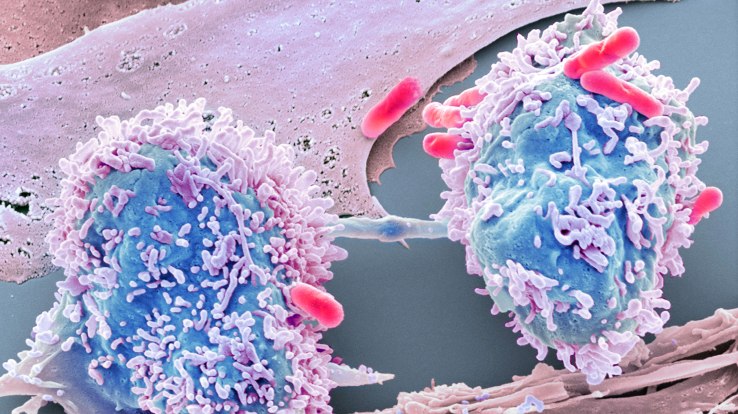
A who’s-who from the world of synthetic biological research have come together to launch Senti Biosciences with $53 million in funding from a slew of venture capital investors.

Led by Tim Lu, a longtime researcher at the Massachusetts Institute of Technology and one of the founding fathers of synthetic biology, Senti’s aim is nothing less than developing therapies that are tailored to an individual’s unique biology — and their first target is cancer.

Here’s how Lu described a potential cancer treatment using Senti’s technology to me. “We take a cell derived from humans that we can insert our genetic circuits into… we insert the DNA and encoding and deliver those cells via an IV infusion. We have engineered the cells to locate where the tumors are… What we’ve been doing is engineering those cells to selectively trigger an immune response against the tumor.”

The adaptive therapies that Senti hopes to develop will act in a localized area only, be able to sense and respond to the conditions that diseases create within a body, are able to be controlled (programmed) at the cellular level and respond to conditions in a variety of ways.

it’s the culmination of decades of research at institutions like MIT, the Wyss Institute at Harvard, MD Anderson, Boston University, ETH Zurich, and other institutions.

“Senti has built a world-class interdisciplinary team, uniquely capable of tackling the challenge of creating adaptive therapies,” said Ed Mathers, partner at NEA and member of Senti’s board of directors, in a statement. “We are excited to support them in their extraordinary vision to change how difficult diseases are treated.”

New Enterprise Associates actually led Senti’s Series A round with participation from 8VC, Amgen Ventures, Pear Ventures, Lux Capital, Menlo Ventures, Allen & Company, Nest.Bio, Omega Funds, Goodman Capital, and LifeForce Capital.

The company was founded three years ago, when Lu first had the idea to pull together the research from the world’s top labs into a single company that would work on developing therapies for cancer — and look to partner with other companies to create treatments for other diseases.

For Lu, the promise of the CRISPR gene editing technology — at least for now — lies in its ability to create these kinds of programmable cells to target disease.

Lu isn’t alone in his belief that CRISPR’s editing technology holds the key to unlocking cures for some of the deadliest diseases facing humanity. A former computer scientist, Lu explains the CRISPR technology as a pretty direct corollary to writing code for software. Thinking of human biological functions as a code, means that many diseases are just coding errors that can be overwritten with the introduction of new “software”.

That’s essentially what Senti is developing. The use of gene-editing technologies allows companies like Senti to write new programmable cells that perform specific functions if certain biological conditions exist.

Senti’s experts have been culled from the best in the field, according to Lu. Who spent the three years that Senti was operating in stealth mode flying around the world to meet with the top researchers in areas like immune cell engineering, engineered cell therapies, mammalian synthetic circuit engineering, and therapeutic synthetic biology, and immune cell engineering.

source:TechCrunch
RightEye’s portable eye-tracking test catches concussions

They say the eyes are the windows to the soul, but physiologically speaking, they’re really windows to the brain.
T
hey say the eyes are the windows to the soul, but physiologically speaking, they’re really windows to the brain.

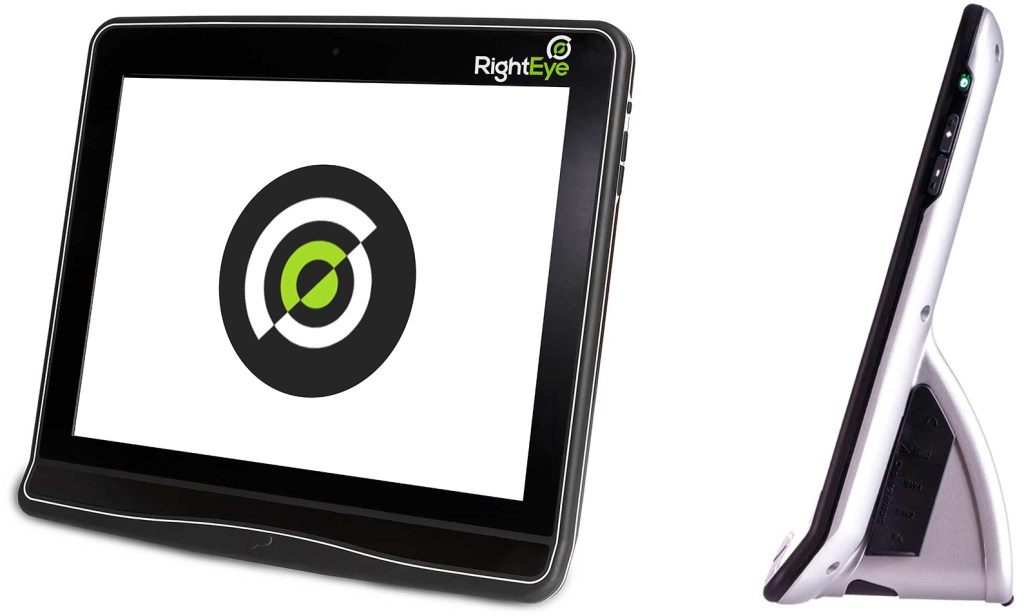
RightEye looks through that window to detect common but often subtle vision issues resulting from concussions and other brain troubles. Its quick, portable eye-tracking station can tell in minutes whether you should see a doctor — or look into becoming a pro ball player.

It turns out there’s quite a lot you can tell from how someone’s eyes move. We may not notice it ourselves, but we all vary in how and how well we execute a number of basic tasks, from flicking our eyes back and forth to smoothly tracking a moving target. For instance, your eyes may over-correct, fail to line up correctly, or track up or down when moving along a straight line.

For healthy individuals, these variations fall within a safe range, just part of the ordinary differences between bodies. But certain patterns well outside the baseline can be strong indicators of things like concussions and eye muscle problems — and even Parkinson’s and Autism-spectrum conditions.

RightEye’s portable eye-tracking test catches concussions and reading problems in five minutes
RightEye
RightEye tracks these movements with a custom device that looks a bit like an all-in-one desktop; it uses a Tobii eye-tracking module built into a single-purpose computer loaded with a library of simple tests. A basic EyeQ (as they call it) test takes five minutes or so, with more specialized tests adding only a few more, and results are available immediately.

To give you an idea: one test in game form has you defending a space station, destroying incoming ships by looking at them. But certain colored ships you must not destroy — meaning you have to detect them in your peripheral vision and avoid looking at them. In another test, you flick your eyes rapidly between two targets appearing on opposite sides of the screen, demonstrating accuracy and functioning saccades (micro-corrections made by your eye muscles).

Each eye is tracked independently, and their performance as a matched pair is evaluated instantly. An easy-to-understand results sheet shows their actual movements and how (if at all) they deviate from the baseline.

It’s compact and can run on battery for some 8 hours, making it ideal for deployment outside hospitals or the like: anywhere from school nurse’s office to the sidelines of an NFL game, even in the home.

I tested the device out myself at CES (my vision is just OK, but I want a rematch), and later chatted with Barbara Barclay, RIghtEye’s President. The two most exciting applications of the technology, as judged by her enthusiasm anyway, are in identifying vision-related cognitive problems in kids and in creating a sort of eye fitness test for sporting persons.

Say a child is having trouble learning to read, or perhaps can’t pay attention in class. The immediate thought these days is frequently ADD. But it’s more than a little possible that it’s a vision problem. A subtle difference in how the eyes track, perhaps one going off the horizontal when tracking a line of text, could easily make reading on the page or blackboard frustrating or even painful. What 3rd-grade kid would keep at it?

RightEye’s portable eye-tracking test catches concussions and reading problems in five minutes
RightEye
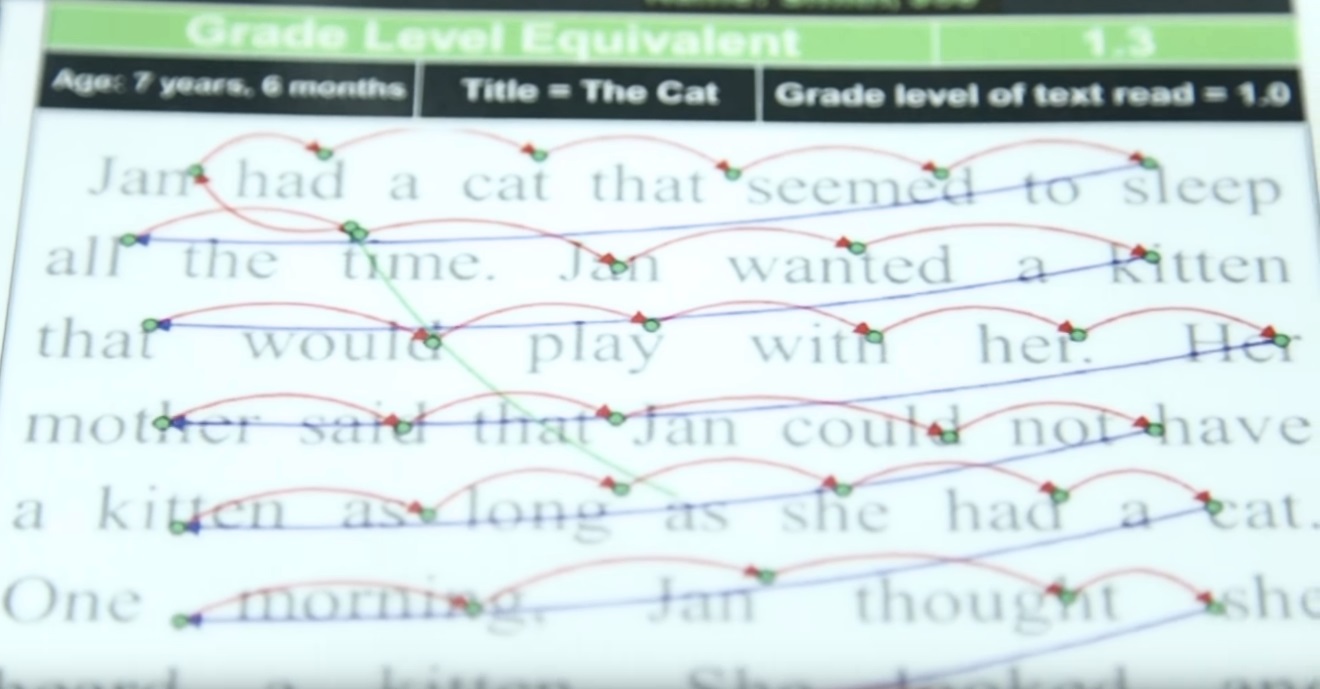
A reading-focused test tracks how the eyes move along a line of text.

This isn’t some groundbreaking new idea — but reliably and objectively evaluating individual eye movements was only something you could do if you went to see a specialist, perhaps after other explanations for a behavior didn’t pan out. RightEye’s test practically runs itself and can detect or eliminate the possibility of vision problems in minutes. Honestly, I think a kid might even find it fun.

Barclay has personal experience with this, her own daughter having had health issues that only after multiple false starts were found to have their root in a relatively simple vision problem the system indicated.

In 2016, RightEye acquired the rights to a pair of tests based on research linking eye movement patterns to Parkinson’s and Huntington’s diseases, as well as Autism spectrum conditions. It’s not a magic bullet, but again, the quick and easy nature of the tests make them ideal for routine screening.

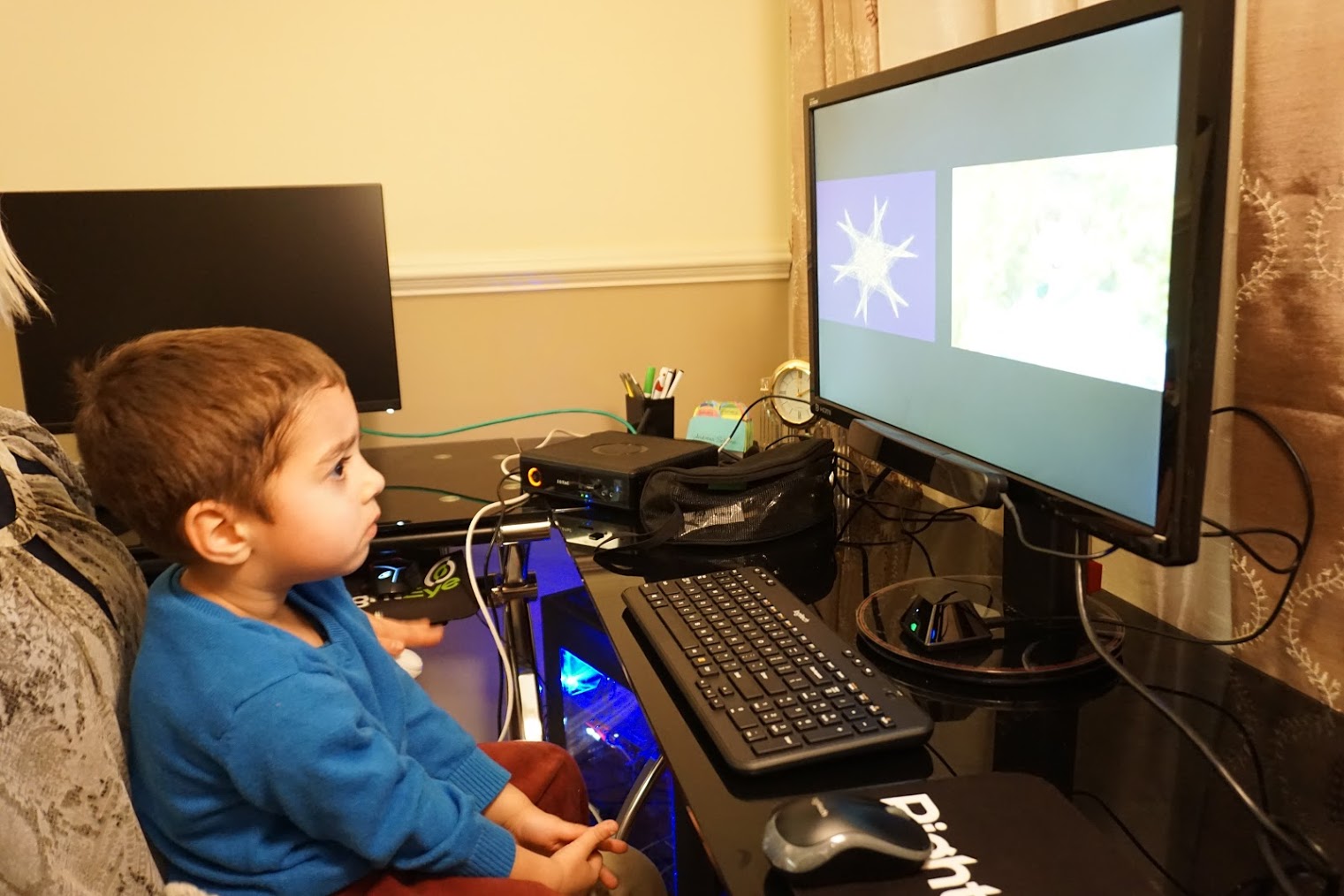
The Autism spectrum test is for children aged only 1 to 3, and watches eye movements between images of people and images of geometric shapes. Lingering on the shapes more than the people, it turns out, is a good indicator that at the very least the kid should receive further testing.

RightEye’s portable eye-tracking test catches concussions and reading problems in five minutes
RightEye
The Parkinson’s and Huntington’s tests watch for the more well understood patterns that accompany the motor degeneration found in those afflictions. They can be administered to people of any age and have (using earlier eye-tracking setups) contributed to many identifications of the diseases.

On a very different, but perhaps more immediately remunerative, note, Barclay told me that the test also works as a way to find outliers on the other end: people with what amounts to super-vision.

It’s entirely possible that someone could take the test and their results will show that they have faster, more accurate saccades, quicker target acquisition, and better continuous object tracking than the baseline. That’s a heck of an asset to have if you’re batting, fielding, goalkeeping, playing tight end — pretty much anything, really.

RightEye’s portable eye-tracking test catches concussions and reading problems in five minutes
RightEye
Examples of a healthy eye movement report (left) and concussed one (right).

It’s also a heck of an asset to have if you’re a scout or coach. If Lopez is catching great on the left side of the field but not the right, you can look into the possibility that he’s having trouble tracking the ball when looking over his left shoulder, his eyes all the way to the right.

Not only that, but you can test for effects of concussions or other traumas right there on the field if they’re having trouble. Given how widespread such injuries are and the immense danger of repeated concussions, testing early and often could literally save lives.

Right now, Barclay told me, 7 MLB teams are using RightEye tech for player assessments. As for the medical side of things, she said the company currently has 200 clients. The new hardware should help boost that number.

Perhaps more importantly, it has the backing (and therefore clout) of VSP, the country’s largest vision insurance company. That’s both a tremendous vote of confidence and a major in — nothing gets people using a system faster than knowing it’s covered by their existing insurance.

source:TechCrunch

With $250 million, Peter Diamandis’ new startup is all about taking stem cells from placentas
Stem cells derived from a human placenta hold the key to unlocking a myriad of potentials in regenerative medicine and are the focus of X-Prize and Singularity University founder Peter Diamandis’ new endeavor.

Called Celularity, the startup is a spinout from Celgene, a global biopharmaceutical company creating gene therapies. Diamandis teamed up with Dr. Robert Hariri, the founder of Celgene Cellular Therapeutics, to create Celularity in the hopes of using stem cells found in the human placenta to quickly regenerate tissue and organs needed to treat cancer and other diseases. The idea is these types of cells can do a better job of helping us live longer, fuller, healthier lives.

It’s a wild proposal and, seemingly, the stuff of science fiction often tossed around in certain Silicon Valley circles — create a startup focused on a medical breakthrough to make us live forever — or at least much, much longer than we currently do. But stem cell technology has been around for some time.

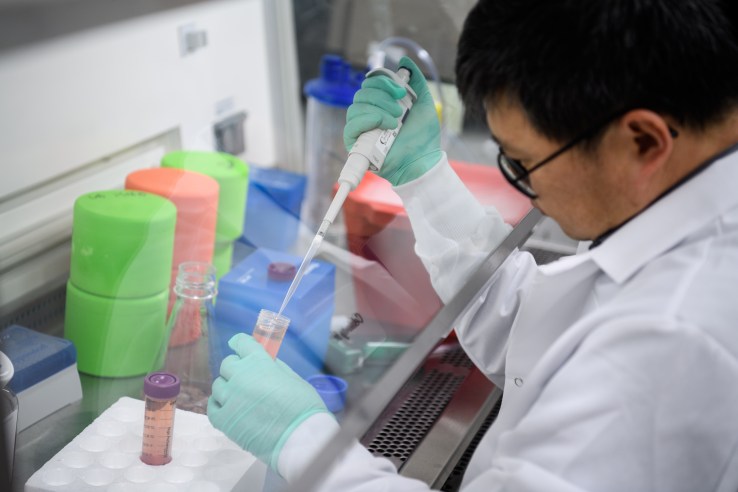
Lab worker with human stem cells
Lab worker with human stem cells.
For decades stem cells have posed an ethical quandary as they’ve largely been harvested through discarded embryos. However, in just the last few years, science has discovered adult stem cells can come from a number of sources throughout the human body — including a woman’s placenta, shortly after giving birth.

Placental stem cells are even more important as they can be taken from any placenta and injected into any human without the risk of the body rejecting them, according to the company. And, because they are so abundant, treatments are potentially more affordable and can begin immediately.

But this is not the first time Diamandis has dipped his toe in longevity research. He cofounded Human Longevity Inc. in 2014 to focus on extending the human lifespan. Celularity extends his interests in this endeavor.

So far, the startup has conducted several clinical trials and treated “hundreds” of patients, Hariri tells TechCrunch. The next step is to try and gain FDA approval to roll these treatments out on a mass scale.

That approval may be just around the corner — possibly in the next 12-24 months, according to Hariri. That’s because “cellular medicine is intrinsically safe,” he says, adding the potential could have a “huge impact” on U.S. medicine.

So just how are Diamandis and Hariri obtaining these human placentas? Donations. Though some couples choose to keep (and later eat) their placental afterbirth, approximately four million human placentas are disposed of per year in U.S. hospitals.

While this strange, yet magical temporary organ is from a human mother, some states consider it to be a biohazard after birth and discard it as waste. Couples, by law, therefore cannot take and sell the tissue to Celularity or some other outfit hoping to use it up. But they can donate it.

That’s where Celularity comes in. The startup procures the placental tissue from hospitals willing to hand over would-be waste in the name of science.

Right now the field is pretty wide for Celularity, too. The company is only competing with a handful of others in the same space like Israeli biotech firm Pluristem. Though it seems to be the only player in the U.S. at the moment.

Add to that a whopping $250 million in new funding from several prominent investors and celebrities to help it grow, including well-known life coach Tony Robbins, John Sculley of Apple and Pepsi-Cola, former GV partner and founder Bill Maris, who now runs a new biotech funding venture Section 32, and Andrew Von Eschenbach, the former commissioner of the U.S. Food and Drug Administration.

Naturally, Celgene led the latest round, with cash infusions from United Therapeutics Corporation, Sorrento Therapeutics and Human Longevity, Inc. to boot.

One other big heaping help to the startup — Celularity owns and operates LifeBank USA, the world’s only repository of donated placenta cells and biomaterials. So, presumably, should any other companies want to do something similar in the U.S., they’d need to go through a subsidiary of Celularity first.

Celularity is sure to stay a large player in this field as it continues. It owns the whole chain from procurement to deploying treatments. It also holds 1,800 patents on the procedures.

“Our ultimate mission is to make 100 years old, the new 60, and to provide people with maximal aesthetic, mobility, and cognition as they age,” Diamandis said. “The 20 years of science, research, and intellectual property pioneered by my visionary partner Dr. Bob Hariri, is the cornerstone for the coming longevity revolution.”

source:TechCrunch

MKRdezign

Contact Form

Name

Email *

Message *

Powered by Blogger.
Javascript DisablePlease Enable Javascript To See All Widget