Russian president challenges US to provide specifics while denying the suspects acted on behalf of Russia.
The 13 Russians indicted by the US on charges of tampering with the 2016 election will "never" be extradited, Russian President Vladimir Putin said, while denying they acted on behalf of himself or Russia.
"Never. Never. Russia does not extradite its citizens to anyone," Putin said during an interview with NBC News.
Putin's comments underscore the challenges the US faces in prosecuting 13 Russian nationals and three Russian groups accused of using social media to sow seeds of discord among Americans during the election. The 37-page indictment detailed how Russians used stolen identities to pose as Americans on Facebook and Instagram, creating Facebook groups, buying divisive ads and posting inflammatory images.
"I know that they do not represent the Russian state, the Russian authorities," Putin said. "What they did specifically, I have no idea."
He challenged the US to provide "some materials, specifics and data," which Russia would then be "prepared to look at them and talk about it."
In an indictment released in February, US special counsel Robert Mueller and the Justice Department called out the Internet Research Agency, a group linked to Russian propaganda efforts across social media. Employees for the IRA created troll accounts and used bots to stage arguments and fuel political unrest during the 2016 campaign.
According to the indictment, the organization included hundreds of staffers dedicated to trolling online and had an annual budget into the millions.
The group allegedly controlled the Facebook accounts "Clinton FRAUDation," and "Trumpsters United," and the Twitter account "March for Trump." The agency also set up fake rallies at the same location for both sides of the political divide.
The US has no extradition treaty with Russia, and Putin's comments on extradition are in line with Russian law prohibiting Russian citizens from being handed over to foreign countries.
When the FCC rolled back net neutrality protections in December, advocates for the free, open internet came out en masse. Although the decision has been made, the fight isn’t over yet, and that’s what FCC Commissioner Mignon Clyburn reiterated today at the fifth annual Lesbians Who Tech conference at the Castro Theatre in San Francisco.
“What the FCC did was to depress — was to strip away the freedoms of the most enabling platform, the most equalizing platform of our time,” the commissioner said onstage this morning.
Thanks to net neutrality and an open internet, the greatest movements in modern history, like #BlackLivesMatter and #MeToo, unfolded in front of the public, Clyburn said. Without the open internet, she continued, the masses would not have heard about what was happening in Ferguson, Missouri. The local press, she said, did not think that it was important.
“But a hashtag and a presence over the internet enabled that story to be told,” Clyburn said. “The suffering of those people in Missouri was no longer buried on the back pages of anyone’s headline.”
The question in front of us today, Clyburn said, is about the public’s willingness to do whatever it takes to keep an open internet.
Last month, the FCC’s “Restoring Internet Freedom” order officially went into effect when it was entered into the Federal Register. Its entrance into the Federal Register, however, meant citizens, attorneys general and other legislators could officially start battling against the FCC’s unpopular December vote to repeal net neutrality.
Just last week, Senator Ed Markey (D-MA) introduced legislation to reestablish 2015’s net neutrality rules. As TechCrunch’s Devin Coldewey noted, the bill is unlikely to reach the president’s desk, but it’s an important step in this long-term battle over internet regulation.
As Clyburn said in her talk, the gatekeepers should not be the ones to control and dictate the public’s online presence.
She later said, “That’s the challenge we have in front of us today.”
Abraham Lincoln famously said that “government of the people, by the people, for the people, shall not perish from the earth,” but looking around these days, you would be forgiven if you thought representative democracy had already been buried alongside Washington, Jefferson, and Roosevelt. Confidence in Congress remains pitifully low, driven by perceived low ethical standards and an increasing awareness that politics is bought by the highest bidder.
Now, a group of technologists and blockchain enthusiasts are asking whether a new approach could reform the system, bringing citizens closer to their representatives and holding congressmen accountable to their voters in a public, verifiable way. And if you live in western San Francisco, you can actually vote to put this system into office.
The concept is known as liquid democracy, and it’s a solid choice for fixing a broken system. The idea is that every person should have the right to give feedback on a policy issue or a piece of new legislation, but often people don’t have the time to do so. Using a liquid democracy platform, however, that voter can select a personal representative who has the authority to be a proxy for their vote. That proxy can be changed at will as a voter’s interests change.
Here is where the magic happens. Those proxies can themselves proxy their votes to other people, creating a directed network graph, ideally connecting every voter to politicians and all publicly verified on a blockchain. While there may be 700,000 people in a congressional district, potentially only a few hundred of a few thousand “super proxies” would need to be deeply engaged in the system for better representation to take place.
David Ernst is a leader of the liquid democracy movement and now a candidate for California Assembly District 19, which centers on the western half of San Francisco. He is ardently committed to the concept, and despite its novelty, believes that this is the path forward for improving governance.
Ernst has had a long-time interest in politics — his father was the city attorney of Dallas from 2013-2016 — but he found the current political environment uninviting. “I have always had the bug, but the biggest thing for me has been the partisanship, it drives me crazy,” he said.
Following college (which he began at age 16) and a few startup jobs, Ernst began working as CTO of a startup called Numerai, a crypto-backed decentralized hedge fund that allows data scientists to earn money when they solve data challenges. “The idea was that we can include many more people to participate in the system who weren’t able to before,” Ernst explained. That’s when it hit him that the decentralized nature of blockchain could allow for more participation in politics, fusing his two passions.
Ernst followed the campaign of the Flux Party in Australia in 2016, which is trying to implement what it calls “issue-based direct democracy” in that country’s legislature. “That was when something clicked,” he said. A congressman for example could commit to voting the calculated liquid democracy position, and “We could elect these sort of remote-controlled politicians as a way to graft this new system onto the old system.”
He built a platform called United.vote to handle the logistics of selecting personal representatives and voting on issues. More importantly, the app then tracks how those votes compare to the votes of congressmen and provides a scorecard.
Ernst believes this is vastly superior compared to other feedback mechanisms. “They say call your senator and call your congressperson, but it can be kind of a frustrating experience because it is unclear what really happens after the call, and worse, no one else knows that you have called in — your call essentially falls into this black hole,” he said.
Tech platforms and Medium posts are nice, but he realized that the most effective way to engage people’s interest in the project is to give them a candidate — himself. “No, it is not just a website, we are actually giving voters the option to have this better system,” Ernst explained. “All you need to do is check the box next to the liquid democracy person’s name, and then we can put this system into office.”
The popularity of liquid democracy today is certainly small. United.vote’s homepage lists 968 members who have signed up for liquid democracy. The Flux Party in Australia garnered 0.15% of the first preferences nationwide in 2016. Ernst, though, is unperturbed. “If I got elected, but only 20 people were actually using [the platform], I would still follow those people,” he said. The hope is that more people will join the platform when they see it can provoke real change in politics.
Ernst is running as an independent, and competing against incumbent Democrat Phil Ting, who he describes as “a nice guy.” Ting won the 2016 election with 80% of the vote, with Republican Carlos Taylor netting 20%, and has represented District 19 since 2012. The 2018 primary will be held June 5, and the top two candidates regardless of party affiliation will compete in the general election on November 6th.
Ernst knows that the tech is early. “There are a million ways in which the software isn’t all it can be yet, but we are putting it out there so that people will tell us to fix this or fix that,” he said. Those software fixes though just might fix democracy itself.
Facebook’s global director of policy programs says it will start sending postcards by snail mail to verify buyers of ads related to United States elections. Katie Harbath, who described the plan at a conference held by the National Association of Secretaries of State this weekend, didn’t reveal when the program will start, but told Reuters that it would be before the Congressional midterm elections in November.
The cards will be sent to people who want to purchase ads that mention candidates running for federal offices, but not issue-based political ads, Harbath said, and contain a code that buyers need to enter to verify that they are in the U.S. The program is similar to ones used by Google My Business and Nextdoor when they need to verify business owners or users who want to join closed neighborhood groups, respectively.
Harbath told Reuters that the postcards “won’t solve everything,” but were the most effective method the company came up with to prevent people from using false identities to purchase ads. In October, Facebook vice president of ads Rob Goldman published a blog post saying that the platform planned to create more transparency around ads by taking steps that include a searchable archive of federal-election ads and requiring political advertisers to verify their identity.
Facebook, Twitter and Google executives were called to testify in front of Senate last fallabout how Russians used their platforms to spread misinformation intended to sway the outcome of the 2016 U.S. presidential election campaign. The companies have been criticized for not doing enough to prevent false advertising. The issue escalated last week when U.S. special counsel Robert Mueller handed down a set of indictments charging 13 Russian citizens and three Russian organizations, including a bot farm, with interfering in the presidential election through operations including fake social media accounts.
You’d be forgiven for missing Donald Trump’s multiple retweets of Facebook executive Rob Goldman over the weekend. Perhaps you were spending time with family, watching Black Panther or just attempting to forget politics for a moment by ignoring the manic flurry of social media updates from the leader of the free world.
“The Fake News Media never fails,” Trump tweeted over the weekend. “Hard to ignore this fact from the Vice President of Facebook Ads, Rob Goldman!”
“I have seen all of the Russian ads and I can say very definitively that swaying the election was *NOT* the main goal.” Rob Goldman Vice President of Facebook Ads https://t.co/A5ft7cGJkE
Trump was citing Goldman’s own Twitter dump over the past week, responding to Special Counsel Robert Mueller’s recent indictment of 13 Russian citizens charged with interfering in the presidential election.
“Very excited to see the Mueller indictment today,”Goldman wrote. “We shared Russian ads with Congress, Mueller and the American people to help the public understand how the Russians abused our system. Still, there are keys facts about the Russian actions that are still not well understood.”
Of course, Mueller’s findings haven’t exactly exonerated Facebook in all this. The site, along with its subsidiary Instagram, were mentioned by name 41 times in the indictment.
Goldman’s Twitter storm acknowledges that the social media behemoth has certainly been a centerpiece of Russia’s misinformation campaign, but adds, “The majority of the Russian ad spend happened AFTER the election. We shared that fact, but very few outlets have covered it because it doesn’t align with the main media narrative of Tump and the election.”
The Fake News Media never fails. Hard to ignore this fact from the Vice President of Facebook Ads, Rob Goldman! https://t.co/XGC7ynZwYJ
Trump spotted the opening and quickly cited it as evidence of the “fake news” campaign to link his election to Russian meddling. While it’s understandable that he would seize upon this sort of statement from a Facebook executive in an on-going effort to put these investigations behind him, among other things, the tweets don’t address the impact that non-advertisement Facebook posts played in the election.
After all, Facebook previously told Congress that Russian-linked ads may have reached as many as 10 million users in the U.S., while the posts from Russian agents were believed to have reached as many as 126 million Americans.
Special counsel Robert Mueller indicts 13 Russian nationals and the Internet Research Agency for a campaign of fake news and trolling during the 2016 election.
US special counsel Robert Mueller has filed charges against 13 Russian nationals and three Russian groups for allegedly interfering with the 2016 presidential election.
In an indictment released Friday (PDF), Mueller and the Justice Department call out the Internet Research Agency, a group linked to Russian propaganda efforts across social media. Employees for the IRA created troll accounts and used bots to stage arguments and sow political chaos during the 2016 campaign.
The defendants are charged with conspiracy to defraud the US and aggravated identity theft.
Disinformation campaigns ran rampant across social media during 2016, with trolls creating controversial and divisive discussions. It was considered a major security concern during the Senate Intelligence Committee's annual "Worldwide Threats" hearing on Tuesday. The trolls would work both sides of the same issue, with the primary goal to misinform and create political divide.
Facebook, Twitter and Google have struggled to deal with fake news, trolling campaigns and bots on their platforms, facing the scorn of Capitol Hill over how they've handled the problem.
Friday's charges come from Mueller, who, as part of the Justice Department, is investigating Russian collusion with the 2016 presidential election. Prosecutors said the efforts to interfere with US politics began as early as 2014, with trolls creating false personalities and spreading fake news across Facebook, Twitter and YouTube.
The Senate Intelligence Committee is running its own investigation into Russian interference in the 2016 election. Sen. Mark Warner, a Democrat from Virginia, said in a statement the indictment Friday "vindicated" the committee's work so far. "With this indictment, the special counsel and his team have taken an important step to hold Russia accountable," Warner said.
Advocacy group Common Cause also applauded the indictment in a statement Friday, saying the charges "hammer home the seriousness of the attacks." The organization filed complaints in September with the Justice Department and the Federal Election Committee asking them to investigate election expenditures on social media, and is urging the passage of a law that would update rules for online election ads.
After the indictment became public, President Donald Trump tweeted that his campaign didn't collude with the Russian effort. "Russia started their anti-US campaign in 2014, long before I announced that I would run for President," Trump said. "The results of the election were not impacted. The Trump campaign did nothing wrong - no collusion!"
Russia started their anti-US campaign in 2014, long before I announced that I would run for President. The results of the election were not impacted. The Trump campaign did nothing wrong - no collusion!
The indictment lists two other organizations, Concord Management and Consulting and Concord Catering, both based in Russia. The organizations were shell companies that Yevgeniy Viktorovich Progzhin used to fund the IRA, according to the indictment.
By "early to mid-2016," the IRA's efforts started supporting then-candidate Trump's campaign and attacking candidate Hillary Clinton's political efforts. Deputy Attorney General Rod Rosenstein said there's no evidence in the indictment that the effort had "any effect on the outcome of the election."
Instructions for the trolling efforts were to "use any opportunity to criticize Hillary and the rest (except Sanders and Trump -- we support them)," according to the indictment.
The group allegedly controlled the Facebook accounts "Clinton FRAUDation," and "Trumpsters United," and the Twitter account "March for Trump." Many of their tweets would include the hashtags "#Trump2016,""#TrumpTrain,""#MAGA,""#IWontProtectHillary" and "Hillary4Prison," the indictment said.
According to the indictment, the organization included hundreds of staffers dedicated to trolling online and had an annual budget into the millions. Rosenstein said the Russian trolls sought "information warfare" against the US.
The organizations started studying and tracking political groups on social media starting in 2014 and sought to copy their tactics such as: how often they posted, how they engage with their audience and what kinds of comments and responses they posted.
Two of the defendants allegedly traveled to the US to gather information and posed as Americans.
While in the US, they bought computer servers and set up a virtual private network to make it appear as if they were working in the country, prosecutors said.
They also reached out to politicians and social activists, according to the indictment. In one scenario, they had gotten tips from an activist based in Texas.
Rosenstein added that no Americans involved were aware that they were dealing with Russians.
On social media, the agency was divided into day and night shifts and instructed to make posts that fell in line with US time zones. They were also directed to write about issues like foreign policy and the economy.
They created groups on Facebook and Instagram, posing as "Secured Borders,""Blacktivist" and "Army of Jesus." These fake activist groups received hundreds of thousands of followers. One such group was @TEN_GOP, an infamous Twitter account posing as a Republican group in Tennessee.
The IRA was also able to create PayPal accounts using stolen Social Security numbers and birth dates of American citizens.
The agency also set up fake rallies at the same location for both sides of the political divide. On Nov. 12, 2016, the agency organized two events on Facebook, one called "show your support for President-Elect Donald Trump" and one called "Trump is NOT my President." It was at the same time and both in New York.
While the US served an indictment, it's unlikely those named will be extradited to the US. The Justice Department also charged Russian hackers behind Yahoo's breach. Russia's complicated extradition process has kept alleged criminals out of US reaches.
Director of National Intelligence Dan Coats said Tuesday that these disinformation campaigns would continue.
Joel Kaplan, Facebook's vice president of global policy, said in a statement that the social network is "grateful" the US government is taking action against the IRA for abusing their services.
Twitter initially declined to comment, but later Friday said the abuse of social media platforms by Russians goes "against everything we at Twitter believe."
"Any activity of this kind is intolerable, and we all must do more to prevent it," a spokeswoman said. "Twitter continues to work with the Special Counsel's Office and with Congress throughout their investigations, providing relevant information and cooperating through appropriate law enforcement channels."
The Trump administration is planning to privatize the international space station instead of simply decommissioning the orbiting international experiment in 2024, according to a report in The Washington Post.
According to a document obtained by the Post, the current administration is mulling handing the International Space Station off to private industry instead of de-orbiting it as NASA “will expand international and commercial partnerships over the next seven years in order to ensure continued human access to and presence in low Earth orbit.”
The Post also reported that the administration was looking to request $150 million in fiscal year 2019 “to enable the development and maturation of commercial entities and capabilities which will ensure that commercial successors to the ISS — potentially including elements of the ISS — are operational when they are needed.”
The U.S. government has already spent roughly $100 billion to build and operate the space station as part of an international coalition that also includes the European Space Agency, the Japan Aerospace Exploration Agency, and the Russian Space Agency.
Astronaut Cady Coleman looking out window of the International Space Station Image courtesy of NASA
But as one NASA engineer noted in a Quora post explaining the NASA decision to decommission the Space Station, the agency simply lacks the resources to do everything that it wants to do.
Robert Frost, an engineer in the Vehicle Integration and Daily Operations Branch at NASA, wrote:
… unfortunately there just isn’t enough funding for space exploration to simultaneously operate multiple large programs. The Space Shuttle program was essential to building the ISS, but once ISS was assembled, the Space Shuttle program had to be decommissioned before the next program (Constellation) could start.
NASA’s primary job is to continue pushing the frontier outwards. The idea is that NASA has mastered low Earth orbit enough that the lessons we have learned will make it possible for commercial companies to operate in low Earth orbit and NASA should then move on to the next frontier. Whether that be to establish a permanent foothold on the Moon, to visit and possibly retrieve an asteroid, or to put human beings on Mars (all of which are possibilities) is something future political leaders will decide, but one thing is fairly assured – NASA will not be given significantly more budget to do such things. That means NASA has to stop doing something it is currently doing.
A public private partnership is the most likely way to ensure that the space station remains aloft, rather than burning up in orbit and having its remaining pieces fall into a watery grave.
Some companies are already pursuing the vision of a network of privately held space stations operating in low earth orbit and beyond.
Image: TechCrunch
Axiom Space, which is helmed by Michael T. Suffredini — a former NASA employee who managed operations for the ISS for a decade — has raised $3 million in seed funding to build a commercial space station. And Bigelow Space, the company founded by the eccentric Las Vegas billionaire, Robert Bigelow, is working on building new structures that can increase living and working space on the ISS.
While some question whether the operation of a space station is commercially viable, the fact that something would have to be done with the space station once the NASA shuttle program was decommissioned was a foregone conclusion.
And what to do about the Space Station has clearly been on astronaut’s minds. Last week in an editorial for The New York Times, Mark Kelly pleaded for continued support for the Space Station.
Two companies, SpaceX and Orbital ATK, now regularly deliver cargo to the station. Just this week, SpaceX launched the Falcon 9 Heavy, a rocket powerful enough to lift 141,000-pound payloads. And after a few years’ hiatus, crew members will once again leave American soil for space and make their way to the space station as soon as next year, courtesy of Boeing and SpaceX.
But all of this will come to a screeching halt (though you won’t hear the “screech” in the vacuum of space) if the Trump administration ends funding for the International Space Station program beyond 2024, a step it is considering. The reasons are unclear, though President Trump has said that he wants to prioritize human travel to the moon.
Whatever the priorities, this sort of trade-off is shortsighted. Cutting funding for the station, now between $3 billion and $4 billion a year, would be a step backward for the space agency and certainly not in the best interest of the country.
Over the past year, the United States abandoned its leadership position on the global stage in many ways. We stopped leading the effort to combat climate change. We stopped leading on trade and commerce, and raised questions about our continued commitment to multilateral organizations and military alliances. We stopped leading on human rights and the rule of law. If we fail to continue funding the International Space Station, America will sacrifice its rank as the global leader in space exploration and commercial space innovation.
NASA programs have benefited the people of our planet since the founding of the agency in 1958. Solar technology, miniaturized computer chips, CT scans and M.R.I.s are just a few examples of the technologies that were developed and delivered to the American consumer as a result of NASA’s innovation.
Still, hashing out the details of how to commercialize a project that was created with international cooperation will be difficult and involve negotiations with parties that have seen their relationships chill substantially over the past decade (at least in the case of the U.S. and Russia).
As the U.S. government ponders its withdrawal from low earth orbit there’s at least one country waiting in the wings to secure more of a leadership position in space.
As Kelly warns, “[other] countries will undoubtedly fill the void left by American withdrawal — most notably China and Russia, countries we consider significant rivals. Not only would they reap the economic and political benefits of leading in space but they also could change the direction of the world’s collective space endeavors in a way inimical to American interests and values.”
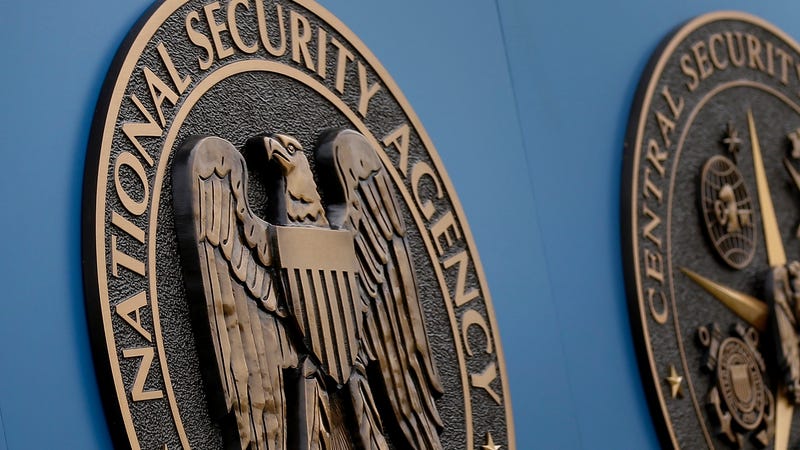
During the first Cold War, American and British spies would sometimes place coded messages in newspaper classified ads to communicate with each other. And according to a new reports in the New York Times and The Intercept, the National Security Agency (NSA) has updated the tactic, using its public Twitter account to send secret messages to at least one Russian spy.
That’s just one relatively small detail in much more salacious articles about NSA and CIA agents traveling to Germany in an effort to recover cyberweapons that had been stolen from US intelligence agencies. A Russian spy allegedly offered up the stolen cyber tools to the Americans in exchange for $10 million, eventually lowering his price to just $1 million. The Russian spy allegedly claimed to even have dirt on President Trump.
According to the reports, the unnamed Russian met with US spies in person in Germany, and the NSA sometimes communicated with the Russian spy by sending roughly a dozen coded messages from the NSA’s Twitter account. The one important question: Were the messages sent via direct message or were they sent out as public tweets?
The New York Times report leaves some ambiguity, but according to James Risen in The Intercept they were very public:
Officials gave the Russians advance knowledge that on June 20, 2017, at 12:30 p.m., the official NSA Twitter account would tweet: “Samuel Morse patented the telegraph 177 years ago. Did you know you can still send telegrams? Faster than post & pay only if it’s delivered.”
That tweet, in exactly those words, was issued at that time.
The NSA used that messaging technique repeatedly over the following months, each time officials wanted to communicate with the Russians or reassure them that the U.S. was still supporting the channel. Each time, the Russians were told the text of the tweets in advance and the exact time they would be released. Each tweet looked completely benign but was in fact a message to the Russians.
Gizmodo has reached out to the NSA for confirmation, though we’re not holding our breath about getting an on-the-record confirmation either way.
Samuel Morse patented the telegraph 177 years ago. Did you know you can still send telegrams? Faster than post & pay only if it's delivered.
The detail from the story that’s getting all of the attention, of course, is the fact that US intelligence agencies may have been willing to buy dirt on President Trump, including an alleged videotape of Trump with sex workers that was taken in 2013. The portions of the tape shown to US spies couldn’t be verified as actually being Trump and US intelligence suspected that they might be getting set up by the Russian government.
The Russian claimed to have access to a staggering collection of secrets that included everything from the computer code for the cyberweapons stolen from the N.S.A. and C.I.A. to what he said was a video of Mr. Trump consorting with prostitutes in a Moscow hotel room in 2013, according to American and European officials and the Russian, who agreed to be interviewed in Germany on the condition of anonymity. There remains no evidence that such a video exists.
But as strange as it may seem, Trump cheating on his wives seems like old news. The alleged pee tape, part of the so-called Steele Dossier, could be released tomorrow and it’d probably be met with a collective shrug among Americans. News that President Trump had paid former porn actress Stormy Daniels some $130,000 shortly before the 2016 election to keep quiet about their affair certainly didn’t make many waves beyond the late night talk shows.
The breaking news here is not only that US intelligence tried to buy the cyberweapons that were stolen in an effort to assess precisely what had been lost, but that the NSA uses its public Twitter account to send secret messages. Now that’s a story of real intrigue for the New Cold War.
Sending public messages while hiding in plain sight is called steganographyand ensures that not only is the message secret, but the method of delivery won’t be suspected by anyone who doesn’t know it’s going on. The message is so public that nobody is thinking to look for it there, aside from perhaps those in the tinfoil hat crowd.
Russian spies reportedly used public websites to communicate coded messages back in 2010 before a large Russian spy ring was broken up. But this might be the first time that such a high-profile US intelligence Twitter account has been used in such a way.
Gizmodo has reached out to the NSA for comment and will update this post if we hear back. We’re not exactly expecting the NSA to hand over their entire cache of secret messages. But it doesn’t hurt to ask.
Update, 7:50am: This article has been updated with information from The Intercept, which received confirmation that the tweets in question were public.
Who do we call to get the last week of our lives back?
Rep. Devin Nunes, the godfather of disappointment, released his memo on Friday, capping off another chapter in the life of the California congressman and chairman of the House Intelligence Committee who exists solely to ingratiate himself to President Trump. The memo is positioned as some sort of smoking gun that stops just short of claiming the FBI colluded with the Clinton campaign to stop Donald Trump from becoming president. But the central premise around the memo—that a controversial dossier was used to launch a politically motivated FBI investigation into members of the Trump team—is totally contradicted by what the memo actually says.
First, the memo states that the FBI’s FISA warrant for Carter Page—a Trump campaign foreign policy adviser likely only hired because all the not-super-creepy conservative thinkers had boarded the #NeverTrump train—was acquired after the Trump campaign began distancing themselves from Page and referring to him as an “informal adviser” who “does not speak for Mr. Trump or the campaign.”
And there we go. The only date that matters. Confirms that all of this happened *after* Page left the campaign. What a waste of everyone's time this whole episode was. pic.twitter.com/UEQhzSDOtW
— Pwn All The Things (@pwnallthethings) 2 Şubat 2018
So this warrant will not help further the narrative that the FBI was spying on the Trump campaign, an allegation for which the president—who has absolute constitutional authority to declassify information whenever the hell he wants—has produced zero evidence.
The memo further indicates that the FISA warrant was granted, in part, due to allegations raised in the dossier authored by former British spy Christopher Steele. It indicates that the FBI would not have pursued the warrant without the dossier and it notes that Steele was not a fan of President Trump. None of this is explosive. And the notion that the Steele dossier alone is enough to convince four judges on the Foreign Intelligence Surveillance Court (FISC) to grant a warrant is patently ridiculous.
The warrant was reauthorized three times, according to the memo, even after the controversy surrounding it exploded in the press. Applications for FISA warrants are rigorous; there’s simply no way the court kept reauthorizing the Page warrant solely based on the dossier.
This #NunesMemo is profoundly unimpressive. It is rife with implicit assumptions but even if every single one of them broke in favor of Nunes and Trump it still is scarcely scandalous given the way the FISA process actually operates.
The allegation that Steele didn’t like Trump is easy enough to believe—more than half the country didn’t vote for him, so a lot of people don’t like him. But nowhere does the memo indicate that Steele faked, forged, or doctored any information presented to the FISC. It also doesn’t show that his political views led him to actively compromise the integrity of his work.
The argument that we should be suspicious of Steele because he didn’t like Trump is a bad one: Should courts only acknowledge information from sources who favor the president? Only people who voted for Donald Trump can testify to character? As far as takes go, this one’s pretty bad. Steele apparently doesn’t like Trump—so what?
Steele’s political leanings might matter politically, but suggesting they matter legally is a big stretch.
The memo claims that the FBI didn’t alert the surveillance court to Steele’s bias. But that point is being strongly refuted by the Democrats, who wrote a memo of their own, which wasn’t released because the Nunes and the Republicans on the House Intelligence Committee prevented it. The FBI, meanwhile, claims the narrative portrayed in the memo is misleading because of “material omissions of fact that fundamentally impact the memo’s accuracy.”
Finally, all the way in the last paragraph, the memo notes that information about Trump campaign adviser George Papadopoulos, who pleaded guilty last October to lying to the FBI, “triggered” the FBI’s counterintelligence investigation into Russia. “There is no evidence of any cooperation or conspiracy between Page and Papadopoulos,” it says. Even if so, references to Papadopoulos seem to undermine the central point Nunes is trying to make: that the investigation into Trump campaign associates stemmed from a dossier written by a guy who apparently didn’t plan on joining one of the president’s golf clubs.
That’s it? Dishonest and misleading memo wrecked the House intel committee, destroyed trust with Intelligence Community, damaged relationship with FISA court, and inexcusably exposed classified investigation of an American citizen. For what? DOJ & FBI must keep doing their jobs.
The FBI and the Justice Department vehemently opposed the release of the memo, and for good reason. Investigators rely on information received by human sources, many of whom will only speak to the FBI if they can do so in strict confidence. The memo doesn’t appear to compromise any confidential sources, but publishing it could, nevertheless, undermine faith sources have in the FBI’s ability to keep a secret.
That members of Congress were able to release information about a classified warrant and for blatantly political purposes is truly startling.
The memo goes on to report that Steele began communicating with members of the press about details contained in the dossier at the instruction of his employer, Fusion GPS. Doing so may have burned his bridges with the FBI, but what this proves otherwise is anyone’s guess.
Are we to believe that if the dossier was *so* central and important to the FISA and it was based on nothing else, a judge -– a human being who watches TV and reads the papers – would have never questioned it and the FBI/DOJ could have just kept "tricking" the court? 🙄
Republicans will find ways to spin the memo as explosive and damaging to the FBI’s credibility, and there are some who will praise Nunes’s actions, but the political cost of releasing the memo will extend far beyond the news cycle. It’s hard to imagine any of the FBI’s some 35,000 employees are pleased with either the White House or the GOP right now.
The Republican Party has always prided itself on being the party that demonstrates the utmost respect and loyalty for law enforcement. They kind of fucked that up today.
You can read the memo here, and an annotated version here. But once you do, be warned, you will not get those precious moments of your life back.
The idea is that a centralized network could protect US communications from Chinese spying. But it might prove a hard sell.
National security officials working for President Donald Trump are considering building a superfast 5G network as an option to counter Chinese spying on US phones, according to a report published Sunday.
Details of the plans come courtesy of a PowerPoint presentation and memo produced by a senior National Security Council official seen and reported by Axios. An unnamed senior administration official confirmed the accuracy of the information late Sunday to Reuters.
A nationalized 5G network is currently under discussion at a low level in the Trump administration and won't be considered by the president for six to eight months, according to Axios. The network would be designed to counter Chinese threats to US economic and internet security, with emphasis on protecting emerging technologies reliant on 5G, such as self-driving cars and the internet of things.
Such a network could be built and owned by the government, with infrastructure rented out to US carriers. This would be a significant departure from the current system, in which network providers build their own infrastructure and lease airwaves from the government.
The telecommunications industry has already been busy getting ready for a future built on 5G, the next-generation wireless technology that promises significantly better speed and coverage than current 4G networks.
While widespread implementation is likely still several years off, Verizon, the largest carrier in the US by number of subscribers, expects to begin commercial 5G operations as a broadband replacement service later this year. It's set to spend around $17 billion in 2018 on capital projects, which includes its work on 5G. AT&T said it plans to launch a mobile 5G network in a dozen markets by the end of the year.
China companies have their own 5G ambitions. Last week, mobile chip giant Qualcomm announced plans to build 5G phones as early as 2019 with some of the largest Chinese phone makers, including Lenovo (Motorola's parent), Xiaomi, ZTE, Oppo (OnePlus' owner) and Vivo.
'A costly and counterproductive distraction'
On Monday, FCC Chairman Ajit Pai -- a Republican appointed by Trump -- spoke out against the idea of a nationalized US network.
"I oppose any proposal for the federal government to build and operate a nationwide 5G network,"Pai said in a statement. "Any federal effort to construct a nationalized 5G network would be a costly and counterproductive distraction from the policies we need to help the United States win the 5G future." Fellow FCC Commissioner Michael O'Rielly likewise blasted the plan.
Across the aisle, Sen. Mark Warner, a Democrat from Virginia, questioned the need for such a network.
While I'm glad that the Trump Administration recognizes that maintaining American leadership in the information age requires a significant investment commitment, I'm concerned that constructing a nationalized 5G network would be both expensive and duplicative, particularly at a time when the Administration is proposing to slash critical federal investments in R&D and broadband support for unserved areas,
he said in a statement.
Representatives of the White House didn't respond to a request for comment.
The plan also raises a number of questions, including how the government would build the network and what airwaves it would use to power the service. The next-generation network requires extensive amounts of wireless spectrum to enable its high speeds, as well as a comprehensive array of cellular radios, and it's unclear where it would get those resources. The FCC has actually auctioned off spectrumto private companies willing to build their own networks.
Still, a government-run network could theoretically let smaller companies rent capacity and offer competitive services, according to NewStreet Research analyst Blair Levin. The risk is that wireless providers may re-evaluate their own 5G investment plans with the prospect that the government could become a source of competition.
Pai says the best way forward is to push spectrum to the private sector and encourage companies to do their own thing.
"The market, not government," he said, "is best positioned to drive innovation and investment."
Outgoing Republican Rep. Darrell Issa of California thinks it’s bad for Silicon Valley to fight with President Trump. Oh, and he’s also glad net neutrality is dead.
Congressman Darrell Issa says tech leaders speaking out against President Donald Trump are making a mistake. Although the Republican representative from California isn't seeking reelection in 2018, that's probably not a surprising thing to hear.
But as one of Trump's point people on tech during the 2016 transition, and one of the go-to voices on tech issues among Republicans, Issa's comments hold some significance.
And he says that leaders increasingly criticizing Trump and his administration on both policy and social issues are making a mistake. For example, Apple CEO Tim Cook, who is gay, criticized Trump's ban on transgender people serving in the military in July. "We are indebted to all who serve,"he said."Discrimination against anyone holds everyone back."
"Your politics and your policies don't have to always match," Issa said, in an 37-minute interview at the CES gadget expo in Las Vegas earlier this month. "The tech leaders who are officers of public companies are really ill-advised to make those statements because those statements, quite frankly, are required to be in the best interest of their stockholders and often they're not."
Issa, who has served in Congress for 17 years, is known for his partisan speaking style, which came up even in his interview after he challenged me on some of the questions I asked, saying they showed bias. But his views give a window into how the Republican party and those in power in Washington are approaching their relationship with the tech industry.
Perhaps most important, Issa's take on government and tech give a sense of how hard it may be for the tech industry to successfully lobby to enforce net neutrality rules, which are designed to ensure the equal treatment of internet traffic. Netflix, Amazon and Google -- and 83 percent of Americans -- disagreed with the recent vote to scrap the 2015 rules to enforce net neutrality.
Issa calls those rules a "power grab" by the FCC chairman under the Obama administration at the time and said he wouldn't support a bill in Congress to enshrine equal traffic rules as a law.
To him, agencies like the Federal Trade Commission, whose mandate is fighting anticompetitive behavior and protecting consumers, should handle net neutrality concerns. Critics of Issa's approach say the FTC isn't focused exclusively on the telecommunications sector, so it's unlikely the agency can deliver the same kind of scrutiny that the FCC can. More important, the FTC lacks the FCC's rulemaking authority, which means FTC enforcement extends only to companies' voluntary public commitments when it comes to the internet.
"For decades, we have had the Federal Trade Commission have the ability to look at both monopolistic behavior, per se, and unfair trade practices and intervene,"he said. And if there needs to be more FTC enforcement, he said,"I'm all for it."
The internet giants, which spoke to the Senate Select Intelligence Committee late last year, gave written answers to followup questions. We read them so you don't have to.
Left to right: Facebook General Counsel Colin Stretch, Twitter General Counsel Sean Edgett and Google General Counsel Kent Walker testified during a hearing before the Senate Intelligence Committee last year.
If senators weren't impressed with Facebook, Google and Twitter's responses to grilling on Capitol Hill late last year over possible Russian interference in the 2016 election, they probably aren't going to be too happy now.
The Senate Select Intelligence Committee published the three tech giants' responses to followup questions from the hearings held last November, during which senators criticized the trio for not doing more to safeguard their collective services from a Russian misinformation campaign.
Though the companies submitted more than 100 pages to the committee, their answers amounted to mostly a lesson in the terms of service the three companies rely on to police their respective networks. Twitter additionally said its ability to respond to the senators' questions was limited because it couldn't "comment on whether or not we received requests related to any specific law enforcement investigations."
The written responses come at a time when the tech industry is increasingly under Washington's microscope. Over the past year, the industry has shifted from a darling of the economy to accidental stooges for a Russian plot to interfere with the presidential election.
Meanwhile, the tech industry has increasingly spoken out against President Donald Trump's actions, from his administration's travel bans and his announcement that transgender people cannot serve in the military, to the Federal Communications Commission's vote to end net neutrality rules that ensured all internet traffic be treated equally.
Questions over collusion
One of the big questions hanging over the investigation into Russian interference in the election has been whether any campaign colluded with the Russian government. Senators tried to find out with their questions what the social media companies might be able to pull from their vast stores of data to shed light on this question. The answer was, not much.
Did the Trump campaign interact with much of the content created by Russia-affiliated accounts? Facebook said it saw "insignificant overlap" between the targeted content used by alleged Russian conspirators and Trump's presidential campaign.
"Facebook does not believe it is in a position to substantiate or disprove allegations of possible collusion," the company wrote in its responses, but it will provide what information it has for investigators to evaluate.
Money, money, money
Senators asked a variety of questions trying to understand how much money the tech giants earn in advertising revenue.
Google didn't directly answer a question from Sen. Kamala Harris, a Democrat from California, about whether the company collected any ad revenue from ads placed with regular posts from Russia-affiliated accounts. Those ads would have been legitimate, while the posts themselves wouldn't have been. Instead of providing a number, Google reiterated that it took in $4,700 in revenue from Russia-affiliated advertisers.
Who's scamming and spamming
The senators asked questions about how the companies detect abuse of their platforms. When it comes to fake accounts, Twitter detects approximately 450,000 "suspicious" logins a day that it says may be bots, or computer programs created to automatically post and respond to things on Twitter. Additionally, it appears the problem is getting bigger. Twitter said it "challenged" an average of 4 million suspicious accounts a week in September, more than twice the rate from the same time in 2016.
Twitter also said it isn't worried about false news on its service. "We have observed our users engage with false information by refuting it," the company said. "Notably, those refuting retweets generated significantly greater engagement across the platform compared to the Tweets spreading the misinformation -- 8 times as many impressions, engagement by 10 times as many users, and twice as many replies."
Fake political events
Harris asked Facebook about events posted on its network. In response, Facebook said there were 129 events posted across 13 different pages run by the Internet Research Agency, a Russia-affiliated group involved in spreading misinformation online. Facebook estimates 338,300 unique accounts saw the events.
"About 25,800 accounts marked that they were interested in an event, and about 62,500 marked that they were going to an event," Facebook said. But Facebook said it didn't know whether any of the events ever took place in real life.
The 2017 elections
Twitter said it's not aware of any state-sponsored efforts to interfere with American elections in 2017, including the Virginia and New Jersey gubernatorial elections. The only thing the company did note was a "surge in automated followers for a candidate in a recent Senate election," which Twitter said does not appear to have been state-sponsored. Google, by the way, also said it didn't detect anything.
Facebook didn't give a direct response to whether it saw any state-sponsored operations associated with the 2017 American elections. "We have learned from the 2016 election cycle and from elections worldwide this last year," the company wrote. "We have incorporated that learning into our automated systems and human review and have greatly improved in preparation for the upcoming elections. We hope to continue learning and improving through increased industry cooperation and dialogue with law enforcement moving forward."
To 2018 and beyond
Facebook, Google and Twitter all pledged to do more going forward. They've begun working together in a group called the Global Internet Forum to Counter Terrorism, to help them identify and deal with "bad actors" on each of their platforms. Through that program, Twitter said the group has created a database of 40,000 "hashes," or accounts that have violated their respective policies and been removed. Twitter says Microsoft, LinkedIn, Oath and Snap have joined this effort.
Twitter reiterated its promise to launch a "Transparency Center" that it said will be an "industry-leading" effort to give researchers access to its data. One feature, for example, will be better search capabilities. It will also include more detail about who is advertising on Twitter and how those ads are targeted. The company didn't immediately respond to a request from CNET for information on when the transparency center will open.
Silicon Valley once again is speaking out against President Donald Trump, this time over his plan to end the popular but controversial "Dreamers" program.
President Donald Trump has decided he will end DACA, a controversial Obama-era immigration program that offers undocumented immigrants who came to the US as children a chance to work and study without fear of deportation. And the tech industry is not pleased.
Now tech industry leaders are joining members of Congress in criticizing Trump's decision.
Tech executives weren't the only ones speaking out against Trump of course. Both Obama and former Vice President Joe Biden spoke out about the decision as well.
To target hopeful young strivers who grew up here is wrong, because they’ve done nothing wrong. My statement: https://t.co/TCxZdld7L4
This is just the latest move by tech leaders who have been increasingly flexing their political muscle in recent years, speaking out on everything from gay rights to early childhood vaccinations. Since Trump was sworn in as president on Jan. 20, they've been speaking out against him.
Now tech executives are banding together again to speak out for "Dreamers," a nickname for DACA recipients. Here's what they had to say:
FWD.us
A collection of tech's biggest names -- including Apple CEO Tim Cook, Amazon CEO Jeff Bezos, Google CEO Sundar Pichai, Uber CTO Thuan Pham, Airbnb CEO Brian Chesky and more than 300 others -- signed a group letter to Trump, as well as leaders in the House of Representatives and the Senate. It was sent last week, when rumors began circulating Trump planned to end the program.
As entrepreneurs and business leaders, we are concerned about new developments in immigration policy that threaten the future of young undocumented immigrants brought to America as children.
The Deferred Action for Childhood Arrivals (DACA) program, which allows nearly 800,000 Dreamers the basic opportunity to work and study without the threat of deportation, is in jeopardy. All DACA recipients grew up in America, registered with our government, submitted to extensive background checks, and are diligently giving back to our communities and paying income taxes. More than 97 percent are in school or in the workforce, 5 percent started their own business, 65 percent have purchased a vehicle, and 16 percent have purchased their first home. At least 72 percent of the top 25 Fortune 500 companies count DACA recipients among their employees.
Unless we act now to preserve the DACA program, all 780,000 hardworking young people will lose their ability to work legally in this country, and every one of them will be at immediate risk of deportation. Our economy would lose $460.3 billion from the national GDP and $24.6 billion in Social Security and Medicare tax contributions.
Dreamers are vital to the future of our companies and our economy. With them, we grow and create jobs. They are part of why we will continue to have a global competitive advantage.
We call on President Trump to preserve the DACA program. We call on Congress to pass the bipartisan DREAM Act or legislation that provides these young people raised in our country the permanent solution they deserve.
FWD.us is a political action group started four years ago by Facebook CEO Mark Zuckerberg to push for immigration reform.
Microsoft
Microsoft CEO Satya Nadella, who moved to the US from India three decades ago, took to (where else?) recently purchased LinkedIn to publish his statement last week as well.
For me, it comes back to two things: the enduring principles and values that have made the United States what it is, and my own personal story.
As I shared at the White House in June, I am a product of two uniquely American attributes: the ingenuity of American technology reaching me where I was growing up, fueling my dreams, and the enlightened immigration policy that allowed me to pursue my dreams.
There is no question in my mind that a priority must be to create more jobs and opportunity for every American citizen. On top of this, smart immigration can help our economic growth and global competitiveness.
As a CEO, I see each day the direct contributions that talented employees from around the world bring to our company, our customers and to the broader economy. We care deeply about the DREAMers who work at Microsoft and fully support them. We will always stand for diversity and economic opportunity for everyone. It is core to who we are at Microsoft and I believe it is core to what America is.
This is the America that I know and of which I am a proud citizen. This is the America that I love and that my family and I call home. And this is the America that I will always advocate for.
We are deeply concerned by news reports about changes to the Deferred Action for Childhood Arrivals (DACA) that are under consideration. These changes would not only negatively impact thousands of hardworking people across the United States, but will be a step backwards for our entire nation.
Let me explain why.
The roughly 800,000 "DREAMers" who are registered beneficiaries of DACA were brought to this country as young children. Although undocumented, these young people grew up in the United States, attended our schools, built careers and started businesses, bought houses, started families and became part of our communities. The DACA program did not grant them a permanent immigration status — it only provided a temporary reprieve from deportation, requiring renewal every two years. But it provided work authorization, allowing them to integrate as contributing members into our nation's workforce and society.
Ending DACA will drastically disrupt the lives of these individuals who willingly came forward to register with the federal government. They could lose their jobs and risk deportation. This repeal will also have significant economic consequences. Studies estimate that ending the program could cost the American economy $460.3 billion in GDP (gross domestic product) and $24.6 billion in Social Security and Medicare tax contributions over the course of a decade.
Our country will also lose the tremendous talent of these individuals. DACA recipients bring a wide array of educational and professional backgrounds that enable them to contribute in crucial ways to our nation's workforce. They are part of our nation's universities and work in every major industry. They are artists, advocates and health care providers. They help meet the needs of our communities and our companies.
We experience this in a very real way at Microsoft. Today we know of 27 employees who are beneficiaries of DACA. They are software engineers with top technical skills; finance professionals driving our business ambitions forward; and retail and sales associates connecting customers to our technologies. Each of them is actively participating in our collective mission to empower every person and every organization on the planet to achieve more. They are not only our colleagues, but our friends, our neighbors and valued members of the Microsoft community.
These employees, along with other DREAMers, should continue to have the opportunity to make meaningful contributions to our country's strength and prosperity. Instead of ending DACA, our policymakers and legislators should enact the DREAM Act or other permanent solution for DREAMers — a goal that continues to have bipartisan support.
Our country has always been a beacon of opportunity. If we are determined to preserve American leadership and excellence, let's build lasting solutions that extend dignity and opportunity while promoting our country's economic prosperity.
We are deeply disappointed by the administration's decision today to rescind protection under the program for Deferred Action for Childhood Arrivals (DACA). As we said last week, we believe this is a big step back for our entire country.
The question for individuals, employers and the country is what we do now.
For Microsoft, the first step is clear. The administration has given Congress six months to replace DACA with new legislation. We believe this means that Congress now needs to reprioritize the fall legislative calendar and move quickly with new legislation to protect these 800,000 Dreamers. This means that Congress should adopt legislation on DACA before it tries to adopt a tax reform bill. This is the only way, given the number of legislative days Congress has scheduled over the next six months, we realistically can expect Congress to complete DACA legislation in time.
We say this even though Microsoft, like many other companies, cares greatly about modernizing the tax system and making it fairer and more competitive. But we need to put the humanitarian needs of these 800,000 people on the legislative calendar before a tax bill. As an employer, we appreciate that Dreamers add to the competitiveness and economic success of our company and the entire nation's business community. In short, urgent DACA legislation is both an economic imperative and a humanitarian necessity.
As this debate moves forward, we need to remember that these 800,000 individuals came to our nation as children. They grew up in this country. They attended our local schools and count millions of American citizens as friends. They obey our laws, pay taxes here and have registered voluntarily with the federal government for DACA relief. They are loyal to this country and contribute their time and money to local churches, schools and community groups. The Dreamers are part of our nation's fabric. They belong here.
That's why we believe a second point is also fundamental. Although we should all ask Congress to act within six months, we should be prepared for the possibility that it will not do so. Such a failure would not relieve anyone else in the country of the responsibility to act thoughtfully and wisely.
This is why we will work as needed with other companies and the broader business community to vigorously defend the legal rights of all Dreamers. For the 39 Dreamers that we know of who are our employees, our commitment is clear. If Congress fails to act, our company will exercise its legal rights properly to help protect our employees. If the government seeks to deport any one of them, we will provide and pay for their legal counsel. We will also file an amicus brief and explore whether we can directly intervene in any such case. In short, if Dreamers who are our employees are in court, we will be by their side.
We appreciate that even limited immigration legislation like DACA is complex, controversial and even difficult. We also appreciate that this issue arises at a time of other important national priorities and sharp divisions within Congress. But when it comes to DACA, there are too many affected people who contribute too much to our country for Congress to fall short. There are leaders on both sides of the aisle who have long championed this issue. And there is a growing list of supporters from across the country who want to see this get done. We're confident that Microsoft is but one of many companies and groups that will support them.
Apple
Cook said in a tweet that 250 Dreamers work at the consumer electronics giant. He also urged a solution "rooted in American values."
250 of my Apple coworkers are #Dreamers. I stand with them. They deserve our respect as equals and a solution rooted in American values.
Following the announcement of Trump's decision, Cook sent a letter to Apple's employees saying he is "deeply dismayed" that Dreamers, including at Apple, may be "cast out of the only country they've ever called home."
America promises all its people the opportunity to achieve their dreams through hard work and perseverance. At Apple, we've dedicated ourselves to creating products that empower those dreams. And at our best, we aspire to be part of the promise that defines America.
Earlier today, the Justice Department announced that President Trump will cancel the Deferred Action for Childhood Arrivals (DACA) program in six months if Congress does not act to make the program permanent.
I am deeply dismayed that 800,000 Americans — including more than 250 of our Apple coworkers — may soon find themselves cast out of the only country they've ever called home.
DACA recognizes that people who arrived in the United States as children should not be punished for being here illegally. It lets these Americans, who have successfully completed rigorous background investigations, go to school, earn a living, support their families, pay taxes and work toward achieving their dreams like the rest of us. They are called Dreamers, and regardless of where they were born, they deserve our respect as equals.
I've received several notes over the weekend from Dreamers within Apple. Some told me they came to the U.S. as young as two years old, while others recounted they don't even remember a time they were not in this country.
Dreamers who work at Apple may have been born in Canada or Mexico, Kenya or Mongolia, but America is the only home they've ever known. They grew up in our cities and towns, and hold degrees from colleges across the country. They now work for Apple in 28 states.
They help customers in our retail stores. They engineer the products people love and they're building Apple's future as part of our R&D teams. They contribute to our company, our economy and our communities just as much as you and I do. Their dreams are our dreams.
I want to assure you that Apple will work with members of Congress from both parties to advocate for a legislative solution that provides permanent protections for all the Dreamers in our country.
We are also working closely with each of our co-workers to provide them and their families the support they need, including the advice of immigration experts.
On behalf of the hundreds of employees at Apple whose futures are at stake; on behalf of their colleagues and on behalf of the millions more across America who believe, as we do, in the power of dreams, we issue an urgent plea for our leaders in Washington to protect the Dreamers so their futures can never be put at risk in this way again.
Despite this setback for our nation, I'm confident that American values will prevail and we will continue our tradition of welcoming immigrants from all nations. I'll do whatever I can to assure this outcome.
Laurene Powell Jobs, wife of late Apple co-founder Steve Jobs, also spoke out.
A terrible day. But a day that will elevate millions to stand up for #Dreamers. Congress, we’re all watching https://t.co/7TCqDVN6Wj
The world's largest social network has been at the center of a lot of political fights lately, but that hasn't stopped Zuckerberg from speaking out. "These young people represent the future of our country and our economy,"he wrote. "They are our friends and family, students and young leaders in our communities."
Following Tuesday's announcement, Zuckerberg expressed his frustration, calling the decision"cruel."
Sheryl Sandberg, Facebook's outspoken COO who often lobbies on behalf of diversity and women's rights, penned a Facebook post criticizing Trump's administration by name, adding that she is "heartbroken and deeply concerned."
Google
The internet giant's CEO, Sundar Pichai, himself an immigrant from India, pushed congress to act.
Dreamers are our neighbors, our friends and our co-workers. This is their home. Congress needs to act now to #DefendDACA. #WithDreamers
Jack Dorsey, the CEO of Twitter and payments company Square who had not attended Trump's meeting with tech executives in December, called Trump's decision "cruel."
Completely unnecessary and cruel. Ending #DACA is a crushing blow to those who want to contribute to our future. https://t.co/Cpu0J01ioK
Uber's CTO Thuan Pham, who also signed the FWD.us letter, published a blog postafter the announcement.
When I was 10 years old, I left Vietnam with my mother and younger brother, crammed with 470 other people without life jackets onto an old fishing boat to Malaysia. It was a perilous and terrifying four-day journey—with major storms threatening to sink us, and pirates with guns and knives who robbed us and could kill us as well. We were the lucky ones who survived the 50% odds of that sea crossing. When we arrived in Malaysia, we were rejected as refugees and had to turn around and take another several days to reach Indonesia with our boat. When we reached the US as refugees, we had to start our lives over with empty hands, but it was the hope and promise of the American Dream that kept us going.
Immigrants often risk their lives for a chance at freedom and opportunity, and our country remains the world's beacon of freedom and opportunity. Immigrants have built and contributed to America since its very beginning, and are at the center of our social fabric and economic prosperity. My heart breaks to see so many people who are in the same situation today that I was in many years ago.
Today, the Trump Administration announced it will end the Deferred Action for Childhood Arrivals (DACA) program, which gave children of illegal immigrants the chance to stay in the US and contribute to their communities and the economy. I was proud to sign the FWD.us letter on behalf of Uber urging President Trump to preserve the program.
Our community has always been about what brings people of every background together. We'll continue to stand by immigrants who want nothing more than to contribute to our country and pursue the American Dream.
Lyft
The ride-hailing company's co-founders John Zimmer and Logan Green, who's also its CEO, tweeted that ending DOCA is wrong.
Dreamers add to our communities and economy. Ending DACA is wrong - we now must work together to ask congress to acthttps://t.co/kWMAMztMit
The short-term rental startup's cofounders Brian Chesky, Joe Gebbia and Nate Blecharczyk put out this statement:
We founded Airbnb based on the idea that our lives and our world are better when we accept each other. Those aren't just economic or business values. Those are the values America has been and should be all about.
Salesforce
Marc Benioff, the enterprise company's CEO, tweeted that DACA is good for business.
Denelle Dixon, chief business and legal officer for Mozilla, which makes the Firefox browser, put out a statement Thursday night:
We believe that the young people who would benefit from the Deferred Action for Childhood Arrivals (DACA) deserve the opportunity to take their full and rightful place in the U.S. The possible changes to the DACA that were recently reported would remove all benefits and force people out of the U.S. - that is simply unacceptable.
Removing DREAMers from classrooms, universities, internships and workforces threaten to put the very innovation that fuels our technology sector at risk. Just as we said with previous Executive Orders on Immigration, the freedom for ideas and innovation to flow across borders is something we strongly believe in as a tech company. More importantly it is something we know is necessary to fulfill our mission to protect and advance the internet as a global public resource that is open and accessible to all.
We can't allow talent to be pushed out or forced into hiding. We also shouldn't stand by and allow families to be torn apart. More importantly, as employers, industry leaders and Americans -- we have a moral obligation to protect these children from ill-willed policies and practices. Our future depends on it.
We want DREAMers to continue contributing to this country's future and we do not want people to live in fear. We urge the Administration to keep the DACA program intact. At the same time, we urge leaders in government to enact a bipartisan permanent solution, one that will allow these bright minds to prosper in the country we know and love.
Electronic Arts
The game company behind titles like Battlefield, Star Wars Battlefront and Madden NFL, signed the FWD.us group letter and also said it has a small number of DACA employees.
We are working closely with them and intend to help in any way that we can.
Consumer Technology Association
The organization that puts on the massive CES show every January, spoke out as well. This from Gary Shapiro, president and CEO:
Preserving DACA is the right thing to do. It also gives Congress an impetus to pass a humane immigration law that attracts and enables the world's best and brightest to innovate, build companies, create jobs and drive economic growth in the United States. Dreamers are an important part of this equation.
DACA recipients make our nation stronger and more economically competitive. They're employed at major tech companies such as Apple and Microsoft. They're innovating and paying their share into Social Security and Medicare. A report by FWD.us shows 91 percent of DACA recipients are employed, and at least 75 percent of the largest companies in America have a DACA employee.
Our representatives in Washington can make a real difference and create a better atomorrow for our nation and these hardworking dreamers. The time has come for a bipartisan solution that fixes our broken immigration system, defines a pathway for dreamers to earn a place in our society and addresses our nation's labor shortage. Inaction is not a winning immigration strategy.
TechNet
The tech industry lobbying group's president and CEO, Linda More, put out a statement shortly after Trump's decision was made public.
Ending DACA will be highly disruptive to the U.S. economy because of the impact on many young people currently working with legal work permits they acquired because of this program. Whether you agree with DACA or not, ending it without anything to replace it creates unnecessary uncertainty for our economy and for almost 800,000 young people in this country who have passed background checks, paid fees, and are contributing to our economy, pursuing their studies, or even serving in our military.
There is a broad and bipartisan consensus that we should not punish children for the actions of their parents. Leaders in both parties have long talked about finding a legislative solution to resolve this situation but have allowed policy disagreements and politics to lead to gridlock. The President's action now makes it an urgent priority for Congress to turn its sympathy for these young people into a law that ends the uncertainty they face.
Other tech leaders
Max Levchin, the former Paypal CTO and co-founder, who himself was born in the Ukraine, also spoke out.
Trump forcing 800k Dreamers out of their jobs & threat of immediate deportation. Congress must pass a bipartisan Dream Act. Call your Rep!
America's tradition of welcoming immigrants from around the world has not only made this nation a more vibrant, dynamic place — it has given us a tremendous competitive advantage. We embrace entrepreneurs, dreamers and everyone who wants to come here to work hard and build stronger communities. For me, as an immigrant, it was a place where having an open mind, tolerant hearts, and thinking differently was championed. It was a place where you could turn technology into opportunity — and help create thousands of jobs and entire new ways of doing business along the way.
Today, that dream was gutted.
By reversing a program — which grants people who were brought to the United States as undocumented toddlers & infants a path to live and work here legally — the Administration has turned its back on the very institution it purports to protect: the American community.
DACA currently protects 800,000 young people in those communities. Young people who are our neighbors and play on our high school football teams; young people who are paramedics in Houston and who stand up each day to pledge allegiance to our flag. They are small business owners, friends, and dreamers. They are Americans in their heart, in their minds, in every single way but one: on paper.
In a few months, these young individuals, who have come out of our shadows to contribute to our economy through DACA protections, will start to lose their ability to work legally and will risk immediate deportation. There is no doubt that all of us take offense to anyone who reaps the rewards of living in America without taking on the responsibilities of living in America. But today's action does not reform a system fraught with imbalance, nor does it encourage citizenship — it simply encourages callousness and prevents our country from realizing its full potential. Congress and the President must actually do some work and craft a legislative solution that gives Dreamers a pathway to citizenship. Inaction will not only destroy families, it will destroy everything that has always made this country great.
Tracy Young, CEO of construction software company PlanGrid, weighed in on Trump's decision.
1/ As a daughter of immigrants and refugees of war, and the 1st to be born an American citizen, I am devastated by the decision to end DACA