Articles by "Culture"

A major security event has 20 keynote speakers, and only one is a woman. Experts say recruiting at events that exclude women keeps the field male-dominated.

Cisco Chairman and CEO John Chambers delivers a keynote address during the RSA Conference in 2009. This year, 19 out of 20 keynote speakers will be men
At a major cybersecurity event in April, the only woman out of 20 keynote speakers is a social commentator.

Her name is Monica Lewinsky, and she advocates to prevent cyberbullying.

The other 19 keynote speakers and moderators, who will present during the four-day RSA Conference in San Francisco, are men. Of those men, all but one are cybersecurity experts.

The lineup has frustrated people in the cybersecurity field, with Facebook's chief security officer, Alex Stamos, taking to Twitter to criticize the conference organizers for leaving women out of RSA's top speaking roles. He even suggested he'd host an alternate conference nearby with a host of women experts, at which his role would be to hand out popcorn.
Lewinsky said on Twitter that she found out about the all-male lineup this week, and told USA Today in a statement that she's asked organizers to do better. "I'm disappointed by this oversight but RSA has about six weeks until the conference, so I'm optimistic that the matter will be rectified by then," she said.

RSA Conference vice president and curator Sandra Toms said in an interview that the lineup is not finalized and more women could join the list of keynote speakers before the event begins. US Homeland Security Secretary Kirstjen Nielsen has been formally invited, for example, but isn't yet confirmed to speak. Other invitations to women keynote speakers are still pending, Toms said.

"We strive each year for a diverse speaking panel," Toms said.

The dustup reflects a persistent problem in tech that happens to be even worse in cybersecurity. Women work in just 11 percent of jobs in this field (PDF). That's bad because security companies say they can't hire skilled people fast enough. Alienating women with the potential to excel at cybersecurity could make us all less safe, especially as hackers continually hammer computer networks to steal our sensitive information.

It also comes as tech conferences continue to take heat for gender bias. In January, organizers of CES, a giant consumer electronics trade show in Las Vegas, took criticism for excluding women from their slate of speakers, too. And in 2016 at Defcon, a major hacking conference in Las Vegas, women complained of a hostile atmosphere that left them feeling unwelcome.

Who's responsible?

But who exactly is to blame for the lack of women at tech conferences and in cybersecurity jobs around the world? Well, nobody is raising a hand to take sole responsibility for that one.

Women cybersecurity leaders: RSA Conference can't find you
Pau Barrena/Getty Images
 Toms said the lack of diversity overall in cybersecurity makes it hard to find women for the conference. "We acknowledge that there is a lack of women in cybersecurity and it's part of a larger lack of diversity in the larger tech space."

So, it's the fault of the tech industry at large that RSA organizers couldn't fill any of those roles with women cybersecurity and tech experts. While that could sound like a dodge, it's not not true -- just look at the companies sponsoring the event.

After all, that's where most of the keynote speakers come from, including companies like Microsoft, Symantec and McAfee, plus RSA Security, a cybersecurity company owned by Dell that sponsors the conference but isn't the same entity that organizes the event. The SANS Institute is an educational sponsor, which Toms said was an "in-kind" arrangement in which the organization offered training presentations in exchange for space on the sponsor list.

Most of the speakers come from senior leadership positions in those sponsor companies. That senior leadership is in every instance a group that's mostly men. Here's how it breaks down at each company that's sponsoring the event and sending a keynote speaker:
  • Juniper Networks: Zero women.
    No women in an 18-person leadership team.
  • SANS Institute: Zero women.
    No women in a six-person faculty.
  • Symantec: 11 percent women.
    Two women in a 18-person leadership team.
  • RSA Security: 13 percent women.
    One woman in an eight-person leadership team.
  • Akamai: 13 percent women.
    Two women in a 15-person leadership team.
  • Microsoft: 19 percent women.
    Three women in a 16-person leadership team.
  • Cisco: 22 percent women.
    14 women in a 64-person leadership team.
  • IBM: 29 percent women.
    Six women in a 21-person leadership team.
  • McAfee: 30 percent women.
    Three women in a 10-person leadership team.
Neither IBM, McAfee nor the SANS Institute responded to requests for comment. Akamai, Juniper, Microsoft, and Symantec didn't provide a comment for this story. Cisco didn't provide a comment on the lack of women keynote speakers at the conference, but a spokeswoman said the company recognizes the shortage of women in the cybersecurity industry.

RSA Security (the company, not the conference) responded with the following statement from a spokeswoman. "RSA recognizes the need for diversity in the technology industry in general, which includes cybersecurity," the spokeswoman said. "We believe in creating a global business that harnesses the power of the best and brightest talent, regardless of their gender, background, religion, nationalities and race."

The conference organizers don't seem to be limited to keynote speakers from sponsor companies, though. Three keynote speakers don't appear to have direct ties to sponsor companies. Two of them are cryptography experts. Whitfield Diffie helped lay the groundwork for what would become known as the RSA public-key system, a tool that lets users send a coded message that only the intended recipient can read. Moxie Marlinspike is the creator of Open Whisper Systems, the company behind the encrypted chat app Signal.

The recruiting cycle

There could be a direct connection between how welcoming a conference is to women and who gets recruited to work at a cybersecurity company. In a report from last week on women in cybersecurity, business analysts at Forrester said companies currently "focus on recruiting from industry events that have been proven unwelcoming to women."

That creates a vicious cycle in which companies hire fewer females. That, in turn, could cause conferences to have a harder time finding women experts to speak at the next event.

Toms said the audience at RSA is typically 20 percent women, which is higher than the general population of women cybersecurity workers. What's more, its two events for young professionals and students attract even higher rates of women.

Cisco spokeswoman Robyn Blum said the company is a sponsor of the Women in Cybersecurity event taking place in March and is hosting an event next week focused on bringing young women into tech careers.

In a blog post about improving diversity in the cybersecurity workforce, Cisco's chief security and trust officer, John Stewart, said women still face too many obstacles in the field. "We have a long way to go for talent, skills and character to overcome gender as a qualification," he said, "especially in leadership and executive roles."

source:CNet News

Tired of using likes to save tweets for later? Twitter’s heard your pleas for a better solution.

Twitter users worldwide will get access to a long-awaited Bookmarks feature on Wednesday, with the company adding a new Share icon beneath all tweets. Tapping that new icon launches a prompt to share the tweet or add it to your Bookmarks.

Previously, users had been using likes as a workaround to create a tweet archive. But these archives were public, putting joke tweets alongside tweets saved for their awfulness. Bookmarks are entirely private, and accessible under your profile tab.

The update also moves all sharing outside of Twitter beneath that single Share icon, which will replace the DM icon in every tweet.

The rollout is the culmination of a project that began during a Twitter Hack Week in 2017 and will be available to all app and mobile users at some point Wednesday.

source:CNet News

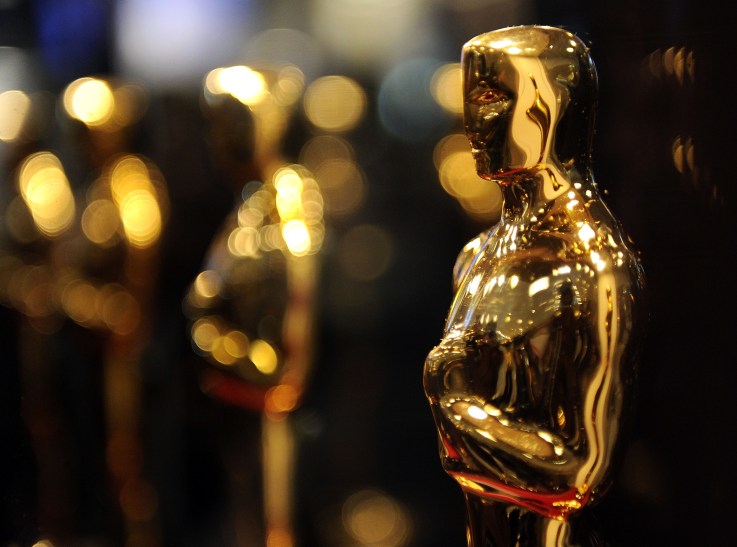
Facebook Watch to live-stream ‘The Oscars: All Access’
Awards season might be coming to a close, but there is still one awards show left, and it’s a big one. The Academy Awards airs Sunday, March 4.

The awards show will air live on ABC, but Facebook users will also have the ability to tune in to “The Oscars: All Access” via Facebook Watch. The Academy’s show page, ABC Television Network’s Facebook page, Oscar.com and ABCNews.com will all carry the stream.

The stream will include red carpet coverage, backstage behind-the-scenes footage, and live ‘look-ins’ to the Oscars broadcast itself. Plus, viewers on Facebook will also be able to ask for a ‘digital autograph’ from one of their favorite stars, whatever that means.

As cord-cutting becomes more prevalent, a handful of firms are competing to own the streaming space, whether it’s Hulu and YouTube with live streaming products or incumbents like ABC, CBS and others creating digital streaming products to air their content. But you can never count out social networks like Facebook and Twitter, which are working their way into live streaming via major events like NFL games and awards shows.

This isn’t Facebook’s first go at an event like this. In January, it aired the Golden Globes red carpet pre-show.

The stream begins on March 4 at 6:30 pm ET.

source:TechCrunch

Seneca Systems raises $3.5 million to help make local governments more efficient
If there’s a pothole on the street outside your home, a fallen tree, a cracked sidewalk or some other issue in your city, you, as a constituent, can contact your local government to send out the appropriate department to handle it. But local government workers are inundated with communications from their constituents, Seneca Systems Co-founder and CEO Nick DeMonner told TechCrunch. Due to the level of civic engagement, their “hair is on fire” — figuratively, of course. Tressa Feher, chief of staff to Chicago’s 46th Ward alderman, said she can relate to the sentiment DeMonner described to me. She told me her office is indeed inundated with emails, tweets and phone calls from constituents.

When she first started working for Aldmeran James Cappleman, Feher said the constituent management software the federal government uses is “very expensive and not really want we needed at the local level,” she told me. “The things we track and the things they track are very different.”

The 46th Ward, for example, deals with things like potholes, trees that need trimming and other types of direct services to people. This is where Seneca Systems comes in. The company, which just closed a $3.5 million seed round led by Initialized Capital, builds products for local governments.

Its first product, Romulus, is designed to help local governments interact with their constituents, no matter what method of communication they use.

Check This Gallery

...
“It’s not particularly sexy. It’s not on the blockchain,” DeMonner said with a chuckle. “But it has really meaningful impact on peoples lives.”

With Romulus, local governments can manage and respond to service requests that come in from every angle — phone, email, text message, social media, etc.

Romulus sells its product on a month-to-month basis to local governments. So far, 24 departments across 16 cities are using Romulus, including local government teams in Chicago, Houston, Los Angeles, Miami and Oakland.

Later this quarter, Seneca Systems plans to launch its mobile app to enable field workers and local officials document issues, and request service fulfillments on the go. Down the road, Seneca Systems plans to offer other products geared toward local governments.

“There is all of this movement around things like smart cities and open data,” DeMonner said. “I don’t want to diminish those efforts, but the truth is, cities are under water for a whole bunch of other reasons and they need the basics before they can even start thinking about what it would be like to be a digitally connected smart city.”

source:TechCrunch

Conservatives outraged by #TwitterLockout

If a follower is a bot, is it really a follower? In a move it says is "without political bias," Twitter purges accounts that couldn't prove they're human.

Call it a purge. A lockout. A censorship campaign. Regardless of the term, conservative and far-right Twitter users are furious about the loss of thousands of followers overnight, with influencers and partisans particularly inflamed by what they perceive to be a targeted attack by the social platform.

Twitter confirmed Wednesday that it's cleaning up the site, saying it was enforcing its rules "without political bias" as part of an ongoing effort to verify that followers are actual humans.

The move isn't the first Twitter has taken against a large number of accounts. In November, for example, Twitter stripped the verification badge from accounts associated with white nationalists, including Richard Spencer, who advocates a separate white homeland, and Jason Kessler, the organizer of the Unite the Right rally in Charlottesville, Virginia. That same month, Federal Communications Commission Chairman Ajit Pai criticized Twitter for having a "double standard" in how it treats conservative users.

"Twitter's tools are apolitical," the company said in an emailed statement. "As part of our ongoing work in safety, we identify suspicious account behaviors that indicate automated activity or violations of our policies around having multiple accounts, or abuse. We also take action on any accounts we find that violate our terms of service, including asking account owners to confirm a phone number so we can confirm a human is behind it. That's why some people may be experiencing suspensions or locks."

Twitter is in a nearly continual battle against persistent Russian-tied activity around nearly every hot-button topic. After the mass shooting in Parkland, Florida, bots last week began flooding Twitter with gun-related hashtags.

But the company isn't the only social network trying to rid itself of fake accounts linked to Russia. Twitter, Facebook and Google told Congress in October they're committed to fighting Russian meddling. Last week, special counsel Robert Mueller indicted 13 Russian nationals for a campaign of false news and disinformation waged on Twitter, Facebook, Instagram and YouTube.

"It's long overdue," Brian Solis, an analyst with the Altimeter Group, said of the move to purge the bots. "Quite honestly, it's still not enough. It's a fraction of what Twitter needs to do."

"The bot problem is one of several problems for Twitter," he added. "It's not promoting civil discourse. It's creating angst and chaos."

While Twitter didn't provide details on the number of accounts affected by the sweep, conservative critics, including Spencer, complained about losing thousands of their followers. They're posting under the hashtag #TwitterLockout.


Follower tallies tell the tale. Using the social-listening tool CrowdTangle, which pulls directly from Twitter's API, we looked at overnight follower activity. And the right isn't wrong -- many popular accounts lost numerous followers.

Conservatives outraged by #TwitterLockout
CrowdTangle

Conservatives outraged by #TwitterLockout
CrowdTangle
That loss doesn't appear to be equally spread across the political spectrum, which may be why Twitter made a point of describing its tools as apolitical -- on the hunt for suspicious accounts. A list of progressive influencers on Twitter lacked the same drastic drop in followers.

Many have since reported that previously locked accounts have been unlocked, follower counts are back on the rise and everything may be going back to normal.

Conservatives outraged by #TwitterLockout
CrowdTangle

source:CNet

Bitcoin for buying juice? Only in Australia

Australian juice company Boost is giving away four bitcoins -- one a week, for four weeks -- to those who buy some juice and enter a code in the Boost app.

Bitcoin for buying juice? Only in Australia
Boost Juice
You thought you had to pay real money for bitcoin? Well you could do that, or you could enter Boost Juice's competition and win a bitcoin instead. If you live in Australia, that is.

The Australian company on Monday announced its latest publicity stuff: it's giving away one bitcoin -- an actual full bitcoin, worth (at time of writing) around $10,500 (AU$13,200), each week for four weeks. All prospective entrants need to do is buy a Boost juice and enter a code in the company's iOS or Android app.

Bitcoin is the world's biggest cryptocurrency, a digital store of value that some hope will replace actual monetary transactions in the future.

Boost Juice is an Australian smoothie and juice chain trying to go global. You can't walk into a shopping mall in Australia without spotting at least three Boost Juice bars. They're actually quite delicious. I recommend Brekkie-to-go.

Boost Juice for the competition is teaming up with Coinjar, an Australian cryptocurrency exchange that allows users to buy and sell bitcoin, ethereum, ripple and litecoin. It's an off-the-wall marketing idea that even Boost's marketing team admits might not fly. "[It] made more sense when we were brainstorming," it wrote in an announcement post, "but it's too late now, we're full steam ahead!"

source:CNet

Commentary: My encounter with a bitcoin ATM four years ago turned $20 into a saga of frustration, forgetfulness and jackpots won and lost.

Thunk. That's the sound of bitcoin investors bopping their foreheads on their keyboards through early 2018 as the price of the cryptocurrency plummets (currently down to a value of around $10,191 from a high near $20,000 last year). I'm a bitcoin investor of sorts, but my forehead is unmarked by QWERTY keys.

This bitcoin ATM machine is where my cryptocurrency story started
This bitcoin ATM machine is where my
cryptocurrency story started.
Amanda Kooser/CNET
In 2014, bitcoin was still the new and rising kid on the block -- a mystery, a temptation, a promise. The idea of a bitcoin ATM where you could exchange cash for pieces of cryptocurrency felt like a fresh and daring idea dancing at the edges of financial regulations. And I was one of the first US users of this newfangled kind of machine.

A tiny bitcoin investment, made in pursuit of a story, kicked off a multi-year saga of forgetfulness, password frustration and the kind of jackpot that would make a hardened slots player shrug and reach for the bandit's arm. This is the tale of my fraction of a bitcoin.

Enchanted Bitcoins, a company that hasn't updated its website since 2014, installed one of the nation's first bitcoin ATMs just a few blocks from my house in Albuquerque, New Mexico. On a bright February afternoon, I strolled into the Imbibe bar in the swanky-funky Nob Hill neighborhood and found Enchanted Bitcoins founder Eric Stromberg manning the ATM amid a haze of cigar smoke.

I fed my $20 in cash into the Lamassu-made kiosk. Lamassu now has 275 working cryptocurrency ATMs worldwide, but Albuquerque was its first in the US.

My paper bill earned me a tiny 0.02747908 fraction of a bitcoin, held in a digital wallet from Blockchain, a software platform that lets you safely store your digital currency. A little too safely, as it turned out for me. That day, my bitcoin bit was worth $17.45 after fees and price fluctuations.

Forgotten, but not gone

I wrote the article. I moved on. I paid little attention to bitcoin. In 2017, the bitcoin currency market soared to insane new heights as news outlets trumpeted headlines like "Bitcoin: How high could the price go?" and "What happens if the bitcoin bubble pops?" And something stirred in the back of my brain. Wait ... didn't I have a bitcoin investment?

How a $20 bitcoin buy led to a multiyear hassle
See more from Blockchain Decoded
I searched my email archives and found the "Welcome To My Wallet" message from Blockchain. I dug up the ATM article. Curious what my $17.45 was worth now, I headed over to Blockchain and tried to log in to check. Wrong password. Tried again. Still wrong.

Blockchain says, "Unfortunately, we're unable to help you re-gain access to your wallet if you've lost or forgotten your password. This is because we don't have access to your wallet or your wallet password." There was an option to use a 12-word security passphrase, but I didn't have that, either.

I first tried to gain re-entry to my wallet in August 2017. I tested every password combination I could think of and nothing worked. About once a month, I went back and typed out more options. In December, I literally threw my hands up in the air and thought to myself, "Well, it's gone. I can't access it."

I didn't break back into my wallet until Jan. 15, during a last-ditch effort when a weird combination of numbers and a favorite fictional character's name finally ushered me back into the bitcoin promised land.

Drumroll please ...

On Jan. 15, my $20 bill from 2014 was worth nearly $400. Nice. I could buy a used guitar, I thought to myself. The next day, it had fallen into the 200s. Suddenly, I was mentally shopping for used guitar pedals instead. On Jan. 18, it was back up over $300.

Now, in mid-February, it's barely over $280. I eye the jagged chart showing bitcoin's price fluctuations over the last couple of months. It looks like a heartbeat monitor going haywire. But there is a distinctive downward pattern.

If I had more than 20 bucks invested in bitcoin, I might be stressed out. But I don't. I've got a pittance of a bitcoin to my name. The question is what I should do from here. I could buy more bitcoin. I could cash out what I've got now and kiss the world of volatile cryptocurrency goodbye.

But I'm going to take what's behind Door No. 3. I'm reaching for the slot machine arm and pulling down. I'm going to let it ride. Maybe in a year my 27.90 millibitcoin will be worth $1,000. Or maybe it will be worth $17.45 or even $0.

I'm going to try my best to forget about it and wait for when (or if) the headlines start chanting about bitcoin's rise again. I've got my Blockchain password backed up now. Maybe one day my $20 bill and a few minutes in the smoldering miasma air of an Albuquerque cigar bar will buy me a nice guitar. I'm willing to wait.

source:CNet

Cryptocurrencies so far haven't lived up to their promise as digital cash for buying goods and services. Whether that happens someday is anyone's guess.

Lior Rachmany, 39, CEO of Dumbo Moving in Brooklyn, said he started taking bitcoin for payment a few months ago. Cryptocurrency transactions now take up about 5 percent of his business
This is part of "Blockchain Decoded," a series looking at the impact of blockchain, bitcoin and cryptocurrency on our lives.

Ever the tech enthusiast, Bert Green decided to start accepting bitcoin at his Chicago storefront in 2013, becoming one of the first art galleries in the US to accept the digital currency as payment.

Things didn't work out as planned.

"It's hardly ever happened," he said, recalling just two sales using the cryptocurrency over the past four years at his gallery, Bert Green Fine Art. "People do not transact in bitcoin."

Bitcoin: Big in investing, but still lousy for buying a sandwichGreen's experience isn't unique. Despite bitcoin and other digital currencies being billed as -- you know -- currencies, they've instead turned into investment vehicles or stores of wealth. That shift appears to have sped up last year, when bitcoin's priceskyrocketed from $1,000 last February to nearly $20,000 by December -- causing cryptocurrency to become a topic at the family dinner table.

This lack of spending with cryptocurrencies could limit their future potential. Bitcoin, ethereum and other digital currencies may remain in the realm of investors and crypto enthusiasts, instead of becoming long-sought universal monies that people use every day and can be spent at any store or website around the world.

Even after bitcoin's price tumbled this year, chances that it could reach that promise are anyone's guess.

"That is the $64,000 question, that is, what's the next narrative for bitcoin?" said Nick Colas, co-founder of the independent research firm DataTrek Research, who's been following cryptocurrencies since 2012. "It's really hard to pin down and that's why the price is so volatile."

The headaches of bitcoin lunch

Things weren't always this way. Back in 2013, bitcoin was being trumpeted as the next, new currency, unfettered by governments, easily movable across borders and anonymous for users.

Looking to take part in this new concept, Kashmir Hill, now a senior reporter in San Francisco for Gizmodo Media Group, spent a week that year living solely on bitcoin, writing about her experience for Forbes. It was a giant pain just finding retailers that would accept the currency.

She did the same experiment a year later and found more retailers accepted the digital tokens, but she bumped up against plenty of other problems. One day, she tried to buy lunch at a local market that accepted bitcoin. Her payment didn't go through so she left starving, she said. The transaction completed about two hours later and she had to go back the next day to get her meal.
Watch this:Cryptojacking: The hot new hacker trick for easy money

In another situation, Hill said she bought a bunch of strangers dinner at a sushi restaurant in 2013 for 10 bitcoin, the equivalent at the time of $200. The price of those bitcoin today would be roughly $93,000.

"I just don't know how I could again spend this currency that could be worth so much more," she added. "I think I would be going crazy while doing it."

Hill's experiment revealed a bunch of annoyances with spending with bitcoin. It's only accepted in a small fraction of retailers, and using it to buy stuff isn't all that simple, often requiring sending funds from one digital wallet to another using an online address called a public key. Plus, cryptocurrency fans don't want to part with their digital tokens for fear they'll miss out on the next big run-up in prices.

One of the best-known examples of missed opportunities with bitcoin came from one of the earliest transactions using the currency. In 2010, when bitcoin was worth a fraction of a penny, Florida software programmer Laszlo Hanyecz agreed to pay someone 10,000 bitcoin for two Papa John's pizzas.

"Those are the two most expensive pizzas in the history of the planet," Colas said. (This week, they'd be worth approximately $93 million -- or $46.5 million per pie.)

With so few people agreeing to part ways with their bitcoin, some retailers have stopped accepting it. For instance, the gaming company Valve in December said it would stop taking the currency on its Steam service, citing its high fees and volatility.

The e-retailer Overstock.com started accepting bitcoin in 2013 and now takes dozens of cryptocurrencies as payment, including Dash, Monero and litecoin. Despite that, the company said roughly 0.25 percent of its revenue comes from purchases using cryptocurrencies.

Julian Plyter, co-founder and CEO of the Manhattan ice-cream sandwich shop Melt, said his business has made just 75 transactions with bitcoin between 2014 and 2017. But, he added, many of those transactions were with journalists curious how bitcoin buying works.

Better on the dark web

Slow bitcoin sales aren't a drag for everyone, though. Lior Rachmany, CEO of Dumbo Moving in Brooklyn, started accepting bitcoin, ethereum and litecoin a few months ago.

While these crypto-sales make up just 5 percent of his business, he likes using digital money because transactions are irreversible, ensuring he'll get paid for a move without fear a customer will charge back the transaction. Plus, past moves have the potential of accruing in value as bitcoin prices rise and some international customers found it easier to use, he said.

He's now planning on selling some of his company's crypto reserves for cash to stock up on equipment ahead of the summer moving season.

"I think that's the way of the future, less politics behind the money," Rachmany said. "And I think everybody should get on it."

These benefits for retailers, of course, can also be seen as disincentives for consumers.
Watch this:What the heck is blockchain?

One area that bitcoin is still regularly used for transactions is the dark web. Thanks to the currency's anonymity, it's found a following for money laundering, murder for hire, drugs and ransomware.

On a daily basis, an estimated 20 percent of overall bitcoin transfers -- roughly $50 million to $60 million -- are for illicit activity, according to Lance Morginn, CEO of Blockchain Intelligence Group, a Vancouver-based company that tracks suspicious bitcoin activity.

That reputation of being tied to illegal activities is another hurdle for bitcoin in reaching the mainstream. Morginn, whose clients include the US Department of Justice, said his company is working to cut down on that problem. In the future, he suggested, the currency may need to become less anonymous to thrive.

Green, the art gallery owner, stocked up on some bitcoin in the early days and now tends to use his reserves the same way as most other crypto fans. At times, he's traded it a bit between different cryptocurrencies and when business is slow he'll sell some to make ends meet. But for the most part he just holds onto it.

"I'm not spending it," he said. "I'm not using it for stuff, because I see a long-term value in holding it."

source:CNet

PicoBrew is back with a scalable beer brewing appliance for homes and businesses.

PicoBrew's modular Z Series appliance lets you design the brewing setup that best meets your needs
PicoBrew, maker of home brewing appliances, on Tuesday introduced a new "professional-grade" model called the Z Series. Inspired by its existing all-grain Zymatic brewer, PicoBrew's Z Series has a modular, stackable design and upgraded materials for use in businesses. The Z Series is available for preorder now and will ship in June.

The Z Series includes four different models, starting at $2,500 (preorder price: $1,499) for the 2.5-gallon Z1 and going up to $8,500 (preorder price: $3,999) for the 10-gallon Z4. PicoBrew's preorder price discounts are available until March 15. It ships outside of the US -- the starting preorder price of $1,499 converts to about £1,080 or AU$1,900.

PicoBrew is targeting restaurants, craft breweries and other businesses with its modular, scalable Z Series. It's also betting serious homebrewers will buy into the Z Series. Its ability to maker larger batches of beer and kombucha gives it an edge over PicoBrew's smaller brewing appliances.

Watch this:One day, two beers, minimal effort. Hands on with the...

source:CNet

At the aptly named Drive A Tank you can jump into the driver's seat of some of the most iconic military hardware of the 20th century. You can even shoot at targets, safe in the knowledge that no-one's going to shoot back.

It's nice when something lives up to its name. The Ferrari Superfast is super fast, the White House is a white house and at Drive A Tank you can actually drive a tank.

Watch this:Tank fans rejoice! You don't have to enlist to drive..

I had never considered going to the great state of Minneapolis and my knowledge of it was limited to lakes, Prince and something about Vikings. But some 70 miles south of the Twin Cities in a small town called Kasota, there turned out to be a place that should have been on my bucket list all along.

The vehicle interiors remind you that they're built for a serious purpose, not for recreation.
Tanks, self-propelled guns and APCs represent some of the most formidable military hardware on the battlefield and have been an imposing presence in combat for over a century. Drive A Tank's hangar contained a selection of the most iconic examples of the breed.

Upon arrival there's a brief history lesson that gives the uninitiated an insight into the history of these incredible machines. It also serves as a warm-up to the day's activities ahead.

I drove a tank without having to enlist
Even with a decommissioned gun, staring down this barrel can be intimidating.
What follows was a day full of experiences in vehicles that span the entire history of tanks. My tentative first go at the driving controls soon progressed to tearing through the landscape and driving using a periscope. Eventually I was sitting in the gunner's seat and tracking down targets for shooting practice. You'll have to watch the full film to see what else happens. But put it this way -- it doesn't end well for a Buick.

source:CNet Roadshow

Professor Robert Kelly went viral when his kids crashed his live interview, and social media wants to see more of them.

He's baaaack! But this time, he remembered to lock the door.

Professor Robert Kelly, aka the "BBC Dad" of viral video fame, appeared on Sky News over the weekend to comment on the North and South Korean Olympic athletes marching into the Opening Ceremonies together Friday night. But Twitter reaction focused less on what Kelly said, and more on what didn't happen.
A tweet Sunday from British editor David Jones pointed out that it's almost impossible to watch Kelly interviews now without concentrating on the door behind him, hoping to see a return visit from his irrepressible family.

Back in March, Kelly gained viral fame when his two kids and his wife gatecrashed a live Skype interview he was conducting with the BBC. First, 4-year-old daughter Marion strutted in, then 8-month-old James followed in his rolling walker, and last, Kelly's wife, Jung-a Kim, desperately yanked the kids back out.

The YouTube video of the moment has been watched by 26 million people, earning Kelly the nickname "BBC Dad." (And yes, Kelly was wearing pants -- many assumed he might not have been, thus giving him a reason to stay seated as things escalated.)


This is far from Kelly's first interview since the family frolic. As a professor at Pusan National University in South Korea, he's an in-demand expert whenever Korea makes the news -- you can watch more of his interviews on his own YouTube channel. But now that the Winter Olympics have begun, Kelly is once again reaching a wider audience. And his fans know what they want.

On Feb. 7, Kelly's original interview was named Best TV Moment at the Broadcast Awards, an event that celebrates the best in British television.

source:CNet

Zombie VR showed me how to cut the cord and walk with the dead

The latest free-roaming VR game by Zero Latency showed me I'll be just fine in the zombie apocalypse. My friends on the other hand...

When the zombie uprising came, I was thankful for two things.
One: I was carrying a big gun. Two: My virtual reality headset didn't have me tethered to a uselessly short cable.

As the tech world gathered at the year's biggest technology show this past January, we were sold a future that was high-tech and seamlessly connected. The main show halls at CES in Las Vegas were filled with VR demos running on ultra-fast 5G networks, high-powered laptops running on mobile phone processors and any number of always-on, always-connected smart robots.

Ready, player one
Ready, player one.
Roger Cheng/CNET
Down the road from the Las Vegas Convention Center, at the MGM Grand Casino, I was rigged up to a different vision of the future: free-roam, multiplayer VR, created by Australian virtual reality company Zero Latency.

That people are willing to pony up $50 (roughly £35 or AU$62) for 30 minutes in this game points to a larger trend in the so-called "location-based entertainment" industry (think theme parks, laser tag, arcades, escape rooms). Entertainment is going high-tech, blending the physical and the digital to create experiences users just can't get at home.

For instance, in my new virtual world, I was running through a 3D hellscape of post-apocalyptic ruins, pwning zombies and fighting for survival. In reality, I was with three nerdy colleagues in the bowels of the MGM Grand, covered in panic sweat and shouting obscenities as we ran around a 2,000-square-foot (185-square-meter) black box room.

This was the future of video games, arcades and amusement thrills all in one. And yes, I won.

Stay away from my precious, precious brains!
Zero Latency

Cutting the cord

The premise of Zero Latency is simple enough: VR, untethered.

Players don a custom VR headset (a modified HDK2.0 headset from OSVR) and a pump-action gun controller, and strap on a backpack fitted with an Alienware Alpha 2 PC. All the action takes place in a no-frills, warehouse-style room, painted black with a white grid on the floor -- what Zero Latency calls its "live-tracking volume."

Players are mapped on Zero Latency's game grid thanks to light-up balls on their headset and gun
Players are mapped on Zero Latency's game
grid thanks to light-up balls on their headset and gun.
Roger Cheng/CNET
But this is VR! Physical surroundings don't matter! With the headset on, you're immediately transported to a 3D world, free to walk around like you're living inside a video game. The grid on the floor and two glowing, ping-pong-sized balls on both your gun and your headset (yes, you're going to look like a high-tech anglerfish) allow the system to track you and your fellow players, who show up as digital avatars in the game, so you don't collide with each other.

We're playing through Zero Latency's brand-new, fast zombie game Outbreak Origins. The game opened in Brisbane on Australia's east coast on Halloween in 2017, but is still in prelaunch stage in Vegas.

You wouldn't know it. The game feels slick and completely immersive. After initial trepidation (I rate myself as a Grade-A n00b when it comes to zombie horror) we're on board. Tentative steps turn into bold breaks for freedom. One of our crew pulls a straight-up Leeroy Jenkins and trips over completely flat ground in the process. Our review: A+++ would pwn again.

According to Zero Latency co-founder and CEO Tim Ruse, the free-roaming aspect of the game is what really sets it apart.

"Most people have experienced virtual reality in a static format like sitting in their chair," he told me on the phone in Australia. "When you couple that with walking around, it's really, really immersive."

This goes far beyond gawking at an overheated phone in a cardboard headset, or even the thrill of more high-tech (but still largely static) experiences like Oculus Riftgames. The HTC Vive lets you walk around, but the space is limited.

Physical movement supercharges the experience. Why else would we see grown adults willing to strap themselves into VR paragliding rigs or weird VR bird-flight simulators to bring a physical element to their digital simulations?

Visions of the future

Attractions like theme parks and arcades have long used technology to lure customers -- Disneyland was sending park visitors through space on its Star Tours motion simulator ride as early as 1987.

Companies like Zero Latency are embracing VR "because it enables them to offer their customers another way to escape from the everyday, which is ultimately what amusement vendors provide us," said Malcolm Burt, virtual reality Ph.D. researcher and self-styled "amusement academic."

Now companies like Bandai Namco are opening VR arcades in Tokyo, Utah-based VR company The Void is jumping in on walk-through VR experiences and in China the gates are about to open on the $1.5-billion Oriental Science Fiction Valley park-- a theme park devoted entirely to VR (and giant robots... natch).

These experiences feel cutting-edge to a person who hasn't tried VR, but they're ultimately just a 21st-century upgrade on the concept that drove '80s arcades: They provide the tech and games that you can't install (or afford) at home.

Down the line, when VR adoption is more widespread and prices come down, we may end up spending more time in our homes, Burt said.

In Outbreak Origins, players use a physical gun in the real world to create the feeling of a first-person shooter in the VR game
In Outbreak Origins, players use a physical gun in the real world to create the feeling of a first-person shooter in the VR game.
Zero Latency

More than a gimmick

Ruse is less sure. Despite the spec'd-out VR kit and the advanced live tracking, Zero Latency isn't just about the tech.

"Some people think, 'The technology's great, therefore that's enough.' It's not enough," he said, touting the blend of tech, social elements, game design and adventure that he says make Zero Latency unique.

After all, can you stand back-to-back with your mates after dashing to escape the zombie hordes or laugh when fellow CNET reporter Alfred Ng trips while trying to escape the undead? There's no doubt the experience of running around a warehouse-style room with up to seven friends is more immersive then flailing around your living room.

Ever since Disneyland started showing 1950s America a futuristic vision of itself through Tomorrowland, the amusement industry has been selling us a vision of tomorrow, today. Throw in a town like Vegas -- a place where you can watch an underwater Cirque du Soleil show and see hip-hop dancers shoot digital fireballs onstage all before your 9 o'clock buffet -- and it makes sense that this is the place where technology meets thrill seeking.

VR is the future of high-tech amusement for the foreseeable future at least.

At the MGM Grand, I vaunt over my final zombie corpse and start to pull off my headset to celebrate with my CNET comrades: a successful mission, and many miles covered. But we're back in that black-painted room, no helicopters or zombie labs in sight as another tentative group gets geared up for a game.

The zombies might have been digital and the rough terrain might have just been a painted grid on the floor, but those 132 headshots were real. And I won't let anyone forget it.

source:CNet

How bitcoin finally made me grow up and get my life together

Commentary: Cryptocurrency may be confusing and volatile, but it launched me into financial adulthood -- at least kind of.

I'm bad with money. I've always been bad with money. Not "two maxed-out credit cards and a $40,000 car loan" bad, but bad enough that at 25 I don't have enough in savings to buy another MacBook if mine goes to computer heaven.

In 2018, however, I'm already being much more responsible with my finances. And it's not because of some flimsy New Year's resolution. It's because of bitcoin.

Cryptocurrency is not, as I first thought, sentient money that will one day enslave humanity. Instead, it's essentially virtual money that runs on transaction-tracking blockchain technology, which has ambitions to decentralize the world's money. No big deal. Most famous is bitcoin, though there's a growing list of altcoins, most easily described as "cryptocurrencies that are not called bitcoin."

Bitcoin to me was just the weird thing people used to buy drugs with on the internet -- until around December. That month followed a recurring pattern: News would break of bitcoin's price reaching new, unlikely heights, and I would say to myself, "Damn, I should have gotten into that, but it's too late now." The price would rise dramatically the next day, and the circle of life spun on.

How bitcoin finally made me grow up and get my life together
Alain Pitton
Getty Images
This cycle hit a peak in mid-December, when the price of a bitcoin, fueled almost entirely by speculation, became more than $19,000. This happened about six years after you could buy one bitcoin for a dollar, and it made many minds, including mine, reel with possibilities. (Even if the truth is that, had I bought 10 bitcoins for $10 in 2011, I wouldn't have had the restraint to hold them until they hit $19,000 apiece. Or even $1,000.)

In the last working week of 2017, after nonstop stories on the rising price of bitcoin, I started to seriously think about putting money into crypto. I, like 60 percent of 18- to 35-year-olds surveyed by Australian bank Westpac, am not saving for a house, so why not invest in magic internet dollars?

The first thing I learned: Someone like me, with no actual assets other than a selfie stick, or any tangible skills to speak of, other than a God-given talent to use that selfie stick, really shouldn't invest in crypto. Or even look at it.

MORE BOOM WITH A VIEW

Most financial experts I consulted -- and by experts I of course mean "articles that resulted from a 'how to bitcoin' Google search" -- said you really don't want to have more than 10 percent of your portfolio in cryptocurrency. Which seems to contradict the "burn it down and don't look back at the explosion" vibe of the whole enterprise.

Your portfolio -- according to the DIY, mostly YouTube crash course I did -- should be made up of reliable, steady-growth mutual or index fund stocks, as well as an emergency fund of three to six months worth of expenses. OK. Slight issue with that one. My portfolio didn't have any of those things. My portfolio didn't exist.

Like I said, I wouldn't call myself dangerously bad with money. But I've saved way too little of the money that appears in my account each month, apparently making me like 80 percent of Americans. So that made an emergency fund hard.

Then there's the issue of reliable assets. Cryptocurrency is arcane, but the stock market was equally mysterious to me. I didn't know what was reliable and what was volatile -- all I knew was stocks can make you a lot of money if you already have a lot of money, and if you play your cards right, Leonardo DiCaprio will play you in a movie.

Bitcoin seems fun, but I was beginning to think it might be better to actually get more responsible rather than try to take a shortcut to financial freedom.

Because, with the exception of those down-since-day-one types who are actually hoping to change the world with blockchain, crypto is looked at as just that: a financial shortcut. Many traditional finance types jeer at it, calling it a speculative bubble (how else does something called DogeCoin become worth $2 billion?). JPMorgan Chase CEO Jamie Dimon, for instance, said he'd fire any trader in his company who invested in it.

But it's made some people obscenely rich, like the co-founder of altcoin Ripple, who briefly became more valuable than Mark Zuckerberg. That's enough to make dopes like me try to Google their way into a few bucks. Luckily though, I got rerouted.

My Christmas break was essentially like a montage from "The Wolf of Wall Street," except instead of quaalude parties with Jonah Hill it was a YouTube party with Warren Buffet, and other folks who had mastered the ever esoteric market.

At the end of that montage, I was a new man. Weekly budgets drawn up in Google Sheets, $500 in an exchange-trust fund with plans to add more each month, starting an emergency fund, consolidating my retirement funds from different jobs and so on.

CRAZY FOR CRYPTOCURRENCY

Nothing crazy, just baby steps -- and I can only hope they actually make a difference long term. But it's a relief to have made some order out of the monthly paycheck-to-paycheck chaos, and ironic that this was brought on by the capricious world of cryptocurrency.

If I follow the conventional wisdom, once this new portfolio of mine hits $5,000 I can put some of that into crypto. But of course, I as a person have not matured, so I'm not following that conventional wisdom. I congratulated my newfound financial responsibility by throwing $500 into crypto.

I'm not worried by the recent market downswing. If all goes according to plan, I'll be writing my next column from a yacht. Made of gold.

source:CNet

MKRdezign

Contact Form

Name

Email *

Message *

Powered by Blogger.
Javascript DisablePlease Enable Javascript To See All Widget