Articles by "Bitcoin"

Bitcoin price drops 10% as hackers exploit Binance’s API keys
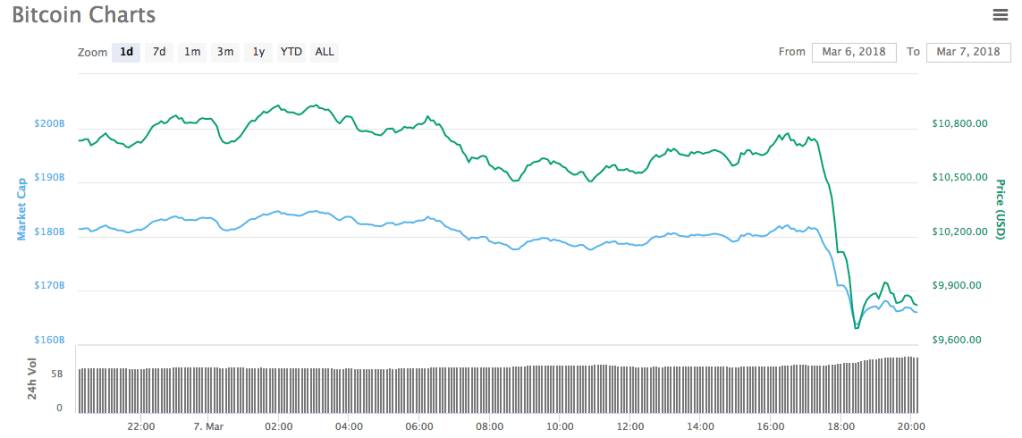
Welcome to another rollercoaster day for the cryptocurrency community. In just a few minutes, bitcoin price crashed from $10,740 to $9,690, which represents a 10.8 percent crash.

As always, it’s a bit hard to know for sure what’s happening. But one company in particular is having a bad day. Cryptocurrency exchange Binance has spotted some unusual activities and halted withdrawals.

Binance is one of the biggest exchanges out there. According to CoinMarketCap, it’s one of the 4 biggest exchanges for the top cryptocurrencies when it comes to traded volume.

Bitcoin price drops 10% as hackers exploit Binance’s API keys
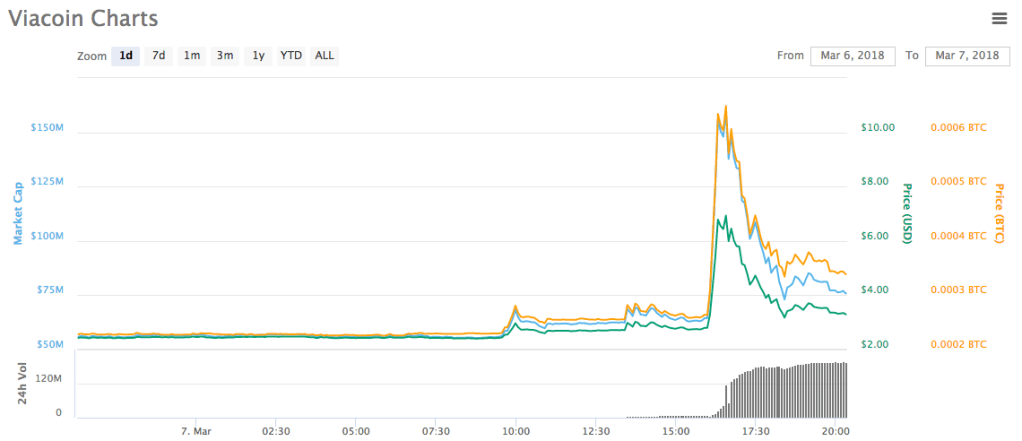
Many people noticed something highly unusual with Viacoin happening right before the crash. There was a huge increase in buy orders for Viacoins on Binance. In just a few minutes, Viacoin’s market capitalization jumped from $64 million to $159 million

Binance looked into it and noticed unauthorized sell orders. “We are investigating reports of some users having issues with their funds. Our team is aware and investigating the issue as we speak,” the company wrote on Reddit. “As of this moment, the only confirmed victims have registered API keys (to use with trading bots or otherwise). There is no evidence of the Binance platform being compromised.”

Bitcoin price drops 10% as hackers exploit Binance’s API keys
So it seems like a third-party service or app got compromised. Users of that third-party app were relying on API keys to control Binance accounts. A hacker may have developed a bot that submits orders at the same time (7:00 AM Pacific).

While the Binance team halted withdrawals, it might be too late. It’s also possible that the hacker already had a big position in Viacoin on another exchange. The hacker could have sold a big pile of Viacoins shortly after manipulating the price on Binance.

In all cases, it proves once again that security is a big issue when it comes to cryptocurrencies. Don’t store your coins on an exchange. Use a hardware wallet or a wallet that lets you control the private keys.

Disclosure: I own small amounts of various cryptocurrencies.

source:TechCrunch

2018 VC investment into crypto startups set to surpass 2017 tally
For months now, much of the media attention on the crypto space has been directed at ebbs and flows in the price of bitcoin on one side, and whiz-bang ICOs on the other.

The price of the most valuable cryptocurrency, Bitcoin (specifically the BTC chain), has backpedaled significantly from highs set in December 2017. The chart below shows pricing data from the CoinDesk Bitcoin Price Index (BPI) over the last 365 days.

2018 VC investment into crypto startups set to surpass 2017 tally
Those dramatic price swings write headlines. And the media, Crunchbase News included, has not been shy in covering bitcoin’s ups and downs.

The hype around ICOs is understandable, as well, given that market’s velocity, eye-popping market capitalizations and titillating if unfortunate stories of theft and subterfuge.

But the comparatively quiet and glacially paced world of traditional venture capital deserves no short shrift from reporters, market analysts and enthusiasts alike. At the time of writing, 2018’s venture fundraising totals alone are more than 40 percent of the way to 2017’s high water mark, according to Crunchbase data.

And it’s been only around two months since the start of the year.

But like all emerging technologies, and most nascent companies working on them, there’s no telling whether these bets will generate significant returns. Like with the very cryptocurrency mining computers hashing away at these blockchains, venture investment in this ecosystem may prove to be a waste of energy and a lot of hot air. But venture investors seem alright with buying equity during the dip.

Here we’ll see how much venture money is being invested, by whom and where these venture-backed crypto companies call home.

(Data) mining for insights into blockchain and blockchain-adjacent companies

To avoid any complaints from so-called maximalist supporters of any one cryptocurrency or blockchain ecosystem, we’re going to base the following analysis on a fairly wide basket of companies.

To learn more about the data set of companies we used for this article, skip to the bottom for notes on methodology. What follows is an analysis of the data that shakes out of our bundle of crypto companies.

Venture dollar volume may eclipse 2017’s highs this year despite ICO hype

Despite all the market hype around ICOs, some of which have raised hundreds of millions of dollars, venture investment in blockchain and related companies has kept pace, as well.

2018 VC investment into crypto startups set to surpass 2017 tally
What’s captured here are just good ol’ fashioned venture rounds — convertible notes, seed and angel rounds, Series As and on through the alphabet — not the Wild West world of ICOs. The chart above excludes rounds labeled as ICOs, even if they had participation from VCs.

The chart makes an important point: Despite price volatility in crypto-land’s most valued blockchain asset, bitcoin (specifically the BTC chain) venture investment — in terms of sheer dollar volume — is on pace to eclipse even the banner year of 2017.

Who is investing in all these rounds?

2017’s funding totals were boosted by a number of sizable venture rounds, including: Coinbase’s $108.1 million Series D, $43.45 million invested in Chinese ASIC chip manufacturer Canaan Creative and a $42.5 million Series B raised by multisignature bitcoin wallet provider BitGo.

2018 is off to a strong start with a $75 million Series B closed by secure hardware wallet-maker Ledger, $18 million invested in the seed round of Russian blockchain-for-cargo-tracking platform QUASA and $10 million invested in SF-based Harbor Platform, among other large rounds.

But which funds are investing in these more recently raised rounds? The chart below shows the most active venture investors from the past 14 months, according to what’s captured by Crunchbase data.

2018 VC investment into crypto startups set to surpass 2017 tally
What’s interesting about the mix above is its diversity. There are plenty of mainstream investors among them, as well as many generalist accelerator programs, like Techstars and Plug and Play. But for every Andreessen Horowitz on the list, there are several more vertical-specific venture firms that have seemingly gone all-in on blockchain technology. These include the likes of Digital Currency Group, Blockchain Capital, Node Capital, Medici Ventures, Digital Finance Group and Polychain Capital, which, again, simply rank at the top of a list of hundreds of other investors.

So we’ve seen how much is being invested, but which countries are leading the way?

Listed headquarters of recently funded companies reveals legal trends

In the chart below, we chart the location of the blockchain companies that raised venture funding in 2017 and 2018 so far.

2018 VC investment into crypto startups set to surpass 2017 tally
Two main features stand out from the chart above: venture fundraising activity in blockchain and blockchain-adjacent companies is highly concentrated in just a handful of countries, with the U.S. leading the way, and a small but growing percentage of companies are choosing to locate themselves in countries with friendly attitudes toward blockchain and cryptocurrency innovation.

The two that stand out here are Singapore and Switzerland, each of which are home to (at least) four percent of the startups that raised venture funding over the last 14 months. Over the course of reporting on other stories, Crunchbase News has learned from investors and entrepreneurs that many Asia-focused blockchain companies and investors in Singapore and Hong Kong are increasingly attractive domiciles for Chinese firms leaving that country in the wake of regulatory crackdown. Japan and Malaysia are also popular locales in Asia for blockchain companies and funds, in part thanks to permissive regulatory environments.

In Europe, Switzerland has been particularly progressive when it comes to clarifying policies around cryptocurrencies and blockchain technology. At CryptoCon in Chicago earlier this month, Brent Traidman, chief revenue officer for Zurich-based mobile wallet-maker Bread, referred to the country as “crypto valley.” Switzerland’s financial authority issued specific guidance to companies looking to raise capital in ICOs last week.

As long as the regulatory environment for cryptocurrencies and other blockchain assets remains somewhat cryptic in the U.S., American crypto-entrepreneurs may opt to leave the country for clearer legal frameworks abroad.

Notes on methodology

Here’s how we found the data we worked with.

We first created a list of companies in Crunchbase’s bitcoin, ethereum, blockchain, cryptocurrency and virtual currency categories. Then we took the list of companies in Crunchbase’s data that have raised capital via an initial coin offering (a funding method better known by its initialism ICO). Finally, we created another list of companies that use those keywords, in addition to “digital currency” and “utility token” in their company descriptions.

We then combined and de-duplicated the list to produce a data set of just over 2,900 blockchain and blockchain-adjacent organizations that we’ll use in our analysis. And, at least for the purposes of this article, we’re going to refer to these companies using some variation of that inelegant if quite inclusive phrasing: “blockchain and blockchain-adjacent.”

source:TechCrunch

A Japanese cryptocurrency exchange has claimed it lost more than $400 million in tokens following an alleged hack on its service.

Japanese exchange says hackers stole over $400M in cryptocurrency
Coincheck said Friday that some 500 million tokens of NEM, worth around $400 million at the time of writing, according to comments at a press event attended by Bloomberg. NEM, the tenth largest cryptocurrency based on total coin market cap, is a distributed ledger platform primarily aimed at enabling payments and other financial services.

The apparent heist is larger than the Mt. Gox hack in 2014 — in U.S. dollar value — but its impact is unlikely to be as significant given the sheer number of cryptocurrencies in the market today and the increased value of bitcoin.

Nonetheless, the incident is yet another reminder of the risk of leaving tokens inside an exchange rather than a more secure option such as a personal wallet or hardware-based option. It’s the latest in a string of recent incidents. Back in November, Tether said it lost $31 million due to an attack while EtherDelta suspended its exchange service for a period in December after it was compromised.

Coincheck said it isn’t aware of how its service was compromised. It is said to be considering compensating users who were affected. Japan is the first country to license crypto exchanges, with its first 11 licenses handed out in September. Coincheck had applied for a license but it is currently waiting for a decision. That makes the situation somewhat unclear, although Bloomberg reported that an official said its operations fall under the supervision of the agency.

NEM Foundation President Lon Wong said his organization is doing “everything we can to help.”

Speculation bubbled up on Friday when the exchange halted the sale, purchase and withdrawal of NEM tokens from its exchange. Coincheck later confirmed the losses and held a press conference to provide more details.
The price of NEM dipped from a high of $1.01 on Friday to reach $0.83 at the time of writing, according to Coinmarketcap.com.

Editor’s note: The author owns a small amount of cryptocurrency. Enough to gain an understanding, not enough to change a life.

source:TechCrunch

Robinhood adds zero-fee cryptocurrency trading and tracking
No-commission stock trading app Robinhood will let you buy and sell Bitcoin and Ethereum without any added transaction fees starting in February, compared to Coinbase’s 1.5 to 4 percent fees in the US. And as of today Robinhood will let all users track the price, news, and set up alerts on those and 14 other top crypto coins, including Litecoin and Ripple.

“We’re planning to operate this business on a break-even basis and we don’t plan to profit from it for the foreseeable future” says Robinhood co-founder Vlad Tenev. “The value of Robinhood Crypto is in growing our customer base and better serving our existing customers.”

By essentially using crypto trading as a loss leader instead of its primary business like Coinbase and other apps, Robinhood could substantially expand beyond the 3 million users it already has. Simplifying trading and tracking could bolster Bitcoin and Ethereum. And by combining it with traditional stock, ETF, and option trading in a single app, Robinhood could further legitimize the cryptocurrency craze. The two trading worlds could cross-pollinate, dragging even more people into the crypto scene.

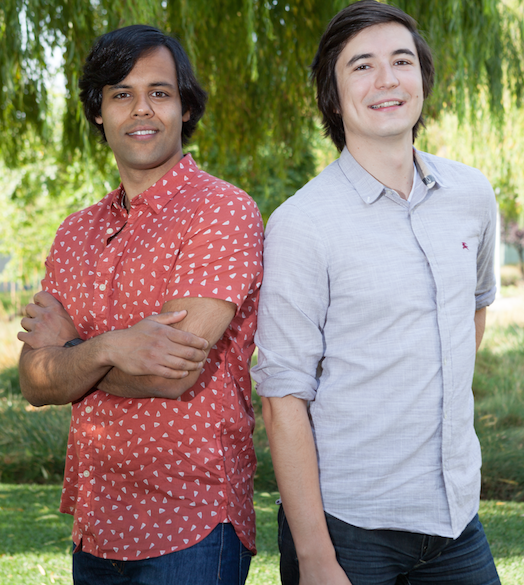
Robinhood founders Baiju Bhatt (left) and   Vladamir Tenev (right)
Robinhood founders Baiju Bhatt (left)
Vladamir Tenev (right)
Many of the startups dealing in crypto are upstarts with questionable track records. But five-year-old Robinhood has raised $176 million from top investors including Andreessen Horowitz, Index, and NEA that now value the company at $1.3 billion. There’s clear long-term benefit to rolling up crypto traders and using the feature as a wedge to get them to hold money with Robinhood where it earns interest, and pay for the Robinhood Gold premium tier for $6 to $200 a month that lets them borrow between $1,000 and $50,000.

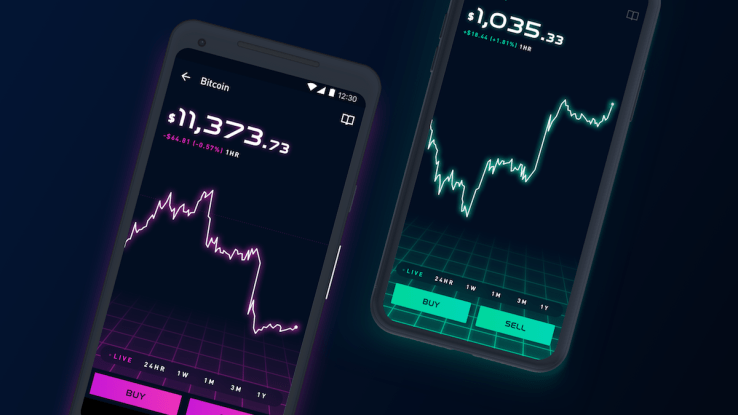
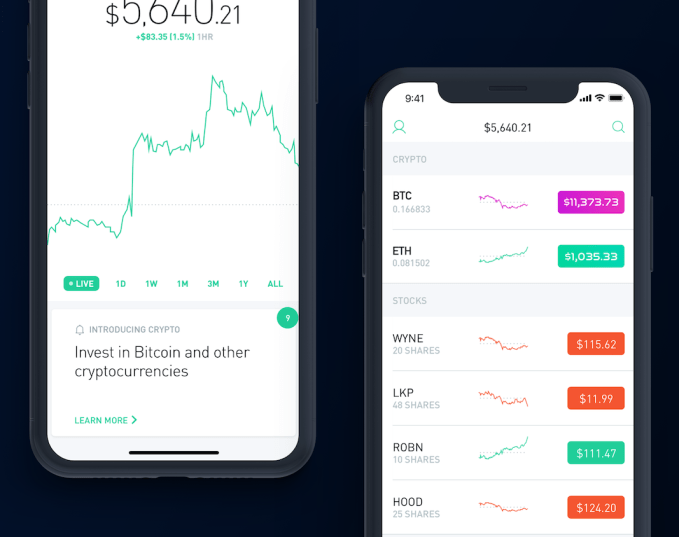
Here’s how Robinhood Crypto works. You can instantly transfer up to $1000 from your connected bank account (more if you have a Gold membership), with additional funds coming over slower ACH transfer. For smaller traders, that could eliminate the annoying delays on other platforms that can make you miss a low price you want to buy up. The whole Crypto section of Robinhood is styled with an 80s Tron design to denote the 24-hour trading window, compared to its day and night themes for when traditional stock markets are open or closed.

When you place a buy or sell order, Robinhood gives you an estimated price, connects to a slew of trading venues, exchanges, and market centers to find the lowest price, and uses its economies of scale to improve to score better prices over time. To counter market volatility, Robinhood puts a “collar” around your trade so if it can’t execute it at close to the estimated price, it waits for the price to return or lets you know.

And in case the price of a coin skyrockets or plummets, you can place limit orders to set a price where you automatically buy or sell. The full list of coins you can track is Bitcoin, Ethereum, Bitcoin Cash, Litecoin, Ripple, Ethereum Classic, Zcash, Monero, Dash, Stellar, Qtum, Bitcoin Gold, OmiseGo, NEO, Lisk, and Dogecoin.

Only BTC and ETH will be available for trading when that rolls out to waves of users starting in California, Massachusetts, Missouri, Montana, and New Hampshire in February, though more will be added. “We’re extremely selective about the cryptos we’re making available on the platform” says Tenev. “We’re introducing those first because these are the most mature coins that people are trading these days. Multiple times people have declared them dead and they’ve come back stronger than ever.”

Robinhood adds zero-fee cryptocurrency trading and tracking

To back-up the new Robinhood Crypto feature, the company is adding new two-factor authentication options including integrations with authenticator apps to ensure people don’t get their wallets stolen and dumped. “There are several senior world-class people that we’ve hired recently that are building the system in-house” says Tenev. Still, the move paints a giant target on Robinhood’s back. If the company gets hacked, or individual users get robbed, it could tarnish the fintech startup’s reputation.

Demand for the product was clear, though. 100,000 of Robinhood’s users were regularly seaching for crypto pricing and trading in its app, and 95% of those surveyed said they’d invest in cryptos if the product supported it. Robinhood even had to send a cease-and-desist to “Cobinhood”, a competing crypto trading app that cribbed its name and raised $10 million in an ICO.

Judging by the choices of two top startups, you could see this week as a sign of cryptocurrency’s shifting purpose. Yesterday Stripe removed Bitcoin as a payment option on its platform, and now Robinhood is adopting trading. “People are thinking about cryptos less from a payments standpoint and more from an assets investment standpoint” Tenev explains.

Robinhood Crypto features a Tron-style 80s design motif
Robinhood Crypto features a Tron-style 80s design motif 
As for whether he’s personally invested in the crypto scene, Tenev admits “I’m a dabbler, definitely, but I wouldn’t say that it’s all that significant.” But it’s a good fit for his business, which used a lean engineering team to drop stock trading fees to zero while competitors like Scottrade and E*trade can charge over $6 per trade to cover their marketing and expansive retail footprint with huge overhead. Now Robinhood has handled $100 billion in transactions, saving its users over $1 billion in fees.

“[Cryptocurrency] puts power that’s historically been held by financial institutions in the hands of the people. I think that lines up directly with Robinhood’s mission to democratize the financial system” Tenev tells me, concluding “We’re an established company and we can handle it”. The confidence to burst into the wild west of crypto could either tank his startup with a massive security fail or greatly boost its traction by alligning with what’s become a cultural phenomenon.

Source:TechCrunch

How bitcoin finally made me grow up and get my life together

Commentary: Cryptocurrency may be confusing and volatile, but it launched me into financial adulthood -- at least kind of.

I'm bad with money. I've always been bad with money. Not "two maxed-out credit cards and a $40,000 car loan" bad, but bad enough that at 25 I don't have enough in savings to buy another MacBook if mine goes to computer heaven.

In 2018, however, I'm already being much more responsible with my finances. And it's not because of some flimsy New Year's resolution. It's because of bitcoin.

Cryptocurrency is not, as I first thought, sentient money that will one day enslave humanity. Instead, it's essentially virtual money that runs on transaction-tracking blockchain technology, which has ambitions to decentralize the world's money. No big deal. Most famous is bitcoin, though there's a growing list of altcoins, most easily described as "cryptocurrencies that are not called bitcoin."

Bitcoin to me was just the weird thing people used to buy drugs with on the internet -- until around December. That month followed a recurring pattern: News would break of bitcoin's price reaching new, unlikely heights, and I would say to myself, "Damn, I should have gotten into that, but it's too late now." The price would rise dramatically the next day, and the circle of life spun on.

How bitcoin finally made me grow up and get my life together
Alain Pitton
Getty Images
This cycle hit a peak in mid-December, when the price of a bitcoin, fueled almost entirely by speculation, became more than $19,000. This happened about six years after you could buy one bitcoin for a dollar, and it made many minds, including mine, reel with possibilities. (Even if the truth is that, had I bought 10 bitcoins for $10 in 2011, I wouldn't have had the restraint to hold them until they hit $19,000 apiece. Or even $1,000.)

In the last working week of 2017, after nonstop stories on the rising price of bitcoin, I started to seriously think about putting money into crypto. I, like 60 percent of 18- to 35-year-olds surveyed by Australian bank Westpac, am not saving for a house, so why not invest in magic internet dollars?

The first thing I learned: Someone like me, with no actual assets other than a selfie stick, or any tangible skills to speak of, other than a God-given talent to use that selfie stick, really shouldn't invest in crypto. Or even look at it.

MORE BOOM WITH A VIEW

Most financial experts I consulted -- and by experts I of course mean "articles that resulted from a 'how to bitcoin' Google search" -- said you really don't want to have more than 10 percent of your portfolio in cryptocurrency. Which seems to contradict the "burn it down and don't look back at the explosion" vibe of the whole enterprise.

Your portfolio -- according to the DIY, mostly YouTube crash course I did -- should be made up of reliable, steady-growth mutual or index fund stocks, as well as an emergency fund of three to six months worth of expenses. OK. Slight issue with that one. My portfolio didn't have any of those things. My portfolio didn't exist.

Like I said, I wouldn't call myself dangerously bad with money. But I've saved way too little of the money that appears in my account each month, apparently making me like 80 percent of Americans. So that made an emergency fund hard.

Then there's the issue of reliable assets. Cryptocurrency is arcane, but the stock market was equally mysterious to me. I didn't know what was reliable and what was volatile -- all I knew was stocks can make you a lot of money if you already have a lot of money, and if you play your cards right, Leonardo DiCaprio will play you in a movie.

Bitcoin seems fun, but I was beginning to think it might be better to actually get more responsible rather than try to take a shortcut to financial freedom.

Because, with the exception of those down-since-day-one types who are actually hoping to change the world with blockchain, crypto is looked at as just that: a financial shortcut. Many traditional finance types jeer at it, calling it a speculative bubble (how else does something called DogeCoin become worth $2 billion?). JPMorgan Chase CEO Jamie Dimon, for instance, said he'd fire any trader in his company who invested in it.

But it's made some people obscenely rich, like the co-founder of altcoin Ripple, who briefly became more valuable than Mark Zuckerberg. That's enough to make dopes like me try to Google their way into a few bucks. Luckily though, I got rerouted.

My Christmas break was essentially like a montage from "The Wolf of Wall Street," except instead of quaalude parties with Jonah Hill it was a YouTube party with Warren Buffet, and other folks who had mastered the ever esoteric market.

At the end of that montage, I was a new man. Weekly budgets drawn up in Google Sheets, $500 in an exchange-trust fund with plans to add more each month, starting an emergency fund, consolidating my retirement funds from different jobs and so on.

CRAZY FOR CRYPTOCURRENCY

Nothing crazy, just baby steps -- and I can only hope they actually make a difference long term. But it's a relief to have made some order out of the monthly paycheck-to-paycheck chaos, and ironic that this was brought on by the capricious world of cryptocurrency.

If I follow the conventional wisdom, once this new portfolio of mine hits $5,000 I can put some of that into crypto. But of course, I as a person have not matured, so I'm not following that conventional wisdom. I congratulated my newfound financial responsibility by throwing $500 into crypto.

I'm not worried by the recent market downswing. If all goes according to plan, I'll be writing my next column from a yacht. Made of gold.

source:CNet

Mt.Gox Implodes
Mt.Gox, one of the first Bitcoin exchanges, is down after an apparent long-term operation bled the company of 744,408 BTC – about $350 million at today’s rate – over a period of years. Bitcoin is trading at about $500 today and Mt.Gox transactions have halted.

The shutdown comes after a supposedly leaked document, below, described the company’s issues in detail. While the legitimacy of the document is still in question, the proposed action items, including a rebranding of the site to gox.com and a joint statement released by the BTC communityhave all happened.

The joint statement, released by the proprietors of popular exchanges Coinbase, Kraken, BitStamp, Circle, and BTC China, notes that Mt.Gox is an outlier in the BTC trading world and that their failures should not reflect on the currency. They write:

In order to re-establish the trust squandered by the failings of Mt. Gox, responsible bitcoin exchanges are working together and are committed to the future of bitcoin and the security of all customer funds. As part of the effort to re-assure customers, the following services will be coordinating efforts over the coming days to publicly reassure customers and the general public that all funds continue to be held in a safe and secure manner: Coinbase, Kraken, BitStamp, Circle, and BTC China.We strongly believe in transparent, thoughtful, and comprehensive consumer protection measures. We pledge to lead the way.
What’s next for Mt.Gox? According to the document, the company will fire CEO Mark Karpelès and completely rebrand. “Moving to a new country (Singapore?) could be helpful,” the author writes.


source: TechCrunch

MKRdezign

Contact Form

Name

Email *

Message *

Powered by Blogger.
Javascript DisablePlease Enable Javascript To See All Widget