Articles by "Enterprise"

There’s a shakeup on Qualcomm’s board amid Broadcom’s hostile takeover attempts
Things have not been so rosy for Qualcomm over the past few months, whether you are looking at an ongoing legal dispute between the chipmaker and Apple or Broadcom’s aggressive attempts to acquire the company.

Now, Qualcomm is saying its executive chairman, Dr. Paul E. Jacobs, will no longer serve as executive chairman for the company’s board of directors. He’s going to remain a director, but with all that’s happened related to its dispute with Apple, its attempts to wave off Broadcom, and also its efforts to get through its acquisition of NXP as quickly as possible, it would make sense for at least some move for the chairman to show shareholders that they are aware of the issues and are looking to change things up.

The company said it is discontinuing the role of executive chairman, and also naming a new independent director Jeffrey Henderson who will serve as the non-executive chairman. It’s a lot of weird semantics here, but the end result is that the board is bringing on someone independent as a kind of signal to shareholders that they are ready to make some changes in light of the issues the company has dealt with and Broadcom’s tender offer to buy it.

You might recall some of this happening recently with Uber, where pending the massive investment with Softbank, the company assembled what my colleague referred to as a “Frankenboard.” As Uber CEO Travis Kalanick was on his way out and the company was trying to get fresh funding from Softbank, the board got a lot of new independent directors as it tried to establish some sense appeasement its existing shareholders.

Qualcomm delayed its annual shareholder meeting, which was set to take place Tuesday this week where investors would meet and Broadcom would be making an aggressive stand to work around the company’s existing management in order to acquire it. Throughout the weeks leading up to it, the companies have basically been duking it out of PR statements on their investor relations pages (though this is what we see on the outside), and may now see the need to find some way to appeal directly to the company’s shareholders ahead of the meeting now scheduled to take place in around a month. Qualcomm delayed the meeting pending a regulatory review by the CFIUS, but it still has been part of an ongoing saga.

source:TechCrunch

Despite Uber debacle, HackerOne’s CEO argues why every company should work with hackers
In November, Uber disclosed that a year earlier, in 2016, hackers had stolen 57 million driver and rider accounts and that it paid them a $100,000 ransom to delete the information. The breach was reportedly part of Uber’s bug bounty program, wherein it pays hackers to test its software for vulnerabilities. But the amount was exorbitant by typical standards, and the episode has fueled criticism over the bug bounty practice, which is seen by some as funding criminal activity.

At an industry event in San Francisco this week, Marten Mickos, the CEO of HackerOne — which runs Uber’s bug bounty program — answered questions about Uber’s hacking, which is now the subject of at least four lawsuits. His interviewer, cybersecurity reporter Kate Conger, also pressed him on the definition of a good versus bad hacker — and whether there’s much of a difference.

Excerpts from their sit-down follow, edited for length.

KC: For those who don’t know, what does HackerOne do?

MM: The simple truth today is that every single system will get hacked. And the only question is, who do you want to get hacked by? People you trust or criminals? If you choose the former, you swallow that pill, you come to us. We have 160,000 ethical hackers in our network who will hack you within 24 hours. They’ll tell you how they broke in and you’ll pay them a lot of money, but it’s much, much less than if you swallow the other pill.

KC: You were in the news recently and maybe not for the most positive reasons: You administered Uber’s bug bounty program and it got wrist-slapped for [losing the data] of 57 million people and paying out $100,000 to the hacker to keep him quiet. Do you think that behavior muddies the water between ethical hackers and bug bounty programs and bribery?

MM: I’m not here to comment on any particular case. I can note, however, that it hasn’t been shown than 57 million records have been lost forever. They might have been lost for a short time only, but we’ll leave that to others to figure out. But it’s clear that in the world of hacking, if there is intrusion and data exfiltration or extortion, it has nothing to do with ethical hacking or bug bounty programs.

The line there is very clear. We’re very fortunate to run Uber’s bug bounty program and many other really large programs [including for the U.S.] Air Force, Army, and Pentagon. So sure, with technology always, it’s the same technology used for good and bad purposes, and technology itself doesn’t have an opinion about what it’s being used for.

KC: So is that the ethical line between a good and bad hacker — data exfiltration? You can break in as long as you don’t take anything?

MM: The difference between the hacker and the criminal is intent. If you’re an ethical hacker and you’re looking for vulnerabilities in order to report them, you must break in. If you have a neighborhood watch and you ask your neighbors to see if they can break into your house, they have to break in to show you that they can do it. Once inside the house, they shouldn’t take anything, though.

The same idea applies [with bounty programs]. [Hackers] have to show that it’s possible to break in. That’s where you get to the question of authorized versus unauthorized conduct, and then again, it’s the owner of the house who decides which is which. When you break into the house, how much do you need to do? Do you need to bring something outside to show it was possible or not? And that’s an individual decision for every customer of ours, who determines what they need as proof. The more proof you need, the deeper the hackers need to go to find it.

KC: In the security industry in particular, a lot of things that are considered best practices seem from the outside sketchy, for lack of a better word. When we were talking earlier about the Uber situation [before the event], you said you felt like Uber averted a lot of risk. Can you talk about what you meant by that?

MM: When you say things look sketchy, things look sketchy when we are fearful, and we are fearful when we have too little information. Once you understand something, it doesn’t look sketchy anymore.

We represent a new model that hasn’t been done, so many people on first blush think that it’s dangerous when it’s actually the opposite. There’s an exact analogy to immunization and vaccines and how they work. The ethical hacking and bug bounty work is the immune system of the internet, so you have to create some of the bad stuff in order to create the defense.

It’s similar here. So when you actually do a bug bounty program, you can have situations where it can escalate or de-escalate. Some of these hackers are no older than 15 . . . [and] there is excitement in the moment. These are hunters; they are hunting for a trophy. And when they find it, they get very excited. And they may in the excitement say something, do something, or ask for something that the other side finds problematic. If you then have the ability to de-escalate the situation, everybody will be happy and step by step, everybody will learn the proper conduct. There are many situations where properly managed bug bounty programs will diffuse situations that otherwise could have gotten out of hand.

KC: You recently testified before the Senate. What was that like?

MM: It was fantastic actually. I’ve never done it before, and I’m not even from this country, so it had special meaning for me.

The Senate asked us to testify for them two weeks ago to tell them what bug bounty and vulnerability disclosure programs are. So at the highest level of legislation in this country now, they have an understanding of the importance of hackers, [and know] we need them. We need hackers more than anything else.

But seeing the senators and their staff, the people working there [who are] seemingly underpaid and overworked are so sharp. I sent them one evening probably 20 URLs [along with] all our white papers and studies and literature — everything — and by the morning they’d read it and they had very good questions. And in the hearing, every senator who spoke up said they believed in ethical hacking. They think bug bounty programs are a vital part of security in today’s society.

KC: One of the cool things about the last year, between Russian and hacking, is people finally care about hacking.

Some [of the hackers we work with] are teenage boys and girls today, and they’ll write us and say their life has changed. They bought an apartment for their mother, or they bought a motorbike for themselves. They show up on social media in their HackerOne hoodies. That’s their identity. It’s shaping them into respectable, contributing citizens who take responsibility for the world. It’s amazing to see how these young people stand up when we adults have been screwing up this world.

KC: You’ve told me you try to be frugal. When you’re raising all this money (roughly $75 million to date), where does frugality enter the picture?

MM: Not when you are raising money. No, no. When you are raising money, you talk about the biggest numbers you’ve heard anybody utter. [Laughs.]

You have to remember when you build a company to never believe your own PR and never to believe that you have to spend the money you get from VCs. You can raise a lot of money, but you don’t have to spend it — even when they say you should, which has happened in my career, in a company that went bankrupt.

VCs don’t take as much responsibility for their dollars as they take for their time. So as a CEO, you have to treat it as your own money and spend it wisely.

The world says it’s so inexpensive today to do a startup today and to use open source software and to run your business in the cloud, and of course you can. Yet you end up paying for all kinds of additional services. We are paying for 150 different software or SaaS packages right now. So you have to watch out who has an account and who can use it for what. You can easily spend all your money without noticing so you want to be careful — unless you are one of our competitors, in which case, do spend your money. If you run out of cash, that’s fine with me.

source:TechCrunch

ScopeAI helps companies analyze their customer feedback
If you’re running a company with a lot of customers, it can take time to sort through all that feedback. A startup called ScopeAI is working to make that process a lot easier.

The startup is announcing that it’s raised an undisclosed amount of seed funding from Y Combinator (where it was part of the winter batch last year), Menlo Ventures, Social Capital and Salesforce Ventures, as well as from angel investors like YC CEO Michael Seibel, Lee Linden and Ray Bradford.

Co-founder and CEO Natalie Abeysena previously worked as a user experience researcher for Google. She said that when companies grow to the point that they’re receiving hundreds or thousands of customer support messages, they “struggle with doing this manually.”

In other words, they usually have to go through and categorize all the different messages, creating reports every couple of weeks or every month.

With ScopeAI, on the other hand, everything gets tagged automatically, making it easy to track different trends. For example, it can tell you whether a certain percentage of your customers are canceling their subscriptions because they don’t have enough time to use your product, or if they’re asking for a refund because of late delivery. And it’s easy to see how that’s changing over time.

ScopeAI helps companies analyze their customer feedback
Abeysena said ScopeAI can recognize the different phrases and wording that customers might use to describe their complaints or requests, and it will still categorize them correctly. The product can also track customized tags, and it performs sentiment analysis.

Although Abeysena is only starting to talk about ScopeAI publicly, the company has already signed up customers including Codecademy, Peloton and Breather.

Over time, ScopeAI could build more integrations that allow businesses to overlay their customer support data with data from other platforms like Salesforce.

“What’s really exciting about what we’re working on preliminarily is taking these insights and translating them into actions that the company can take,” Abeysena said. “How can you map that to business metrics?”

source:TechCrunch

Box shares fall over 20% on slowed growth
Cloud storage provider Box started out the day Thursday down over 20% on the stock market. Shares traded as low as $19.11 in early hours of trading, down from a previous close of $24.07.

The company reported quarterly earnings after the bell on Wednesday, and while its losses of six cents per share surpassed analyst expectations of negative eight cents, investors were concerned about the outlook.

Revenue was $136.7 million, in line with analyst estimates, but Box said it projected revenue for the next quarter to be $139 million to $140 million, disappointing Wall Street which was looking at $144.3 million. Its full year is expected to be between $602 million and $608 million, beneath the $625.6 million that analysts forecast.

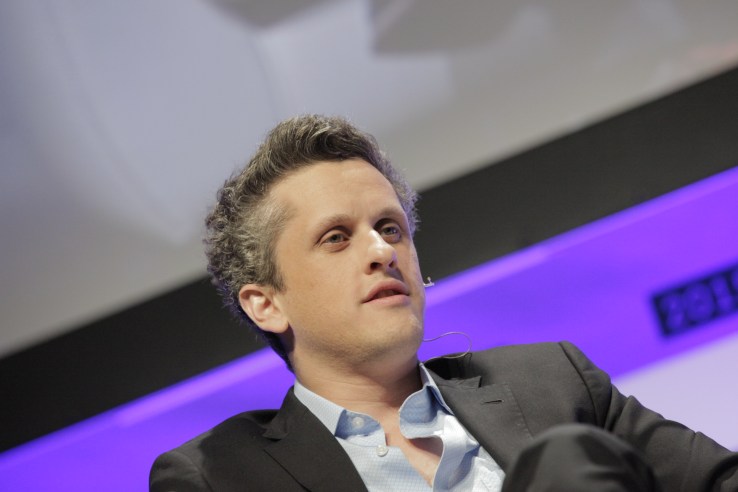
In a conversation with TechCrunch, CEO Aaron Levie said that the slower growth was partly attributable to an accounting change. He called the guidance “conservative,” but acknowledged that “at scale obviously there’s a natural slowdown that you experience.”

He also spoke of competitor Dropbox’s upcoming IPO, highlighting the differences between the two companies. He said that while the company has “really strong financials,” the two are competing in “fundamentally different markets,” emphasizing that Box has a greater focus on large enterprises.

Box says it has clients at 69% of the Fortune 500 companies.

Levie says he believes the company can get to “a billion in revenue and beyond.”

source:TechCrunch

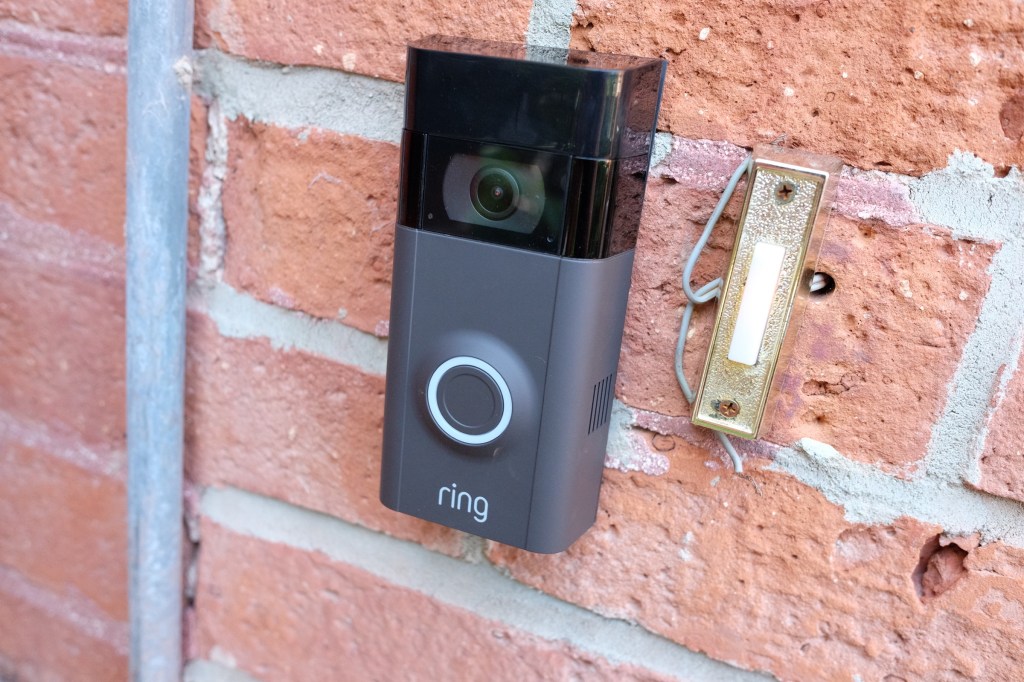
Amazon is buying smart doorbell maker Ring
With Nest’s first smart video doorbell right around the corner, Amazon is busy buying up the competition.

After acquiring Blink just two months ago, Amazon is now acquiring Ring, makers of the self-titled Ring doorbell (plus a bunch of other security gear, like solar security cameras, floodlight cams, and an in-home alarm system).

Geekwire broke the rumor this afternoon, and we’ve just received independent confirmation.

Details on the deal are still pretty light; the financial terms of the deal, for example, haven’t trickled out just yet. Update: Reuters is reporting, via tweet, that the sale price was over $1 billion. The company had raised around $209 million to date, according to Crunchbase.

This acquisition makes plenty of sense. Amazon has already built a few connected cameras of its own — but hardware is, as they say, hard, and that’s not going to change. With nearly a dozen solid products to its name, the Ring team has proven themselves more than capable of building hardware (and I’m sure its array of patents doesn’t hurt either.) With Amazon, Google, Apple et al. all duking it out for physical space in and around your home, someone was going to make a big offer — and I’d be surprised if Amazon was the only bidder in the mix. Plus, who on earth is responsible for more doorbell presses than Amazon?

(Fun bit of trivia: Ring debuted to the world on Shark Tank back in 2013, then known as “DoorBot”. They wanted $700k for 10% of the company, but no one took the deal.)

source:TechCrunch

The FTC settles with Venmo over a series of privacy and security violations
The FTC announced today it has settled with PayPal over a complaint about the company’s handling of privacy disclosures in its peer-to-peer payments app Venmo, its lack of disclosure over the speed with which customers could access funds, as well as other issues related to the security and privacy of customer transactions.

News that the Federal Trade Commission was looking into Venmo’s business were disclosed back in spring 2016, when PayPal revealed through an SEC filing that it was under investigation. A week later, a settlement document between Venmo and the Attorney General of Texas, revealed more details about the government agency’s concerns.

The document described a variety of privacy issues, including an auto-friending feature that pulled in contacts from users’ phones and a setting that made all transactions public by default. It also said that Venmo should not inform users it offered “bank-grade security,” unless that claim was true.

According to a statement from the FTC, the issue with the speed of transfers had a direct impact on consumers, and caused financial hardships, in some cases. Venmo didn’t properly disclose to customers that their transactions could be subject to review, which could lead to funds being frozen or removed, the FTC explained.

While Venmo allows customers to transfer funds from the app to their bank account, they can undergo reviews that may cause delays. Customers complained that when funds were delayed, money they were counting on wasn’t available, leading them to be unable to pay bills or rent. At other times, people selling items – like concert tickets – delivered them to the buyer, then had the payments held or removed by Venmo, which led to a financial loss, the FTC said.

“Consumers suffered real harm when Venmo did not live up to the promises it made to users about the availability of their money,” said Acting FTC Chairman Maureen K. Ohlhausen. “The payment service also misled consumers about how to keep their transaction information private. This case sends a strong message that financial institutions like Venmo need to focus on privacy and security from day one.”

In addition, the FTC said that Venmo’s statements about its security, including the “bank-grade security” it claimed to offer, were misleading. Until August 2014, Venmo didn’t have a written information security program, the FTC noted, and until March 2015, it didn’t inform users when their password or email had been changed or when a new device was added. This led to unauthorized users being able to withdraw funds before consumers noticed their account had been accessed. In addition, the FTC said that Venmo didn’t offer “adequate customer support” to respond to these complaints.

The FTC also said Venmo misled customers about its privacy settings around transactions published to its news feed. In the app, transactions can be set to public, private, or friends-only, but customers weren’t properly informed how this worked.

The FTC settles with Venmo over a series of privacy and security violations
Venmo was also found to violate the Gramm-Leach-Bliley Act’s Safeguards Rule, which requires financial institutions to have safeguards that protect the “security, confidentiality, and integrity of customer information,” and Privacy Rule, which requires the delivery of privacy notices to customers.

The proposed settlement addresses all the above, and forbids Venmo from further misrepresenting its service. It also requires the company to make disclosures to consumers in some cases. The FTC is giving Venmo 150 days to come into compliance.

For example, Venmo will now have to explain to consumers – including both new and existing users – how to limit the visibility of their transactions through privacy settings right in the app itself. It must also disclose that funds could be subject to review, and that means they could be frozen or held.

In addition to various disclosures to consumers about its privacy and security practices, the FTC says Venmo will now have to have third-party assessments of its compliance with the Privacy Rule and Safeguards Rule every other year, for the next 10 years.

The consent order released today does not have a fine attached to it, as the FTC doesn’t have the authority to obtain civil penalties for initial violations of the FTC Act or under Gramm-Leach-Bliley Act. But when it’s finalized, each subsequent violation could include a penalty of up to $41,484, the FTC noted in its announcement.

However, the settlement is not without financial impact to PayPal. The company will have to spend money now to hire outside auditors to monitor its privacy program going forward at a time when it’s seeing increased competition from tech giants like Apple and Google, with Apple Pay and Android Pay, respectively, as well as from U.S. banks with Zelle.

source:TechCrunch

Apple now relies on Google Cloud Platform and Amazon S3 for iCloud data
It’s no secret, Apple has been relying on third-party cloud companies for iCloud. And CNBC spotted an interesting tidbit in Apple’s own documents. The company now relies on Amazon S3 and Google Cloud Platform’s storage product to store iCloud data.

Back in 2016, CRN reported that Apple signed with Google for cloud storage. But Apple’s document represents the first official confirmation that this deal happened.

You can find the information in Apple’s iOS 11 security guide that was published in January 2018. The company mentions that user files are divided into tiny chunks and encrypted. The encryption keys and metadata information are stored on Apple’s own servers. But the encrypted files are stored on third-party services.

While users have no idea that Amazon and Google are managing their iCloud data, Amazon and Google can’t do anything with those files without the encryption keys. So it seems highly unlikely that Amazon and Google are looking at your data.

“The encrypted chunks of the file are stored, without any user-identifying information, using third-party storage services, such as S3 and Google Cloud Platform,” you can read in the document.

In the past, Apple has mentioned Microsoft Azure in its partners. The wording of the document isn’t really clear. Apple could be using more storage services without naming them directly.

In all cases, this is a great example of asymmetric competition. While Apple and Google are fighting really hard to grab market share of the smartphone market, Apple is also Google’s client. Apple also competes with Amazon and Microsoft in other areas. So Apple would need to step up its cloud hosting game to cut ties with its competitors altogether.

source:TechCrunch

Hunter2 wants to teach engineers to handle web app security with a hands-on approach
When Equifax was broken into late last year — one of the biggest security breaches in recent history — Fletcher Heisler wanted to make sure security engineers got to know exactly what happened right away, and how to fix it.

That’s part of the goal of Hunter2, a new online learning platform for security engineers that’s designed to teach them how to handle these kinds of breaches in a more hands-on way. Hunter2 aims to spin up training labs centered around real-world scenarios to teach engineers exactly why something broke in a web app, and how to fix it. Engineers work through responsive web apps, which are spun up on a fully functional server, that include some scenarios built off of real-world events — like the Equifax hack. It’s essentially like a game, where they try to break it and fix it, except it isn’t happening quite in the real world. Hunter2 is launching out of Y Combinator’s winter 2018 class.

“We try to keep every lesson in the context of what’s happening in the industry and what’s happening in the wild,” Heisler said. “We spin up a lab in 20 minutes that perfectly replicates the vulnerability. Engineers can get hands on practice. We train them — here’s what happens, here’s what they should have done, here are the best practices that should have been followed and gonna patch the code. It’s one thing to teach a topic in the abstract and say, beware of SQL injection, it’s another to tie this to something that’s happened.”

Hunter2 wants to teach engineers to handle web app security with a hands-on approach
Hunter2 was in some ways born as a response to training programs for engineers within companies where they check in for a few hours every year to ensure that they are somewhat up-to-date with the current security environment on the Web. But as development languages continue to evolve rapidly and new frameworks like NodeJS become more and more popular, these programs are sometimes finding themselves in catch-up mode, Heisler said. That, and the approach needs to be more hands-on, rather than just a typical video class.

Engineers then go through a number of challenges to identify their strengths and weaknesses. If they run into problems, they go more in depth into the skills where they need some work. Think of it like the sorts of compliance training you might need for larger organizations, except it’s a routine check-in on making sure you know all the right skills in order to deal with issues as they arise.

There are plenty of industries that need to be more conscious about security, like healthcare for example, and need to make sure their engineers are trained and ready for new scenarios as they emerge. Hunter2 aims to be a sort of ramp-up for joining those companies, and one an engineer will check back in for a couple of hours every month to make sure they’re still working those muscles, so to speak. Companies can customize the content they are seeing with their own kinds of vulnerabilities, and Hunter2 helps create content for them for their engineers to work through.

“[We have a problem with] traditional training because it’s based in slide decks and videos is a lot harder to update,” Heisler said. “It takes a lot of time to keep up to date with new tech. Its not like were gonna miraculously create half a million cyber security experts in the next year or two. What we can do is teach those basic skills to a number of people who are becoming not just developers but tech workers in general. That’ll become a much more fundamental piece of every role in the next couple years. That way we can save a lot of time and money upfront by giving those security skills to the right people working in tech or getting into tech but bringing the right mindsets.”

That idea of teaching in a simulated or more hands-on environment is an area that’s gathering more and more interest. If you look at sites like Codecademy, there are some places that are trying to focus on the do rather than the watch in order to teach people how to code and start dealing with more real-world scenarios.

Hunter2 wants to teach engineers to handle web app security with a hands-on approach
After all, if you’re in the process of learning how to program, one of the pieces of advice people will give you is probably “go work on a project” — and that kind of freezing up to figure out what kind of a project can be a big barrier to entry to learn how to apply those skills. Hunter2 aims to build its own virtual environment to handle these kinds of scenarios, rather than just simulations, in order to offer its own flavor of how to teach how to handle these problems.

“You don’t actually have the full control over your access what we’ve done is put lessons on the left and a server on the right,” Heisler said. “There are a couple similar platforms but they sill simulate access. The difference is there’s time for hands on keyboard training. Having time to exploit or patch seems to be the right way to teach the lessons hand on. I think a lot of security education coming from traditional security is coming from the fact or academic spaces that.”

source:TechCrunch

Apple is launching its own medical clinics for its employees
Apple isn’t just a tech company as the company is now hiring doctors and other medical staff to create its own medical clinics. CNBC first spotted Apple’s new subsidiary, AC Wellness.

While AC Wellness’ website is still sparse, it doesn’t try to hide its connection with Apple, Inc. On the about page, there’s a big photo of Apple’s new spaceship campus. If you look at the source code on the contact page, it sends an email to an @apple.com email address.

“AC Wellness Network, LLC. is a subsidiary of Apple, Inc. and is the dedicated management services organization (MSO) for AC Wellness Network, a dedicated independent medical group that serves Apple Wellness Centers in Santa Clara Valley,” you can read in job ads on Indeed.com. “Our mission is to deliver the world’s best healthcare experiences for Apple employees.”

CNBC found two clinics in Santa Clara County, not far from Apple’s offices in Cupertino. In addition to making sure that your employees have everything they need to remain healthy, Apple could use this subsidiary to test new devices and services.

This isn’t the first time private companies form healthcare companies for their own employees. Amazon, JPMorgan Chase and Berkshire are teaming up to form their own healthcare company.

It’s yet another example that the healthcare system in the U.S. is broken. Big tech companies are now taking matters into their own hands. If you’re working for a big company, you’re going to be fine because they can help you with a wide range of benefits.

But everyone else is left behind. You don’t want to get laid off, work as a freelancer, work for a small and scrappy company or retire.

Apple is launching its own medical clinics for its employees

Source:TechCrunch

Author Ryan Holiday on “the nature of world-altering success”
It could be said that the first few years of this current tech boom were fueled by mostly harmless, relatively easy products—websites for sharing your photos, for looking up stuff, for connecting with old friends. And the people who made them were seen as mostly good people.

Yet this feel-good perception has slowly and then suddenly disappeared. Users have begun to regard once trusted sites with suspicion over issues of privacy. The same reporters who previously lavished unthinking praise on every new startup now search with equal enthusiasm for scandals and mistakes. Those once harmless social networks, now at a scale unprecedented in human history, no longer look so innocent. The acronym we have for what were once upstarts or underdogs—Facebook to Amazon to Netflix to Google—hints at the now ominous nature of their place in the world, F.A.N.G.

What happened?

What happened was success. What happened was not that power corrupts, but rather, as the biographer Robert Caro would say, what happened is that power revealed.

Cornelius Vanderbilt began his career in shipping in the early 1800s alongside a man named Thomas Gibbons who fought a monopoly (successfully) all the way to the United States Supreme Court, a case considered a landmark ruling in U.S. commerce. Decades and billions of dollars later, Vanderbilt would famously say, “What do I care about the law? Haint I got the power?”

This is the nature of world-altering success. It’s easy to be good when the stakes (and the valuations) are low. We can count on it as an immutable law of history: in any space where fame and fortune and power are up for grabs, Machiavelli eventually makes his appearance. Even if you started as the little guy or you were certified as a B Corp or put ‘Don’t Be Evil’ in your public filing documents.

In present day, I like to think of this before and after picture of Jeff Bezos as a good example of the arc of a successful businessman or woman, one that is timeless and perennial. At first, you have a skinny nerdy guy who just wanted to sell us books over the computer, and fended off lawsuits by mega-retailers like Barnes & Noble and Wal-Mart for the privilege. Now, twenty or so years later, he’s jacked like a Terminator—the physical manifestation of his trillion-dollar company which has eaten the world—and his influence is now distributed through one of the most prestigious newspapers in the country…which he owns.

We could compare two photos of Andrew Carnegie and see the same thing.

Perhaps what’s set Silicon Valley apart—the difference between Elon Musk and John D. Rockefeller, Elizabeth Holmes and Jay Gould—is that it believes, since the disruption is orchestrated from behind a computer, it’s not the same. That it was somehow cleaner than coal or oil or steel. This is naive. Disruption is painful. People get hurt. And someone has to do that hurting.

It’s called creative destructionfor a reason.

Good comes from it, but it’s not without its costs—to society or to the people who make it their living.

The ability to willfully seek out this destruction on a massive scale is, in its own way, a skill. Not all of us have it. It’s probably better than most of us do not. But certain people do. There are people who tastelessly start a business designed to put bodegas out of business (as one recent start up attempted) and there are people like Steve Jobs who artfully and heartlessly delivered a mortal blow to Eastman Kodak, a 129 year old company, with one addition to his design for the iPhone. And we cheered him for it. Between these two types, there is a Travis Kalanick who saw taxicab drivers not as solid middle class citizens, like many of us mistakenly did, but as a cabal of overpaid, rent-seeking obstacles to be broken apart and put out of work. Indeed, many of the early Uber investors I would speak to about Travis would remark that his greatest strength was his intense will to power. It was this unquestioning drive that allowed him to blow past technological hurdles, monopoly power, local regulations, unions, and in some cases, mob-controlled taxi companies.

It can’t be said that power changedTravis. That’s the whole point. It didn’tchange him and that was the problem. He was such a natural fighter that he fought everything, and thus, ensured his own downfall.

In my study of the billionaire Peter Thiel over the last year for my book ConspiracyI found that he was one of the few from Silicon Valley who understood this as a precondition to success and was willing to openly discuss all of it. If you read Zero to One, it’s all there: the necessity of secrets, the drive to monopoly, owningthe future. He quotes Emerson, “weak men believe in luck, strong men believe in cause and effect.” Or as the deeply competitive Thiel supposedly said after a chess match, “Show me a good loser and and I’ll show you a loser.”

You can see in Peter’s own development, a hardening that mirrors the evolution of the startup scene. His first company, PayPal, began in an attempt to create a kind of early cryptocurrency and as it got more successful, ended up, in one famous anecdote, having to debate whether to accept payments from pornographers and then after 9/11, whether they were hiding money for terrorists. Facebook, his best investment, went from a fun place for college students to share party photos to connecting the world to being a distributor of fake news. And Palantir, which he founded with PayPal’s anti-fraud technology, began as a big data company…that is now used for drone strikes and SEAL Team Six raids. Success raised their profiles, which raised the stakes.

And Peter’s merciless plot to destroy Gawker (itself a former startup that had become an enormously powerful media company)? Thiel was caught off guard when Gawkerouted him as gay in 2007. There was a time he looked to resolve things amicably with Gawker. One Gawkereditor would tell me about meeting Thiel in 2008 and finding him almost painfully naive about the media business, thinking that he could appeal to personal relationships to get gossip journalists to back up. By 2012, he had hardened, sold a billion dollars in Facebook stock, and become convinced that Gawkerwas an obstacle to his business plans, as well as his vision for the future and needed to be crushed. Part of that cold-eyed calculation was the belief that Gawker’s power as a media outlet could not be met effectively in the marketplace of ideas, but rather had to be met with the power of his bank account. Which is what he did. It took nearly a decade, but at the end Gawkerfell and he remained standing. A $300 million company with 300+ employees ceased to exist.

Morality aside, there is something nakedly bold about that kind of exercise of power. Just as there is in Mark Zuckerberg’s track record of first wooing and then crushingpotential competitors. Ask Twitter. Ask Snapchat. Ask Zynga. Ask Meerkat. Ask Google Plus. Few have gone against Facebook and walked away—and those that have, do with a permanent limp. Which, by the way, is Zuckerberg’s obligation to his shareholders.

I’m not saying this to praise these kinds of moves, but in fact to wash away the vestiges of naivete which allow them to happen unchecked. One of Gawker’s editors would say in a documentary about Peter Thiel’s plot, “It was scarcely believable that something so cinematically vindictive and conspiratorial and underhanded could have actually happened.”

Certainly that disbelief is exactly whyit happened. “We live in a world where people don’t think conspiracies are possible,” Thiel would tell me in an interview. “We tend to denounce ‘conspiracy theories’ because we are skeptical of privileged claims to knowledge and of strong claims of human agency. Many people think they are not possible, that they can’t be pulled off.”

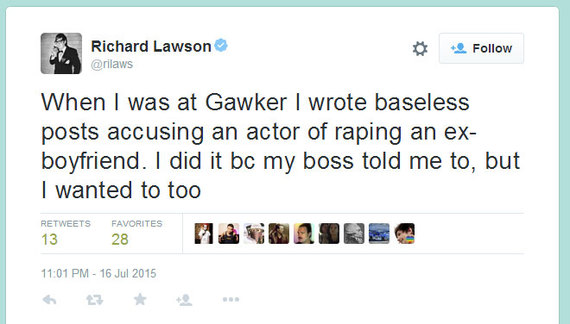
The robber baron type of today and yesterday live in a world where the opposite belief is true, and where power is raw and real and there to be used in furtherance of such conspiracies. Too many others, as Gawker was, are misled by their own cynicism and virtue-signaling. They forget how the world works. Gawkercertainly did, or they would not have acted so recklessly or indiscriminately, not only outing married men with children and tweeting things like this, but deliberately making enemies like Peter Thiel—men who accrued real power—and expecting that there would never be a reckoning.

An immutable law of history: actions have consequences. There is the apocryphal story about Vanderbilt after he was cheated by two business partners in Nicaragua and lost his license to operate in the country. He sent them a letter, “Gentlemen: You have undertaken to cheat me. I won’t sue you, for the law is too slow. I’ll ruin you. Yours truly, Cornelius Vanderbilt.”

Power is sought so it can be wielded. Just as no one builds a multi-billion dollar empire without some sort of savage determination and intense will to power (otherwise they would have stopped at some earlier point, taken their winnings and gone home), no one accumulates power and then declines to use it in the face of existential threats—of which Thiel counted Gawkeras one to his business interests. A Mark Zuckerberg or an Elon Musk doesn’t build an empire and allow others to encroach on their borders. And yet, it says something about our reflective, childlike understanding of the minds of these people that we condemn, the Koch Brothers or George Soros for various schemes, without stopping to think about whythey are doing these things. It’s not simply to save on their taxes, I’ll tell you that. It’s because they have those same “privileged claims to knowledge” and “strong claims of human agency,” that Peter was talking about.

They are trying to own the future, or direct it where they want to go. Sometimes we’ll agree with their attempts—such as when Mark Zuckerberg donated $100 million to New Jersey schools—and other times we’ll be shocked and upset—as people have been with many of Peter Thiel’s when he set up scholarships for dropouts, funded seasteading, and of course, destroyed a media outlet.

I would argue that this only a taste of what is to come. Silicon Valley was place of a generational—perhaps epoch-level—transfer of power. Nick Denton, the founder of Gawker, himself once observed that New York gossip had transitioned from from Zuckerman (as in Mortimer Zuckerman, the media tycoon and former owner of the New York Daily News) to Zuckerberg. It’s true, and he, and, we, the public, are now experiencing what that will mean.

The press, the public, and politicians need to understand this rising force if they wish to put up guardrails against it or put it to good use solving society’s problems. By understand, I don’t mean clutch at pearls constantly, I mean understandit they way we recognize a riptide or the ferocity of a wild animal. Artists need to understand it too, and create works that teach lessons about it.

I enjoyed Nick Bilton’s book on Ross Ulbricht, the creator of the Silk Road, for this reason. It’s the story of a boy who ached to do something important and massive, who built a libertarian marketplace where anything could be bought and sold, and did not stop for a second to think of the consequences. It was fun at first, like a kid sneaking around his parents’ restrictions. But this is not kid business, and the savagery soon begins to ooze through. Ross is challenged with questions, with the sticky ethical dilemmas inherent in this small but growing illicit operation. What does he do after the first overdose of one of his customers? How does he sleep with that on his conscience? And the first time he’s told of one user robbing another? Now Silk Road users want to use the site for arms dealing? Can they sell cyanide?

Each step, each decision, takes one further from the incorporeal realm and into the brutishness of the Hobbesian world, a world of Social Darwinism. What steps will he take to evade and deceive the police or the agencies that seek to stop him? How will he hide the wealth that has come pouring in? How does it feel to spend money you know came from enabling someone else’s suicide? Ross was one day simply sitting in his room, dreaming his plans on a keyboard, and then another day he had to decide whether to order a contract hit on an employee who threatened to unravel his ambitious attempt to change how society works. He can’t be stopped, he won’t be stopped—what he is doing is too important. The savagery of ordering not just one murder but six would eventually put Ulbricht in a federal prison cell. And indeed he stands now as a cautionary tale, a kind of true story of how one breaks bad. Or rather, fully becomes the bad, as they already were.

I wrote about Thiel’s arc from technology investor to Straussian power broker for that same reason. I think we need a wakeup call about how this all works, what kind of forces have been unleashed by the gold rush of California, just as powerful forces and names like Hearst and Stanford and Huntington were unleashed in the original Gold Rush.

Because we ignore them at our peril.

Ryan Holiday is the bestselling author of Conspiracy: Peter Thiel, Hulk Hogan, Gawker, and the Anatomy of Intrigue

source:TechCrunch

Google Crushes Dreams of a Universal Dark Mode For Android, For Now
Some Android users watching Google’s Issue Tracker board got very excited this week when one of the company’s engineers confirmed that a dedicated dark mode for night browsing would be “available in a future release,” but alas, this was not to be.


Per TechCrunch, instead of the much-desired dark mode feature—which some users insist is easier on the eyes, potentially reduces battery drain, and just looks plain cool—the note apparently referred instead to a developer feature intended to improve dark mode support for third-party app creators. In a post to the Issue Tracker board, the engineer clarified:
What we *have* added in a future Android release is a developer-facing setting (via Developer Options) to toggle the -night UI mode qualifier, which will make it easier for developers to create and test apps that implement night mode. This qualifier has been in the platform since Froyo (SDK 8) and globally modifiable via UiModeManager since Marshmallow (SDK 23); however, there was never an explicit toggle made available anywhere in Settings.
As The Next Web noted, users can simply apply custom-built Android screens to achieve much of the same effect, while numerous apps already have night mode built including Twitter, YouTube, and a few stock internet browsers. Some Android phones already toggle themes depending on the time of day, though it’s not the same as a manual setting that users can apply across the board.

The engineer added that the continued lack of a universal dark mode is at least not because they are wasting time on a “Hot Dog Mode”:
If it’s any consolation, we will also not be adding Hot Dog Mode (where all UI elements are yellow and red).
It’s a shame that dark mode isn’t coming to Android yet, since it’s clearly the best way to run apps even in the daytime (the night mode users will rule this galaxy!). Seeing as it’s pretty easy to replicate most of the mode’s functionality with third-party tools or simply turn on Android’s existing blue light filter (though this ends up looking more like f.lux than what users might expect out of a night mode), this might not the most pressing feature add. Still, one can dream.

source:Gizmodo

Hello and welcome back to Equity, TechCrunch’s venture capital-focused podcast where we unpack the numbers behind the headlines.


At long last, after many predictions and even a private filing, Dropbox dropped its S-1 today. The filing marks the public beginning of the end of Dropbox’s life as a private company. Dropbox is going public!

To mark the occasion, Katie Roof and Alex Wilhelm met up in the TechCrunch podcast studio to chat about the company’s numbers. And, we got Aaron Levie, CEO of Dropbox competitor Box, on the phone to talk about the occasion.

Dropbox’s IPO has been long awaited for several reasons. Primarily that the firm grew quickly, landing a $10 billion valuation in 2014. Even more, it grew up during an earlier period in the SaaS era, when more niches were unfilled and recurring revenue was less perfectly understood.

(Today, in contrast, you cannot avoid the sheer bulk of SaaS advice out there. In fairness, Equity did just do an episode live at SaaStr, a SaaS-themed event.)

Dropbox’s debut also is a critical moment for the unicorn wave, the period in which we currently live that has seen a host of billion-dollar, yet-private companies prosper under the forgiving suns of private capital. Dropbox going public indicates that a large chunk of that accreted, illiquid wealth will manage to liquify itself after all.

For its investors, who command billions of dollars of its stock, it’s a welcome event. For us, it was a great excuse to sit around and talk about big private companies. Stay cool!

Equity drops every Friday at 6:00 am PT, so subscribe to us on Apple Podcasts, Overcast, Pocket Casts, Downcast and all the casts.

source:TechCrunch
The Dropbox IPO filing is here
It’s official, the Dropbox IPO filing is here.

Going public is a huge milestone for Dropbox and has been one of the most anticipated tech IPOs for several years now. The cloud storage company has been around since 2007 and has raised over $600 million in funding.

We knew that it had already filed confidentially, but the company has now unveiled its filing, meaning the actual IPO is likely very soon, probably late March.

The company says it will be targeting a $500 million fundraise, but this number is usually just a placeholder.

The filing shows that Dropbox had $1.1 billion in revenue for last year. This compares to $845 million in revenue the year before and $604 million for 2015.

The company is not yet profitable, having lost nearly $112 million last year. This shows significantly improved margins when compared to losses of $210 million for 2016 and $326 million for 2015.

Dropbox has been cash flow positive since 2016.

Dropbox, which has a freemium model, says it has 11 million paying users, just a small fraction of the over 500 million registered users who use its cloud services for free.

Its average revenue per paying user is $111.91.

The big question is whether the company will achieve the $10 billion valuation it raised in the private markets. Part of its success will be measured relative to Box, which went public in 2015 and will be considered a comparable.

The prospectus warns of the competitive landscape.
The market for content collaboration platforms is competitive and rapidly changing. Certain features of our platform compete in the cloud storage market with products offered by Amazon, Apple, Google, and Microsoft, and in the content collaboration market with products offered by Atlassian, Google, and Microsoft. We compete with Box on a more limited basis in the cloud storage market for deployments by large enterprises.
With the filing we see that the largest shareholder is Sequoia Capital, which owned 23.2% of the overall shares outstanding. This is a large stake. Accel owned 5% overall.

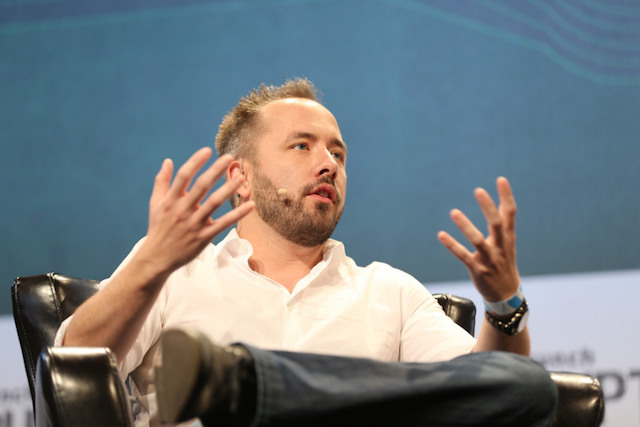
Founder and CEO Drew Houston owned 25.3% of the company.

The company is listing on the Nasdaq, under the ticker “DBX.”

Others vying to go public soon will keep an eye on the performance of Dropbox. Investors place weight on the “IPO window,” and view recent debuts as a test for appetite for tech listings.

Spotify is gearing up to go public around the same time, but will be shunning the traditional IPO process, by listing without doing a fundraise.

source:TechCrunch

Hello and welcome back to Equity, TechCrunch’s venture capital-focused podcast where we unpack the numbers behind the headlines. This week the full gang was in town, with Katie Roof, Matthew Lynley and Alex Wilhelm all back in the podcast studio. The trio was joined by Hilary Gosher, a managing director at Insight Venture Partners who helped dig through the news.


The packed week meant some things had to get left behind (Rovio’s dive, and so forth), but, as always, we picked the best of the bunch to chew over. First up: Roku’s earnings results and ensuing share price shellacking. The company was a 2017 IPO, and a breakout success, meaning that its recent dip was all the more interesting since we covered, and spoke about it during and after its IPO.

Next up, Snap’s own share price problems. After an earnings report went its way and the social company’s stock managed to climb back over its IPO price, at last, a combination of things knocked it off center this week, including an analyst downgrade, a celebrity tweet, and its CEO’s massive 2017 payday.

Following, we walked through Airbnb’s new plans for more upscale lodging, and experience-accommodation hybrids. The popular unicorn took itself off the 2018 IPO table, but it will eventually pull the trigger.

All that and we kicked over the Roche-Flatiron Health deal that brings a $1.9 billion exit to the New York City startup scene. Thanks for tuning in, and we’ll chat you all next week!

Equity drops every Friday at 6:00 am PT, so subscribe to us on iTunes, Overcast, Pocketcast, Downcast and all the casts.

source:TechCrunch

Is Uber selling its Southeast Asia business to Grab?
If you read the tech press, you might have seen reports that Uber is pursuing a sale in Southeast Asia that would see Grab, its Singapore-headquartered rival valued at $6 billion, acquire Uber’s business in the region.

Rumors of such a tie-in have been rife for a while. Uber sold its China business in exactly such an arrangement in 2016, and it made a similar exit from Russia last year. In both cases, the firm’s motivation was to purportedly shape up for a potential IPO by offloading loss-making units that had lost the local market.

Why not, then, extend that into Southeast Asia and sell to Grab?

There is competition.

Reliable data is hard to come by, but it is fairly widely accepted that Uber, once the leader in Southeast Asia, has dropped behind Grab across the region as a whole, while both companies trail local startup Go-Jek — a unicorn itself, too — in Indonesia, the only market Go-Jek operates in.

There are challenges.

Despite a cumulative population that exceeds 600 million people, Southeast Asia’s ride-sharing business did just $5.1 billion last year, according to estimates from a report authored by Google and investment firm Temasek. Uber is not expected to be profitable in the region “in the near future,” CEO Dara Khosrowshahi said last year.

There is the motivation.

Uber and Grab share a common investor in SoftBank. The Japanese firm first backed Grab back in 2014, and it recently pumped in $2 billion in fresh capital alongside China’s Didi Chuxing — the company that bought Uber China and, by virtue of that deal, is also an Uber stockholder. SoftBank, of course, secured a much-publicized investment in Uber in January.

Pitting two of its portfolio together in a loss-making market probably doesn’t make sense to SoftBank at this point.

Someone, somewhere, seems very keen to make a deal happen, and so we have the reports.

Last week, CNBC cited two people “with knowledge of the matter” who said that Uber “is preparing to sell Southeast Asia unit to Grab.”

The news was widely re-reported by a number of other media. But if you skip down to the second line of the original CNBC article, the transaction seems less definitive that the title suggests. Uber and Grab both declined to comment on the report when we asked.

The Grab office in Singapore
The deal can make sense in financial terms, as above, but in practice there are certainly some question marks.

Uber may have fallen behind Grab, but it still has the brand. Uber invented ride-hailing, and it can continue to maintain a sizable market share, if not close the gap with some investment.

The word Uber is already a verb to many people, such is the company’s profile, and that isn’t just limited to the English language. There’s a huge amount of consumer awareness that Uber trades on, even when its competitors push hard with discounts, marketing and other strategies, is very much alive in Southeast Asia.

The market in the region is tipped to grow massively.

The same Google-Temasek report noted that the ride-hailing market in Southeast Asia has grown four-fold since 2015 and it is tipped to reach $20.1 billion by 2025. More generally, Southeast Asia is now the world’s third-largest region for internet users — with more people online than the entire U.S. population — with upwards of 3.8 million people coming online for the first time each month.

It might be hasty for Uber to retreat at this time. Certainly, the chips are down and things have been better, but the game is far from won as it was in China, where Uber had little mainstream recognition and was spending over $1 billion just to try to keep up with Didi.

There hasn’t been much of a reaction to the reports from Uber, but this week Khosrowshahi — who was in India as part of his first Asia tour with Uber — made a series of bullish comments that seemed to reaffirm a commitment to Southeast Asia, according to Reuters.
"We expect to lose money in Southeast Asia and expect to invest aggressively in terms of marketing, subsidies etc,” Khosrowshahi told reporters in New Delhi, adding there is huge potential in the region thanks to a big population and fast internet user growth.
You could, of course, offer a counter argument that Khosrowshahi is playing hard to get or making negotiations with Grab tougher. But the Uber CEO also pointed out to press that SoftBank is just one shareholder and thus its aims and objective don’t represent the path that the company will take.

From Reuters again:
Khosrowshahi said SoftBank is an investor but Uber, which has a valuation of around $68 billion, will take any final decisions along with the board on mergers and partnerships.
There has certainly been some suspicion that the leaks may be coming from the investor side of Uber/Grab, given the benefits that consolidation might bring. The fact that these leaks have also intensified since SoftBank became interested in an Uber investment, certainly gives credence to that theory.

Indeed, SoftBank board member Rajeev Misra — who joined the Uber board following the investment — told the Financial Times that Uber should focus on Western markets and cut its losses in emerging regions.

Is SoftBank the source of these new leaks? You can draw your own conclusions.

So, while a deal might make some sense on paper, reports of an imminent acquisition seem wide of the mark. That said, this is the ride-hailing industry, and anything can happen.

source:TechCrunch

Angry Birds maker craters on bad guidance, losing half its market value
Angry Birds maker Rovio’s stock price tanked cratered after their latest quarterly earnings report painted a dismal future for the game maker. The stock is down 50 percent after the company sent investors a warning in their latest earnings report that revenues were likely to suffer in 2018.

Despite a strong over reliance on the Angry Birds brand, which seems to have been integrated into any and every licensing deal possible over the past few years, the 15-year-old Rovio is still making moves. The company had $365 million (297.2 million euros) in revenues in 2017, a 55 percent increase over the previous year as the game-maker made more money off of its titles and brand licensing deals.

Angry Birds maker craters on bad guidance, losing half its market value
The strong reaction today was the result of investors feeling misled by the company’s optimism in past future guidance. Rovio, which is listed on Finland’s main stock exchange in Helsinki, forecast that its 2018 revenues would likely sink below the previous year and profits may dip as well as user acquisition costs have gotten higher and the future has become more uncertain.

Game developers that strike it rich off a single title have historically seemed to have a rough go as public companies. The company was valued at $1 billion preceding its IPO late last year, but the goings have been a bit rough with its market cap now sitting below $500 million.

source:TechCrunch

Split raises $17M for its product experimentation platform
Split announced this morning that it’s raised $17 million in Series B funding.

The round was led by Lightspeed Venture Partners, with participation from Accel Partners and new investor Harmony Partners. Split has now raised a total of $26.8 million.

The startup allows companies to test out new features and deliver them in a targeted way to select groups of users. Co-founder and CEO Adil Aijaz said the key components of the platform include tools for targeting users and tracking their activity within the product, plus a statistical engine to help businesses understand how feature changes are actually affecting that activity.

While this might sound like just another A/B testing tool, Aijaz argued that it’s very different, because it’s used by the product and engineering team (rather than marketers), and it involves core product features (rather than relatively superficial changes to a website’s appearance and messaging).

Optimizely, which has its roots in A/B testing, also describes itself as an experimentation platform,. in Aijaz’s view, this is just “great validation.”

“In the long run, will these terms become synonymous? I believe so,” he said. “But I believe a single solution that serves the needs of the needs of entire team is still pretty far off in the future.”

And Split has already signed up customers including Salesforce, Vevo and Twilio.

source:TechCrunch
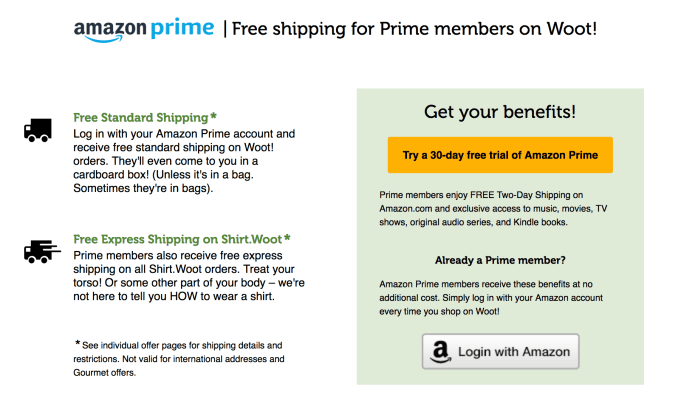
Amazon’s latest Prime perk is free shipping on its deals site Woot!
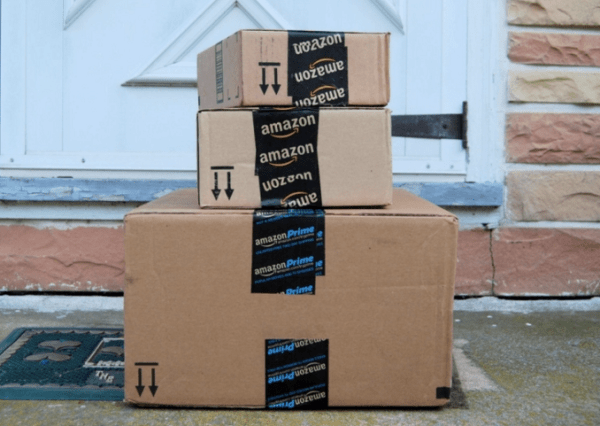
Eight years after Amazon snatched up the daily deals site Woot!, the retailer is now leveraging the site to serve as another perk for Prime members. Woot! this morning announced that it will begin offering free shipping on purchases from its site to all Amazon Prime members.

Woot!, which was founded in 2004, is no longer the household name it used to be back when Amazon acquired it in 2010 for $110 million. At the time, the site had gained popularity for its gimmick of “one deal per day,” which drove engagement, traffic and, of course sales, as quantities were limited.

Amazon’s latest Prime perk is free shipping on its deals site Woot!
Woot! was also well-known for its sense of humor, which continues today with its announcement of the Prime deal. In it, the company writes: “YEP. YOU’RE WELCOME,” and then proceeds to quote its monkey mascot, Mortimer.

In the years following Amazon’s acquisition, Woot! distanced itself from the one-deal-a-day format, and now features a variety of special deals, including several limited-time offers across categories like computers, electronics, home and sporting goods and more.

However, it makes sense that Amazon would bring Woot! into the fold, given that roughly one-third of Woot!’s traffic comes from Amazon.com, according to data from SimilarWeb, which also claims the site saw 16.8 million visits in January, 2018.

This is not the first time Amazon has brought one of its subsidiaries into the Prime membership program. In September 2016, Amazon added free audiobooks and podcasts from Audible to its list of Prime perks, and a variety of upgrades and special features for gamers with the launch of Twitch Prime.

source:TechCrunch
UPS is working on a fleet of 50 custom-built electric delivery trucks
UPS will work with partner Workhorse, a battery-electric transportation technology company, to develop and deploy a fleet of 50 custom-built plug-in electric delivery trucks with zero emissions.

The goal is to make trucks that cost as much to buy as do traditional fuel-based delivery vehicles – even without taking into account subsidies. The Workhorse designed-vehicles, will be all-electric, and are designed to run on a single charge throughout a normal delivery day and then charge back up overnight.

Workhorse says they’ll have a 100 mile range, which is a good fit for in-city routes, and the trucks will first enter testing in urban areas in various parts of the U.S., including Atlanta, Dallas, and LA. The test will lead to fine-tuning, which will lead to a larger fleet deployment targeting 2019.

UPS’ goal with this is to help meet its corporate renewable energy and carbon footprint goals, as well as to hopefully reap benefits in terms of vehicle operation efficiency, and the cost of maintenance (which should be far less using all-electric trucks).

source:TechCrunch
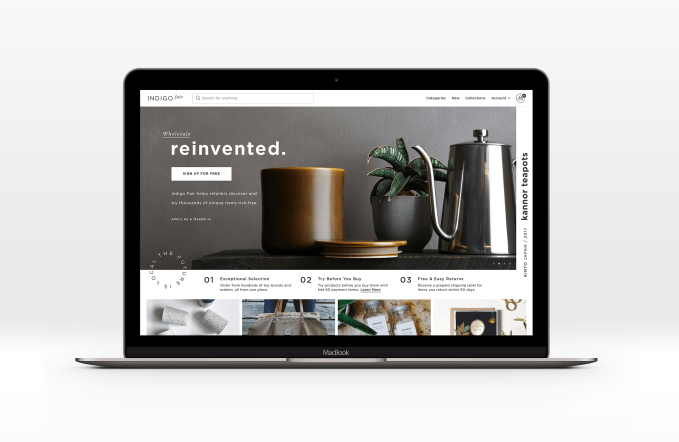
Indigo Fair raises $12M to connect wholesalers with smaller retail outlets with a smarter service
Max Rhodes was walking around that weird little parklet in Hayes Valley in San Francisco after taking a break from a five-year stint at Square to figure out what he wanted to do next — and he kept seeing Square registers everywhere.

It was spotting them over and over again in smaller retail shops dotted throughout the city that made him think about the connections between the average product maker — that kind of small group making a bespoke funny candle — and those retailers. That’s what prompted him to start Indigo Fair, a platform that connects those two entities in order to streamline the process of getting those products into smaller retail stores that are looking for just those kinds of weird candles throughout major urban areas. The company said it has raised $12 million in new financing from Forerunner Ventures and Khosla Ventures, with Forerunner’s Kirsten Green joining the board of directors.
“I started to think about the fact that you have all these stores adopting cloud-based PoS systems and inventory systems and, generally all their data is becoming available through their media profiles and inventory systems,” Rhodes said. “If there were some way that you could get all that data and know what is selling where, you could actually predict how well a given product is gonna sell in a store. That was the starting point.”

As so-called “big box” shopping increasingly shifts online, the theory is that there will be more and more niche retail outlets looking for interesting products that try to capitalize on the core original shopping experience, which is more social and curated.

Indigo Fair receives hundreds of applications from makers every week — though, as more and more tools become available to create more complex products, that’s probably only going to increase — and the team accepts about 5% of those applications. Part of the reason is to keep a good handle on the company’s growth and still make sure it has that curated feel for retailers, who know they are getting their hands on a good product. They send in some information and then start getting orders, print out a shipping label, and then start sending the product out to those retailers.

On the retailer end, the shops sign up and immediately have access to those products available through those wholesale makers. Indigo Fair aims to cut out the process of spending tens of thousands of dollars on trips to trade shows with makers to find the right products and then get them in their stores with the hope that they’ll sell. If you go into one of the stores on Valencia Street in San Francisco, you’ll probably find quite a bit of weird stuff that those stores hope to sell. Indigo Fair looks to try to streamline that process and make it easier to get those products in-house without all the travel and hassle.

Indigo Fair raises $12M to connect wholesalers with smaller retail outlets with a smarter service
Of course, even using public data as a starting point, gathering the data to make the model defensible is the harder part. After all, there are a lot of online platforms looking to empower wholesale makers to get their goods into the hands of consumers, though the company today said it’s actually partnering with Shopify and Square. But as the company gets more and more information about what’s selling, what isn’t, and who’s returning what, it gets a better sense of consumer demand for a product — and where to put it — to keep the cost for both of those entities down.

“In so many ways it’s the age old challenge of marketplaces,” Green said. “I think it requires you to be very scrappy, it requires you to find good customers that believe in the proposition and the potential for the product that they’re willing to start working with you in that regard. There is a lot of info you can readily access online today. Just having the patience and the commitment to try to put a bunch of that together on your own platform so you can start building the dataset is just some of the heavy lifting involved.”

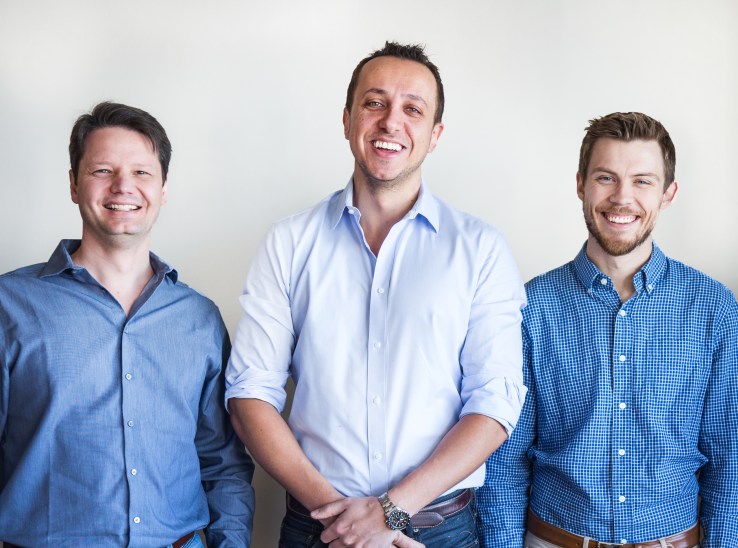
Rhodes’ hope, amid increasing competition and different models and approaches like Simon — which wants to help startups get pop-up shops in malls — is that with his experience dealing with the problems first-hand, and with enough data, Indigo Fair will become a go-to service for both retailers and product makers. Rhodes, a former consultant at Bain who helped build Square Cash, with his cofounders Marcelo Cortes and Daniele Perito, look to lean on everyone’s experience getting an expensive umbrella in stores and selling it across North America to enable every product maker to get the same thing done.

source:TechCrunch
MKRdezign

Contact Form

Name

Email *

Message *

Powered by Blogger.
Javascript DisablePlease Enable Javascript To See All Widget