Articles by "Sci-Tech"

Watch someone stand beneath a Blue Angels fighter on takeoff

Commentary: Why do people do this? Because they do.

Technically Incorrect offers a slightly twisted take on the tech that's taken over our lives.

Watch someone stand beneath a Blue Angels fighter on takeoff
They stand so still, mesmerized.
Storyful Rights Management/YouTube screenshot by Chris
Matyszczyk/CNET
I know that people have done this for years.

Why, on the island of St. Maarten, they stand in their swimsuits, waiting to be blown back by large planes taking off from the airport. Even though last year, a woman died after she was blown into a wall.

Yet here, courtesy of Norman Graf Aviation Photography, are two people standing beneath a Blue Angels F/A-18 Hornet as it takes off from the Naval Air Facility in El Centro, California.

The Blue Angels were there this weekend to offer a display of their talents.
So two intrepid individuals decided to stand right in line with Blue Angel No. 6, as Lt. Brandon Hempler took off seemingly quite near their heads.

Perhaps you'd be able to predict what might happen

The two gentleman just stand there, taking no avoiding action whatsoever.

It's as if they're mesmerized by what they're seeing and reluctant to consider what they might shortly be feeling.

They finally duck at a moment when the plane appears to be already past them.

Stunningly, they're engulfed by sand and dust and, surely, the most awful din that will wreck their ears for centuries.

But it was, apparently, exciting. Shrieks can be heard and now tales can be told.

And, I suppose that's what doing something like this is all about. To tell someone else about it.

source:CNet News

NASA's Curiosity rover is trying out a new drilling method so it can get back to pulverizing a little bit of Mars.

NASA's Curiosity rover has encountered a few hiccups during its journey on Mars, including worn wheels, electrical issues and a balky drill. The wheels are holding together and it has recovered from the electrical problems, but the drill has haunted the machine for over a year.

The drill works by grinding a tiny bit of Mars into powder so it can be placed into Curiosity's onboard lab instruments for closer examination.

A new Curiosity drilling method produced this hole on Feb. 26
A new Curiosity drilling method produced this hole
on Feb. 26.
NASA/JPL-Caltech/MSSS
In late 2016, the rover's drill hit a snag when the motor used to extend it between its two stabilizers stopped working. The Curiosity team back on Earth has been trying to figure out a fix ever since. It may have finally hit on a workable solution.

First, the team got the drill to extend, but they could no longer use the stabilizers.

NASA describes the new drilling method as "more freehand." Curiosity now pushes the drill down with its arm and monitors its progress by using a force sensor to keep the drill from wandering or getting stuck.

A NASA photo released Wednesday shows a very satisfying view of the Martian surface with a small light-gray mound of dust visible in the image. NASA says the half-inch (1-centimeter) hole is "enough to validate that the new method works mechanically."

NASA deputy project manager Steven Lee says the rover is now behaving more like a human would with a drill. NASA playfully calls this solution "MacGyvering." The Curiosity team has also come up with a new way to deliver the samples into the rover with a process it likens to applying seasoning by tapping a salt shaker.

The first test is promising, but Curiosity will next need to drill a deeper hole and try out the shaker method.

Scientists are eager to learn more about the rover's current location in an area rich with hematite. "Drilled samples might shed light on the origin of the ridge and the history of its interaction with water," says NASA.

Humans on Mars: An atlas of plans to land on the Red Planet

...
source:CNet News

New space rocks in our neighborhood are found all the time, often just before they pay us a visit. You can watch the next fly-by right here soon.

A bus-size asteroid this week will zip by us at a distance that's less than a third of the length between the Earth and the moon. You can watch the sassy space rock, named 2018 DV1, whip past us right here starting late Thursday or early Friday, depending on your time zone.

The news of this ominous visitor might make some people freak out, but we get fly-bys like this several times a year that pass quietly without incident. In fact, one asteroid came almost three times as close to our planet on Jan. 18 and a pair of celestial wanderers made similar passes on a single day last month.

More Space

Stealth space catapult startup SpinLaunch is raising $30M
The Trump administration is reportedly moving to privatize the International Space Station
How SpaceX plans to bring speedy broadband to the whole world

We also had another one slip between the moon and here on Monday, which the Virtual Telescope Project managed to photograph pretty clearly.

Italian astronomer Gianluca Masi, who's with the project, will be at it again later this evening when he hosts a live webcast of 2018 DV1's visit, starting at 9:30 p.m. PT. You can watch via the embedded feed above.

In recent years we've become more aware of the number of space rocks in our cosmic neighborhood, especially after one went completely undetected in 2013 before slamming into the atmosphere over Russia, blowing out windows and causing numerous injuries.

Over 15,000 near-Earth asteroids have been cataloged, but we continue to spot new ones all the time. NASA even has a spacecraft heading for a large asteroid right now so we can learn more about them and perhaps be better prepared if we ever come across one that's aimed to send us the way of the dinosaurs.

source:CNet News

Astronomers see signs of the first light from the universe's earliest stars, but one find hints at darker forces at work shortly after the Big Bang.

Astronomers have picked up a radio signal from the moment the lights went on in the universe billions of years ago, and they've discovered some surprises embedded in it. No, not aliens, but potential evidence of something just as mysterious and elusive.

An artist's impression of how the first stars may have appeared
An artist's impression of how the first stars may have
appeared.
N.R.Fuller, National Science Foundation
Using a sensitive antenna only about the size of a table in the Australian desert, scientists managed to isolate the very faint signal of primordial hydrogen, part of the cosmic afterglow from the Big Bang. But the ancient signal from this basic building block of the universe also carries the imprint of some of the first light from the very first stars ever.

"This is the first real signal that stars are starting to form, and starting to affect the medium around them," Alan Rogers, a scientist at MIT's Haystack Observatory, said in a statement. "What's happening in this period is that some of the radiation from the very first stars is starting to allow hydrogen to be seen. It's causing hydrogen to start absorbing the background radiation, so you start seeing it in silhouette, at particular radio frequencies."

Rogers is a co-author of a paper on the work published Wednesday in the journal Nature.

"There is a great technical challenge to making this detection," says Peter Kurczynski of the National Science Foundation, which has provided funding for the project. "Sources of noise can be a thousand times brighter than the signal they are looking for. It is like being in the middle of a hurricane and trying to hear the flap of a hummingbird's wing."

In the video below, Kurczynski explains in more detail the process of confirming the signal:

Watch this:Light from first stars after Big Bang shows evidence...

The signal can be traced back to around 180 million years after the Big Bang that kicked off the universe as we understand it over 13 billion years ago.

"Finding this miniscule signal has opened a new window on the early universe," explained University of Arizona astronomer Judd Bowman, the lead investigator on the project. "Telescopes cannot see far enough to directly image such ancient stars ... It is unlikely that we'll be able to see any earlier into the history of stars in our lifetimes."

One surprising finding from the distant signal was that the gas in the early universe was likely much colder than scientists had expected. One possible explanation is that baryons, or normal matter, may have lost energy from interactions with dark matter in those early days, according to a companion study published in Nature with Rennan Barkana of Tel Aviv University as lead author.

A timeline of the universe, updated to show when the first stars emerged
A timeline of the universe, updated to show when the first stars emerged.
N.R.Fuller, National Science Foundation
Dark matter is believed to make up a large portion of the matter in the universe but has never been directly observed and has been detected primarily through its gravitational effect on the matter we can see.

"If Barkana's idea is confirmed," says Bowman, "then we've learned something new and fundamental about the mysterious dark matter that makes up 85 percent of the matter in the universe, providing the first glimpse of physics beyond the standard model."

Bowman says he welcomes efforts from others to confirm his team's detection with different instruments like radio telescopes. He also hopes to see more resources dedicated to deeply probing the signal for further information about the early universe.

"Now that we know this signal exists," says Bowman, "we need to rapidly bring online new radio telescopes that will be able to mine the signal much more deeply."

Stephen Hawking's favorite places in the universe

...
source:CNet News

Afraid of circular saws? Let MIT's AutoSaw mobile robots do all the wood cutting for your custom furniture projects.

You like your fingers and you want them to stay on your hands, so you have a healthy fear of jigsaws and circular saws. But you still want a custom-made table. It's a good thing MIT's Computer Science and Artificial Intelligence Laboratory (CSAIL) has developed AutoSaw, a robotic system that does all the dangerous work.

Your journey to a custom piece of furniture starts with the CAD (computer-aided design) system OnShape and a selection of design templates. You can make adjustments to the look, change the size, or make it shorter or taller.

The system sends the finished design to a crew of robots, which includes two agile Kuka youBot robo-arms on wheels and a delightfully modified Roomba that wields a jigsaw.

This modified Roomba robot vacuum now holds a jigsaw
This modified Roomba robot vacuum now holds a
jigsaw.
MIT CSAIL video screenshot by Amanda Kooser/CNET
AutoSaw uses motion-tracking software to direct the robots, so the youBots can do things like carry a wood stud over to a chop saw and position it for cutting. The chop saw buzzes through the wood while any humans around wait a safe distance away.

AutoSaw then provides step-by-step directions for an Ikea-like furniture assembly experience. The CSAIL team's use of mobile robots means the system could work just as well at a job site or even a home workshop.

AutoSaw won't be rolling out to a home improvement store near you anytime soon, but the researchers are continuing to develop the system. They hope to add drilling and gluing capabilities to further reduce the need for people to get involved.

Perhaps someday we'll all turn to AutoSaw to create a perfect side table for a living room or cut all the lumber for a new deck while keeping our precious fingers far, far away from power tools.

These 8 robots will haunt your nightmares

...
source:CNet News

But damage to the inscription removes the final letter that would have spelled out "prophet," so we may never know.

A team of Israeli archaeologists have discovered a 2,700-year-old clay seal that may bear the name stamp of the biblical prophet Isaiah.
According to the Bible, Isaiah was a counselor to the Judean king Hezekiah, which would make the find logical.

The discovery was made as part of the Ophel Excavations at the foot of the southern wall of the Temple Mount in Jerusalem. The clay seal was found "right outside the royal bakery in undisturbed Iron Age remains," the statement says.

But due to damage to the inscription, it isn't possible to positively identify the seal. The bulla is marked with the Hebrew name of Isaiah, followed by "nvy." But in order for "nvy" to spell out "prophet," it would need to end with the Hebrew letter aleph, but the damage makes that unclear.

"The absence of this final letter... requires that we leave open the possibility that it could just be the name Navi." Mazar said. "The name of Isaiah, however, is clear."

13 ancient mysteries unlocked by modern science

source:CNet

Stealth space catapult startup SpinLaunch is raising $30M
W
hat if instead of blasting cargo into space on a rocket, we could fling it into space using a catapult? That’s the big, possibly crazy, possibly genius idea behind SpinLaunch. It was secretly founded in 2014 by Jonathan Yaney, who built solar-powered drone startup Titan Aerospace and sold it to Google. Now TechCrunch has learned from three sources that SpinLaunch is raising a massive $30 million Series A to develop its catapult technology. And we’ve scored an interview with the founder after four years in stealth.

Sources who’ve spoken to the SpinLaunch team tell me the idea is to create a much cheaper and sustainable way to get things like satellites from earth into space without chemical propellant. Using a catapult would sidestep the heavy fuel and expensive booster rockets used by companies like SpaceX and Blue Origin.

SpinLaunch plans to use a centrifuge spinning at an incredible rate inside a vacuum that reduces friction. All that momentum is then harnessed to catapult a payload into space at speeds one source said could be around 3000 miles per hour. With enough momentum, objects could be flung into space on their own. Alternatively, the catapult could provide some of the power needed with cargo being equipped with supplemental rockets necessary to leave earth’s atmosphere.

After some hesitation about emerging from stealth, Yaney agreed to talk to TechCrunch about his secretive startup, and show us the image of SpinLaunch’s hangar seen above. “Since the dawn of space exploration, rockets have been the only way to access space. Yet in 70 years, the technology has only made small incremental advances” Yaney tells me. “To truly commercialize and industrialize space, we need 10x tech improvement.”

SpinLaunch founder and CEO Jonathan Yaney
Until recently, few details about SpinLaunch have been available. SpinLaunch’s website is password-protected, and some Sunnyvale, CA job listings merely refer to it as a “rapidly growing space launch startup”. But last month, a bill was proposed in the Hawaii state senate to issue $25 million in bonds to assist SpinLaunch with “constructing a portion of its electrical small satellite launch system”. Hawaii hopes to gain construction contracts and jobs, and meet government goals for expanding space accessibility by helping SpinLaunch.

SEC documents show that Yaney raised $1 million in equity in 2014, the year SpinLaunch was founded, $2.9 million in equity in 2015, $2.2 million in debt in mid-2017, and another $2 million in debt in late 2017. Now Yaney confirms SpinLaunch has raised a total of $10 million to date, and that he’s personally an investor. As for the next $30 million, he says “The current status of our series A raise is that we are still taking meetings with potential investors and have not yet received an executed offer.”

Yaney has been co-founding startups since 2000, including TriVance and Moretti Designs. But a passion for aeronautics led him to become a 1000+ hour pilot, and start communications and imaging solar drone startup Titan Aerospace. It sold to Google in 2014 after receiving acquisition interest from Facebook, and Yaney began work on SpinLaunch to huck satellites into orbit.

Stealth space catapult startup SpinLaunch is raising $30M
Yaney explains that reaching orbital velocities typically “requires a rocket to carry massive quantities of propellant, leaving only a small fraction (a few percent) of the overall vehicle’s mass for ‘cargo.'” But SpinLaunch replaces rocket boosters with a kinetic launch system using principles “similar to those explored by several ground-based mass accelerators that date back to the 1960s. Modern adaptations include electromagnetic rail and coil guns, electrothermal-chemical guns, light gas guns, ram accelerators, and blast wave accelerators.”

NASA has investigated the possibility of catapult-assisted launches that fire off a track instead of a centrifuge, but none have become cost-effective enough to be successfully used to commercially launch things into space.

Yaney’s method is different. He says “SpinLaunch employs a rotational acceleration method, harnessing angular momentum to gradually accelerate the vehicle to hypersonic speeds. This approach employs a dramatically lower cost architecture with much lower power.” SpinLaunch is targeting a per launch price of less than $500,000, while Yaney says “all existing rocket based companies cost between $5 million and $100 million per launch.”
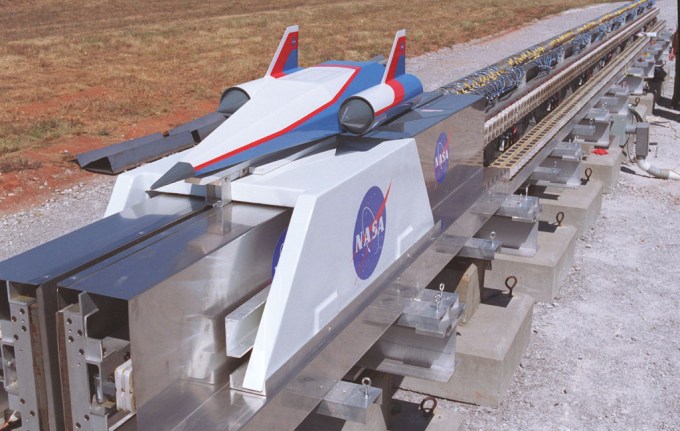
NASA has researched catapult-based space launchers that fire cargo off a track
NASA has researched catapult-based space launchers that fire cargo off a track.
Two sources says physicists who’ve looked into the company said a potential challenge could be air resistance upon the cargo when the catapult fires. Earth’s atmosphere is so dense that it could be like the cargo was hitting a brick wall upon ejection. Any electronics or other sensitive materials in the cargo might have to be engineered to withstand intense G-forces. This all explains the pointy, aerodynamic launch vehicle shown in the photo up top.

Now it’s a question of getting that ship into space. “During the last three years, the core technology has been developed, prototyped, tested, and most of the tech risk retired” Yaney proclaims. “The remaining challenges are in the construction and associated areas that all very large hardware development and construction projects face.” Touching the heavens isn’t cheap, so SpinLaunch is talking to big institutional VC firms that could afford to fund successive rounds.

If SpinLaunch can overcome the technical barriers, it could democratize access to space by lowering launch costs. That could accelerate a new era of zero-gravity innovation, from space travel to mining to what we once thought of as mere science fiction

source:TechCrunch

SpaceX misses catching Falcon 9 rocket fairing with a giant net on a big ship
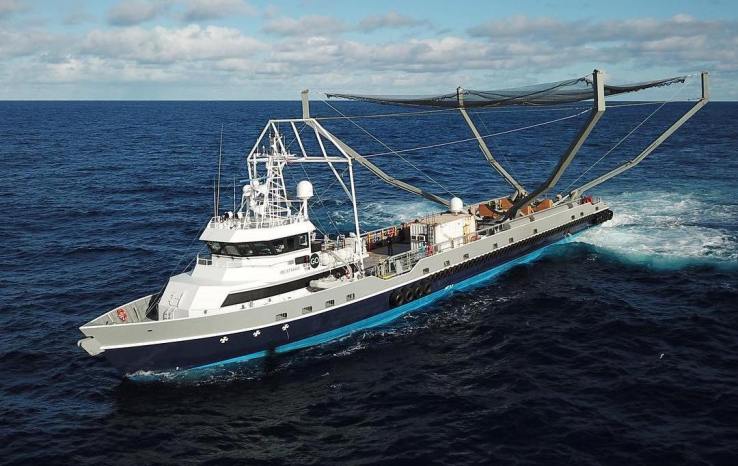
SpaceX nearly succeeded in catching the fairing used in its PAZ Falcon 9 mission on Thursday, using a barge called ‘Mr. Steven’ that uses four giant arms with a net strung between them to secure the used nosecone once it floats back from space. The fairing missed the boat by just a few hundred meters, but did land intact in the water, at least.

SpaceX CEO Elon Musk noted that the attempt was underway shortly after launch, and the fairing’s parafoil, which helps it decelerate and return to Earth at a speed that makes it possible for the barge to catch it without damage, deployed as planned.

Prior approaches to recovering the fairing used on SpaceX missions have had mixed success, and one key element was that previously the protective covering, which houses the rocket’s payload and separates once the rocket clears the atmosphere, basically just landed in the ocean (as it ended up doing today) and SpaceX would attempt to pull it out. Catching it on board the barge takes that risky element of the process out of the mix.
Why even bother? Cost. The fairing is a $6 million part, which is around a tenth of SpaceX’s total rocket launch cost with an expendable configuration. If it can reduce or eliminate that by reusing fairings as often as possible, that’s a big savings and a key ingredient towards SpaceX’s broader goals of efficient, reusable rockets.

source:TechCrucnh

SpaceX successfully launches Falcon 9 carrying Starlink demo satellites
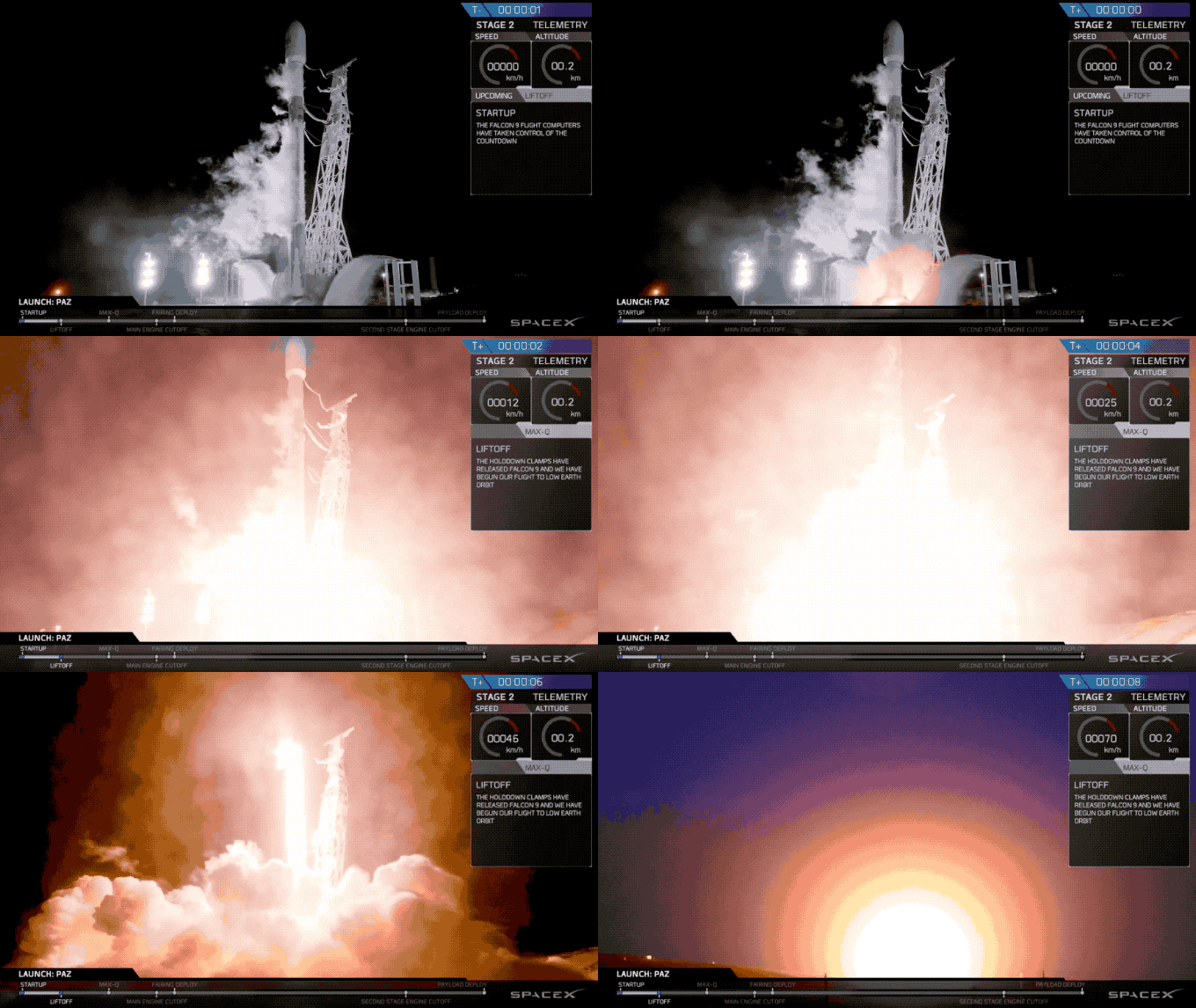
SpaceX has successfully launched a Falcon 9 from SLC-4 at Vandenberg Air Force Base today, its first launch since its successful Falcon Heavy test earlier this month. The launch took off early Wednesday morning, after being rescheduled a couple of times from an initial target of this past weekend.

The launch was primarily designed to bring the PAZ satellite to orbit (which was deployed as planned into a low Earth, sun-synchronous polar orbit), a satellite for a Spanish customer that’s designed to provide geocommunications and radar imaging for both government and private commercial customers. This launch had a secondary purpose, however, and one that might ultimately be more important to SpaceX’s long-term goals.

SpaceX packed two demonstration micro satellites for its planned internet broadband service (which Elon Musk confided via tweet it will call ‘Starlink’). These will perform tests required before it’s certified to operate the service, which it hopes to use to generate revenue by signing up subscribers to its internet service, which will hopefully be globe-spanning once complete.
We will also see SpaceX attempt to recover the fairing used on this mission, using a new barge designed for the purpose called ‘Mr. Steven.’ The vessel is basically a large landing platform with a net strung across its surface, which is intended to capture the fairing as it returns to Earth gently, assisted by special parachutes. The fairing, which is the two-part ‘shield’ that protects the rocket’s cargo atop the Falcon 9, is a part that could save SpaceX as much as $6 million per launch if it’s able to be consistently reused.

We’ll update this post when we find out more about that aspect of today’s launch.

SpaceX did not attempt to recover the first stage booster used during today’s launch, which was a flight proven Falcon 9 first stage used during a mission last August.

source:TechCrunch

BB-8 poses with its best side front

Scientists have looked into the feasibility of lovable droids like BB-8 and R2-D2, and find they're good for more than just pushing a plot forward.

BB-8 poses with its best side front
BB-8 poses with its best side front.
Lucasfilm
If you ever find yourself in dicey situations like those faced by Poe Dameron and Han Solo, you might find a series of high-pitched beeps and tones like trusty robot R2-D2's helpful.

That's the conclusion of Robin Murphy, Texas A&M University professor of computer science and engineering.

Murphy considered whether the beloved robots R2-D2 and BB-8 from the Star Wars universe would be feasible in real life and found the Hollywood mechs actually have some practical features beyond just advancing an often convoluted narrative, especially when it comes to communication. She published her findings Wednesday in the journal Science Robotics.

"The beeps and whistles project mental state, e.g., disagreement with whatever C3PO is nattering about, disapproval of a main character's dubious decision, and frustration at being thwarted in its job of helping the protagonist save the world," Murphy explains. "In real life, (roboticist) Robin Read has found that the types of beeps and whistles that facilitate the rebel-droid interaction can be effectively used by real robots in engaging children and adults."

But when it comes to getting around, the design of BB-8 turns out to be less realistic, especially for navigating the sands of Jakku as seen in "Star Wars: The Force Awakens."

"Anyone who has driven a car on a beach knows how quickly wheels can become buried in the sand and spin in place," Murphy writes, going on to cite the work of other scientists like Georgia Tech's Dan Goldman, who performed experiments with the Sphero BB-8 toy on sand to see how it did.

You can see one such experiment in the video below. While Murphy acknowledges a toy is different from an actual robot, it still demonstrates how BB-8 was clearly conceived more for a particular storyline than an actual setting.

Still, Murphy says Star Wars droids have had a very real influence on real-world robotics, pointing out that NASA's personal satellite assistant was inspired in part by Luke Skywalker's lightsaber training droid and Robonaut 2 aboard the International Space Station bears a certain resemblance to C3PO.

Murphy fails to chime in on the potential influence of some of the more effective battle droids, like the freaky Droidekas from "The Phantom Menace."

No worries, though. I think Elon Musk may have some thoughts on the risks of combining those type of droids with artificial intelligence that we can all heed instead.

source:CNet

Musk has said next-generation SpaceX rockets could launch large satellites -- or perhaps a number of small ones

The first Starlink satellites are set to launch aboard a Falcon 9 on Thursday. It could be the start of a whole new way to share Elon Musk memes.

Musk has said next-generation SpaceX rockets could launch large satellites -- or perhaps a number of small ones
Musk has said next-generation SpaceX rockets
could launch large satellites -- or perhaps a number
of small ones.
SpaceX
After a third delay, Thursday is now the day SpaceX plans to launch two small prototype satellites aboard a Falcon 9 rocket, the beginning of what Elon Musk and his company hope will be a new way of connecting humanity.

The launch was initially planned for Saturday, but was delayed twice to allow additional time for systems check and a third time due to high-altitude winds on Wednesday.

Also along for the ride into orbit is the larger Paz telecommunications satellite, but all eyes are on the smaller satellites, named Microsat-2a and Microsat-2b.

The project has been relatively secret by SpaceX standards, but is currently known as Starlink and amounts to a new kind of satellite broadband internet service provider. Most other satellite internet services, like Viasat or HughesNet, rely on a handful of big satellites in geostationary orbit, over 22,000 miles (35,000 kilometers) above Earth.

Signals and data travel back and forth between those satellites and customers' satellite dishes, as well as larger ground stations on Earth, to bring the internet into the homes of hundreds of thousands of customers, often in rural locations with few other options.

Traveling all those thousands of miles from high orbit can cause high levels of latency when using satellite internet, as anyone who's ever Skyped over such a connection will tell you. Things like real-time video calls and gaming can become difficult when there's lag and delay in the line from data having to travel to space and back over and over again.

So the idea behind Starlink is to use satellites at a much lower orbit to cut down on all that lag time. Sounds great, but there's a catch. Because the satellites will be much closer to the surface of the Earth, they'll only be able to "see" far smaller areas, so a much greater number of them will be required to cover the whole planet.

A figure from SpaceX's application to the FCC
A figure from SpaceX's application to the FCC.
Federal Communications Commission / SpaceX
SpaceX has declined requests to elaborate on the project, but Musk did acknowledge that the test satellites are aboard the Falcon 9 in for the first time in a tweet Wednesday morning. The company's application to the Federal Communications Commission outlines its plan to begin by deploying an army of 4,425 small satellites in low Earth orbit between 1,100 kilometers (684 miles) and 1,325 kilometers (823 miles) above us.

Once the first 800 satellites in this constellation are up and running, that will be enough "to provide initial US and international coverage for broadband services," the company says in its FCC application. "Deployment of the remainder of that constellation will complete coverage and add capacity around the world."

But that's not all. Once its low Earth orbit constellation is up and working, SpaceX hopes to launch an even larger flock of satellites, 7,518 of them to be exact, at an orbit of around 340 kilometers (211 miles) in altitude.

SpaceX says this "VLEO constellation" would provide added capacity where it's needed around the world, "enabling the provision of high speed, high bandwidth, low latency broadband services that are truly competitive with terrestrial alternatives."

Every Elon Musk project right now


SpaceX isn't the only company hoping to operate a constellation of satellites in low Earth orbit. Globalstar and Iridium have operated dozens of satellites for voice services at that altitude for many years, and Starlink competitor OneWeb already has approval for a constellation of several hundred broadband satellites. But Musk's plan is arguably more ambitious by an order of magnitude.

To make this audacious plan work, SpaceX has more emerging tech it will include on each satellite, in the form of lasers allowing them to communicate and coordinate with each other.

The launch of the first two Starlink test satellites "fires the starting pistol on laser communications use in space to provide connectivity for even the most remote places on Earth," said Markus Knapek, an engineer and board member for laser communications company Mynaric.

So Much Musk

Here’s a video of Elon Musk watching the Falcon Heavy take off
Starman has gone dark
First SpaceX internet satellites now set to launch Wednesday

For their part, OneWeb and other competitors have filed their concerns with the FCC that SpaceX's massive Starlink constellations will endanger other satellites in orbit. SpaceX has responded that its plan meets all safety standards and allows for adequate buffers of space between other satellites.

Even still, over 10,000 satellites makes for an awful lot of space debris.

SpaceX says in its application that it will deorbit satellites nearing the end of their useful lives, which it says should be roughly five to seven years. That means the satellites will be steered into Earth's atmosphere where they will burn up many years earlier than what's required by international standards.

Getting all those satellites up and flying doesn't happen overnight, however. SpaceX has so far just received FCC approval to launch the two test satellites. Its application for the larger Starlink project is still before the FCC, where Chairman Ajit Pai has given the plan his public endorsement. Even with a stamp of approval from the FCC, more approvals will be needed, including from the International Telecommunication Union.

All this means you won't be jacking into SpaceX's network anytime soon. In fact, Musk says the full service probably won't be up and running until the middle of the next decade, just in time for it to help fund his other audacious plans, like sending us to Mars to give Starman a space high five.

Humans on Mars: An atlas of plans to land on the Red Planet

...
source:CNet

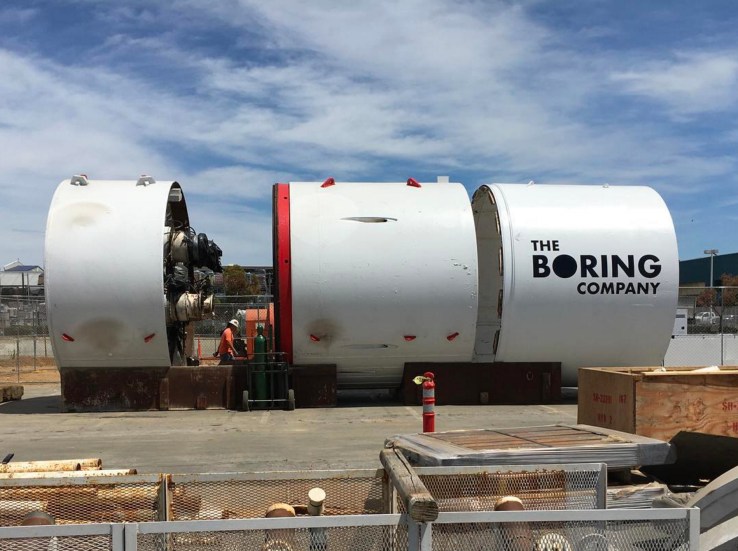
Elon Musk’s Boring Company gets preliminary permit for NYC-D.C. Hyperloop
A 29-minute trip from D.C. to New York may seem too good to be true. And it very well may be. But that isn’t stopping Elon Musk from pushing forward with plans to build a Hyperloop along the eastern corridor.

And while it’s a very small, very vague step forward, Musk’s Boring Company has received a permit for preparation and preliminary excavation of a site in the nation’s capital. The exact location is 53 New York Avenue NE, next to a McDonald’s and near the Bureau of Alcohol, Tobacco, Firearms and Explosives, according to the Washington Post.

In July, Elon Musk tweeted that he had received verbal government approval to build a multi-state underground Hyperloop on the East coast. While such approval doesn’t formally exist, Bloomberg confirmed that the White House had had positive conversations with The Boring Company over the proposed tunnel.
This latest permit is far from what’s required to actually begin building the tunnel — which would run from New York to Philadelphia to Baltimore to D.C. — but it’s a start. Musk recently received a conditional permit to start operations in Hawthorne Maryland for a 10.3 mile route. Maryland officials told WaPo that the tunnel would run under Maryland Route 295, with the D.C.-Baltimore leg being built first.

Stations for the Hyperloop would be relatively small and toned down compared to the stations we’re used to such as Union Station and Penn Station. There would be a main line running between the four aforementioned cities, with smaller lines spurring out from the city’s central station for other potential destinations.

Right now, the trip from NY to D.C. takes over three hours. It would certainly be nice to pop down for a meeting with just an hour of travel time, but this first permit is comparable to an athlete stretching before a race. We have not yet begun.

source:TechCrunch

SpaceX is ready to launch a test of its planned  satellite internet service aboard a Falcon 9 rocket

Elon Musk's rocket company has been working on getting satellite broadband off the ground for years. Now the Falcon 9 is set to launch the first test.

SpaceX is ready to launch a test of its planned  satellite internet service aboard a Falcon 9 rocket
SpaceX is ready to launch a test of its planned
satellite internet service aboard a Falcon 9 rocket.
SpaceX
For the second time in recent days, SpaceX has delayed the launch of a rocket carrying prototype satellites for its planned broadband internet service.

The Falcon 9 is now set to blast off Wednesday, just a few weeks after SpaceX launched its huge Falcon Heavy rocket for the first time.

More than three years ago we learned Elon Musk and his rocket company were working on developing satellites to provide low-cost internet access around the world. Correspondence between the company and the Federal Communications Commission revealed that the first pair of demonstration satellites for the company's Starlink service will finally be launched into orbit.

The main payload for the launch from Vandenberg Air Force Base in California will be the Spanish government's Paz satellite, designed to capture imagery of the Earth down to the single-meter scale. But there had been unconfirmed reports for several weeks now from space industry sources like NASASpaceFlight.com that a secondary passenger on the flight would be the Starlink demonstration setup.

SpaceX itself has been relatively mum about the debut of its Starlink satellites, and about the entire program itself. However, a letter from SpaceX to the Federal Communications Commission, posted to the FCC website Monday, makes it pretty clear what will be aboard the Falcon 9 when it launches.

The letter refers to two satellites, called Microsat-2a and Microsat-2b, that will be launched as a secondary payload on the Paz mission. The FCC granted SpaceX a license in November to launch this pair of satellites as part of a test mission. In its application, the company describes the test objectives: Putting that all together: SpaceX is testing internet broadband satellites that will be launched along with the Paz satellite.

Last Wednesday, FCC Chairman Ajit Pai gave his endorsement to SpaceX's application to operate two huge constellations of broadband satellites. The company has secured approval for the two test satellites, but the broader application for Musk's larger ISP vision is still awaiting a decision.

The launch had originally been scheduled for Saturday, but was postponed to Sunday and then again until Wednesday to allow "additional time to perform final checkouts of upgraded fairing," according to a tweet from SpaceX.

A release from Vandenberg confirmed that the launch is scheduled for Wednesday at 6:17 a.m. PT and that "the Falcon 9 and payload remain healthy."

SpaceX declined to make an official comment about the broadband project prototypes.

Even so, Joy Dunn, the company's "senior manager of new product introduction," did drop this emoji-based hint earlier this week on Twitter:
SpaceX hopes to have its global internet service up and running by the middle of the 2020s. Other public filings have revealed that the company hopes revenue from becoming an ISP could help fund its vision of a Mars colony.

If that pans out, spreading internet memes about Mars could eventually help us pay to get there. It's almost poetic.

Humans on Mars: An atlas of plans to land on the Red Planet

...

source:CNet

MKRdezign

Contact Form

Name

Email *

Message *

Powered by Blogger.
Javascript DisablePlease Enable Javascript To See All Widget