Mental health is one of the biggest issues of recent times, with Kendall Jenner, Emma Stone, Lady Gaga and even The Rock opening up about their mental health issues. Even the royal family has got in on the act, setting up the Heads Together charity. And it’s not just a fleeting issue. The World Health Organisation says depression will overtake cancer as the world’s main ‘global disease burden’ by 2030.
So it’s not surprising that meditation apps like Calm are going gangbusters amongst consumers. However, meditation and brain training apps are targeted towards cognitive skills. These skills can help with concentration and dementia, for example, but won’t allow you to have better and deeper relationships.
So it’s interesting that a new app has launched to tackle the thornier problem of how to improve your emotional intelligence. That’s the hope of new app startup eQuoo now launched on the Apple App store and Google Play.
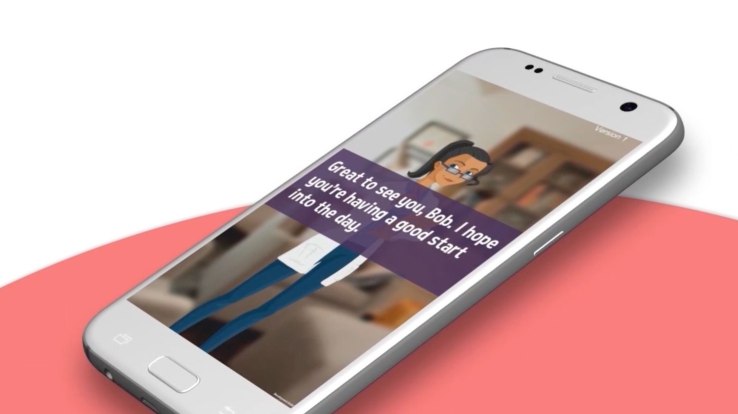
eQuoo is an emotional fitness game that aims to teach you psychological skills in a fun and engaging way. You get to use those skills in a choose your own adventure game, but they are for real-life situations as well.
Founder Silja Litvin (a psychologist) says she was inspired to create the game because “emotional intelligence is more important than IQ when it comes to success in the workplace. If you know how and why you react and feel the way you do, you can navigate through stressful situations and relationships much better.”
Equoo has raised an Angel round, and the investors include Julian Pittam (Investor to Disciple Media, which just raised $4 million), Pierre Andurand and other angels.
As a child, Litvin moved from sunny Southern California to the less-than-sunny Luxembourg and was bullied at school. But things changed when her older sister got a body-language book for her birthday. “The idea that there was a science – a manual, so to speak – about why people did what completely blew my 12-year- old mind. That’s when I decided to become a psychologist: I wanted to spread the good news. eQuoo essentially helps you build up people skills.” Her team also includes, Med Buckey (CTO), Professor Markus Maier (Head of research) and James O’Brien (Lead developer).
In the game, a character, Dr Joy (named after Sigmund Freud – Freud is joy in German) walks you through the learning session. eQuoo allows you to practice the skills in the learning part of the game; unlock a level in the game which leads you to a choose your own adventure story where you need to use the skills to win; gives you feedback on your personality through the Big Five personality test’ let’s you share your personality feedback on social media; learn more about the skills you possess on a deeper level; and anything you learn becomes part of your psychological ‘tool-box’.
The startup opened the Beta on in Australia and New Zealand and has a weekly growth rate of 19% and a 4.8 rating in the app store. Phase one will be building advertisement and subscription, but after that, it plans to work with insurance companies as a mental health game that prevents anxiety and depression.
In the wake of Uber’s entry into the healthcare transportation market, Lyft wants to remind people that’s a space it’s been working at for years, with partnerships across brokers of non-emergency medical transportation that cover nine of the top 10 health care systems in the U.S. It’s adding Allscripts today, and already counts Blue Cross Blue Shield, Ascension and others as platform partners.
Lyft provides API access to these partners and their platforms, and with Allscripts, it’s going to integrate its ride hailing system into their open health platform as well as their electronic health records (EHR) services.
The service Lyft providers to health care companies works via their Concierge offering, a B2B version of its ride-hailing service that allows businesses to schedule and call rides for their patients and clients. The planned EHR integration would take this a step further, automatically detecting special transportation needs in a patient’s file and making that a part of the ride-hailing workflow without any additional work needed on the health care provider’s part.
This would be an industry first, according to Lyft and Allscripts, and would also serve up real-time notifications of key events like patient pick-up, as wells live ETAs for health care providers.
Lyft’s goal with this and its other partnerships in the health care space is to reduce the number of patients who miss crucial care and appointments simply because they don’t have access to proper non-emergcy medical transportation. Lyft has set a goal of reducing the number of Americans who fail to get care for this reason by half by 2020, meaning presumably they’d want to take the 3.6 million Americans who miss an appointment per year right now and make that 1.8 million. Lyft also says it hopes to reduce this number to zero shortly after that.
Stem cells derived from a human placenta hold the key to unlocking a myriad of potentials in regenerative medicine and are the focus of X-Prize and Singularity University founder Peter Diamandis’ new endeavor.
Called Celularity, the startup is a spinout from Celgene, a global biopharmaceutical company creating gene therapies. Diamandis teamed up with Dr. Robert Hariri, the founder of Celgene Cellular Therapeutics, to create Celularity in the hopes of using stem cells found in the human placenta to quickly regenerate tissue and organs needed to treat cancer and other diseases. The idea is these types of cells can do a better job of helping us live longer, fuller, healthier lives.
It’s a wild proposal and, seemingly, the stuff of science fiction often tossed around in certain Silicon Valley circles — create a startup focused on a medical breakthrough to make us live forever — or at least much, much longer than we currently do. But stem cell technology has been around for some time.
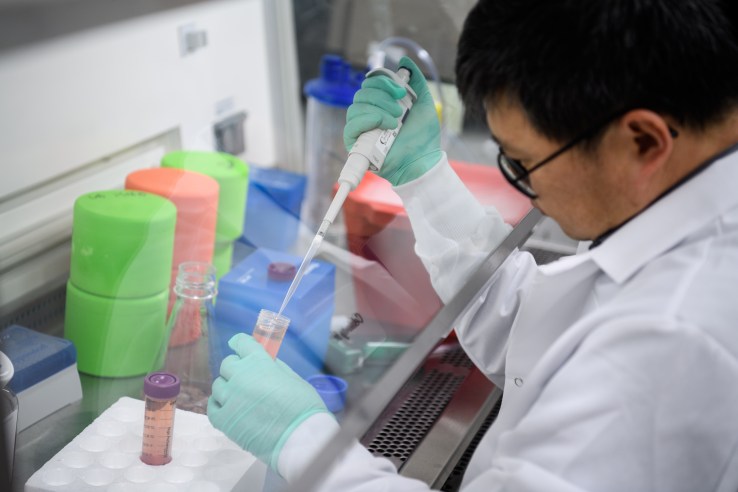
Lab worker with human stem cells.
For decades stem cells have posed an ethical quandary as they’ve largely been harvested through discarded embryos. However, in just the last few years, science has discovered adult stem cells can come from a number of sources throughout the human body — including a woman’s placenta, shortly after giving birth.
Placental stem cells are even more important as they can be taken from any placenta and injected into any human without the risk of the body rejecting them, according to the company. And, because they are so abundant, treatments are potentially more affordable and can begin immediately.
But this is not the first time Diamandis has dipped his toe in longevity research. He cofounded Human Longevity Inc. in 2014 to focus on extending the human lifespan. Celularity extends his interests in this endeavor.
So far, the startup has conducted several clinical trials and treated “hundreds” of patients, Hariri tells TechCrunch. The next step is to try and gain FDA approval to roll these treatments out on a mass scale.
That approval may be just around the corner — possibly in the next 12-24 months, according to Hariri. That’s because “cellular medicine is intrinsically safe,” he says, adding the potential could have a “huge impact” on U.S. medicine.
So just how are Diamandis and Hariri obtaining these human placentas? Donations. Though some couples choose to keep (and later eat) their placental afterbirth, approximately four million human placentas are disposed of per year in U.S. hospitals.
While this strange, yet magical temporary organ is from a human mother, some states consider it to be a biohazard after birth and discard it as waste. Couples, by law, therefore cannot take and sell the tissue to Celularity or some other outfit hoping to use it up. But they can donate it.
That’s where Celularity comes in. The startup procures the placental tissue from hospitals willing to hand over would-be waste in the name of science.
Right now the field is pretty wide for Celularity, too. The company is only competing with a handful of others in the same space like Israeli biotech firm Pluristem. Though it seems to be the only player in the U.S. at the moment.
Add to that a whopping $250 million in new funding from several prominent investors and celebrities to help it grow, including well-known life coach Tony Robbins, John Sculley of Apple and Pepsi-Cola, former GV partner and founder Bill Maris, who now runs a new biotech funding venture Section 32, and Andrew Von Eschenbach, the former commissioner of the U.S. Food and Drug Administration.
Naturally, Celgene led the latest round, with cash infusions from United Therapeutics Corporation, Sorrento Therapeutics and Human Longevity, Inc. to boot.
One other big heaping help to the startup — Celularity owns and operates LifeBank USA, the world’s only repository of donated placenta cells and biomaterials. So, presumably, should any other companies want to do something similar in the U.S., they’d need to go through a subsidiary of Celularity first.
Celularity is sure to stay a large player in this field as it continues. It owns the whole chain from procurement to deploying treatments. It also holds 1,800 patents on the procedures.
“Our ultimate mission is to make 100 years old, the new 60, and to provide people with maximal aesthetic, mobility, and cognition as they age,” Diamandis said. “The 20 years of science, research, and intellectual property pioneered by my visionary partner Dr. Bob Hariri, is the cornerstone for the coming longevity revolution.”
ental care can be costly and hard to access, especially if you live in a rural community or a third-world country. In fact, the biggest barrier to dental care is cost. This is according to the American Dental Association, which says many rural areas lack access to dental professionals.
Other than the obvious aesthetic benefits of straighter teeth, orthodontics has legitimate health benefits. According to the American Association of Orthodontics, proper teeth alignment contributes to the development of a healthy bite. Properly aligned teeth are also easier to clean, which helps prevent plaque, bacteria buildup and cavities. Meanwhile, improperly aligned teeth can also wear down your enamel and contribute to teeth loss.
As it turns out, 65 percent of the population could benefit from orthodontic treatment, according to a study from the National Health and Nutrition Examination Survey. But in terms of those who get treatment, it’s more frequent in higher income groups.
The cost of braces and invisible aligners — those clear, mouthguard-like pieces of plastic — varies, but treatments can range from $4,685 to $6,500 for adolescents, and adult treatments can cost up to $7,135, according to a 2013 American Dental Association survey. Last year, the orthodontics market saw $11 billion in revenue, according to market research company IBISWorld. It’s also worth noting that a number of Invisalign-maker Align Technology’s patents around the planning phase of clear aligners expired last year.
It’s no surprise, then, that a handful of venture-backed startups are now vying for the opportunity to straighten and whiten your teeth. Similar to Uber and Lyft’s effects on the taxi industry, these orthodontics startups could potentially upend a hundred-year-plus-old industry and change how we access dental care.
Here come the startups
For those who can’t afford braces or Invisalign, startups like Uniform Teeth, Candid, SmileDirectClub and Orthly aim to not only reduce the cost of clear aligners, but also the number of visits to the orthodontist — with some even cutting out the in-person orthodontist visit altogether. The rationale behind many of the startups that have popped up over the years comes down to accessibility and cost.
Uniform Teeth, which launched the first week of this year, is one of a handful of technology-driven startups that have popped up in recent years to get inside your mouth. Uniform Teeth costs $3,500, and offers treatment that is most similar to the experience of seeing a traditional orthodontist in a traditional setting. Before any treatment begins, Uniform Teeth requires you to come into its office to meet with its licensed orthodontist to get X-rays, scans and a dental health exam.
What differentiates Uniform Teeth from the traditional orthodontics experience is that Uniform Teeth does not require ongoing in-person visits. Instead, after their first sessions, patients check in with their orthodontist via the mobile app every week. For the last visit, patients come in to ensure the treatment is going well and that no refinements are needed.
Uniform Teeth was co-founded by Dr. Kjeld Aamodt, a certified orthodontist, member of the American Association of Orthodontists and teaching professor at the University of California San Francisco. The startup’s intent is to make orthodontics more affordable and accessible.
“There are over 200 million Americans of all ages who need orthodontic treatment and less than 1% of the population receive care each year,” Uniform Teeth CEO Meghan Jewitt told TechCrunch. “This suggests a huge need for better, easier and more affordable orthodontic care.”
Another startup is Candid, which virtually connects patients with local orthodontists and then enables those orthodontists to prescribe direct-to-consumer aligners. Candid entered the market last September, with its 3D-printed aligners. Candid CEO Nick Greenfield described it to me as being for people who need mild-to-moderate orthodontic work. Candid costs $1,900 upfront or $88 per month over two years, while braces can cost up to $7,000 and Invisalign can cost up to $8,000.
“For us, it’s all about expanding access and improving affordability,” Greenfield told me. “What’s happening now is across health care, it’s 18 percent of GDP. It’s growing six times the speed of the economy and you’ve seen many health care costs rise by five to ten times over the last 15 to 20 years.”
Candid, which raised a $15 million Series A round last November, has a three-step process to straighter teeth. First, the company sends patients a modeling kit, so they can take teeth impressions at home. After patients send their impressions to Candid, its orthodontists review them to ensure Candid can treat their case.
If Candid’s orthodontists decide your case is more severe, meaning it might require some teeth extraction or other procedures, they’ll suggest you go into an orthodontic office.
Orthly‘s approach is to connect patients with local orthodontists in person and then enable the orthodontists to prescribe the direct-to-consumer aligners. The idea, Orthly co-founder Patrick Lee told TechCrunch, is to streamline the process and “make everything more efficient and lower prices for consumers.”
Similar to Uniform Teeth, Orthly requires an initial in-person visit. Unlike Uniform Teeth, though, Orthly does not have its own orthodontists. Instead, Orthly connects patients with orthodontists in your area.
The naysayers
While Candid, Uniform Teeth and Orthly are all newer entrants, SmileDirectClub has been around since 2014. Over the last year, however, SmileDirect has made headlines as a result of the American Association of Orthodontists objecting to the way it markets itself and other violations.
SmileDirectClub is a direct-to-consumer teeth aligner startup that started with the idea of using teledentistry to virtually connect licensed dentists and orthodontists with people who want to straighten their teeth. Since its inception in 2014, SmileDirectClub says it has helped more than 100,000 people straighten and brighten their teeth.
The company ships invisible aligners directly to customers, and licensed dental professionals (either orthodontists or general dentists) remotely monitor the progress of the patient. Before shipping the aligners, patients either take their dental impressions at home and send them to SmileDirectClub or visit one of the company’s “SmileShops” to be scanned in person.
SmileDirect says it costs 60 percent less than other types of teeth-straightening treatments, with length of treatments ranging from four to 14 months. The average treatment lasts six months.
The AAO asserts that SmileDirectClub violates the law because its methods of allowing people to skip in-person visits and X-rays is “illegal and creates medical risks.” The organization has also filed complaints against SmileDirectClub in 36 states, alleging violations of statutes and regulations governing the practice of dentistry. Those complaints were filed with the regulatory boards that oversee dentistry practices and with the attorneys general of each state.
“The AAO has provided additional supporting information to those states, as well,” AAO General Counsel Kevin Dillard told TechCrunch. “The AAO’s position is that SDC is in violation of the statutes and regulations the AAO identified in the complaints. Those statutes and regulations exist to protect the health and safety of the public.”
With any old-school market disruptors, there are bound to be naysayers. Orthodontic treatment is not a product, but rather “a complex medical process that moves biological material, and is best done under the direct supervision of a licensed professional,” Dillard said.
In most cases, Dillard said, orthodontists take 3D and X-ray imaging of patients’ oral structures, which can help the orthodontist identify issues, like weak roots or “other structural problems that may make orthodontic treatment inadvisable or even dangerous — including the risk of losing teeth if treatment is undertaken.”
On its website, the AAO has a consumer alert that cautions against do-it-yourself procedures and “other objects ordered on the internet.” It warns, “moving teeth without a thorough examination of the overall health of the teeth and gums could result in the permanent loss of teeth, which may result in expensive and lifelong dental problems.”
The AAO also notes that all orthodontists are dentists, but only 6 percent of dentists are orthodontists. SmileDirectClub, however, maintains its focus is on the customer and that “certain organizations” simply see the company’s model as a threat to its bottom line, SmileDirectClub co-founder Alex Fenkell told TechCrunch in an email.
“Many of the opinions around our business model have been founded on a misunderstanding of SmileDirectClub’s process and the services it provides to the affiliated dental professionals,” Fenkell said. “SmileDirectClub has worked collaboratively with the agencies that have investigated our process and in all situations, there have been no findings of wrongdoing or improper practice.”
SmileDirectClub has a partnership with Align Technology to manufacture a fraction of SmileDirectClub’s aligners. In 2016, Align Technology invested $46.7 million in SmileDirectClub and invested another $12.8 million in 2017 to own a total of 19 percent of the company.
“As the pioneer and leader in clear aligner technology – and a major developer of digital innovation – Align needed to participate in and help shape the evolving Doctor Directed model which is extending the market to more people,” an Align Technology spokesperson told TechCrunch in an email. “This new model also creates new opportunities to connect Invisalign providers with potential patients who would not otherwise have seek in-office treatment. There are millions of consumers who could benefit from minor tooth straightening, and many are looking for convenience and affordability of treatment that they don’t associate with a doctor’s office.”
Align also noted that, in the event SmileDirectClub cannot take a patient, the startup refers the patients to an Invisalign provider for in-office treatment.
While the U.S. Food and Drug Administration has approved Invisalign for in-office treatments, it has not cleared or approved any over-the-counter clear aligners, an FDA spokesperson told TechCrunch. The FDA does not confirm, comment or deny any pending applications.
In order to ensure it doesn’t wind up in a similar or worse position SmileDirectClub found itself in last year, Candid says it has a strict requirement around what is needed from its customers in order to service them. For one, Greenfield stresses that Candid only takes mild to severe cases. Candid also requires that the patient has seen a dentist in the previous six months.
While Candid says it has not had any conversations with the AAO chairman or anyone at the highest-ranking level, Greenfield says his conversations with other folks at the organization have been positive.
“That organization wants to see great patient outcomes,” Greenfield said. “They don’t want to see orthodontia taken in a direction where people get hurt. Their job is to oversee the movement of teeth. In our conversations with high-ranking members of the AAO, their number one concern is patient outcomes.”
Unlike SmileDirectClub, AAO has not taken a public stance on Candid, Uniform or Orthly, Dillard said. However, Dillard noted the AAO “has long held the position that it’s in the best and safest interest of the public to have orthodontic treatment conducted under the direct and ongoing supervision of a licensed orthodontist.
Candid has orthodontists on board from every state in the U.S., except North Carolina because of regulatory reasons. If the orthodontist decides your case is mild or moderate, they’ll create a treatment plan for you and send you a 3D model of what your teeth will look like.
“As a company, our job is to connect customers to orthodontists on the backend but try to make that interaction as seamless as possible,” Greenfield said. “It’s the orthodontist doing the treatment planning and overseeing that.”
Although Candid itself is not approved by the FDA, Candid says it’s working with a manufacturer that has 510(k) clearance, which means it has demonstrated to the FDA a certain level of safety and effectiveness.
“Candid uses orthodontists for their treatment,” Greycroft Partner John Elton, an investor in Candid, told TechCrunch. “So that’s an important factor in all of this. They spend time making sure it’s the right treatment.”
That means once Candid receives the impression from the patient, the company converts that into a 3D file that then goes off to the manufacturer. The manufacturer then turns that into a plan, with the purchase coming from an orthodontist.
“It’s actually the orthodontist selling the aligner from the manufacturer,” Greenfield said. “It’s as if you went in, but you’re doing it remotely.”
What works for you
All of these startups work with licensed dental professionals. At the end of the day, it’s about going with the solution that feels best for you. Getting orthodontic treatment can be costly and it’s not always accessible, depending on where you live.
“If you didn’t grow up in a wealthy household or in a first-world country, you may have issues with your teeth and showing up to an interview — you know, getting ahead in your job — these things matter. And if you have issues like that, it affects your quality of life,” Elton said. “It affects disadvantaged people disproportionately.”
What these startups do is offer an alternative to people who can’t afford the traditional methods and may not have time to go to in-person office visits over the course of several months. This is where the promise of tele-health comes in, which enables patients to check in with their orthodontists via mobile apps, sending them pictures of their teeth and other relevant information.
Cyan Banister of Founders Fund has also made a bet on teeth-straightening startups. Instead of Candid, she went with Uniform Teeth, saying the company’s approach is different from the rest.
“I think it’s far more responsible,” Banister told TechCrunch. “Telemedicine is fine, but I think there needs to be a step in between. My goal here in investing in the company is to drive down the cost so it’s more affordable.”
With the handful of clear aligner startups out there, it’s too soon to say which model is best. And, perhaps, similar to Uber and Lyft, it doesn’t need to be a winner-takes-all market.