Search Result For "apple"

In partnership with retailers, banks and credit card companies, Apple launches the iOS mobile payment service Apple Pay in the US on October 20.

Apple Pay launches October 20, streamlines online and retail transactions with iPhone 6 handsets
Watch this: Apple Pay is coming Monday, October 20
Editors' note: This piece was updated on October 16, 2014, to reflect additional news following Apple's October press event.
While Apple enthusiasts may often find their wallets emptying out with each new product announcement, wallets may literally start slimming down, thanks to Apple's recently announced iOS feature, Apple Pay.

Launching in the US on Monday, October 20, with other countries to follow, the mobile payment service works similarly to Google Wallet and enables users to streamline their retail and online purchasing experience with the iPhone 6 , the 6 Plus and the Apple Watch.

According to Apple CEO Tim Cook, getting involved in payments is a natural progression for the company and is a huge business.
Every day between credit and debit, we spend over $12 billion, Cook said during a September press event when Apple Pay was first introduced. "That's over $4 trillion a year, and that's just in the US."
With the service, users can add credit cards that are already on file with their iTunes accounts and upload new cards to store on their iPhones. These cards will be integrated into PassBook, an existing iOS app that consolidates a user's coupons, membership cards, and ticket passes. Credit cards can be added via the camera, which will then be verified by their issuing banks to confirm that they indeed belong to the rightful owner.

The most recent pair of iPhones are equipped with two chips: near-field communication (NFC), which is common in Android handsets, and Secure Element. In conjunction with the handset's built-in TouchID fingerprint reader, users can carry out mobile payments at retail shops by tapping their device with an NFC reader and confirming the purchase with their fingerprint.

Thanks to the iOS 8.1 update , other iOS devices can use Apple Pay, too. But without NFC, in-store purchases aren't supported; instead, users are limited to approving online in-app purchases with their TouchID fingerprints. Companies that are already on-board include Uber and Groupon, as well as OpenTable, which users can use to pay for restaurant meals.

Apple Pay also creates a "device-only" account number that works with Secure Element to generate one-time-use security codes with every transaction. This adds an extra layer of protection against data breaches that use the static code seen on the back of each credit card.

In the event that an iPhone is missing or stolen, users can employ the Find My iPhone feature to cancel all pending transactions. In addition, because sensitive credit card information isn't stored directly on the handset, users won't have to cancel the card if the phone is lost.

Emphasizing security, Apple Senior Vice President of Internet Software and Services Eddy Cue said that the company does not keep records of what users buy, where they buy it or how much they paid. Likewise, when using Apple Pay, cashiers will be unable to see your name, credit card number or security code.

With Apple Pay, iOS users can carry out third-party app transactions through TouchID.
CNET Staff
The tech-giant has partnered with credit card companies like American Express, Master Card and Visa, as well as a number of popular banks, including Bank of America, Wells Fargo, Barclays, Chase, US Bank, Citi, Capital One, Navy Federal Credit Union, USAA and PNC.

After its initial September announcement, Cook reported that Apple has added 500 more banks to the service, and that they will roll out support later this year and early next year.

In the US, there are already 220,000 merchant locations that accept mobile payments, and Apple has been working with other retailers like McDonald's, Target, Subway and Whole Foods to integrate its service as well. Even Disney is expected to support Apple Pay in all its retail locations by Christmas. iOS 8 will also have an Apple Pay API available for developers, so expect more apps in the future to use this service, too.


source: CNET

China-based iCloud users are facing a change in  how Apple handles the privacy of their data

Apple is moving encryption keys for China-based users' data from the US to the Asian country. Some say that's bad for dissidents. Apple says the keys are safe.

China-based iCloud users are facing a change in  how Apple handles the privacy of their data
China-based iCloud users are facing a change in
how Apple handles the privacy of their data.
James Martin/CNET
Apple has privacy advocates worried over a change in how it protects the data of iCloud users in China, according to a pair of reports.

The data, such as messages, emails and photos, is shielded from prying eyes by encryption, which means it's coded. But Apple will begin storing the keys for the code not in the US, as it's done till now, but in China, say reports this week by Reuters and The Wall Street Journal.

That means Chinese authorities won't have to go through US courts to compel Apple to give them access to data. The move is a response to new laws in China, which say cloud services offered to citizens there must store data in the country and be operated by Chinese companies.

At the end of the month, Apple will begin shifting the data to China and partner with a local company with ties to the Chinese government. Apple hasn't said when the encryption keys themselves will be moved overseas.

Privacy advocates say the switch could mean trouble for political dissidents and others. Apple says, though, that the keys will be kept in a safe location and that Apple itself will maintain control of them. The company says it will hand over data only in response to valid legal requests from Chinese authorities and that it hasn't built in any backdoors for access.

An Apple representative told the news outlets that the company advocated against iCloud being subject to the new laws but was unsuccessful. The rep also said Apple decided that discontinuing the iCloud service in China would make for a bad user experience and "less data security and privacy for our Chinese customers."

Amazon and Microsoft also partner with China-based companies to offer cloud storage services there and tap in to the huge Chinese market. The two US-based tech giants declined to tell the Journal where encryption keys will be stored for those businesses.

Apple told the news outlets that it's sending warning of the switch-over to iCloud users in China. Users there can opt out of iCloud to avoid having their data stored in the country. The company also said it won't move anyone's data until they accept the new China terms of service. Users whose settings are configured for a different country, or for Hong Kong or Macau, won't have their data stored on Chinese servers. Reuters includes Taiwan on that list; The Journal doesn't.

Neither Apple nor Amazon immediately responded to CNET's request for additional comment. Microsoft declined to provide added comment.

Security: Stay up-to-date on the latest in breaches, hacks, fixes and all those cybersecurity issues that keep you up at night.

source: CNET

You can now preorder Apple's $349 HomePod

Apple's first smart speaker finally emerges, well after Amazon's Echo speakers and the Google Home family dominated the conversation.

For Apple's HomePod, it's better late than never.

The smart speaker became available for advance orders in the online Apple Store in the US, UK and Australia on Friday. While you can typically put in an order for new Apple products at 12:01 a.m. PT, the HomePod wasn't available until just before 5:45 a.m. PT.

A little patience was required for Apple's latest product. The consumer electronics giant unveiled the HomePod at its developer conference in June and said it was slated to ship in December, but it ended up delaying the release to early this year. The device will hit stores Feb. 9.

The HomePod is available for $349, £319 or AU$499 in white and space gray. Apple has positioned it as a speaker first, smart device second. You'll be able to ask Apple's Siri voice assistant to do things like play a song on Apple Music, send a message to a friend through WhatsApp or control your smart lights. Later this year, you'll be able to link two HomePods together for multiroom listening and stereo sound.

Unlike recent iPhone launches, the HomePod didn't immediately sell out Friday, and the Apple Store didn't have glitches that prevented people from placing their orders. As of 5:45 a.m. PT, both the white and space gray versions of the speaker were still available, and the shipment date lists Feb. 9. Apple's hottest iPhone models have tended to sell out within minutes.

Watch this:Apple HomePod: Everything to know before you buy

Anticipation for Apple's HomePod is likely nowhere near as high as demand for a new iPhone. Despite efforts to get into new markets like wearables and the smart home, Apple still makes about two-thirds of its sales from its smartphones.

Working against Apple's smart speaker is the popularity of Amazon's Echo and the HomePod's higher price compared to rivals. The speaker also doesn't easily stream music from third-party services like Spotify, and the number of other tasks you can ask of Siri is limited. Siri itself has been deemed a subpar voice assistant by researchers. And even though Apple is pushing HomePod's audio capabilities, that may not win over as many people as it hopes.

"There is not a large market for high-quality audio," Creative Strategies analyst Ben Bajarin said. "Most Echo owners are completely content with the sound quality and say it is 'good enough' for their needs."

Siri, can I buy a HomePod?

When Apple showed off the HomePod for the first time in June, it positioned its new device as a music experience rather than just a smart-home hub, ostensibly to "reinvent home music." It has better audio specs than other hub speakers and an A8 chip for processing (the same chip that's in the iPhone 7). It uses a wide-array mic that supposedly can hear you over the music, and naturally integrates with Apple Music. It can also control HomeKit devices.

source:CNet

The iPhone X and the iPhone 8 were the big drivers of Apple's holiday season

This still doesn't quell the questions about how the iPhone X continues to do.

Just how well the iPhone X performed remains a mystery, but one thing's for sure: Apple sold boatloads of iPhones. But apparently, not enough boats.

The Cupertino, Calif., consumer electronics giant said Thursday that it sold 77.3 million iPhones, down 1 percent from a year ago. Bernstein analyst Toni Sacconaghi had pegged the company to sell around 79 million iPhones in the period.

While Apple doesn't break out the sales figures for specific iPhone models (which include the iPhone 8, 8 Plus and older units), the decrease should do little to quell the chatter about whether the iPhone X was a flop during the holiday season. The expectation was for the iPhone X to be a hard-to-find item after it launched in November, but many customers were able to easily get one after the first few weeks, suggesting demand wasn't as strong as expected.

Watch this:Apple iPhone sales drop slightly

Then there's the talk that iPhone X sales have dropped even further in the new year, with several reports pointing to Apple halving the production run of the phone to 20 million units. On Monday, Sacconaghi cut his estimate for iPhone sales in the current quarter to 53 million from 66 million.

The pricier iPhone lineup still drove the company to post all-time records in quarterly profit and revenue. And CEO Tim Cook says the iPhone X remains the top seller. And the average selling price was higher than expected at $796 -- suggesting a higher mix of iPhone X sales.

A rough holiday

Apple ended 2017 in unusual fashion.

There was, of course, the split timing of the release of its new iPhones, with the iPhone 8 and 8 Plus debuting on Sept. 22 and the iPhone X launching on Nov. 3. Apple also pushed the iPhone X's starting price to $999 -- unchartered territory for a super-premium phone.

Watch this:Apple may have slashed iPhone X production in half

In December, Apple admitted it issued a software update that allowed the company to slow down older iPhones to better deal with aging batteries and cold conditions. That sparked a huge consumer backlash, causing Apple to cut the price of its battery replacement service by $50, to $29. The US Securities and Exchange Commission and Department of Justice are investigating how the company disclosed the information. Apple said it's responding to the government inquiries.

The bad publicity and the fact that consumers could swap out the battery on their existing iPhone on the cheap may have had a negative effect on iPhone demand.

Cook, however, said he didn't know what the impact of the lower battery replacement cost would be.

"We did not consider in any shape or form what it would do to the upgrade rate," he said on a call with analysts. "We did it because we thought it was the right thing for the customer."

The unit sales decline suggests Apple could have potentially lost market share in phones in the period, according to Moor Insights analyst Patrick Moorhead.

Bottom line

The move to the more expensive iPhone did help its revenue. The company's iPhone unit generated $61.58 billion in revenue, up 13 percent from a year ago.

The company's iPad sales also saw continued improvement, with its 13.2 million units shipped up 1 percent amid a 6 percent increase in revenue. The company is seeing a flicker of life come back to the tablet business, largely for education and business use. While the iPad was wildly popular a few years ago, consumers feel less of a need to upgrade to a new version, preferring to spend their money on other gadgets -- like a new phone.

Apple said there are 1.3 billion active installed devices out there, an increase of 30 percent in 2 years.

Its second most important contributor to revenue was its services business, which includes Apple Music and its App Store. It generated $8.47 billion in revenue, up 18 percent from a year ago.

Apple noted that last year's quarter lasted 14 weeks, while this past fiscal first quarter was only 13 weeks, affecting the comparison between periods.

Apple's net income rose to $20.07 billion, or $3.89 a share, from $17.9 billion, or $3.36 a share, a year ago.

Revenue rose to $88.29 billion from $78.35 billion.

Analysts had expected earnings of $3.86 a share and revenue of $87.28 billion, according toYahoo Finance.

Looking ahead, Apple expects revenue to be between $60 billion and $62 billion in the fiscal second quarter, lower than the $65.7 billion analysts expected.

Apple shares rose 3.3 percent to $173.35 in after-hours trading.

source:CNet

Apple now relies on Google Cloud Platform and Amazon S3 for iCloud data
It’s no secret, Apple has been relying on third-party cloud companies for iCloud. And CNBC spotted an interesting tidbit in Apple’s own documents. The company now relies on Amazon S3 and Google Cloud Platform’s storage product to store iCloud data.

Back in 2016, CRN reported that Apple signed with Google for cloud storage. But Apple’s document represents the first official confirmation that this deal happened.

You can find the information in Apple’s iOS 11 security guide that was published in January 2018. The company mentions that user files are divided into tiny chunks and encrypted. The encryption keys and metadata information are stored on Apple’s own servers. But the encrypted files are stored on third-party services.

While users have no idea that Amazon and Google are managing their iCloud data, Amazon and Google can’t do anything with those files without the encryption keys. So it seems highly unlikely that Amazon and Google are looking at your data.

“The encrypted chunks of the file are stored, without any user-identifying information, using third-party storage services, such as S3 and Google Cloud Platform,” you can read in the document.

In the past, Apple has mentioned Microsoft Azure in its partners. The wording of the document isn’t really clear. Apple could be using more storage services without naming them directly.

In all cases, this is a great example of asymmetric competition. While Apple and Google are fighting really hard to grab market share of the smartphone market, Apple is also Google’s client. Apple also competes with Amazon and Microsoft in other areas. So Apple would need to step up its cloud hosting game to cut ties with its competitors altogether.

source:TechCrunch

Even with double the subscribers, Spotify says Apple will always have an edge owning the app store
Spotify just filed for a direct listing in the U.S., sidestepping the traditional IPO process, and now we’re starting to see some of the true financial guts of the company — and some of the significant risks it faces from challenging services from Apple and Google.

Apple, for example, charges apps a percentage of revenue for subscriptions processed through the App Store. Apple Music, meanwhile, will always deliver Apple 100% of the subscription revenue that it receives from subscribers (sans record fees and all that kind of stuff, of course). Apple, too, has a direct integration with its iOS devices and also a huge amount of brand recognition even though Spotify is a massive service. Spotify says it has 159 million monthly active users and 71 million premium subscribers, while Apple has 36 million paying subscribers as of February 2018.

Here’s the full boilerplate from the filing:
Our current and future competitors may have higher brand recognition, more established relationships with music and other content licensors and mobile device manufacturers, greater financial, technical, and other resources, more sophisticated technologies, and/or more experience in the markets in which we compete.

In addition, Apple and Google also own application store platforms and are charging in-application purchase fees, which are not being levied on their own applications, thus creating a competitive advantage for themselves against us. As the market for on-demand music on the internet and mobile and connected devices increases, new competitors, business models, and solutions are likely to emerge.
As owners of the platforms themselves, Apple and Google will always be able to dictate the terms. And while Spotify is a massive service, its success still hinges on users listening on their mobile devices. It may be able to build a strong brand and create some inertia against potential changes from Apple that could incite user backlash, but at the end of the day, Apple runs the system where its users actually get the service.

As Apple begins diversifying its revenue streams to create a services branch that the company likes to say will be the size of a Fortune 100 company, music is increasingly becoming a core part of that. Google, too, owns its app store platforms, and will recognize 100% of the revenue from its own service. We haven’t seen the full potential of these companies’ approaches to the music space, in particular with Apple Music which appears to be steadily growing, but Spotify is clearly recognizing it as an existential threat.

source:TechCrunch

Apple is launching its own medical clinics for its employees
Apple isn’t just a tech company as the company is now hiring doctors and other medical staff to create its own medical clinics. CNBC first spotted Apple’s new subsidiary, AC Wellness.

While AC Wellness’ website is still sparse, it doesn’t try to hide its connection with Apple, Inc. On the about page, there’s a big photo of Apple’s new spaceship campus. If you look at the source code on the contact page, it sends an email to an @apple.com email address.

“AC Wellness Network, LLC. is a subsidiary of Apple, Inc. and is the dedicated management services organization (MSO) for AC Wellness Network, a dedicated independent medical group that serves Apple Wellness Centers in Santa Clara Valley,” you can read in job ads on Indeed.com. “Our mission is to deliver the world’s best healthcare experiences for Apple employees.”

CNBC found two clinics in Santa Clara County, not far from Apple’s offices in Cupertino. In addition to making sure that your employees have everything they need to remain healthy, Apple could use this subsidiary to test new devices and services.

This isn’t the first time private companies form healthcare companies for their own employees. Amazon, JPMorgan Chase and Berkshire are teaming up to form their own healthcare company.

It’s yet another example that the healthcare system in the U.S. is broken. Big tech companies are now taking matters into their own hands. If you’re working for a big company, you’re going to be fine because they can help you with a wide range of benefits.

But everyone else is left behind. You don’t want to get laid off, work as a freelancer, work for a small and scrappy company or retire.

Apple is launching its own medical clinics for its employees

Source:TechCrunch

Apple says its software slows down older iPhones to counteract issues from aging batteries

The Department of Justice and the Securities and Exchange Commission are putting questions to the company, says a Bloomberg report.

Apple may be the target of a federal investigation for using software to slow down older iPhones, according to a report from Bloomberg.

The news agency reported Tuesday that the US Department of Justice and the Securities and Exchange Commission are investigating whether Apple violated securities laws when it issued a software update that slowed the performance of iPhones with older batteries. Unnamed sources said the investigation is in the early stages and that the government has asked Apple to provide information.

An SEC official declined to comment. Apple wasn't available for comment.

Apple confirmed in December that it had released software in 2016 that makes your phone operate more slowly to offset problems with its aging lithium ion batteries. As batteries get older, they don't hold their charge as well as newer batteries, and can have worse problems when the charge is low or the temperature is cold.

The aging battery means your phone could have trouble operating or might unexpectedly shut down, as happened to the iPhone 6 and 6S last year. To address the issue, Apple said, it incorporated better power management capabilities. Apple said it slows down the device only in certain instances, such as when it's cold outside, when the battery charge is low, or when the batteries are very old.

Apple admitted its software could slow performance, following a report earlier from Primate Labs, the company behind the Geekbench processor benchmarking software.

iPhone users have long complained that their devices seem to slow down when new models are released. Some people have accused Apple of purposely slowing down their devices to entice them to upgrade. Apple has long denied this assertion.

source:CNet

Will the mockery of Apple continue

Commentary: Samsung keeps insisting that Apple is always behind. With the release of the Galaxy S9, how true might that be?

Technically Incorrect offers a slightly twisted take on the tech that's taken over our lives.

Will the mockery of Apple continue
Will the mockery of Apple continue?
Samsung / YouTube screenshot by Chris Matyszczyk / CNET
It was the ad that took mockery to an exalted level.

Released last November to coincide with the launch of the iPhoneX, here was Samsung wantin everyone to believe that it was the inventive brand, while Apple was the label of sad sheep and retrograde lovers.

Samsung was, in its own eyes, first with just about every single development in phone design since, well, smartphones were invented.

Apple merely copied. And late, too.

With the Galaxy S9 being launched this week, will Samsung still be able to claim this?

If you look at the teaser ads for the S9 that the Korean company released last week, they featured the camera, the camera and the camera.

Oh, and an emoji variant. Which some Apple faithful might think of as copying Animoji with a little twist.

Oddly, this apparent emphasis on the camera and Animojis coincides precisely with what a T-Mobile salesman told me were the biggest selling point of the iPhone X: selfies and Animojis.

Is this what we've come to? Phone companies selling their devices by giving humans more ways to imaginatively express their self-regard?

Of course, it may be that Samsung has some pulsating surprise that it's saving for the February 25 launch day.

Yet the rumors collected by my colleague Justin Jaffe so far don't point to a phone that will give Samsung a new reason to claim its (supposedly) obvious creative superiority over Apple.

Yes, there might be a more entertaining unlocking tool or perhaps a virtual fingerprint reader, but will these be sufficient to add a new chapter to Samsung's Apple-mocking?

Samsung didn't immediately respond to a request for comment.

Some might see an acknowledgement of an essential parity between the two brands in the naming of the new phone.

It seems to be the Galaxy S9. Not, say, the S10. Or even, to tweak Apple further, the S11. Is a 9 somehow slightly lesser than a 10? I mean, a X?

Psychology can play strange tricks on vulnerable human minds.

Personally, I'd rather like Samsung to reveal something the rumor mills haven't uncovered. There's always something delightful about companies defying the constant online chatter, renderings and photographing of supposedly new phones.

Mischievous Apple-persons, though, might muse that the most enjoyable surprise for them would be if the S9 had a notch.

source:CNet

Curious how well the battery inside your iPhone is doing? Here's how to check it.

iPhone battery health: How to check it on your own
Checking the performance level of your iPhone, or any iOS device for that matter, isn't complicated. In fact, it doesn't even require a visit to the Apple Store.

Keep in mind, Apple isn't actually requiring your battery to fail its test to make you eligible for the $29 replacement. Checking your battery is more for peace of mind than anything else.

If after testing your battery you decide its time to replace it, follow Rick Broida's guide to make the process painless.

Watch this:Yep, Apple slows down older iPhones

Apple Support app

Apple Support app
Screenshot by Jason Cipriani/CNET
This is by far the easiest way to check on your battery's health. Install the official Apple Support app and sign into your Apple ID if required.

Start a chat session with Apple Support, selecting the phone you want to have tested as the device in question. Once you're connected with a technician, inform him or her you want to know the status of your battery's health.

You will then be walked through the process, which requires going into Settings > Privacy > Analytics. A few seconds later, a report is sent to the representative.

My iPhone X battery passed with flying colors, as expected.

Apple Store

Naturally, the Genius Bar inside an Apple Store has all of the tools and resources required to run a diagnostics test on your phone's battery. You'll need to make an appointment through Apple's Support page and visit the store in person in order for the test to be conducted.

One reason to opt for a visit to the store to run this test is if you have questions beyond testing your battery.
Coconut Battery

Coconut Battery

If you want more info than a simple pass or fail, or don't feel like talking to Apple Support at all, you can install the third-party app Coconut Battery.

It's important to note, the app is not available in the App Store and installing apps outside of official channels is something you do at your own risk.

The free version of Coconut Battery requires the iOS device to be connected to your Mac via a USB cable.

After installing the app and granting it permission to run on your Mac, click on the iOS device tab, and look at the design capacity of your battery. Anything under 80-percent and you should take your phone in to have the battery replaced.

source: cnet

Apple devices are butt dialing 911 from its refurbishing facility – 20 times per day
Since October, emergency responders in Elk Grove and Sacramento County, California have received over 1,600 false alarm 911 calls coming from an Apple repair and refurbishing site in the area.

It’s not clear if the calls are coming from Apple’s iPhones or Watches but each time a call originates out of the Elk Grove facility, there’s no one on the other end of the line and it’s gumming up the emergency response system in the area, draining resources and possibly slowing down response teams in actual emergencies.

Apple devices are butt dialing 911 from its refurbishing facility – 20 times per day“The times when it’s greatly impacting us is when we have other emergencies happening and we may have a dispatcher on another 911 call that may have to put that call on hold to triage the incoming call,” police dispatcher Jamie Hudson told Sacramento CBS Local News, which first reported these incidents.

The Sacramento County Sheriff’s Department says it has also received these false calls, telling CBS Local dispatchers sometimes heard technicians in the background.

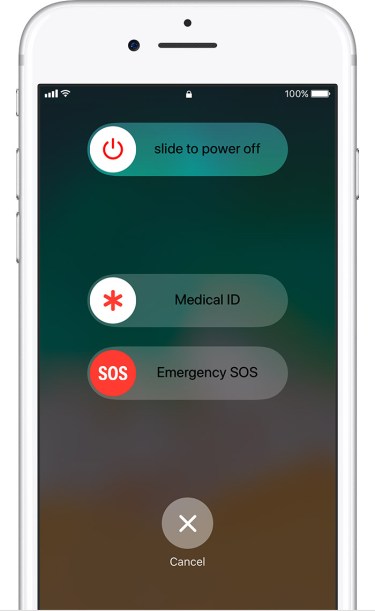
iPhones and Apple Watches are easily triggered to call emergency response services with an accidentally long touch of a button. iPhone X, iPhone 8, or iPhone 8 Plus call up the SOS emergency service by holding down the side button and one of the volume buttons for an extended period. The Watch triggers a call to 911 just by pressing and holding the side button.

Though Apple Watches and iPhones make it easier for individuals to get hold of 911 dispatchers quickly, the Watch’s accidental calls issue has been a known problem for a while now. In early 2017, Tolland County, Connecticut emergency responders reported a series of accidental calls coming from Apple Watches in the Tolland and Hartford areas. Earlier this month, a dispatcher in Ottawa County, Michigan told Newsweek his local branch had been receiving accidental butt dials from Apple Watches at least 10 times a day.

Apple has told CBS Local it was aware of the problem and was “working closely with local law enforcement to investigate the cause and ensure this doesn’t continue.”

We’ve reached out to Apple to find out what specific measures it is taking to stop these false alarm calls from causing havoc on the emergency systems in the area and possibly slowing down responders from getting to a real life and death situation. So far, we have yet to hear back but will be sure to update you when we do.

source:TechCrunch

iPhone X: The five worst features in Apple's best phone

There’s a lot to like, but Apple needs to rethink some things for 2018's iPhones.

For well over two months, my days have ended and begun with the iPhone X. Compared to older iPhones, the X feels impressively fast, slim and, with 5.8 inches of screen space, satisfyingly spacious. But as I've grown to appreciate some of its finer points, I've also discovered the traits that make me roll my eyes, gnash my teeth and occasionally erupt with a well-chosen expletive.

The funny thing is that almost all of these ire-inducing "quirks" stem from Apple's redesign of the iPhone X, which removed the home button and installed a bunch of swipes and taps to cover all navigation bases.

On one hand, Face ID and gestures prove that iPhone users can live without a home button. On the other, learning the ropes takes time, and the swipey stand-ins don't always make a lot of sense. Some iPhone X gestures feel half-baked.

So here we go, my five personal worst iPhone X navigation offenders. Stay tuned for a future piece on some of the things I truly do love about the iPhone X.

Watch this:Five annoying things about the iPhone X

Face ID never works when I most need it

Face ID, Apple's replacement for the secure fingerprint reader, uses the iPhone X's front-facing camera to approve mobile purchases and unlock the phone.

It works by making a 3D map of your eyes, nose and mouth -- except when it doesn't. Face ID recognizes me often, but fails enough times to make me notice. For example, I have about a 50-50 success rate while wearing my polarized sunglasses.

Face ID doesn't work when your face is stuffed in a pillow
Face ID doesn't work when your face i
stuffed in a pillow.
CNET
When it doesn't work is when I want it to most: as soon as I wake up in the morning. Part of the problem is biological. I'm near-sighted, which means that when I first reach for the phone while my glasses and contacts are resting in their cases, I wind up holding the phone closer to my face than the 25 to 50 centimeters that Apple recommends.

And then there's the fact that in my groggy morning state, I'm lying on my side with either one eye closed, or my face buried in my pillow.

There's no way Face ID is boring its way through that, and it's not Apple's fault.

What is Apple's fault is that the iPhone X doesn't have a satisfying backup plan to my morning squinty-eye. With Face ID, you don't get an immediate second chance to biometrically unlock the phone, not the way you do when the fingerprint scanner on a home button fails; you just tap it again.

No such luck here. You can wait some long seconds only to have to try again, or lock and unlock the phone to kickstart a new Face ID scan.

More often than not, I wind up typing in my 6-digit password, which is faster than waiting for Face ID to maybe or maybe not unlock. This gets annoying when you do it multiple times a day, every day. I'd love a biometric backup, or a faster do-over time if Face ID misses the scan the first time around.

Tip from David S.: 

Regarding Face ID, you can re-drive a biometric check by "wiggling" the home bar after a failure. Just move it up and down slightly and quickly and it should re-check.

Tip from Jonathan K.:

One trick to fix some failures is to swipe up and then down on your unlock screen while holding your finger down the whole time. This allows you to unlock notifications without opening your home screen.

Bleh battery life

If you're switching from an older iPhone with battery life that can barely hobble through a single day (especially if Apple did this), the iPhone X is a fantastic upgrade. At least at first.

The iPhone X will last longer than your old iPhone, but not as long as a $1,000 handset should.
The iPhone X will last longer than your old iPhone,
but not as long as a $1,000 handset should.
James Martin/CNET
After two months, I noticed a steep battery decline. Of course your charge will take a hit every time you stream music or video, or use navigation. That's life with a phone. But even on days when I didn't engage these things, I found myself topping up the power reserves before going out for the night, unconvinced my phone would make it through the evening activities.

When you live on your phone -- texting, looking up stuff online, reading e-books -- that uncertainty makes the difference between a device you can trust and one you have to constantly manage.

This isn't just anecdotal, either. In CNET's looping-video tests, the iPhone X lasted just shy of 11.5 hours average after 9 tests. That's two hours less than the iPhone 8and iPhone 8 Plus results with the same test, and six hours less than the Samsung Galaxy Note 8 (17.5 hours).

Anecdotally, it lasts longer than the iPhone 8 in real-life use, but peters out before the 8 Plus loses steam.

These time windows don't seem so short in a vacuum, but when you compare the results across the board, the iPhone X -- the most expensive mainstream phone you can buy -- drains as quickly as some midrange phones that cost less than half the price, if not faster.

To make matters more frustrating, Apple hides the iPhone X battery percentage meter; it isn't visible at a glance. Instead, you have to swipe down from the top of the phone on the right side of the notch to call up the Control Center. Only then can you keep a detailed tab on how much juice you have left.

Maps navigation shortcut only goes one way

Tap this to get back to your ongoing Google Maps navigation.
Tap this to get back to your ongoing
Google Maps navigation.
Jessica Dolcourt/CNET
I use maps navigation quite a lot. When you pop out of either Google Maps or Apple Maps to do something else, the iPhone X helpfully puts a tiny blue Tic Tac around the clock, turning it into a nifty little button you can tap to pop back into the map again.

This is great, but Apple stops short. See, you can toggle from any app back into the map, but you can't toggle from the map back to what you were doing before. So if you're reading an article, you can pop into the map to check on the directions (using the shortcut) but won't be able to return to the story (no shortcut).

When you get used to pressing that shortcut button a couple dozen times during a long trip, you'll be cursing Apple that it only goes one way. Yes, there are other ways to return to a previous app (like swiping right on the bottom bezel of the screen).

The main point is that Apple is training you to tap a space to do one half of a task. Why ask you to apply a completely different muscle memory to get back? Hopefully a future version of the software will make toggling a two-way street.

By the way, the shortcut also works with the phone app (the button turns green), voice memos (red) and some third-party apps.

Is the alarm on or what?

I'm an inveterate nervous-alarm-setter, even on weekends. I just can't relax unless I know I won't oversleep (yes, I have problems).

That doesn't stop me from waking up bleary-eyed in the middle of the night second-guessing if I set the alarm for the right time, or even set it at all. I would like to be able to glance at the iPhone X and immediately see the alarm clock icon reassure me, before drifting back to sleep.

This is how it was pre-iPhone X and still is on the iPhone 8 and 8 Plus. Yet for some reason, Apple has decided to bury this information. You can still see it -- and your remaining battery percentage -- but you have to pull down the Control Center first.

I don't want to mess with my phone at 4am. I don't want to swipe a screen or use more brain cells than I have to. In short, I don't want to do anything that could wake me up and make falling back asleep harder than it needs to be.

But the biggest problem is…

The first iPhone was so beloved because -- in a world of hard-to-use phones that acted like mini computers with file systems, keyboards and styluses -- it was simple. Anyone could pick it up and figure it out.

10 years on, you can't use the iPhone X without a tutorial, which Apple does provide. Things that should be easy are complex. For example, don't you swipe up on the camera icon to open it from the lock screen? No, you hard-press and then release it, a change from the previous version, or swipe right.

In other words, you have to know how to interact with the button -- which has changed from the previous version -- or know how to gesture, in order to open it. That's not a good user experience, especially for a company that's made simplicity and ease of use its watchword.

Ten years on, the iPhone X is rife with hidden gestures you just have to know, including powering down the phone
Ten years on, the iPhone X is rife with hidden gestures
you just have to know, including powering down the phone.
Lexy Savvides/CNET
A few more examples. Apple's also changed the buttons you press to take a screenshot and power down the phone. If you mess this up, you might find yourself accidentally calling 911.

You have to know which side of the Notch to swipe for the quick-controls in Control Center (the right side) and which to swipe for your notifications (the left). And now, you double-press the lock button to finish installing an app and hold it down to fire up Siri.

While these changes are absolutely learnable, and even become second-nature over time, the iPhone X's navigability is a far cry from the logical layout that made the iPhone stand out from every other phone of its day.

It's not that I wish the iPhone X reverted to the stripped-down style of the original iPhone. It's that Apple, in paving the way with some new technologies, had the opportunity to rethink how we use a phone, and wound up making it more complicated to use -- not less.

source:CNet

Apple and Android are destroying the Swiss Watch industry
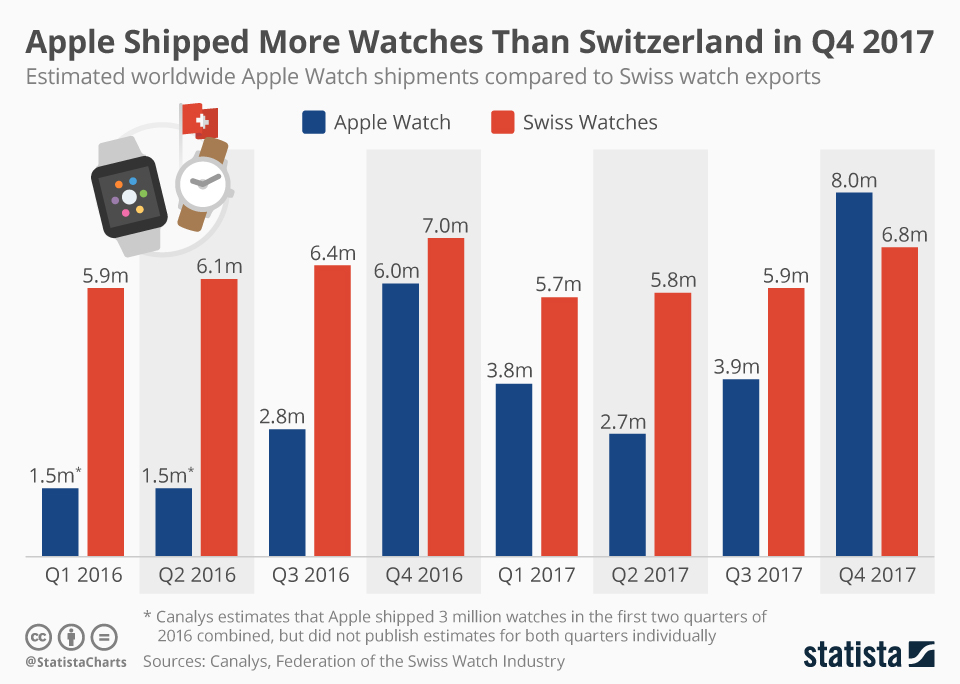
In Q4 2017 – essentially during the last holiday season – market research firm Canalysfound that more people bought Apple watches than Swiss watches. Two million more, to be exact. Brian Heater has more data but this news is quite problematic for the folks eating Coquilles St-Jacques on the slopes of the Jura mountains.

The numbers are estimates based on market data but they still point to a trend. In Q1 2016 Apple shipped 1.5 million watches to Switzerland’s 5.9 million. The intervening quarters were about the same until the launch of the Apple Watch 3 in September 2017, just in time for holiday shopping. The boost of a new phone and a new watch at the same time meant a perfect storm for upgraders, driving the total number of Apple Watches sold past the Swiss watch sales numbers.

Apple and Android are destroying the Swiss Watch industry
Image: TechCrunch
This switch does not mean Apple will maintain that lead – they have one product while Switzerland has thousands – but comparing a single company’s output to an entire industry’s in this case is telling.

Wearing watches is, as we all remind each other, is passé.

“I check the time on my phone,” we said for almost a decade as phones became more ubiquitous. Meanwhile watch manufacturers abandoned the low end and began selling to the high end consumer, the connoisseur.

Take a look at this chart:

Apple and Android are destroying the Swiss Watch industry
Image: TechCrunch
Sales of low- to mid-tier watches – and a mid-tier watch can range in price between $500 and $3,000 (and I would even lump many $10,000 watches in the mid-tier category) – were stagnant while the true cash cows, the expensive watches for the ultra-rich, fell slowly from a high in 2014. This coincides with falling purchases in China as what amounted to sumptuary laws reduced the number of expensive gifts given to corrupt officials. Sales are up as December 2017 but don’t expect much of a bump past the current slide.

As a lover of all things mechanical – I did ruin a few years of my life writing a book about a watch – I look at these trends with dismay and a bit of Schadenfreude. As I’ve said again and again the Swiss Watch industry brought this on itself. While they claim great numbers and great success year after year the small manufacturers are eating each other up while nearly every major watch brand is snooping around for outside buyers. There is no money in churning out mechanical timepieces to an increasingly disinterested public.

As time ticks ever forward things will change. The once mighty Swiss houses will sink under the weight of their accreted laurel-resting and Apple will move on to embedded brain implants and leave watches behind. The result, after a battle that raged for more than four decades, will be a dead Swiss industry catering to a world that has moved on.

source:TechCrunch

Apple addresses iOS source code leak, says it appears to be tied to three-year-old software
Earlier this week, iOS source code showed up on GitHub, raising concerns that hackers could find a way to comb the material for vulnerabilities. Apple has confirmed with TechCrunch that the code appears to be real, but adds that it’s tied to old software.

The material is gone now, courtesy of a DMCA notice Apple sent to GitHub, but the occurrence was certainly notable, given the tight grip the company traditionally has on such material. So, if the code was, indeed, what it purported to be, has the damage already been done?

Motherboard, which was among the first to note the code labeled “iBoot,” reached out to author Jonathan Levin, who confirmed that the code certainly looks real and called it “a huge deal.” While the available code appears to be pretty small, it could certainly offer some unique insight into how Apple works its magic.

“Old source code from three years ago appears to have been leaked,” the company said in a statement provided to TechCrunch, “but by design the security of our products doesn’t depend on the secrecy of our source code. There are many layers of hardware and software protections built into our products, and we always encourage customers to update to the newest software releases to benefit from the latest protections.”

Much of the security concern is mitigated by the fact that it appears to be tied to iOS 9, a version of the operating system released three-and-a-half years ago. Apple’s almost certainly tweaked significant portions of the available code since then, and the company’s own numbers show that a large majority of users (93-percent) are running iOS 10 or later. But could the commonalities offer enough insight to pose a serious potential threat to iPhone users?

Security researcher Will Strafach told TechCrunch that the code is compelling for the information it gives hackers into the inner workings of the boot loader. He added that Apple’s probably not thrilled with the leak due to intellectual property concerns (see: the DMCA request referenced above), but this information ultimately won’t have much if any impact on iPhone owners.

“In terms of end users, this doesn’t really mean anything positive or negative,” Strafach said in an email. “Apple does not use security through obscurity, so this does not contain anything risky, just an easier to read format for the boot loader code. It’s all cryptographically signed on end user devices, there is no way to really use any of the contents here maliciously or otherwise.”

In other words, Apple’s multi-layered approach to keeping iOS secure involves a lot more safeguards than what you’d see in a leak like this, however it may have made its way to GitHub. Of course, as Strafach correctly points out, the company’s still probably not thrilled about the optics around having had this information in the wild — if only for a short while.

source:TechCrunch

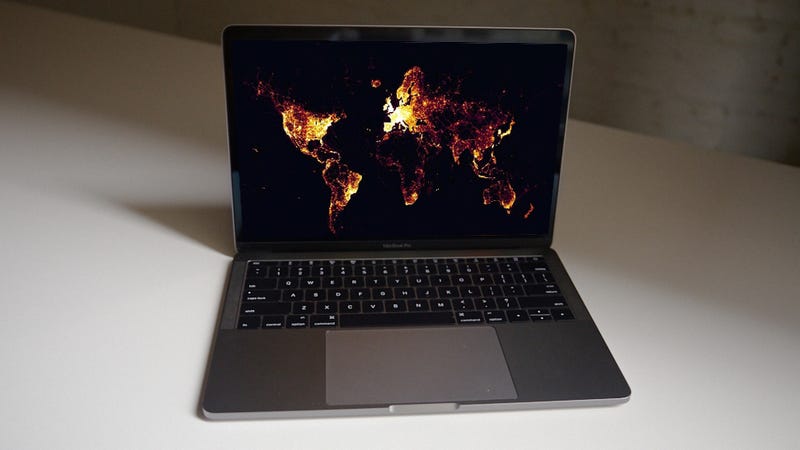
How to Avoid Being Tracked on Your Laptop, Phone, or Fitness Tracker
Today we’re all being tracked by more gadgets than ever before, and in ways that might not be immediately obvious; but it is possible to put restrictions on the data that your laptop, your smartphone, and even your fitness tracker can collect about you—in particular, where you are and what you’re doing with your device.

As you’ll be able to tell if you actually read through any of the privacy policiesthat appear when you sign up for a new website, install a new app, or boot up a new device, it’s just about impossible to stay completely untracked unless you’re going to retreat to an off-the-grid cabin in the woods to see out your final days.

That said, there are steps you can take to at least limit some of the data that developers, tech companies, websites, and advertisers are amassing on you. Here are the key settings you need to know about for your laptop, your phone, and your fitness tracker.

Laptop data

Log into a macOS computer and you’re making a deal with Apple as per its privacy policy about what it can and can’t track. There’s also the applications you install on top, and the websites you visit, which will have data logging policies of their own to think about—it’s something to consider every time you install something new.

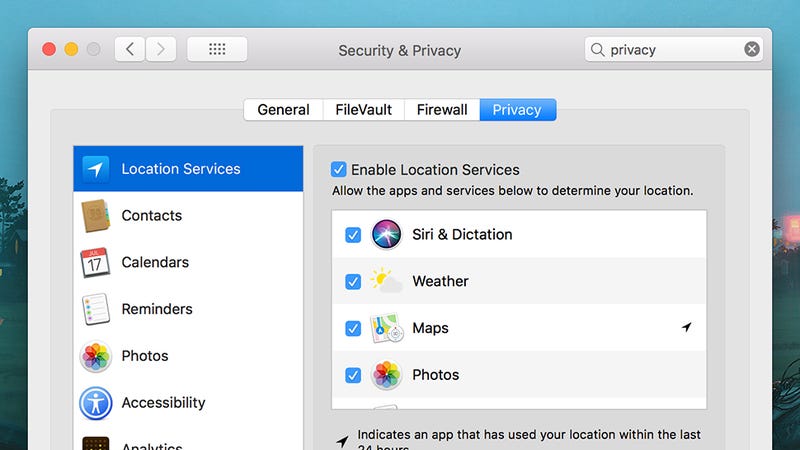
You can put certain limits on data collection—from the Apple menu choose System Preferences then Security & Privacy. Under the Privacy tab are options for preventing apps and macOS itself from tracking your location, as well as settings for which programs can see your contacts, calendars, and so on. Select Analytics and you can choose which diagnostic data gets sent back to Apple—data which the company promises is anonymized.
How to Avoid Being Tracked on Your Laptop, Phone, or Fitness Tracker
Image: Screenshot
Those of you using Windows can take a look at Microsoft’s privacy policy if you want to know what’s being collected and why—your wedding anniversary, maybe, so Cortana can remind you about it. As on macOS, you also need to consult the policies and setting pages for all the applications you install if you want to get a genuinely comprehensive picture of the data you’re giving away.

Fire up Settings in Windows 10 (the cog icon on the Start menu), click Privacy, and you can disable tracking settings related to app launches, access to the camera and the microphone by certain apps, and location tracking. You can, for example, limit the apps that have access to your precise location, as well as turn location tracking off for your whole laptop.
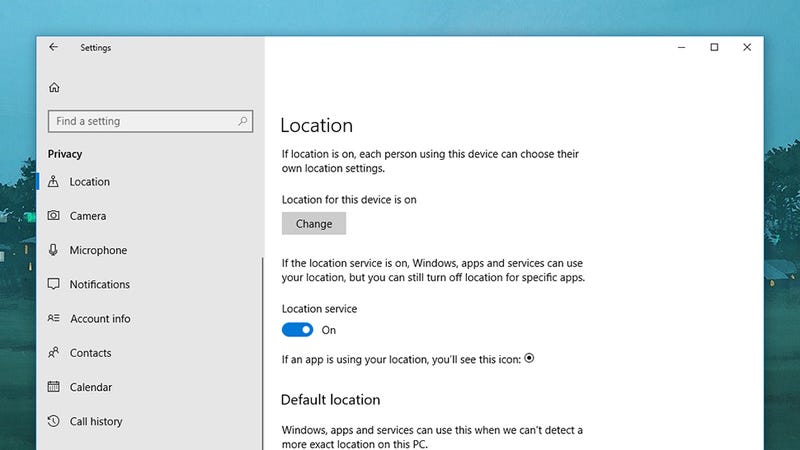
Killing location tracking on Windows
Killing location tracking on Windows.
Image: Screenshot
If you’re on a Chromebook then you’ll want to check out Google’s privacy policy to see the data that it’s collecting—which is a lot. Some of this is an inevitable consequence of choosing to use Chrome OS or indeed Chrome on macOS or Windows, but the best place to manage data logging is your Google account page on the web.

Click Go to My Activity to see data being tracked across Chrome, Google search, YouTube, Google Maps and more, and to delete it if necessary. To turn off some of this data collection—like location logging—select Manage your Google activity from the front page, then Go to Activity Controls. This data covers information collected by Google for its own purposes, rather than any data made public.

A big part of the data you’re giving away is to websites you visit, which are keen to track you to the greatest extent possible. We’ve previously written detailed guides to all the data sites collect as well as ways in which you can stop it from happening. For example, you can turn off cookie tracking in your browser’s settings if you don’t want sites to recognize you when you return.

Installing a VPN is one of the best ways of obfuscating your location from the sites you visit, the applications you use, and your ISP. It also encrypts data sent between you and the web, though it doesn’t necessarily do much to stop data tracking on the web. Sites will still be able to recognize you—especially if you log in—unless you take steps to restrict this in your browser settings. If you want to really avoid being tracked on a browser and don’t mind never signing into an account again, than you can always use a TOR browser.

Phone data

As on desktop OSes, you make certain deals with Apple and Google when you sign into your accounts on a brand new phone—if you don’t like it, don’t use iOS or Android. However, there are certain settings you can get at to restrict how much data you’re giving away on your smartphone, both to Apple and Google and the apps you’ve installed.

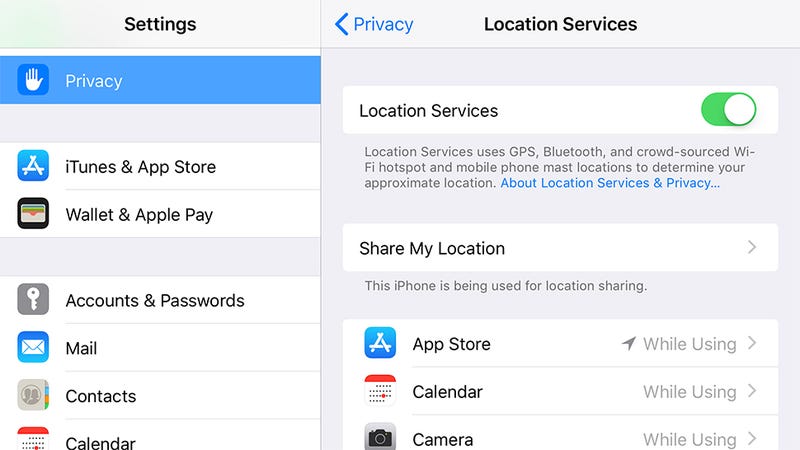
In the case of iOS, you can find a dedicated Privacy menu entry in Settings. Open this then tap Analytics to see the data you’re sending back to Apple—this includes data on how you use your phone, how you use iCloud, and the fitness tracking data logged by your phone’s sensors. None of this information identifies you personally, Apple promises.
How to Avoid Being Tracked on Your Laptop, Phone, or Fitness Tracker
Image: Screenshot
You can actually see the data being logged if you tap Analytics Data. In the words of Apple: “Personal data is either not logged at all, is subject to privacy preserving techniques such as differential privacy, or is removed from any reports before they’re sent to Apple.” If you’re not happy with any of this, turn the toggle switches to off next to Share iPhone Analytics, Share iCloud Analytics, and Improve Health & Activity.

Head back to the Privacy menu and you’ve got all the key permissions being used by your apps, both Apple’s and those from third-party developers—tap any of these entries, like Health, to revoke permissions. In the case of Location Services, you can either turn your phone’s location tracking off completely, or on an app-by-app basis, which is great for your privacy but not so great for finding local coffee shops.

Over on Android, you can check up on what Google is keeping tabs on by launching Settings then choosing Google and Personal info & privacy. The key option on the subsequent screen is Activity controls, where you can choose the data that Google logs, from your voice searches to your location—it’s up to you to what extent you trust Google to use this data in a responsible way.

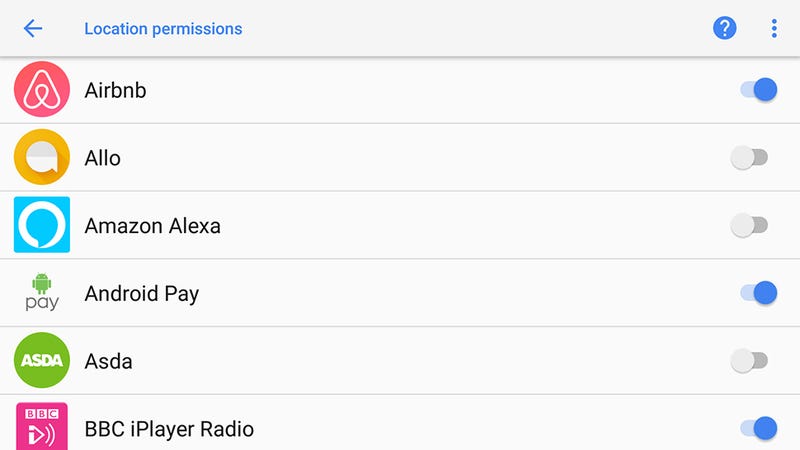
Then there are all the individual tracking permissions assigned to your apps, which on Android can be found by tapping Apps & notifications then App permissions. As on iOS, the items listed here are the various bits of data apps can request access to, from your current location to the phone microphone.
How to Avoid Being Tracked on Your Laptop, Phone, or Fitness Tracker
Image: Screenshot
Tap any of the items on the list to see which apps have access and revoke that access if necessary—just slide the toggle switch to the off position. You can also choose an app from the Apps & notifications screen, then select Permissions to see what it has access to and revoke the access if you want to (which may or may not break some of the functionality of the app along the way).

With any iOS or Android app, having access to something like the microphone doesn’t necessarily mean the app is recording everything you say. Even if it is (maybe it’s a dictation app), it doesn’t necessarily mean the developer is using it for a nefarious purpose. But you’re really at the mercy of the developers, their privacy policies, and how well they stick to them—the safest option is just to turn off permissions.

Fitness tracker data

When you buy and set up a new fitness tracker, you’ve got two concerns: The data the tracker manufacturer is collecting, and the data being collected by any apps you’ve set up to work with the tracker. As always, a thorough read through of the associated privacy policies is recommended, if you can make sense of them.

In the case of individual apps, such as Strava or Fitbit’s bundled app, you can make use of the various permission switches we’ve already mentioned that are built into iOS and Android. However, they refer specifically to the data being collected from your phone, and won’t necessarily cover data being synced from a separate wearable.
How to Avoid Being Tracked on Your Laptop, Phone, or Fitness Tracker
Image: Screenshot
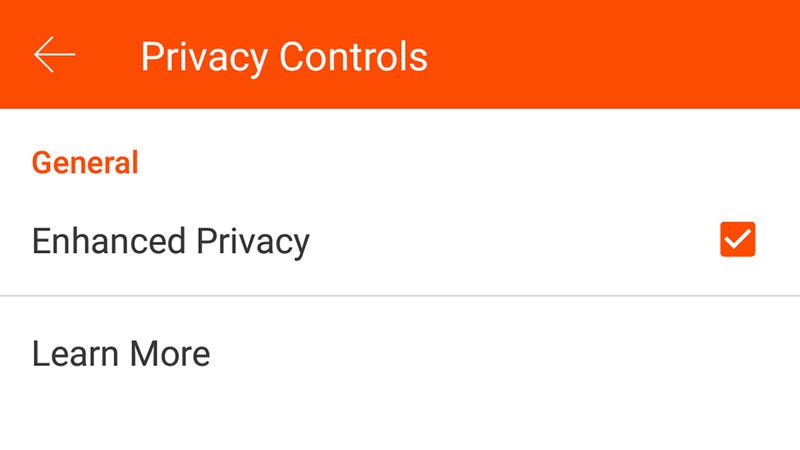
To really take control over the data being logged and shared by your fitness apps, you need to delve into the settings for those apps. In the case of Strava, for example, tap the Menu button (top left on Android) or the More button (bottom right on iOS), choose Settings and then Privacy Controls, and you can hide your activities from other users.

You can also hide individual activities from view, and extra privacy settings are available on the website, including the specific option to exclude you from heat maps, and the option to create privacy zones. These are certain areas of the planet where your activities can’t be viewed by anyone you’ve connected with or anyone browsing your Strava profile.

Of course this only hides your runs and cycles from other people, not from Strava itself—though the company says private activities weren’t shown on the now infamous heat map. As we’ve mentioned above, signing up with these services essentially means you’re giving them permission to log and use your data as defined by their privacy policies (here’s Strava’s), which are usually fairly ambiguously worded.
How to Avoid Being Tracked on Your Laptop, Phone, or Fitness Tracker
Image: Screenshot
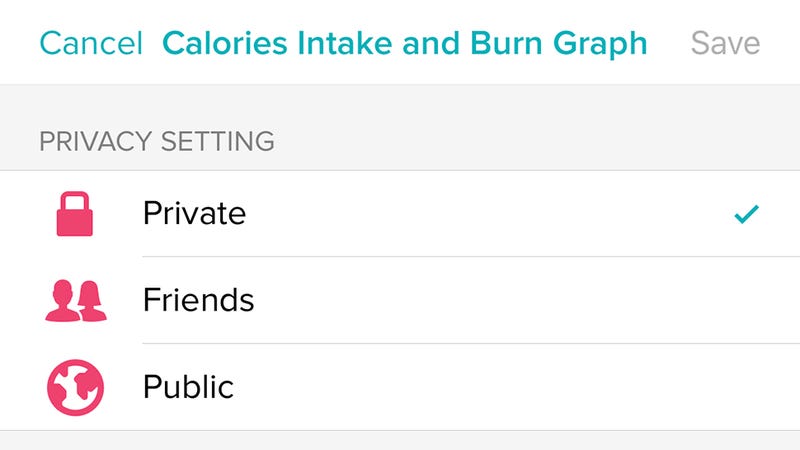
Your own fitness tracker and apps may vary. With Fitbit’s apps, tap the profile icon to the top right, then your account name, then Personal Stats—similar options are available on the Fitbit website via the cog icon (top right)—then Settings, then Privacy. The subsequent screens let you control the data that’s shown on your Fitbit profile and made visible to your Fitbit friends, or indeed the world at large.

So click or tap on any bit of data, such as Average Daily Step Count or Sleep Graph, and you can set its visibility to Public, Friends, or Private. As with Strava though, this is only limiting what other people can see—Fitbit is still collecting all of this information, as it’s the way that its apps work.

Obviously Strava, Fitbit, and others need to collect and log data on you—it’s how the whole fitness tracker experience works, so you can see just how much faster your morning jog is getting. You can limit some of the ways this data is used, depending on the app, but getting out altogether usually means deleting your account and uninstalling the app.

source:Gizmodo

A Google Chrome lapel pin
A technology twist could make mobile browsing faster and more engaging, and Google's putting muscle behind it.

The web has taken a beating in the smartphone era. But it's about to start beating back.

Explosive growth of the web, starting in the 1990s, connected the world's population. In the last decade, though, we all started tapping app icons instead of web hyperlinks to chat with friends, share photos and buy products online.

Now Google's Chrome team and browser allies from Mozilla, Opera and Microsoft are putting a new twist on things. It's called progressive web apps, or PWAs. They endow websites with many of the advantages of native apps that run on Google's Android or Apple's iOS. And they can outdo native apps when it comes to fast, hassle-free loading.

PWAs are headlining this week at the Chrome Dev Summit, Google's two-day conference in San Francisco for programmers who want to figure out where Google is taking browser technology. Native apps hog the spotlight, but at the conference, Google will reveal a good reason why browsers generally and Chrome in particular also deserve a place on the stage: unbeatable reach.

"We have over 2 billion Chrome instances that are active" each month, said Darin Fisher, Google's vice president of Chrome engineering and the conference's opening speaker. That amounts to fewer than 2 billion people, because a single person can use Chrome on multiple devices, but it's still a platform with immense power.

That power is essential to making Google's vision a reality. If it succeeds, that browser icon might be the one you reach for on your home screen a lot more often.

Website usage tracking firm StatCounter says browser use on mobile devices just exceeded PC browsing worldwide
Website usage tracking firm StatCounter says browser use on mobile devices just exceeded PC browsing worldwide.
StatCounter
Success on that front also could help restore the fortunes of the web, the closest the computing industry has come to freeing us from software that works only on one device or another, like a Windows laptop but not an iPhone. In an era when tech giants wield tremendous power, the web levels the playing field and makes it easier for new competitors to join the game.

It's no wonder Google is pushing the mobile web. This month, browser usage on tablets and phones for the first time surpassed usage on PCs, analytics firm StatCounter said.

App fatigue

Apps might get the glory, but the web does a lot of the work already. When we need to interact with a business or service, a website is often our first point of contact. Apps are popular, with millions available in Apple and Google app stores, but it's hard to convince people to install them, and even then, most lie dormant.

Among American adults, "almost half...report that they use five or fewer apps at least once per week, and just 16 percent indicate that they use more than 10 apps on a regular basis," a 2016 Pew Research Center study found. And Localytics, which monitors app usage, found that 23 percent of users never reopen an app after the first time and that only about a fifth of people are likely to still use an app after three months.

Darin Fisher, vice president of Chrome engineering, speaks at Google's Chrome Dev Summit
Darin Fisher, vice president of Chrome engineering, speaks at Google's Chrome Dev Summit.
Stephen Shankland/CNET
Fisher isn't pronouncing native apps dead, but he thinks PWAs means the web can shoulder more of the load.

"It's expensive to get people to install an app," Fisher said, but progressive web apps arrive fast through the browser to keep visitors happy, then download extra abilities silently in the background. For website developers, he said, "there's really no fundamental limit to the kinds of experiences you can create."
There's a place for both apps and websites, analyst firm Gartner believes. "A mobile website is more generic, with wider reach, like your ABC or CBS or Fox or NBC channels," said Research Director Jason Wong, while native apps are akin to "a cable channel like the Cooking Channel or MTV targeted toward a specific segment." Apps are great for people who use a company's services are lot, like the 10 percent or 15 percent of users who come back to an e-commerce site frequently, but websites are crucial for the rest.

"The mobile web is unavoidable. Users are using smartphones and tablets to access websites more and more. Google has changed its [search] algorithm to reward mobile-optimized websites," Wong said. "It's imperative companies move to responsive and mobile-optimized websites."

Progressive web what?

If you're browsing the web, you won't see any fancy label announcing a progressive web app. But done well, you'll like it.

The first idea behind a PWA is that websites arrive as fast as possible in basic form so you can get started immediately, then gradually flesh themselves out in the background -- thus the term progressive. Compare that to a typical native app that often requires you to download tens of megabytes of data and wait for an installation before you can get started.

They're not for every situation right now -- games, for example. But PWAs can be appropriate for lots of situations with native apps, like social networking, e-commerce, news and streaming video.

PWAs also download components so they work offline. And they take advantage of push notification abilities for the web -- for example, Carnival Cruise's site can prompt customers to finalize a reservation before it expires in 24 hours. And PWAs can be placed as a home-screen icon so you're more likely to use them again.

The results have convinced companies like the Washington Post, Housing.com in India and Chinese e-commece giant Alibaba. Also, CNET launched its own progressive web app Thursday. Tap this Tech Today link on your phone or tablet if you're curious.
Thao Tran, head of global partnerships for Google,  shows at Chrome Dev Summit how much less expensive  it's been for Housing.com to woo new customers with its progressive web app
Thao Tran, head of global partnerships for Google,
shows at Chrome Dev Summit how much less expensive.
Stephen Shankland/CNET

When Alibaba moved to a PWA, it found a website visit was 76 percent more likely to convert into a website transaction. Among Android device users, monthly usage increased 30 percent, and for those with iPhones and iPads, monthly usage increased 14 percent.

PWAs are particularly popular in developing countries where mobile networks are slow and coverage is spotty, said Alex Komoroske, a Chrome group product manager. Using a cheap, low-end Android phone with an older 3G connection, downloading FlipKart's e-commerce native app took 14 minutes, but the company's progressive web app took 14 seconds, he said.

Where's Apple?

Google has built into Chrome much of the required supporting technology, including push notifications. Mozilla's Firefox and Microsoft's Edge are on board, too, making it safer for web programmers to bet on PWAs.

Apple hasn't joined the party with its Safari browser, but Fisher is optimistic.

If 50,000 website developers start using PWA technologies, "you can imagine Safari engineers will see there's a lot of interest," Fisher said. "Developers can have some influence, voting with their feet for what they care about."

Apple didn't respond to a request for comment.

Apple forbids other browser makers from using their own browser engines on iPhones and iPads, so running Chrome doesn't enable PWAs on those devices. Apple's lack of support is "a real concern for developers," Fisher said, but embracing the PWA approach still boosts performance on Apple's iOS-powered devices.

Easier payments

And progressive web apps will benefit from web payment technology where Apple is ahead, letting you easily complete a purchase with Apple Pay. A more general technology, the web payments interface, is coming to mobile browsers to connect to Android Pay, a credit card, Alibaba's AliPay service, Apple Pay, or whatever other payment mechanism your phone offers.

It all leads to vast improvements over the plodding, hard-to-read websites still common with mobile browsing.

"Everybody should be building a progressive web app," Fisher said. "It just makes sense."

source: CNET

Chinese National, Three Others Plead Guilty in Apple Counterfeiting Scheme
A Chinese national who was living in the U.S. on a student visa pleaded guilty on Friday to charges of trafficking in counterfeit goods and conspiracy over a plot to sell Chinese-made Apple knockoffs to U.S. customers.

According to a Department of Justice press release, 43-year-old Jianhua “Jeff” Li’s company Dream Digitals conspired with at least three others to smuggle over 40,000 Chinese-made “electronic devices and accessories, including iPads and iPhones, along with labels and packaging bearing counterfeit Apple trademarks.” In the process, Li netted some $1.1 million in sales revenue from customers who believed they were buying actual Apple products. He also smuggled in parts separately from the counterfeit labels in order to assemble the electronics stateside, part of an effort to avoid detection by customs officials.

“Proceeds from the sales of the devices were funneled back to the co-conspirators’ accounts in Florida and New Jersey via structured cash deposits and a portion of the proceeds was then transferred to conspirators in Italy, further disguising the source of the funds,” the DOJ wrote.

According to court documents, prosecutors say that if the products were genuine, they would have been worth over $15 million.

Jianhua “Jeff” Li Apple counterfeiting scheme by Nick Statt on Scribd


China has a robust counterfeiting industry; in 2015, officials there busted a factory for producing 41,000 fake iPhones worth up to $19.4 million in one year alone, per Fortune. The counterfeiting ring bought second-hand components in Shenzen and “hired hundreds of workers to reassemble them on six production lines.” Years earlier in 2011, Chinese authorities were reported to have uncovered at least 22 fake Apple stores in the city of Kunming. According to Fortune, the International Chamber of Commerce estimated the global counterfeit trade was worth up to $1.7 trillion in 2012, and China accounted for almost 70 percent of seizures of fake products globally over a period from 2008 to 2010.

Apple has separately filed lawsuits against Amazon retailers for selling fake products, like Mobile Star LLC, which it alleged sold large numbers of counterfeit Lightning cables and charges.

Li’s sentencing is set for May 30th, while co-conspirators Rosario LaMarca, Andreina Becerra, and Roberto Volpe have also pleaded guilty, according to the DOJ. LaMarca received a sentence of 37 months in jail.

source:Gizmodo

MKRdezign

Contact Form

Name

Email *

Message *

Powered by Blogger.
Javascript DisablePlease Enable Javascript To See All Widget