Search Result For "galaxy s9"

With Mobile World Congress coming up at the end of the month, the smartphone world is ramping up to peak hype in preparation for the Samsung Galaxy S9’s expected debut there on February 25th. The rumors are flying so we scoured the net and gathered up the most credible leaks and rumors to give you the best idea of what Samsung will announce in just a couple of weeks.

Design

One of the most confusing things about the Galaxy S9 based on early leaks and renders is that the front of Samsung’s new flagship is going to look almost identical to the Galaxy S8—right down to the curved display and the rounded corners on its screen. Even the arrangement of the sensors and cameras built into the top bezel look unchanged.
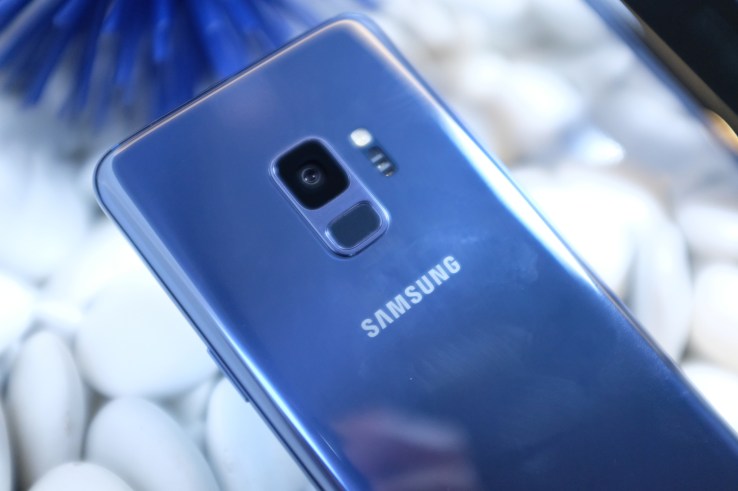
However, it’s a slightly different story around back, as Samsung has moved the S9’s fingerprint sensor to a more central location below the rear camera, rather than off on the right side like you get on the Galaxy S8. Additionally, the camera stack is aligned vertically, instead of horizontally, which gives the S9’s back a more symmetrical appearance. Everything else seems like it is pretty much the same as the Galaxy S8, including the brushed aluminum band holding the front and back glass panels together, and Samsung’s retention of the dedicated Bixby button on the left.

For those wondering about color options, Evan Blass claims the S9 will be available in midnight black, lilac purple, titanium gray, and coral blue.

Specs

Inside, the Galaxy S9 is expected to come with Qualcomm’s latest mobile processor, the Snapdragon 845, which would the first time this chip has been featured in a consumer device. Memory and storage for the S9 will stay at 4GB and 64GB respectively. However, VentureBeat claims the S9+ should get a small bump up to 6GB of RAM and 128GB of storage standard. The S9 and S9+’s OLED screens will remain the same size, at 5.8 and 6.2-inches, and should sport the same 2960 x 1440 resolution as well.

A nice upgrade, according to SamMobile, is that it seems the S9 will have stereo speakers, which should deliver a much richer audio experience than the mono setup on the S8. Finally, also according to Evan Blass, Samsung has wisely decided to retain a headphone jack for the S9, which should be a big boon for people who don’t want to deal with wireless headphones.

New Rear Camera

Despite the lack of official specs or info, Samsung is already teasing the power of the S9’s new camera. Based on yet more info from Evan Blass, that confidence might not be unwarranted, as it seems the S9 will feature the world’s first adjustable aperture camera on a smartphone that can switch between f/1.5 (which would also widest aperture on a smartphone) and f/2.4 on command. On top of that, there are reports from SamMobile saying that the S9 will have a new super slowmo feature that can record video at up to 480 frames per second at 720p. Meanwhile, the S9+ will also feature a second rear camera with 2x optical zoom similar to the one found on the Galaxy Note 8.

Other New Features

Here’s Everything We Think We Know About Samsung’s Galaxy S9 So Far
Image: SamCentral
Currently, the S8 already has iris scanning and facial scanning biometric security options. But according to SamCentral, on the S9, Samsung will combine the two to create what it’s calling Intelligent Scan, which seems to be the company’s answer to Apple’s Face ID. Based on a teardown of the Note 8’s Oreo update, Intelligent Scan should leverage eye and face recognition to offer better security, while also enabling another new feature that people are calling 3D emojis.

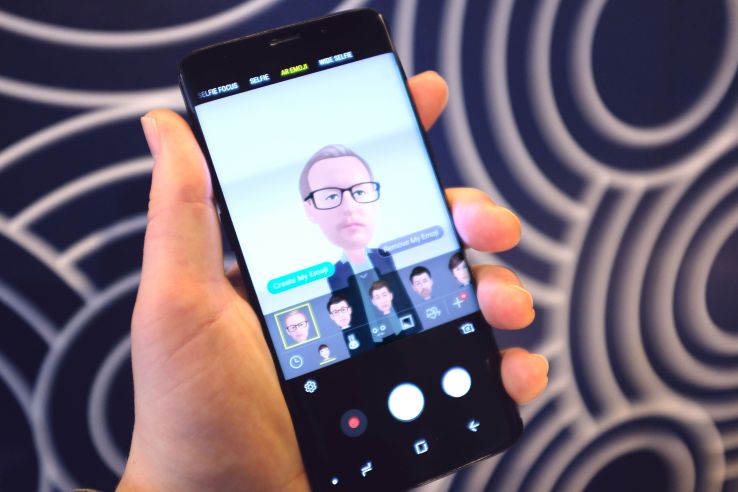
That’s right, after Apple included Animoji on the iPhone X, it seems Samsung has come up with its own version of animated emojis that react to your facial movements. According to ETNews, the S9 will be able to create 3D characters based on a persons’s face, which can be used in place of emoticons in specific messaging apps. However, 3D emoji is currently just a placeholder name, while we wait for Samsung to announce something more official on February 25th.
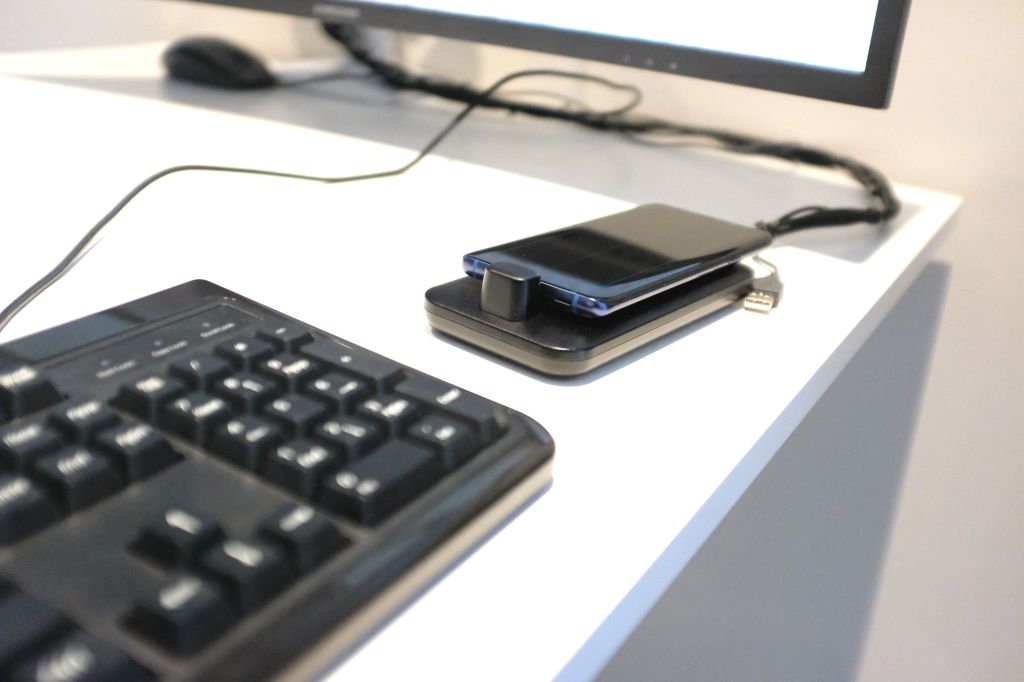
The last big change is a new version of Samsung’s DeX Station, which has evolved from a standup dock-like affair to something more padlike. The pad will come with all the necessary ports to hook up a mouse, keyboard and an external display, so that you can transform the S9 into a mini desktop of sorts. Fingers crossed it improves on the last version.

Price and Availability

This last topic is the subject of some major trepidation, because in the fall, both Samsung and Apple released the most expensive phone each company has ever made in the $900 Galaxy Note 8 and the $1000 iPhone X. And unfortunately, based on rumors coming out of both South Korea and the UK, it seems like the price of the Galaxy S9 is going up too.

Based on rumored pricing in Asia and Europe, I’m estimating that the Galaxy S9 will go for between $775 and $800, which would be a significant jump up from the $700 to $720 the Galaxy S8 cost when it came out last year (prices varied slightly depending on the carrier). Meanwhile, the larger S9+ will most likely command its typical $100 premium over the standard model. This would make the S9 the most expensive Galaxy S yet, which probably isn’t too surprising for anyone keeping tabs on recent smartphone trends, but it is a bit worrying.
Here’s Everything We Think We Know About Samsung’s Galaxy S9 So Far
Image: Samsung
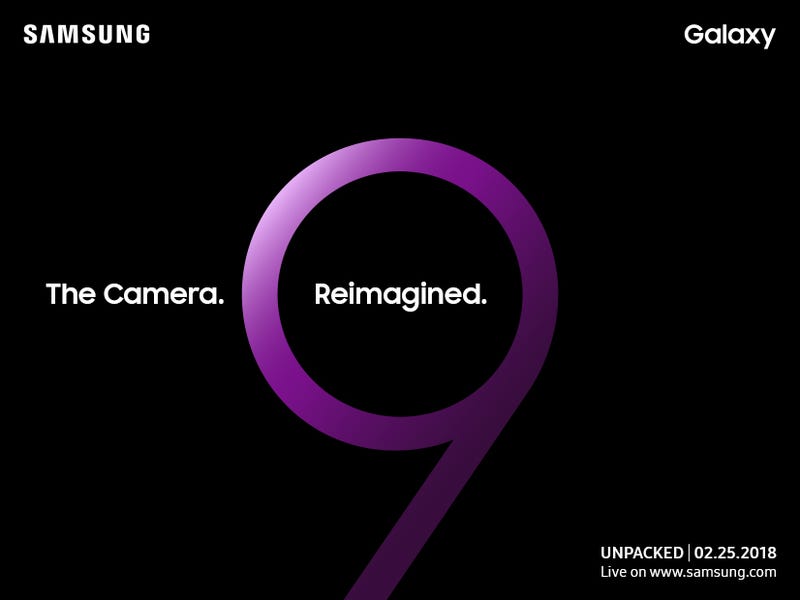
As for when you’ll actually be able to buy one, @evleaks claims that pre-orders will go live on March 1st, with orders shipping out two weeks later on March 16th. This would be one of the earliest Galaxy S launches in recent history, which is good for anyone who has been holding off on buying a new phone, and should ensure that Samsung is the first phone maker out there selling the next generation of phones.

So will the S9 be enough to steal the thunder away from Apple iPhone X? It’s hard to say yet, but if those camera rumors are true, that could be enough put Samsung back on top. Either way, I’ll be on the ground in Spain at Mobile World Congress covering all the news, so check back starting Feb 25th for the latest.

source:Gizmodo

And this year is all about business. While the Samsung Galaxy S9 is going to be announced tomorrow at Mobile World Congress in Barcelona, Slashleaks shared the official promo video for the Samsung’s upcoming flagship device.

It’s a polished 3-minute video packed with information about the new phone. First, just like rumors said, it looks just like the Galaxy S8. There are some minor changes, such as the location of the fingerprint reader. But it’s going to feel just like holding a Samsung Galaxy S8.

This isn’t necessarily a bad thing as the Galaxy S8 was a great phone with a tall 18:9 display. If you want a well-designed Android phone, Samsung has some nice options.

When it comes to software features, the video shows an improved DeX dock. It lets you plug your phone to a display or a TV and turn it into an Android-powered desktop experience. It’s a good way to show presentations for instance. And because the dock is flat now, you can use the phone as a trackpad.

The video also says that the Galaxy S9 is water resistant and comes with a new translation feature. You can point the camera at text to translate it into a familiar language. This feature is powered by Google Translate as you can see in the corner of the screen in the video.

Samsung really insists on the business features of the device. The company wants you to think about the Galaxy S9 when it’s time to buy a bunch of new phones for your employees. There will be an enterprise edition with maintenance, extended guaranty and security updates for up to four years. You can also update the firmware of your employees over the air.

The 3-minute video probably only tells part of the story. That’s why we have a team on the ground in Barcelona to give you more details about the Galaxy S9 tomorrow.

source:TechCrunch

We ran 12 tests on the Snapdragon 845 processor to find out.

There's little doubt the upcoming Samsung Galaxy S9 will be fast. And on a warm, sunny day at Qualcomm's headquarters in San Diego, California, we found out exactly how fast that might be.

The Galaxy S9 is expected to be one of the first phones in 2018 to use Qualcomm's Snapdragon 845 chipset. The chipset is the phone's brain. You can't run the operating system, connect to the internet or process photos without it. The Snapdragon 845 also comes with advanced features that will produce more colorful photos and videos, longer battery life and biometric security that guards your privacy with your fingerprint or face.

Here's the Snapdragon 845 reference device, running a graphics test
Here's the Snapdragon 845 reference device,
running a graphics test.
Jessica Dolcourt/CNET
A poorly performing chip means the entire phone could run slowly, and the battery probably won't last as long. So when Qualcomm offered to let us test the claim that Snapdragon 845 will work 25 percent faster across the board compared to the Snapdragon 835 found in last year's Galaxy S8, we jumped at the chance.

We journalists spent two hours running and rerunning a suite of 12 benchmarking tests on Android reference phones that the company whipped up specifically to evaluate and fine-tune Snapdragon 845. For a truer reading, we gave the phones a chance to cool down when their batteries grew hot.

Together, the dozen benchmarking tests simulate how well the graphics (GPU), raw computing power (CPU) and websites among other things will run on phones that use this chip.

I then ran the exact same tests on some of 2017s top phones when I returned to San Francisco: the Galaxy Note 8, Pixel 2 XL and LG V30. And yes, all three used last year's Qualcomm chip, the Snapdragon 835.

Watch this:Our Samsung Galaxy S9 feature wishlist

You'll see the results in the charts below, but spoiler alert: The 845 device performed at least 25 percent faster than the best score on all but four tests out of the dozen.

Now, benchmarking tests are only one indication of performance, and there's a lot they don't cover. Keep reading for more on that.

The new chip is hitting at a time when Qualcomm, the world's largest chipmaker for mobile phones, needs to show it's still the apex predator. The company faces increased pressure from device makers like Huawei and even longtime partner Samsung, both companies that make their own chips (Samsung phones often use Qualcomm in some regions and their house-made Exynos processor in others).

Watch this:Samsung Galaxy S9: The latest details

Qualcomm is also locked in a legal battle with Apple that it's currently losing -- perhaps along with Apple's business -- even as the ensuing threat of a hostile takeover by giant chipmaker Broadcom looms.

But a wave of best-in-class phones made with Snapdragon 845 will give Qualcomm the prestige it needs to sell more chips and strengthen partnerships as it prepares to usher in 5G phones next year.

What's a reference phone and why does it matter?

The phones running Qualcomm's Snapdragon 845 CPU aren't prototypes, and you'll never be able to buy them. They're what's known as "reference devices," working phones meant for in-house use.

In this case, Qualcomm relies on them to test new chips in as close to a real-world environment as possible. The reference devices also work as a proof-of-concept for partners that might consider making a phone or other device using the chip.

Snapdragon 845 reference phone specs

  • 5.5-inch LCD screen with 2,560x1,440-pixel resolution
  • Dual rear cameras: 12-megapixel and 13-megapixel
  • Front-facing camera: 12-megapixel
  • 2.8GHz Snapdragon 845 processor
  • 6GB RAM
  • USB-C
  • No headset jack
  • Not waterproof

Snapdragon 845 vs. Galaxy Note 8, Pixel 2 XL and LG V30

I ran 12 benchmarking tests a minimum of three times each on the Snapdragon 845 reference phone, in some cases rerunning tests six times when the results seemed off-target. I averaged the results.

Then, I ran each test three times on three other phones: the Galaxy Note 8, Pixel 2 XL and LG V30, which all run on Snapdragon 835. That's a grand total of 150 benchmark results to average and compare in the chart you see below.

The Galaxy S9 looks like this, according to these renders


If you don't regularly study benchmarking scores, don't worry. All you need to know is that taken together, these tests attempt to model real-world speeds for graphics, computing power and web use. They establish a baseline indicator of how fast the phones can be at their peak efficiency.

Comparing phones with the Snapdragon 835 chips can be one basis for predicting how devices made with the next generation processor will behave, along with real-world observation.

If there's only one thing you take away from this chart, it should be how much faster the Snapdragon 845 reference device is than the next fastest 835 phone. That's the far right column.

SNAPDRAGON 845 VERSUS NOTE 8, PIXEL 2, LG V30

Snapdragon 845 Reference PhoneGalaxy Note 8Google Pixel 2XLLG V30Percentage faster
AnTutu256,805200,665203,109178,87126%
Geekbench 4.0Single: 2,439; Multi: 8,200Single: 1,870; Multi: 6,411Single: 1,911; Multi: 6,393Single: 1,922; Multi: 6,466Single: 27%; Multi: 27%
GFXBench 4.0 Manhattan 3.0 Offscreen5,160 frames3,911 frames3,747 frames3,750 frames32%
GFXBench 4.0 Manhattan 3.1 Offscreen3,769 frames2,650 frames2,566 frames2,573 frames42%
GFXBench 4.0 T-Rex Offscreen8,434 frames6,567 frames6,476 frames6,318 frames28%
GFXBench 4.0 Car Chase Offscreen2,086 frames1,488 frames1,453 frames1,432 frames40%
3DMark Slingshot 3.1 Unlimited4,8954,6904,0173,5684%
3DMark Slingshot 3.0 Unlimited6,2176,0265,0064,0293%
Kraken - Chrome (lower is better)2,436 milliseconds3,643 milliseconds3,536 milliseconds3,150 milliseconds23%
Octane - Chrome15,92111,55012,32610,80529%
Sunspider - Chrome (lower is better)448 milliseconds591 milliseconds529 milliseconds862 milliseconds15%
Jetstream - Chrome8659636237%

*Higher scores are better, for all results except Kraken and Sunspider
**Versus the next fastest phone in this group

Snapdragon 845 benchmarking tests paint half a picture

Benchmarking scores aren't the end-all, be-all of performance indicators. First of all, the tests don't account for variations in how you use the phone, or for all the features that help you enjoy your device.

Second, the validity of benchmarking results has been called into question in the past for "optimizing" phones so they skew more powerful in testing. Samsung, OnePlus and HTC have all been nailed for this.

The Snapdragon 845 will power 2018's top phones
The Snapdragon 845 will power 2018's top phones.
Josh Miller/CNET
Even if one handset using 845 winds up with scores that peg it as slower than another device with the same chipset, you may not notice much difference when using the two side by side.

That's why we balance test scores with anecdotal observation from everyday life. Does it lag or hang as you naturally use it, how smooth is scrolling or gameplay on a game with some seriously detailed graphics? How long does it take to process a photo?

The most meaningful interpretation we can get from these results right now is that Qualcomm's claims mostly hold. Best case scenario, you can hope for your Snapdragon 845 phone to be about 25 percent faster than 2017's models.

But the variation in score between phones humming along on the very same chip proves that there are other factors in play that make these devices the sum of multiple parts, not just a collection of processors.

Before you know it, we'll be able to get a better idea of Snapdragon 845's real-life results, as soon as the first phone to use it -- likely the Galaxy S9 -- lands in our hands.

source:CNet

Will the mockery of Apple continue

Commentary: Samsung keeps insisting that Apple is always behind. With the release of the Galaxy S9, how true might that be?

Technically Incorrect offers a slightly twisted take on the tech that's taken over our lives.

Will the mockery of Apple continue
Will the mockery of Apple continue?
Samsung / YouTube screenshot by Chris Matyszczyk / CNET
It was the ad that took mockery to an exalted level.

Released last November to coincide with the launch of the iPhoneX, here was Samsung wantin everyone to believe that it was the inventive brand, while Apple was the label of sad sheep and retrograde lovers.

Samsung was, in its own eyes, first with just about every single development in phone design since, well, smartphones were invented.

Apple merely copied. And late, too.

With the Galaxy S9 being launched this week, will Samsung still be able to claim this?

If you look at the teaser ads for the S9 that the Korean company released last week, they featured the camera, the camera and the camera.

Oh, and an emoji variant. Which some Apple faithful might think of as copying Animoji with a little twist.

Oddly, this apparent emphasis on the camera and Animojis coincides precisely with what a T-Mobile salesman told me were the biggest selling point of the iPhone X: selfies and Animojis.

Is this what we've come to? Phone companies selling their devices by giving humans more ways to imaginatively express their self-regard?

Of course, it may be that Samsung has some pulsating surprise that it's saving for the February 25 launch day.

Yet the rumors collected by my colleague Justin Jaffe so far don't point to a phone that will give Samsung a new reason to claim its (supposedly) obvious creative superiority over Apple.

Yes, there might be a more entertaining unlocking tool or perhaps a virtual fingerprint reader, but will these be sufficient to add a new chapter to Samsung's Apple-mocking?

Samsung didn't immediately respond to a request for comment.

Some might see an acknowledgement of an essential parity between the two brands in the naming of the new phone.

It seems to be the Galaxy S9. Not, say, the S10. Or even, to tweak Apple further, the S11. Is a 9 somehow slightly lesser than a 10? I mean, a X?

Psychology can play strange tricks on vulnerable human minds.

Personally, I'd rather like Samsung to reveal something the rumor mills haven't uncovered. There's always something delightful about companies defying the constant online chatter, renderings and photographing of supposedly new phones.

Mischievous Apple-persons, though, might muse that the most enjoyable surprise for them would be if the S9 had a notch.

source:CNet

With the Galaxy S9, Samsung put the fingerprint sensor where it belongs
The Samsung Galaxy S8 is a beautiful phone with a critical flaw. The fingerprint sensor is in the wrong damn spot. A phone is only as good as its usability and, to me, the S8 is crippled with its fingerprint sensor located off center. It drives me mad but Samsung finally righted the wrong with the S9.

Samsung just announced the latest Galaxy phone and we spent some time with it. It’s very similar to the S8, which, to me, is just fine. The Samsung Galaxy S8 is a lovely phone besides of course the aforementioned fingerprint sensor location.

The S8’s fingerprint sensor is to the right of the camera lens instead centered on the phone. It’s a crazy location and I’ve yet to get used to it. My finger hits the camera lens every time.

It took me sometime to get used to a back-mounted fingerprint sensor and most of the time I still appreciate TouchID’s location on my iPhone. There are some upsides to having it on the back. It’s much easier to pull the phone from a pocket and unlock it in one smooth motion. But only if the button is in the right place and it’s not on the S8.

I’m not alone. The S8’s fingerprint sensor location is universally hated. Samsung must have heard the feedback loud and clear.

Now, on the S9, the sensor is in the center of the phone and everything is right in the world. I don’t care about the new camera or Samsung’s copy of Animojis. Even the inclusion of the Snapdragon 845 is meaningless to me. All I want is an S8 with a center-mounted fingerprint sensor and the S9 is just that with a few fun extras.

source:TechCrunch

Samsung’s DeX docking station gets revamped, turning a smartphone into a trackpad
If you were having any doubts about Samsung’s commitment to its DeX, consider them assuaged. The company introduced its smartphone docking hardware with the Galaxy S8 and has talked up a new version for every big phone release since then — and today’s big Galaxy S9 reveal is no different.

We were pretty lukewarm on the idea — or at least skeptical of how big a niche such a product really was. But to Samsung’s credit, the company been responding to user feedback and building it out since launch. This generation marks the biggest and most welcome change to the system thus far, including, notable a big shift in form factor.

The update cleverly shifts the dock’s orientation from vertical to horizon, so the phone lays flat when it’s plugged in. That means the handset gets to do double duty, both powering the desktop system and doubling as either a standalone touchpad or keyboard. The flat orientation as means the dock is compatible with a wider ranger of phone sizes.

Samsung’s DeX docking station gets revamped, turning a smartphone into a trackpad
That said, the new dock will only be capable with the S9 and S9+ at launch, with a software update that will make the hardware backward compatible coming soon. Certainly it would make sense to have the system compatible with the widest range of handsets possible, if the company is targeted shared office environments with the technology.

Samsung’s made some moves in that direction in this most recent update, allowing for more control from an IT department, including the ability to push a corporate logo on the desktop. Granted, the cost of buying a stationary DeX is a lot cheaper than outfitting every employee with both a smartphone and standalone laptop/desktop. Even so, the use for such a system still feels pretty limited in the real world.

source:TechCrunch

We get it Samsung. You're at MWC

LG's next flagship won't be unveiled next week in Barcelona. Here are a few guesses as to why (one rhymes with "Gamsung Salaxy").

MWC 2018, otherwise known as the world's biggest mobile trade show, kicks off Feb. 26. Though a bunch of phones, laptops and smartwatches are expected to launch during the event, including the highly-anticipated Galaxy S9 and S9 Plus, there will be one phone that definitely won't be there: the LG G7.

Despite unveiling its flagship phone at the show in years past, like last year's G6, LG is opting to freshen up its V30 from 2017 with a new variant and roll out two other mid-tier phones at the show instead.

This leaves some, like me, wondering where oh where the G7 could be? Why is LG holding it back? Will it even be released at all? Here are a few theories.

Watch this:The LG G6 gives the people what they (mostly) want

Schedule, schmedule: LG doesn't want to be tied down

And by "tied down" I mean being tied to the predictable ebb and flow of major phone launches. If you're not Apple in September or Google in October, you most likely have to launch at least one of your big phones in February at MWC. (Even Samsung does this most years, which I'll get to later).

But earlier this year at CES 2018, LG said it was planning to shake up its timingwith new products. What better time to start than at MWC?

"We decided that it was time to try something different rather than letting one event drive so much of our strategy," wrote Ken Hong, senior director of LG's global corporate communications, in an email to CNET.
We get it Samsung. You're at MWC
We get it Samsung. You're at MWC.
Sarah Tew/CNET

Samsung's going to eclipses everything at MWC anyway

LG knows what's up. Competing for the limelight at MWC is like plants competing for sunlight at the bottom of the rainforest. With all these companies going at it, someone's going to get choked out. And try as everyone might, Samsung is like some giant Galaxy-phone-bearing Kapok tree gobbling up every bit of light available. This sucks for everyone aside from Samsung, but that's the reality.

So what can you do? Hold your own event and pray to the phone gods that you're a big and sexy enough company to attract all the tech reporters, bloggers and trendy YouTubers together for one glorious day? Google did this in 2016 when it launched its very first Pixel and LG should be able pull that of too. Plus, I did hear June is a nice time of year.

LG wants you to really like the V30 instead

There's a reason why revamping the V30 isn't such a terrible idea. The V30 is a pretty great phone in its own right -- we actually like it slightly more than the G6. Introducing improvements can only make the V-series better.

The new V30 will add image recognition software called Vision AI, which will enable the camera to recognize objects like flowers and landscapes, and adjust camera settings accordingly to take the best photo. This is similar to what the Huawei Mate 10 and 10 Pro can do. The new V30 will also have additional speech recognition smarts for advanced voice commands.

Of course, we'll need to check out the phone for ourselves at MWC to see if these new AI-centric additions are actually good and useful. But we're a fan of the V30, and it makes sense to build upon what already works instead of starting from scratch.

It doesn't want to rush anything

The modular LG G5 from 2016
The modular LG G5 from 2016.
Josh Miller/CNET
What is time anyway but a social construct designed to restrict our lives and destinies? Exactly -- LG gets it. It also knows what it means to launch a product and have it flail, like the modular G5 from 2016.

After the G5's hot-swappable design received a lukewarm reception, LG switched gears and dropped the modular concept with the G6. Reflecting back on the G5 after it hit the market, its chief technology officer Skitt Ahn said in Jan. 2017 that the phone "was a meaningful test," and that the company "paid a lot" in the end.

From that learning experience, I wouldn't be surprised if LG wants to take its time with the G7 (if it will even be called that) to make sure it can do things just right.

LG's waiting for a new "Like a G7" song for optimal cross promotion

This is a longshot, but if LG could pay the hip hop band Far East Movement millions of dollars just to write a new song about the G7 (plane? Phone? Both?), it should. If only so us phone reviewers can catch a break and indulge in some not-very-original-nor-clever-but-who-will-stop-me punny headline writing.

The submission video itself is something to see.

source:CNet

Samsung’s AR Emoji taps creepy avatars and Disney characters to compete with Animoji
We’ve known for a while that Samsung’s been planning an Animoji competitor for its latest handset. Now that we’ve actually seen (the admittedly clunkily named) AR Emoji in action, we can testify to the fact that it’s some combination of compelling and creepy.

Samsung’s AR Emoji taps creepy avatars and Disney characters to compete with Animoji
That last part first. Like the iPhone X, the Galaxy S9 takes advantage of its on-board face scanning technology to offer up an animated emoji that corresponds to the user’s facial movements, so you can send animated messages, sing cartoon character karaoke and the like. But, as is Samsung’s wont, the phone takes things an extra step, mapping more than 100 points in the user’s face and building a 3D avatar.

Once the scan is complete, users can customize it from a selection of hair styles, clothes, glasses and the like, before firmly taking up residence in the uncanny valley. The custom AR Emoji isn’t as adorable as Apple’s animals or benign as Nintendo’s Mii avatars. Instead, it straddles that uncomfortable line between cartoon and realistic 3D scan a bit uncomfortably.

It’s first generation, of course, and I’d expect that the company should smooth that line out a bit by the time the Galaxy S10 or even the new Note rolls around. For now, however, it’s a little uncomfortably creepy for my own taste. There’s good news on that front, however. The company’s offering up some default cartoon options — including a rabbit that’s a bit more anthropomorphic than Apple’s offering.

Samsung’s AR Emoji taps creepy avatars and Disney characters to compete with Animoji
But Samsung’s got one big secret weapon on its side. The company no doubt ruffled some feathers at Apple’s big glass spaceship today when it announced a partnership with Disney, bringing the entertainment goliath’s beloved cartoon characters to its emoji offering. The company’s bringing Mickey, Minnie and the Pixar’s Incredibles to the mix.

It seems like a bit of a curveball that Disney opted to partner with Samsung, rather than Apple this time out — after all, the two companies have worked together in the past on things like the Mickey Mouse watch face. And of course, there’s been a fair amount of executive overlap between the two companies, between Steve Jobs’ involvement with Pixar and the fact that Robert Iger currently sits on Apple’s board.

Of course, those sorts of things aren’t a guaranteed promise of partnership, and Disney looks like it’s not trying to play favorites with content partnership. Take, for example, the media company’s licensing of Star Wars content for AR stickers on the Pixel 2.

source:TechCrunch

MKRdezign

Contact Form

Name

Email *

Message *

Powered by Blogger.
Javascript DisablePlease Enable Javascript To See All Widget