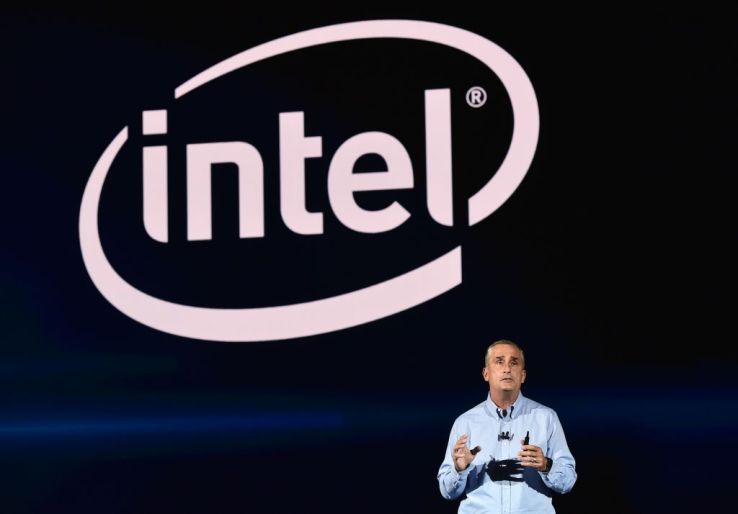
It was so bad that the chip maker has to be thrilled to have CES, the massive consumer technology show going on this week in Las Vegas, as a way to change the subject and focus on the other work they are doing.
For starters, CEO Brian Krzanich had to deal with the elephant in the room at the company keynote on Monday. Spectre and Meltdown patches were coming to 90 percent of the company’s affected chips by next week. That was good news for a company under siege for what my colleague Ingrid Lunden described without exaggeration as “…perhaps its biggest security scare in its history.”
It didn’t help matters when Intel’s patch proved buggy and caused some systems to reboot.
In case you don’t know what that trouble was about, it began last week when The Register, a U.K. tech publication, published an article blowing the lid off an Intel kernel security problem in their CPU chips. This is not a small matter.
It has the potential to allow hackers unimpeded access to the chip’s kernel where information like your passwords and encryption keys are stored in a supposedly secure area of the chip architecture.
It later turned out there were actually two chip vulnerability problems, one that had an impact on mostly Intel chips called Meltdown (a single ARM chip is also affected) and one called Spectre that affected Intel and other chips, including AMD and ARM processors and even IBM’s Power chips. We also learned that another Intel rival, Nvidia, also announced several of its chips have been affected. (If you were running a Raspberry Pi computer, you were spared.)
Mitigation efforts have been coming fast and furious from every corner: from chip vendors, from the OS vendors like Microsoft and Apple and from very nearly everyone else. There is concern that the mitigation solutions could in fact slow down computers substantially. While it’s still not widely known just how much that will affect individual computers and servers, Microsoft published a blog post this week outlining their benchmarks showing various degrees of performance degradation after implementing the Spectre and Meltdown mitigation solutions on machines running Windows. So did Intel, which found some performance hits and Google, which claimed it didn’t have any.
While this wasn’t just an Intel problem, it is, as Lunden pointed out, “one of the world’s biggest chip makers,” and as such it bore the brunt of the bad reaction. It didn’t help that the company had been aware of the vulnerability for some time or that Krzanich had sold a substantial amount of stock in November, and had filed the intent to sell those shares after the company had learned about the bugs.
This week at CES, the company addressed the problem (at least to some extent), as Lunden reported, but a show like CES has the advantage of being a stage for a number of new technologies. The company began making a flurry of announcements, planned long before the chip flaws became public last week.
It started with the announcement of a 49 Qubit quantum computing chip. If you want to change the conversation, building one of the fastest quantum computing chips in the world is one way to do it (IBM announced in November that it had built a 50 qubit prototype).
In fact, the company made a total of six announcements that we covered at TechCrunch this week involving drones, autonomous cars and cinematic VR, among other things.
All of this seems to me to be about using various degrees of showmanship and technological acumen to try to change the subject. It’s likely that Meltdown and Spectre will continue to haunt Intel and other chip makers for some time to come.
While it’s important to note that there haven’t been any documented breaches from this vulnerability, it has created a serious perception problem for Intel and its competitors, especially since they have chosen from an engineering perspective to optimize their chips for speed over security for many years, paving the way for these vulnerabilities.
Given all of this, Intel has little choice but to keep dancing as fast it can, just like the dronesit showed off earlier this week at CES.
Accessible Olli was designed from the ground up to help people with disabilities get where they need to go.
Jay Rogers stood a few feet from his company's futuristic-looking shuttle bus, called the Accessible Olli.
The all-electric, partially 3D-printed, autonomous vehicle, sitting in the middle of the bustling Las Vegas Convention Center during the CES tech show, packs features to help people with disabilities and the elderly get around.
There's a retractable wheelchair ramp, software that can process sign language, and displays inside offering simplified information and reminders for people with cognitive disabilities like memory loss.
"We did this with a lens of of accessibility to show that what people would've called niche can lead," Rogers, the radio-announcer-voiced CEO and co-founder of Local Motors, said earlier this month while wearing a bow tie and a zip-up Local Motors jacket.
The bus, which Rogers said will be on the road in a few months in places including Copenhagen and Buffalo, New York, offers a new approach to mass transit, in which a driverless shuttle could someday pick you up at any hour of the day and you wouldn't need to own a car. It's part of a broader trend of companies dabbling in self-driving vehicles as a new form of transportation. At CES, Toyota unveiled its e-Palette autonomous shuttle, while the French company Navya is manufacturing the Arma shuttle, too.
The difference with the Accessible Olli is that it can provide many more capabilitiesto help people with disabilities get to work, attend school or do errands. And it may be able to do all that much faster than a typical bus system or paratransit service. It may also address transportation needs that have been overlooked, since the shuttle was developed with the input of people with disabilities.
The nonprofit National Organization on Disability, which has been tracking the gaps between people with and without disabilities since the 1980s, said it's found that transportation options are often lacking for people with disabilities, which results in severely limited job opportunities for them.
"We are eager to learn more about the Accessible Olli because it seems to have the potential to close that pervasive gap," NOD President Carol Glazer said in a statement. "We particularly like that the shuttle was designed by people with disabilities, for people with disabilities."
Hannah Rankin, director of growth at Incight, which help people with disabilities with their education and employment, said many public bus and light rail systems offer wheelchair ramps and scheduled routes, which can be useful. But people can't expect every bus driver to know sign language. That's where the Olli may be able to provide more uniformity to help people communicate, Rankin said.
Bringing Watson to your morning commute
On the CES show floor, Rogers walked me through the compact Accessible Olli. Inside, digital displays fill nearly every inch of window, showing map directions and messages to prospective passengers, like "Katherine, this is your stop." There's cushy seating all around that fits up to 10 people. But most noticeably, the interior looks something like a tiny room, not a vehicle, since there's no steering wheel or space for a driver.
The first iteration of the Olli shuttle, which doesn't have accessibility features, debuted in June 2016. Local Motors, which was founded in 2007 and recently moved its headquarters from the Phoenix area to San Francisco, used crowdsourcing to work with more than 200,000 volunteer designers, engineers and customers to create the Accessible Olli. The startup also partnered with IBMand the charitable arm of the Consumer Technology Association, which runs CES, on the project.
IBM built its Watson artificial intelligence software into Olli to communicate with passengers and hopes to use Olli as a way to bring its AI into more people's lives and show the software's benefits.
"When you get in a car that doesn't have a driver, you have to establish trust, so you need to know that Olli understands what you want and it gives you feedback along the way," Bret Greenstein, IBM's vice president of the Watson Internet of Things business, told me earlier by the Olli. "We have to make Olli, or any other self-driving car, feel like a trusted driver."
Ideally, the things IBM and Local Motors learn from helping people with disabilities will benefit anyone using an Olli.
"My hope, as we continue to learn about all the accessibility use cases, is we're learning all the other ways we can better understand people and support them," Greenstein said. "People shouldn't have to learn how to talk to machines."
The body-swapping show shines when it trades one-note grimness for weird science fiction craziness.
"Altered Carbon" is about human consciousness downloaded into different bodies. Which is fitting, because the new Netflix show feels like "Blade Runner", "Ghost in the Shell" and "The Matrix" downloaded into one body and jostling for space.
Joel Kinnaman is no Ryan Gosling. Netflix
In terms of idea-packed cyberpunk world-building, "Altered Carbon," on Netflix now, is a total blast. Set several hundred years in the future, it features humans swapping bodies; sharp-tongued artificial intelligences; virtual reality; clones; and high-tech drugs, guns and body modification -- the full sci-fi shebang.
As with "Blade Runner", our way into this richly imagined future is through an old-school noir mystery. The story opens with a gumshoe plot straight out of the pages of Raymond Chandler, involving a disillusioned antihero with a past; a duplicitous millionaire and his sultry wife; a locked room-style murder; and a cast of supporting suspects with their own complex criminal agendas.
...
Joel Kinnaman plays our sci-fi shamus, Takeshi Kovacs. He's downloaded into a new body -- known as a "sleeve" for the way minds can be slipped in and out of them -- and hired by the murder victim himself. Like "Westworld" and other twisty-turny flashback-driven shows, untangling the various crimes and conspiracies requires a bulletin board covered in Post-its, but don't worry if you lose track of the finer details. Sometimes even Raymond Chandler didn't know who killed the chauffeur.
Between the show's creator, Laeta Kalogridis, and the original novel's author, Richard Morgan, "Altered Carbon" cleverly mines the body-swapping premise with trippy scenarios like "cross-sleeving" -- a mind being downloaded into a body of a different gender -- or "double-sleeving", when people split their mind into two bodies. Identity is thought-provokingly divorced from physical attributes like race and sex, while the elite are the people who have lived the longest and can afford the most clones. And the careless attitude to disposable human bodies gives a real weight and pathos to "real death", when a person's stored mind is destroyed once and for all.
The availability of different bodies raises thought-provoking questions about identity. Netflix
Netflix's pot of money means the visuals look amazing. The neon-drenched cityscapes look a lot like those in "Blade Runner", but "Altered Carbon" finds its own identity with atmospheric VR sequences, novel future-flavoured fight scenes, and heavenly towers floating in distinctly uncyberpunk blue skies.
This sounds like a lot of fun, although fun is one thing missing from long stretches of the show. The jokes are generally of the grunted sarcasm variety, and in a world where human flesh is disposable, the noir genre's trademark sadism gets turned up to 11. Men and women -- mostly women -- get cut to bloody pieces left, right and centre, usually while naked. I'm all for a bit of the old ultraviolence, and the zero-gravity and clone-based fights are great. But as with "Blade Runner 2049" viewers could find that their mileage varies regarding when, exactly, an examination of violence against women becomes instead just more depictions of violence against women.
And, as is often the problem with Netflix shows stretched over 10 hours or more, the pace can sometimes plod.
Acting-wise, everybody from Kinnaman on down puts on their best noirish frowny faces, which does make the tone a bit one-note. Kinnaman's looming blockhead only has one facial expression. OK, so does Ryan Gosling in "Blade Runner 2049," but let's just say Joel Kinnaman is no Ryan Gosling.
Chris Conner's gothic-inspired AI is one of the standout performances. Netflix
The most entertaining support comes from Chris Conner as a gothic-inspired AI, and Matt Frewer as a grinning synth, but most of the cast sticks to sultry growling. I'd also love to see the actors have more fun with the body-swapping element by playing different personalities: Cliff Chamberlain and Matt Biedel deserve credit for delivering real highlights as secondary characters dropped into unfamiliar bodies, giving us fun scenes like one in which a chirpy Latina grandmother inhabits the body of a hulking thug.
It's when the story embraces its heightened sci-fi premise that the show really shines. "Altered Carbon" is worth a watch for moments like these when it's not wearing its influences on its sleeves.
While the wireless industry says 5G is coming in 2019, AT&T believes it can launch its service by the end of this year.
Next stop for the 5G hype train: Reality?
The next generation of cellular technology promises a massive boost in speed, more ubiquitous coverage and a responsiveness quick enough to handle remote surgery or autonomous vehicles. It's supposed to be the fuel that drives all other innovations at CES 2018. Despite the numerous company announcements and field trials from the wireless industry, we don't seem to be that much closer to 5G, which is widely expected to roll out in a big way by 2019.
AT&T is shooting for 5G bragging rights. Roberto Machado Noa/Getty
AT&T is hoping to speed up the timetable. The company said on Thursday that it plans to launch its mobile 5G network in a dozen markets in late 2018, along with a single device able to tap into that network. This is different from Verizon's plan to offer 5G service as a replacement for home broadband service this year. AT&T's 5G will look more like the typical cellular service you enjoy now.
If it meets its deadline, AT&T would be the first carrier in the US to launch a mobile 5G service, which has the ability to eventually transform our world through broader, faster and more reliable coverage. The promised speeds are far faster than what most people can get at home (download a season's worth of "Stranger Things" in seconds), but 5G will also better power the growing family of connected devices in our lives. The launch of 4G gave us Uber, Snapchat and live-streaming video -- 5G potentially opens the door even wider to new innovations.
That promise has the carriers engaged in a war of words over 5G. Verizon struck first in 2015 by saying it would the first to launch field trials of 5G, and is on track to deliver a type of fixed 5G service later this year.
"We are encouraged to hear that other wireless providers are beginning to adopt our strategy toward unleashing the full potential of 5G mobile technology," Ed Chan, chief technology architect at Verizon, said Thursday. "This is good news for customers, society and the 5G ecosystem."
T-Mobile has mocked both Verizon and AT&T as fueling the hype and potentially disappointing customers. Now AT&T is looking to up the timeline again.
AT&T, however, is light on details. Gordon Mansfield, vice president of radio access network and device design for AT&T, said that while there would be a single type of device able to tap into the 5G network, he wouldn't comment on what the gadget would look like. Whatever the form, the device is expected to use 4G for most of its normal connection, and switch to 5G when the extra speed is appropriate -- think a download, live-streaming video or another bandwidth-intensive app.
He also declined to say which markets would get 5G coverage. The company has rolled out the confusingly named "5G Evolution" markets over the past year -- cities with the infrastructure for higher wireless speeds, but isn't actually 5G. The company calls 5G Evolution the foundation for 5G, although Mansfield wouldn't say if one of the 23 metro areas would be in the dozen 5G markets.
Here's a list of the "5G Evolution" markets: Atlanta; Austin; Boston; Bridgeport, Connecticut; Buffalo, New York; Chicago; Fresno, California; Greenville, South Carolina; Hartford, Connecticut; Houston; Indianapolis; Los Angeles; Louisville; Memphis; Nashville; New Orleans; Oklahoma City; Pittsburgh; San Antonio; San Diego; San Francisco; Tulsa; and Sacramento, California.
The timing of AT&T's launch is curious given that major chip supplier Qualcomm has said it doesn't expect the first devices to include 5G radios until the first half of 2019.
Mansfield, however, said AT&T has worked with a number of partners and suppliers to ensure a device will launch commercially this year.
Expect to hear more about 5G at CES 2018 next week.
The hype is starting to give way to reality as the wireless industry irons out the kinks in the new wireless technology. What better place to do it than a trade show in Barcelona?
5G will bring higher speeds to our phones than ever before, and it's ready and raring to go…
Well, almost.
The advent of 5G, the next generation of cellular technology, comes loaded with promises. It will enable smart cities, wireless streaming video in virtual reality, driverless cars and a huge leap in speed and reliability. The good news is we've seen demos proving it works.
But here's the bad news: We won't see the first 5G device until later this year -- and it'll likely come in the form of a wireless hotspot "puck." Phones aren't showing up until early next year at the earliest. So why should you care about 5G now?
Before 5G gets out into the wild, carriers, governments, infrastucture manufacturers, chip makers and organizations designed to bring them all together need to do some negotiating about when and how they are going to make it happen. Mobile World Congress, happening next week in Barcelona, is where many of these conversations will take place. It's not sexy, but it's necessary.
"The dull stuff is engineers in labs, testing, testing, testing, finding something that doesn't work, fixing it," said Ben Timmons, senior director of marketing and business development for Qualcomm in Europe.
Not that people won't be shouting from the rooftops about 5G. In fact, we expect it to be on the lips of most of the attendees. "Last year's MWC was a 5G hype-fest, CES last month was a 5G hypeapolooza and 5G hype at this year's MWC will be even bigger,"T-Mobile Chief Technology Officer Neville Ray said in an email.
But the real opportunity of the show is a chance to see what the next generation of networks and phones will be capable of. Think integrated augmented and virtual-reality applications that work without wires, or low-power sensors that can run for years on a single battery charge.
Ben Wood, an analyst for CCS Insight, predicts that there could be announcements from Google and its partners about its ARCore platform, its 3D-sensing camera technology. Sophisticated areas like ARCore and VR tax not only our phones, but also the networks, something that 5G will solve.
Last year at MWC, Qualcomm, Intel, Huawei and other industry leaders got together and agreed to accelerate efforts to create the first network standard, which they formalized in December. At CES in January, Qualcomm CEO Stephen Mollenkopf said 5G will be the biggest thing since electricity.
This year, Ray expects the conversation to be geared around deciding what 5G services will look like in the future, which will mean "more than just speed," encompassing talks around spectrum and applications for the internet of things. He's looking forward to having "a grown-up conversation about what 5G needs and the best path to get to real, mobile, standards based, nationwide 5G," he said.
Key players from the US and Asia are likely to have substantive plans to discuss, said Ian Fogg, senior director for mobile and telecoms at IHS Markits. Korea and Japan are at the forefront of rolling out 5G, while Verizon is testing 5G as a broadband replacement service this year. The others are all vowing to have mobile 5G networks up shortly after.
Meanwhile, Europe has to play catch-up after taking a more cautious approach.
"Despite the EU's lofty ambitions for the region to be among the 5G pace setters, most providers remain focussed on making the most of their significant investments in 4G/LTE," said CCS Insight analyst Kester Mann. "I'd say Western Europe is probably one to two years adrift of trailblazing markets like the US and South Korea."
Perhaps a meeting or two in Barcelona will jumpstart their ambitions.
Google is bringing gadget maker Nest back under its control as the search giant battles rivals Amazon and Apple in the rapidly expanding smart home market. A big part of the change: Making it easier to add Google's artificial intelligence technology and Assistant -- a digital helper that competes against Amazon's Alexa and Apple's Siri -- into new Nest products.
The world's largest search engine has staked its future on building Google smarts into devices beyond smartphones. On Wednesday, Google said Nest was part of its plans and would no longer operate as a separate division that lived in the outer orbit of parent company Alphabet's "Other Bets" group of projects.
Instead, Nest rejoins the Google mothership -- the part of Alphabet that houses search, YouTube, Android mobile software and other moneymakers. Nest, acquired by Google in 2014, had been operating outside of Google, the only profitable division of Alphabet, for the past three years.
Under the new org structure, Nest CEO Marwan Fawaz reports to Google's hardware chief, Rick Osterloh, a former Motorola executive who took charge of all Google's consumer devices in 2016. That includes Google Home smart speakers, Pixel smartphones and Chromecast streaming devices.
Nest CEO Marwan Fawaz says the company has shipped 11 million products to date. James Martin/CNET
"All of Google's investments in machine learning and AI, they can very clearly benefit Nest products. It just makes sense to be developing them together," Osterloh said in an interview Tuesday, which included Fawaz and took place in a meeting room designed to look like a home, complete with a kitchen and a washer-dryer setup. "It's the natural thing to evolve to."
Nest's brand, known for its 2011 internet-connected thermostat, isn't going anywhere, Osterloh and Fawaz said. In fact, the two drilled home the message that the reunion of the teams will "supercharge Nest's mission," as Fawaz put it. They used the word "supercharge" at least five times during our 40-minute interview at Nest headquarters in Palo Alto, California.
Fawaz said Nest has shipped more than 11 million products since its first thermostat went on sale in 2011. Since it's been part of "Other Bets," Alphabet doesn't call out how much money Nest makes or loses.
The biggest change: Making Google's AI technology a staple in future Nest products. I asked if that means making every new Nest device an access point for the Google Assistant. That integration is "core to the strategy," said Fawaz, but nothing is set in stone. Nest has already begun building the Assistant into devices like its Nest Cam IQ indoor camera.
Nest and Google have already plotted out and finalized their hardware roadmaps for 2018, but in the next two years, they'll start co-developing products. Google also plans to offer more bundled packages for Nest and Google devices, like one deal last year that paired Nest products over $100 with a free Google Home Mini. Fawaz said people could also eventually use their Google accounts with their Nest app.
One thing that isn't changing: Nest, which won't say how many employees it has, will keep its offices in Palo Alto, instead of moving to the Googleplex in nearby Mountain View.
The decision to merge Nest with Google comes as tech's biggest companies work to infuse their software into every aspect of people's lives, from their cars to homes. People will spend $1 trillion on the so-called "internet of things" by 2020, according to Gartner. And they'll spend over $50 billion on smart home tech in 2022 -- up from $31 billion this year -- according to Statista.
But right now the gateway drug is smart speakers. Amazon dominates that world with its Echo devices, owning 69 percent of the market. Google is far behind with 31 percent, according to a report by Consumer Intelligence Research Partners. Apple, meanwhile, officially enters the market when its new HomePod speaker goes on sale Feb. 9.
Nest was previously a semi-independent unit of Alphabet, Google's parent company. CNET
Nest's reunion with Google isn't a complete surprise. In November, The Wall Street Journal reported that Google was considering bringing Nest back into the fold. Osterloh and Fawaz said the merger has been in the works for the last few months. Since the two groups already partner on supply chain operations, packaging and event launches, it made sense for them to be one unit, they said.
Being under the same org chart also makes it easier for Nest to use Google's AI technology, the foundation for its Assistant and the key to new products like its Google Lens and Google Photos services.
"We've leveraged AI capabilities from Google in the past, especially in the computer vision space and facial recognition," Fawaz said. "Being part of the Google family, we get closer to that."
'The whole world is shifting'
A lot has changed since Google bought Nest for $3 billion nearly four years ago. That same year, Amazon introduced its Echo smart speaker, a surprise hit and a big slap to Google and Apple, which were already working on voice search. Google followed in 2016 with Home, a smart speaker that promised to put Google's leading search engine a few voice commands away. And this week, reviews went up for Apple's HomePod, a $350 Siri-enabled smart speaker that Apple touts as having better audio quality than its rivals.
Google has bulked up its hardware efforts in other areas too. Osterloh, former president of Motorola, was tapped two years ago by Google CEO Sundar Pichai to create a new consumer device effort. Though Google has always dabbled in hardware -- think the Nexus Q media player or Chromebook laptops -- Pichai wanted to prove the company was all-in this time around. Under Osterloh, Google unveiled its first branded phone, the Pixel, in October 2016 to rival Apple's iPhone and Samsung's Galaxy. It also added a virtual reality headset, a Wi-Fi router and new Chromecast video and audio streamers to its "Made by Google" product lineup.
Maybe the biggest sign that Google no longer considers hardware a hobby is its $1 billion investment in smartphone manufacturer HTC, which brings to Google over 2,000 HTC engineers -- many of whom already worked on the Pixel phone. The deal officially closed last week.
Google also put on a show last month in Las Vegas at CES, the world's largest consumer electronics conference. In past years, Google has typically laid low while its manufacturing partners, including Samsung and LG, made all the noise. But this year, the company set up a massive stage to showcase its gadgets and plastered the words "Hey Google" -- one of the trigger phrases for the Google Assistant -- over the Las Vegas Monorail. White-suited Google workers greeted showgoers in booths across the conference floor with the sole aim of telling them about how Google Assistant worked with various gadgets, from TVs to headphones.
Nest will be joining Google's hardware division, led by former Motorola executive Rick Osterloh. James Martin/CNET
Meanwhile, after a two-year slump in which it didn't enter new product categories, Nest in September added devices and services, including the Nest Hello smart doorbell and the Nest Secure alarm system.
"It's just a logical move," said Bob O'Donnell, an analyst with Technalysis. "The whole world is shifting. Amazon did a good job of recognizing an opportunity. Others are recognizing it and adjusting accordingly."
Hey, Alexa
When it comes to their smart home rivalry, Google and Amazon haven't been afraid to play hardball -- sometimes at the expense of customers.
Amazon, the world's largest online retailer, doesn't sell Google Home. Instead, searching for that product on Amazon brings results for other products, including the e-commerce giant's rival Echo speaker. Amazon sells some Nest products, like the smart thermostat and smoke detector, but not others, such as the Nest E, a cheaper $170 version of its thermostat, or the Nest Secure alarm system. Also, after banning sales of Google's Chromecast streamers two years ago, in December Amazon agreed to bring them back.
Google, meanwhile, cut off YouTube from working on Amazon's Echo Show video device and Fire TV. And at CES, Google tapped partners including Sony to introduce four new video devices with the Assistant built-in to compete with the Echo Show.
Google has made big investments in hardware with its Google Home line of products. CNET
Google, Amazon and Apple know getting adoption for their voice assistants is the key to future riches. Over 5 billion devices that support digital assistants, including Alexa and Google Assistant, will be in use by consumers in 2018, according to IHS Markit, with nearly 3 billion more added by 2021. Of those devices, 39 million will be smart speakers, up from about 27 million units sold in 2017.
That all raises the question: Will Nest's closer relationship with Google mean Nest products stop working with Amazon Alexa?
"This announcement doesn't change that," Fawaz said. "If there are any changes in the future, we'll certainly make sure it's the right decision for consumers."
I pressed them again about the potential for this new arrangement to change the relationship with Amazon.
"I would call Amazon and ask them," Osterloh said. "We don't know. We want to work with Amazon in an open, transparent, symmetrical way. Hopefully they want to do the same. We're continuing discussions with them on that."
(We're checking with Amazon and will update this story when we get a response.)
A rocky tenure
When Nest appeared in 2011, it was a novel enterprise from a leader with a storied pedigree. Nest co-founder and former CEO Tony Fadell became known as the Godfather of the iPod after he played a key role, with Steve Jobs, in developing the seminal music player. Following Fadell's departure from Apple in 2010, he and Nest co-founder Matt Rogers focused on reinventing another market. The answer: a smart remake of home thermostats. The idea was to create a whole suite of forgotten household products that had been reimagined for the internet era. The startup announced its second product, the Nest Protect smoke detector, in 2013.
In 2014, Google bought Nest. That was, in part, to inject the search giant with some of the product magic Fadell brought with him from Apple. But Nest's tenure at Google has been rocky. There was public drama after Nest paid $555 million for Dropcam, maker of the security camera it eventually turned into the Nest Cam. After the buyout, Dropcam CEO Greg Duffy left the company and has since called the acquisition a "mistake." Under Nest, more than 50 Dropcam employees resigned. Duffy has said Dropcam's product roadmap was derailed.
When Google created Alphabet in August 2015, Nest became its own division, alongside other units including Google, the moonshot factory X and health tech company Verily.
It was Nest, though, with its own brand, team and offices, that was supposed to be the model for how the new Alphabet structure would work. But instead of becoming the Platonic ideal for an Alphabet company, Nest underwent more scrutiny. Meanwhile, Alphabet CFO Ruth Porat tightened spending at the "Other Bets."
Fadell stepped down in 2016, and Fawaz took his place. Fawaz and Osterloh met in 2012 while both working at Motorola. Google briefly owned Motorola before selling it off to Lenovo for $3 billion in 2012, but neither executive came to Google as a direct result of that acquisition.
Today, all Fawaz will say about Nest's past is that the stories were "a bit exaggerated."
As for the way Alphabet is set up, Fawaz defended it. "Each bet is different. We have different journeys," he said. "In this particular case, Rick and I came together and said, '[Nest rejoining Google] makes sense.'"
"Other bets will have different journeys. They can have a different outcome," Fawaz added. "There's not one size that fits all in the model."
But following a holiday season that failed to live up to expectations, the company recently laid off 45 staff members globally, TechCrunch has learned, a move it says has impacted departments company-wide.
The majority of the layoffs were centered in the company’s Colorado headquarters, but staff cuts also affected its global offices in the U.K. and Hong Kong.
“We restructured our team on Friday to better align with our product needs,” a spokesperson for the company told TechCrunch. “As we look to our product development schedule for 2018 and beyond, we weren’t going to go that deep, so we had to make some changes for how the teams were structured.”
The move is a step back for the company and a bit of a surprise for those who have been following its trajectory from afar. After participating in Disney’s accelerator back in 2014, the hardware startup got a small investment from the entertainment goliath and began production on a BB-8 toy released alongside 2015’s blockbuster Star Wars return, The Force Awakens.
In 2017 alone, the company released new toys based on R2D2, The Last Jedi‘s BB-9E, Spider-Man and Pixar’s Cars franchise, along with Sphero Mini, a smaller, sub-$50 version of the smartphone-controlled ball that started it all.
The startup had bolstered its headcount to meet the demands of its much accelerated output.
It’s telling, of course, that the layoffs come so soon after the holidays. While not disastrous, the final tally pointed to the need for a rethink in strategy going forward. “[Sales weren’t] exactly what we had expected,” the spokesperson said. “We still consider ourselves a young startup. It’s the right time to pivot.”
The decrease comes as it shifts toward a product roadmap more in line with the pre-2017 days — putting it at closer to one to two products per year. “That might be our sweet spot,” the spokesperson added. “We’re still pretty young, but the one part of our business that continues to shine is what we’re doing in education. This allows our company to focus on that vision.”
This restructuring finds Sphero investing much more of its existing resources into the education side of its business. The company has been operating in the category for some time, leveraging its hardware creations in an offering designed to target schools, but that side has largely taken a backseat to Sphero’s more commercial offerings until now.
Educational robotics — STEM/STEAM specifically — is an extremely competitive space, as well. CES last week was overloaded with companies big and small pushing into the category with a variety of different platforms, and from the looks of things, next month’s Toy Fair in New York won’t be much different.
But Sphero has the marked advantage of building on top of its own popular robotics platform. In fact, it ran popular pilot programs in its native Colorado that garnered coverage in places like Wired and The New Yorker last year and in 2016.
The company’s SPRK+ Education offers educators and parents a platform for teaching coding and robotics. Sphero’s package lets kids program its connected toys through coding, offering a real world robotics platform on the cheap.
“[Education] is something we can actually own,” the company’s spokesperson says hopefully. “Where we do well are those experiences we can 100-percent own, from inception to go-to-market.”
Sphero co-founder and CTO Ian Bernstein also recently left the company to spin out a new startup, Misty Robotics. It isn’t designed to be a direct competitor, focusing instead on home assistant robotics, but former staffers did join Bernstein at the new company. Misty will also have its own programmable robot, though its offering, the Misty I, is focused primarily on adult developers.
The latest free-roaming VR game by Zero Latency showed me I'll be just fine in the zombie apocalypse. My friends on the other hand...
When the zombie uprising came, I was thankful for two things.
One: I was carrying a big gun. Two: My virtual reality headset didn't have me tethered to a uselessly short cable.
As the tech world gathered at the year's biggest technology show this past January, we were sold a future that was high-tech and seamlessly connected. The main show halls at CES in Las Vegas were filled with VR demos running on ultra-fast 5G networks, high-powered laptops running on mobile phone processors and any number of always-on, always-connected smart robots.
Ready, player one. Roger Cheng/CNET
Down the road from the Las Vegas Convention Center, at the MGM Grand Casino, I was rigged up to a different vision of the future: free-roam, multiplayer VR, created by Australian virtual reality company Zero Latency.
That people are willing to pony up $50 (roughly £35 or AU$62) for 30 minutes in this game points to a larger trend in the so-called "location-based entertainment" industry (think theme parks, laser tag, arcades, escape rooms). Entertainment is going high-tech, blending the physical and the digital to create experiences users just can't get at home.
For instance, in my new virtual world, I was running through a 3D hellscape of post-apocalyptic ruins, pwning zombies and fighting for survival. In reality, I was with three nerdy colleagues in the bowels of the MGM Grand, covered in panic sweat and shouting obscenities as we ran around a 2,000-square-foot (185-square-meter) black box room.
This was the future of video games, arcades and amusement thrills all in one. And yes, I won.
Stay away from my precious, precious brains! Zero Latency
Cutting the cord
The premise of Zero Latency is simple enough: VR, untethered.
Players don a custom VR headset (a modified HDK2.0 headset from OSVR) and a pump-action gun controller, and strap on a backpack fitted with an Alienware Alpha 2 PC. All the action takes place in a no-frills, warehouse-style room, painted black with a white grid on the floor -- what Zero Latency calls its "live-tracking volume."
Players are mapped on Zero Latency's game grid thanks to light-up balls on their headset and gun. Roger Cheng/CNET
But this is VR! Physical surroundings don't matter! With the headset on, you're immediately transported to a 3D world, free to walk around like you're living inside a video game. The grid on the floor and two glowing, ping-pong-sized balls on both your gun and your headset (yes, you're going to look like a high-tech anglerfish) allow the system to track you and your fellow players, who show up as digital avatars in the game, so you don't collide with each other.
We're playing through Zero Latency's brand-new, fast zombie game Outbreak Origins. The game opened in Brisbane on Australia's east coast on Halloween in 2017, but is still in prelaunch stage in Vegas.
You wouldn't know it. The game feels slick and completely immersive. After initial trepidation (I rate myself as a Grade-A n00b when it comes to zombie horror) we're on board. Tentative steps turn into bold breaks for freedom. One of our crew pulls a straight-up Leeroy Jenkins and trips over completely flat ground in the process. Our review: A+++ would pwn again.
According to Zero Latency co-founder and CEO Tim Ruse, the free-roaming aspect of the game is what really sets it apart.
"Most people have experienced virtual reality in a static format like sitting in their chair," he told me on the phone in Australia. "When you couple that with walking around, it's really, really immersive."
This goes far beyond gawking at an overheated phone in a cardboard headset, or even the thrill of more high-tech (but still largely static) experiences like Oculus Riftgames. The HTC Vive lets you walk around, but the space is limited.
Physical movement supercharges the experience. Why else would we see grown adults willing to strap themselves into VR paragliding rigs or weird VR bird-flight simulators to bring a physical element to their digital simulations?
Visions of the future
Attractions like theme parks and arcades have long used technology to lure customers -- Disneyland was sending park visitors through space on its Star Tours motion simulator ride as early as 1987.
Companies like Zero Latency are embracing VR"because it enables them to offer their customers another way to escape from the everyday, which is ultimately what amusement vendors provide us," said Malcolm Burt, virtual reality Ph.D. researcher and self-styled "amusement academic."
Now companies like Bandai Namco are opening VR arcades in Tokyo, Utah-based VR company The Void is jumping in on walk-through VR experiences and in China the gates are about to open on the $1.5-billionOriental Science Fiction Valley park-- a theme park devoted entirely to VR (and giant robots... natch).
These experiences feel cutting-edge to a person who hasn't tried VR, but they're ultimately just a 21st-century upgrade on the concept that drove '80s arcades: They provide the tech and games that you can't install (or afford) at home.
Down the line, when VR adoption is more widespread and prices come down, we may end up spending more time in our homes, Burt said.
In Outbreak Origins, players use a physical gun in the real world to create the feeling of a first-person shooter in the VR game. Zero Latency
More than a gimmick
Ruse is less sure. Despite the spec'd-out VR kit and the advanced live tracking, Zero Latency isn't just about the tech.
"Some people think, 'The technology's great, therefore that's enough.' It's not enough," he said, touting the blend of tech, social elements, game design and adventure that he says make Zero Latency unique.
After all, can you stand back-to-back with your mates after dashing to escape the zombie hordes or laugh when fellow CNET reporter Alfred Ng trips while trying to escape the undead? There's no doubt the experience of running around a warehouse-style room with up to seven friends is more immersive then flailing around your living room.
Ever since Disneyland started showing 1950s America a futuristic vision of itself through Tomorrowland, the amusement industry has been selling us a vision of tomorrow, today. Throw in a town like Vegas -- a place where you can watch an underwater Cirque du Soleil show and see hip-hop dancers shoot digital fireballs onstage all before your 9 o'clock buffet -- and it makes sense that this is the place where technology meets thrill seeking.
VR is the future of high-tech amusement for the foreseeable future at least.
At the MGM Grand, I vaunt over my final zombie corpse and start to pull off my headset to celebrate with my CNET comrades: a successful mission, and many miles covered. But we're back in that black-painted room, no helicopters or zombie labs in sight as another tentative group gets geared up for a game.
The zombies might have been digital and the rough terrain might have just been a painted grid on the floor, but those 132 headshots were real. And I won't let anyone forget it.
A major security event has 20 keynote speakers, and only one is a woman. Experts say recruiting at events that exclude women keeps the field male-dominated.
At a major cybersecurity event in April, the only woman out of 20 keynote speakers is a social commentator.
Her name is Monica Lewinsky, and she advocates to prevent cyberbullying.
The other 19 keynote speakers and moderators, who will present during the four-day RSA Conference in San Francisco, are men. Of those men, all but one are cybersecurity experts.
The lineup has frustrated people in the cybersecurity field, with Facebook's chief security officer, Alex Stamos, taking to Twitter to criticize the conference organizers for leaving women out of RSA's top speaking roles. He even suggested he'd host an alternate conference nearby with a host of women experts, at which his role would be to hand out popcorn.
Maybe it's time to rent out the Metreon again for an alt-conference, this time all women speakers (with me handing out popcorn). Anybody game?
Lewinsky said on Twitter that she found out about the all-male lineup this week, and told USA Today in a statement that she's asked organizers to do better. "I'm disappointed by this oversight but RSA has about six weeks until the conference, so I'm optimistic that the matter will be rectified by then," she said.
RSA Conference vice president and curator Sandra Toms said in an interview that the lineup is not finalized and more women could join the list of keynote speakers before the event begins. US Homeland Security Secretary Kirstjen Nielsen has been formally invited, for example, but isn't yet confirmed to speak. Other invitations to women keynote speakers are still pending, Toms said.
"We strive each year for a diverse speaking panel," Toms said.
The dustup reflects a persistent problem in tech that happens to be even worse in cybersecurity. Women work in just 11 percent of jobs in this field (PDF). That's bad because security companies say they can't hire skilled people fast enough. Alienating women with the potential to excel at cybersecurity could make us all less safe, especially as hackers continually hammer computer networks to steal our sensitive information.
It also comes as tech conferences continue to take heat for gender bias. In January, organizers of CES, a giant consumer electronics trade show in Las Vegas, took criticism for excluding women from their slate of speakers, too. And in 2016 at Defcon, a major hacking conference in Las Vegas, women complained of a hostile atmosphere that left them feeling unwelcome.
Who's responsible?
But who exactly is to blame for the lack of women at tech conferences and in cybersecurity jobs around the world? Well, nobody is raising a hand to take sole responsibility for that one.
Pau Barrena/Getty Images
Toms said the lack of diversity overall in cybersecurity makes it hard to find women for the conference. "We acknowledge that there is a lack of women in cybersecurity and it's part of a larger lack of diversity in the larger tech space."
So, it's the fault of the tech industry at large that RSA organizers couldn't fill any of those roles with women cybersecurity and tech experts. While that could sound like a dodge, it's not not true -- just look at the companies sponsoring the event.
After all, that's where most of the keynote speakers come from, including companies like Microsoft, Symantec and McAfee, plus RSA Security, a cybersecurity company owned by Dell that sponsors the conference but isn't the same entity that organizes the event. The SANS Institute is an educational sponsor, which Toms said was an "in-kind" arrangement in which the organization offered training presentations in exchange for space on the sponsor list.
Most of the speakers come from senior leadership positions in those sponsor companies. That senior leadership is in every instance a group that's mostly men. Here's how it breaks down at each company that's sponsoring the event and sending a keynote speaker:
Juniper Networks: Zero women. No women in an 18-person leadership team.
SANS Institute: Zero women. No women in a six-person faculty.
Symantec: 11 percent women. Two women in a 18-person leadership team.
RSA Security: 13 percent women. One woman in an eight-person leadership team.
Akamai: 13 percent women. Two women in a 15-person leadership team.
Microsoft: 19 percent women. Three women in a 16-person leadership team.
Cisco: 22 percent women. 14 women in a 64-person leadership team.
IBM: 29 percent women. Six women in a 21-person leadership team.
McAfee: 30 percent women. Three women in a 10-person leadership team.
Neither IBM, McAfee nor the SANS Institute responded to requests for comment. Akamai, Juniper, Microsoft, and Symantec didn't provide a comment for this story. Cisco didn't provide a comment on the lack of women keynote speakers at the conference, but a spokeswoman said the company recognizes the shortage of women in the cybersecurity industry.
RSA Security (the company, not the conference) responded with the following statement from a spokeswoman. "RSA recognizes the need for diversity in the technology industry in general, which includes cybersecurity," the spokeswoman said. "We believe in creating a global business that harnesses the power of the best and brightest talent, regardless of their gender, background, religion, nationalities and race."
The conference organizers don't seem to be limited to keynote speakers from sponsor companies, though. Three keynote speakers don't appear to have direct ties to sponsor companies. Two of them are cryptography experts. Whitfield Diffie helped lay the groundwork for what would become known as the RSA public-key system, a tool that lets users send a coded message that only the intended recipient can read. Moxie Marlinspike is the creator of Open Whisper Systems, the company behind the encrypted chat app Signal.
The recruiting cycle
There could be a direct connection between how welcoming a conference is to women and who gets recruited to work at a cybersecurity company. In a report from last week on women in cybersecurity, business analysts at Forrester said companies currently "focus on recruiting from industry events that have been proven unwelcoming to women."
That creates a vicious cycle in which companies hire fewer females. That, in turn, could cause conferences to have a harder time finding women experts to speak at the next event.
Toms said the audience at RSA is typically 20 percent women, which is higher than the general population of women cybersecurity workers. What's more, its two events for young professionals and students attract even higher rates of women.
Cisco spokeswoman Robyn Blum said the company is a sponsor of the Women in Cybersecurity event taking place in March and is hosting an event next week focused on bringing young women into tech careers.
In a blog post about improving diversity in the cybersecurity workforce, Cisco's chief security and trust officer, John Stewart, said women still face too many obstacles in the field. "We have a long way to go for talent, skills and character to overcome gender as a qualification," he said, "especially in leadership and executive roles."
Outgoing Republican Rep. Darrell Issa of California thinks it’s bad for Silicon Valley to fight with President Trump. Oh, and he’s also glad net neutrality is dead.
Congressman Darrell Issa says tech leaders speaking out against President Donald Trump are making a mistake. Although the Republican representative from California isn't seeking reelection in 2018, that's probably not a surprising thing to hear.
But as one of Trump's point people on tech during the 2016 transition, and one of the go-to voices on tech issues among Republicans, Issa's comments hold some significance.
And he says that leaders increasingly criticizing Trump and his administration on both policy and social issues are making a mistake. For example, Apple CEO Tim Cook, who is gay, criticized Trump's ban on transgender people serving in the military in July. "We are indebted to all who serve,"he said."Discrimination against anyone holds everyone back."
"Your politics and your policies don't have to always match," Issa said, in an 37-minute interview at the CES gadget expo in Las Vegas earlier this month. "The tech leaders who are officers of public companies are really ill-advised to make those statements because those statements, quite frankly, are required to be in the best interest of their stockholders and often they're not."
Issa, who has served in Congress for 17 years, is known for his partisan speaking style, which came up even in his interview after he challenged me on some of the questions I asked, saying they showed bias. But his views give a window into how the Republican party and those in power in Washington are approaching their relationship with the tech industry.
Perhaps most important, Issa's take on government and tech give a sense of how hard it may be for the tech industry to successfully lobby to enforce net neutrality rules, which are designed to ensure the equal treatment of internet traffic. Netflix, Amazon and Google -- and 83 percent of Americans -- disagreed with the recent vote to scrap the 2015 rules to enforce net neutrality.
Issa calls those rules a "power grab" by the FCC chairman under the Obama administration at the time and said he wouldn't support a bill in Congress to enshrine equal traffic rules as a law.
To him, agencies like the Federal Trade Commission, whose mandate is fighting anticompetitive behavior and protecting consumers, should handle net neutrality concerns. Critics of Issa's approach say the FTC isn't focused exclusively on the telecommunications sector, so it's unlikely the agency can deliver the same kind of scrutiny that the FCC can. More important, the FTC lacks the FCC's rulemaking authority, which means FTC enforcement extends only to companies' voluntary public commitments when it comes to the internet.
"For decades, we have had the Federal Trade Commission have the ability to look at both monopolistic behavior, per se, and unfair trade practices and intervene,"he said. And if there needs to be more FTC enforcement, he said,"I'm all for it."
Recent Sphero spinoff Misty Robotics brought a decidedly non-consumer-focused device to the Consumer Electronics Show in Vegas this week. The Misty I Developer Edition is the first baby step for a startup with even grander ambitions than the one that gave birth to it. In June, the company announced a $11.5 million Series A led by Venrock and Foundry Group to aide in its plans to build a mainstream household robot with a much broader skillset than the industry leading Roomba.
An early attempt at that will arrive later this year, in the form of Misty II, a more highly polished and commercially minded version of the company’s robotic’s platform. For now, however, its focus is far more narrow, with plans to court developers, as it works to build something more suitable for the home market.
Misty I Developer Edition is sort of the Apple I to the Misty II’s Apple II. There will likely be a developer version of the II, but the company’s forgoing the consumer version of the I. It’s all understandably a little convoluted a first glance, but the startup’s working on getting its sea legs, as it prepares for the seemingly impossible: a home robot that can do it all. In a briefing in a hotel suite at CES this week, CEO Tim Enwall and Head of Product Ian Bernstein laid out a fairly grandiose roadmap for me.
It’s a ten-year plan, according to Enwall, and the startup’s investors have apparently agreed to that extremely long runway. After all, someone has to bring robots into the mainstream, right? So why not Misty? Bernstein was the founder and CTO of Sphero, which quickly moved from remote control ball to Disney darling, and Enwall headed up Revolv, which ultimately got sucked up into Google/Nest.
There’s a small army of Misty I’s in the hotel suite when we meet the team. Bernstein puts one on the floor and fires it up. It has the body type of ET: The Extraterrestrial, balanced on four wheels and constructed out a black plastic exoskeleton, that’s maybe a touch more Xenomorph. As Misty (referred to primarily as a “she” by her creators) fires up, a pair of dots inside two brackets simulate some semblance of eyes on what resembles a blue screen of death.
When fully operational, the eyes are a bit more lifelike, though still early stages. There’s nothing here akin to the animated personality Anki has developed for Cozmo by assembling a team of animators from places like Pixar and Dreamworks. In fact, much about this first Misty model is rudimentary, and that’s kind of the point. The robot fills a similar role as Willow Garage’s bygone Turtlebot or iRobot’s Create, offering developers a way to build ideas on a robotics platform.
It’s a far more limited offering, however. Enwall tells me that it takes his team four to six hours to build a unit, totaling around five to ten units a week. It’s not exactly a sound business model in the long term. Instead, the company will be vetting potential developers through its online platform, and hopefully building up an ecosystem of software ahead of the Misty II’s launch.
Bernstein walks us through some of the quick and dirty features early developers have programmed in at a recent hackathon. In the most compelling demo, Misty I uses her on-board camera and facial recognition to detect people. When she sees them, she zips back on her wheels as if startled. It’s a far cry from the security and smart home connectivity planned for its already announced successor, but it’s a start.
Fittingly, it all feels a bit like watching a baby takes its first tenuous steps. It’s the first public-facing movements of a startup that has a long road of ahead of it — a prospect that’s at once frightening and hopeful.
LG's next flagship won't be unveiled next week in Barcelona. Here are a few guesses as to why (one rhymes with "Gamsung Salaxy").
MWC 2018, otherwise known as the world's biggest mobile trade show, kicks off Feb. 26. Though a bunch of phones, laptops and smartwatches are expected to launch during the event, including the highly-anticipated Galaxy S9 and S9 Plus, there will be one phone that definitely won't be there: the LG G7.
Despite unveiling its flagship phone at the show in years past, like last year's G6, LG is opting to freshen up its V30 from 2017 with a new variant and roll out two other mid-tier phones at the show instead.
This leaves some, like me, wondering where oh where the G7 could be? Why is LG holding it back? Will it even be released at all? Here are a few theories.
Schedule, schmedule: LG doesn't want to be tied down
And by "tied down" I mean being tied to the predictable ebb and flow of major phone launches. If you're not Apple in September or Google in October, you most likely have to launch at least one of your big phones in February at MWC. (Even Samsung does this most years, which I'll get to later).
But earlier this year at CES 2018, LG said it was planning to shake up its timingwith new products. What better time to start than at MWC?
"We decided that it was time to try something different rather than letting one event drive so much of our strategy," wrote Ken Hong, senior director of LG's global corporate communications, in an email to CNET.
We get it Samsung. You're at MWC. Sarah Tew/CNET
Samsung's going to eclipses everything at MWC anyway
LG knows what's up. Competing for the limelight at MWC is like plants competing for sunlight at the bottom of the rainforest. With all these companies going at it, someone's going to get choked out. And try as everyone might, Samsung is like some giant Galaxy-phone-bearing Kapok tree gobbling up every bit of light available. This sucks for everyone aside from Samsung, but that's the reality.
So what can you do? Hold your own event and pray to the phone gods that you're a big and sexy enough company to attract all the tech reporters, bloggers and trendy YouTubers together for one glorious day? Google did this in 2016 when it launched its very first Pixel and LG should be able pull that of too. Plus, I did hear June is a nice time of year.
There's a reason why revamping the V30 isn't such a terrible idea. The V30 is a pretty great phone in its own right -- we actually like it slightly more than the G6. Introducing improvements can only make the V-series better.
The new V30 will add image recognition software called Vision AI, which will enable the camera to recognize objects like flowers and landscapes, and adjust camera settings accordingly to take the best photo. This is similar to what the Huawei Mate 10 and 10 Pro can do. The new V30 will also have additional speech recognition smarts for advanced voice commands.
Of course, we'll need to check out the phone for ourselves at MWC to see if these new AI-centric additions are actually good and useful. But we're a fan of the V30, and it makes sense to build upon what already works instead of starting from scratch.
It doesn't want to rush anything
The modular LG G5 from 2016. Josh Miller/CNET
What is time anyway but a social construct designed to restrict our lives and destinies? Exactly -- LG gets it. It also knows what it means to launch a product and have it flail, like the modular G5 from 2016.
After the G5's hot-swappable design received a lukewarm reception, LG switched gears and dropped the modular concept with the G6. Reflecting back on the G5 after it hit the market, its chief technology officer Skitt Ahn said in Jan. 2017 that the phone "was a meaningful test," and that the company "paid a lot" in the end.
From that learning experience, I wouldn't be surprised if LG wants to take its time with the G7 (if it will even be called that) to make sure it can do things just right.
LG's waiting for a new "Like a G7" song for optimal cross promotion
This is a longshot, but if LG could pay the hip hop band Far East Movement millions of dollars just to write a new song about the G7 (plane? Phone? Both?), it should. If only so us phone reviewers can catch a break and indulge in some not-very-original-nor-clever-but-who-will-stop-me punny headline writing.