Search Result For "nintendo"

Analysis: It's the one-year anniversary of the Nintendo's smash-hit console, but the evolution has just begun.

The Nintendo Switch was the best gadget of 2017. That's my opinion, but I dare you to disagree with me. What started as another odd Nintendo novelty gaming design has turned into a runaway smash success. The system has sold over 14.8 million units worldwide, more than the Wii U ever sold. Some of the best of games of 2017 -- notably Super Mario Odyssey and The Legend of Zelda: Breath of the Wild -- were Switch exclusives, and the console's game library has continued to add a long list of third-party favorites, reversing a big weakness of recent Nintendo consoles.

So, a year after excited fans lined up to buy the Switch on day one, what's next? Actually, there's a lot that can still happen for a second act with the same hardware.

What can be the next version of these?
Sarah Tew/CNET

Add more modular accessories

The most brilliant idea of the Switch is that it's a modular tablet: between its side-rail connectors for Joy-Con controllers and its USB-C port on the bottom, all sorts of expansions are theoretically possible. A Wall Street Journal report seems to confirm Nintendo's peripheral-based strategy, which makes a lot of sense -- why upgrade the tablet part right now? The USB-C port works for the included dock and video out, but it could allow other connections and accessories, too: USB-C is very versatile.

Watch this: We played with Nintendo Labo's crazy cardboard creations

The rails that the Joy-Cons slide into are used for controllers now, but they could clearly accommodate other ideas. Nintendo hasn't opened up third-party access to those connectors, but Nintendo has hinted before to new ways to play in the future going back to last year, when Nintendo spoke to CNET before the Switch launch. I'd like to see a more advanced and better-fitting dock, different sizes of controls, and maybe a version with full-analog triggers.

Nintendo Switch, Year Two: 5 ways it's set to leap forward
Crazy weird Nintendo is back.
Sarah Tew/CNET

More crazy things like Nintendo Labo

Nintendo Labo is one of those "new play" ideas, and it completely sidesteps any plug-in hardware. I tried playing with the kit, which is brilliant -- it's like programmable papercraft with a tied-in video game, and it utilizes the sensor and button-studded wireless Joy-Con controllers to power all sorts of other ideas.

Nintendo Labo's many cardboard forms

Nintendo's done a clever thing with Labo: it's shown that the included hardware is already more versatile than it seems on the surface. Labo hits stores in April, and I'm hoping Nintendo will follow up in the second half of the year with something equally and wonderfully bizarre and creative.

Improving the online experience

Will Nintendo's subscription service upgrade the online experience that's on the Switch now? A number of Switch games are online-friendly, and Nintendo even has a (not great) phone app to connect to online game chat in titles like Splatoon 2. But the fuller subscription service is slated for later this year. It'll no longer be free to play online. Hopefully, however, the online experience will be better in exchange for the yearly charge. There's a lot of room for improvement.

Nintendo Switch, Year Two: 5 ways it's set to leap forward
Ahem.
Sarah Tew/CNET

More old-school retro games

Nintendo's affordable retro-game plug-and-play console, the NES Classic and SNES Classic, are still pretty hard to find. But you can't play any of those NES or SNES retro games on a Switch. Not yet, at least. Nintendo's kept its back catalog of virtual console and retro games mostly off the Switch so far, but the launch of the company's subscription online service in September promises access to the titles that Nintendo 3DS, Wii and Wii U owners take for granted. Needless to say, it'll be frustrating paying for the original Super Mario Bros. for the fifth time, but fans will love playing classic games on the go on this modular system.

There's also all the Wii U games, ripe for rerelease: the Wii U was a system few even got a chance to play. It worked for Mario Kart 8 and Bayonetta 2. There's a lot more where that came from: Super Mario Maker, Super Smash Bros., Super Mario 3D World, New Super Mario Bros. U and Nintendoland.

Nintendo Switch, Year Two: 5 ways it's set to leap forward
Expect a lot more indie games, fast.
Sarah Tew/CNET

A flood of indie

The Switch has become one of the best pipelines to try indie games over the past year. I'd even say that the indie games have become my favorite things on the system. Ports of popular Steam, PlayStation 4, Xbox One and mobile games like Rocket League, Thumper, Stardew Valley, Overcooked and Celeste are now starting to arrive as simultaneous Switch launches. The games can often cost more on Switch, but take up less space to download and are perfect for quick play. Now that the Switch has sold so many systems, it's no longer a risk for indie developers to plan for Switch releases at all.

source:CNet News

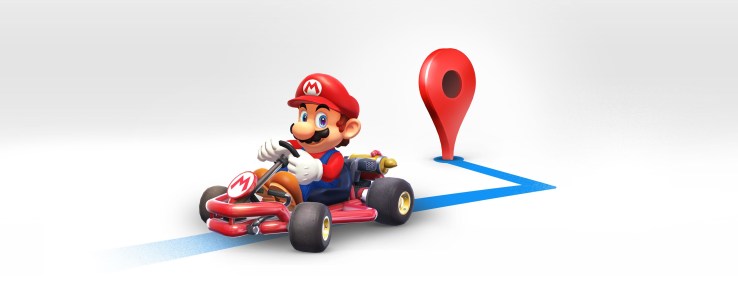
Mario can now guide your route in Google Maps
It’s Mario Time! Beloved gaming character Mario is coming to Google Maps, thanks to a partnership between Google and Nintendo ahead of Mario Day, March 10. (MAR10…get it, Mario?) In addition to the various deals and sales on Nintendo games, the mustachioed plumber will also make an appearance in Google Maps’ navigation, if you opt in to have Mario accompany you on your journey.

The feature, which Google announced this morning, is available in the latest update in the Google Maps app on both iOS and Android.

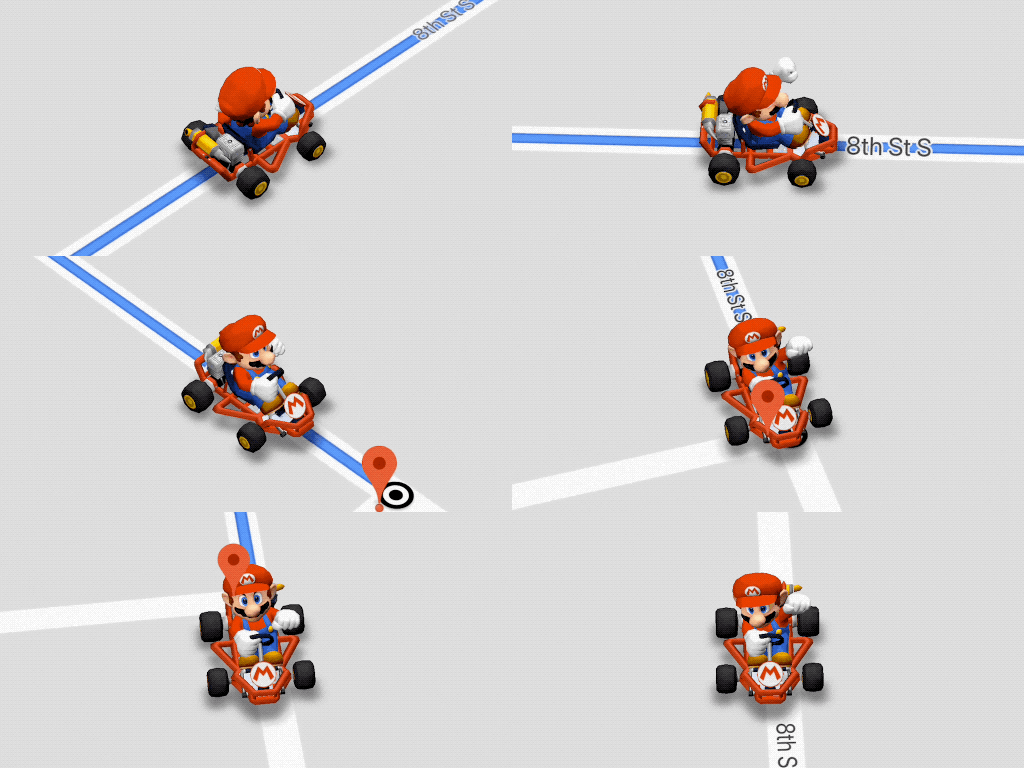
After entering in your destination, you’ll notice a yellow question mark “?” icon at the bottom right of the app’s screen. Tap this, and you’ll get a prompt to enable “Mario Time.”

Mario can now guide your route in Google Maps
From then on, the navigation arrow in Google Maps will instead be Mario – who, in his little red go-kart, will then be your companion for your entire trip. The integration will be available for a full week, says Google, so you can enjoy using Mario for longer than just on Mario Day alone.

You can also choose to screenshot your route and share it to @GoogleMaps on Twitter and Instagram with the hashtag #MarioMaps, Google suggests. But of course, don’t share personal details like your work or home address, if you do so.

Mario can now guide your route in Google Maps
This isn’t the first time Google has had a little fun with Google Maps, as you may recall.

The company has in the past unleashed Pac-Man on city streets in Maps, let Google Maps streetview users go inside Doctor Who’s TARDIS, and has let you travel by Loch Ness Monster, among other things. Plus, Google and Nintendo have worked together before on silly stuff like this, as with the April Fool’s day prank involving the “launch” of Google Maps 8-bit for NES.

But in this case, adding Mario to Maps feels more like a brand advertisement, rather than just a fun trick. We asked Google if that was the case. However, a company spokesperson confirmed that no money exchanged hands in its business deal with Nintendo.

The Mario feature will begin rolling out today – so make sure you’ve got you’ve got the latest version of Google Maps installed if you want to try it out.

source:TechCrunch

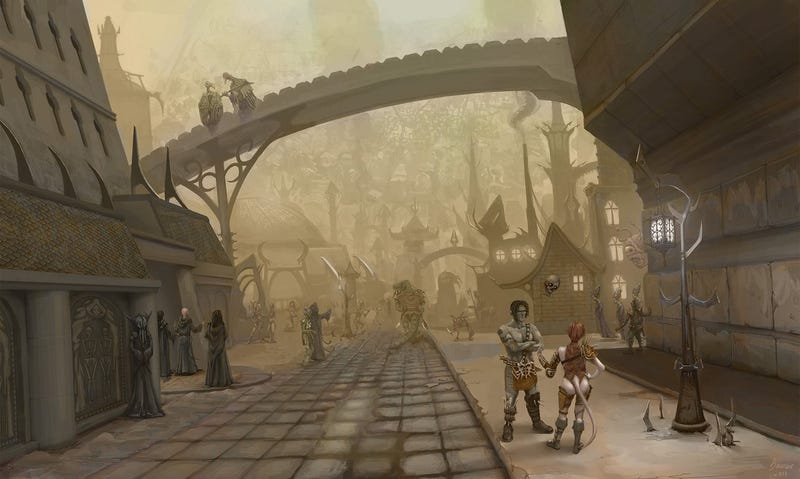
The Richest Scifi and Fantasy Worlds in Video Games
Few creative mediums let you explore stories like video games. Players don’t just watch a story—they participate in it, sometimes steering narratives to wildly divergent endings. But in order for an interactive experience to truly transport players, it needs to have a well-built world for them to live in. Here are some locales that stand out from the rest.

The most memorable video game worlds come to the player steeped in story, teeming with possible paths to take and lives to intersect with. Characters whose existences you want to know more about, conflicts you’re compelled to join, spaces filled with mood and urgency… a good gameworld is a place you don’t want to leave.

Rapture from BioShock

Rapture from Bioshock

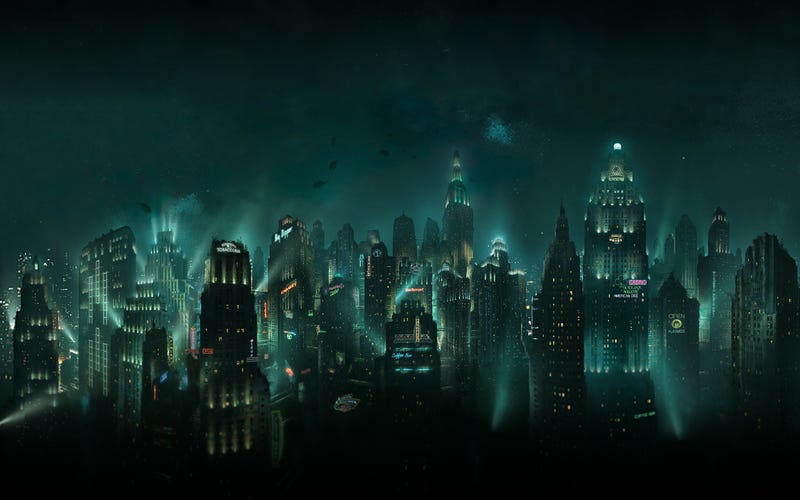
When you first enter the failed undersea experiment in Objectivist utopia-building, it’s all gone to hell. As you pick through the remains of a society where genetic manipulation and unchecked ambition ran rampant, you find out about class tensions that erupted into all-out war and a twisted family reunion. BioShock 2 took players back to Rapture before it exploded, and sequelBioShock Infinite transported them to the companion city of Columbia, set in a floating metropolis where turn-of-the-20th-century nationalism curdled into jingoism. Infinite reveals a multiverse at the end of it all, teasing a whole bunch of other realities with their own versions of Rapture, making the whole enterprise feel even more epic.

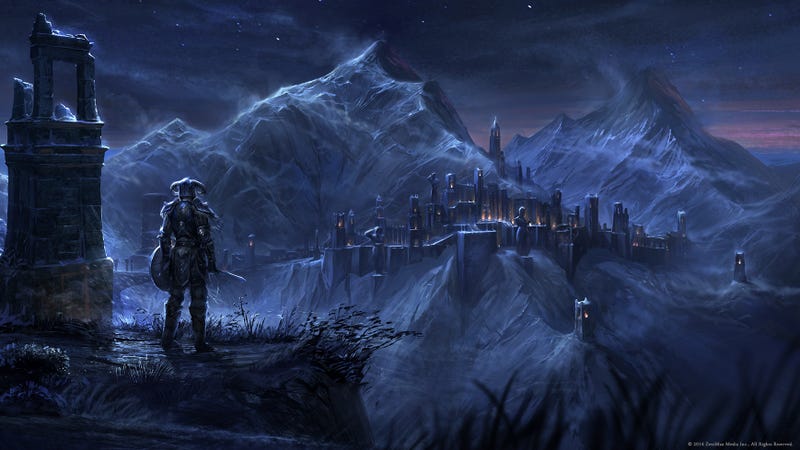
The Elder Scrolls’ Tamriel

The Elder Scrolls' Tamriel

When it comes to sheer size and volume, few video game environments match the scope of Tamriel, seen in Oblivion, Skyrim, and other installments of Bethesda Softworks’ trailblazing Elder Scrolls franchise. It’s a continent that contains the wondrous dragons, evil sorcerers, and power-hungry monarchs that you’d expect, but is also rife with surprisingly poignant ground-level stories and characters with oddly quirky, but wholly believable behaviors. No matter how many times you finish, say, Skyrim, Tamriel continues to feel like like a place where there’ll always be something to do and more to explore.

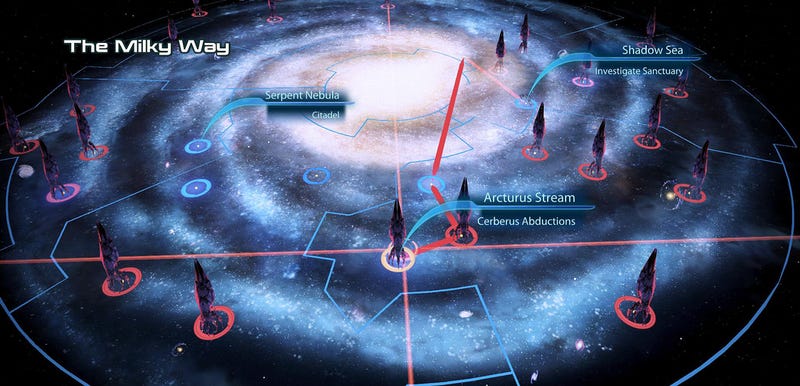
The Milky Way from the Mass Effect Trilogy

The Milky Way from the Mass Effect Trilogy

The sector of space that humankind already lives in gets a radical makeover thanks to alien technology in BioWare’s beloved scifi series. Humans have achieved a fantastical level of harmony and plenty in the Mass Effect games, but contact with other sentient races means there’s cosmic-scale melodrama to get involved with. In the aggregate, the franchise’s main plotlines, sidequests, and DLC add-ons offer a rich stew of family secrets, tribal grudge matches, and interplanetary political turnabout. The Mass Effect games are filled with moments where it feels like you’re changing lives in both big and small ways, which is what make them so memorable.

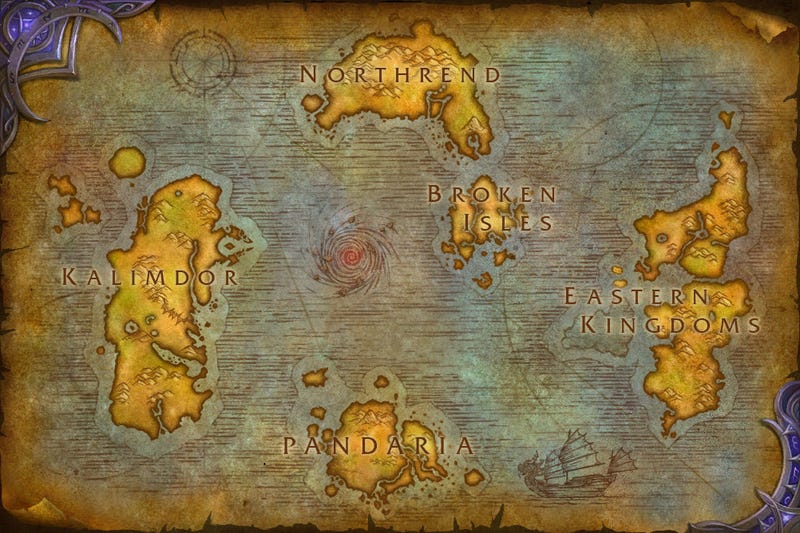
World of Warcraft’s Azeroth

World of Warcraft’s Azeroth

Azeroth is the fictional reality where World of Warcraft happens, meaning it’s been home to millions of players in its 13-year existence. As it grew into one of the most influential MMOs ever, World of Warcraft transported players to new kingdoms, introduced new races, and sent them into the past to prevent a broken future. Whether you played through WoW’s massive raids as Alliance or Horde, it felt like you were in the middle of a living history, something few games can lay claim to.

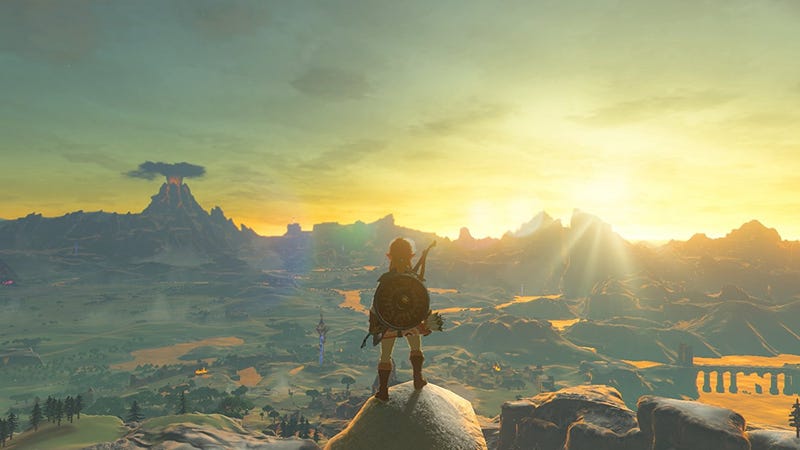
The Legend of Zelda’s Hyrule

The Legend of Zelda’s Hyrule

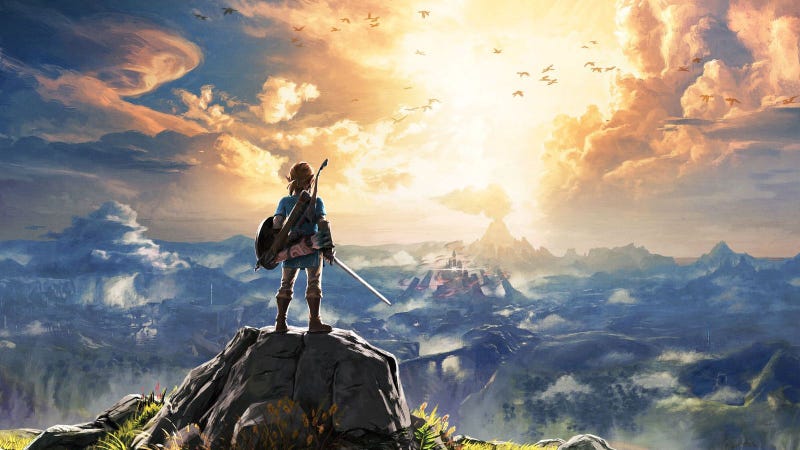
Nintendo’s re-invented the fantasy kingdom of Hyrule plenty of times over the history of its iconic game franchise. Sure, you’re always playing as a plucky boy hero named Link with a familiar set of races, allies, and enemies. But the world has come to feel mutable, like it’s kinda sorta just reincarnated from entry to entry. Zelda games have bounced players back and forth from past to present, light and dark in endearingly clever ways and Link, Zelda, and Ganon have been reincarnated so many times that it’s hard to keep track of, even if you use the official timelines. No matter what, Hyrule will be a place where Nintendo fans can romp through best-in-class adventures.

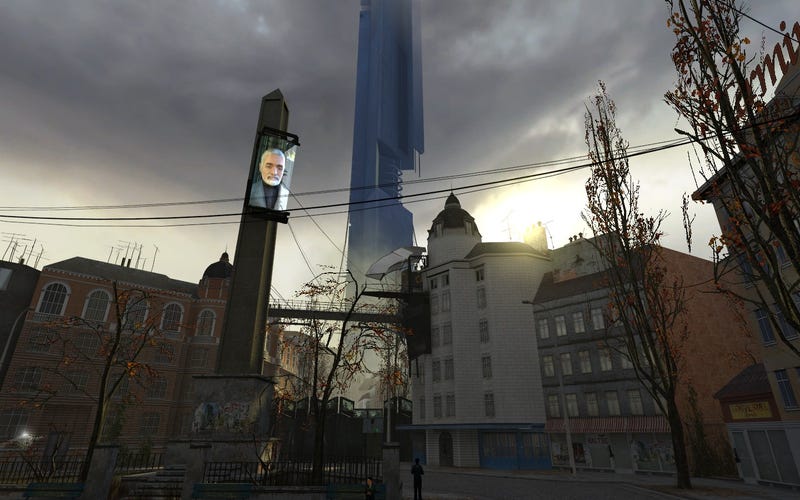
Half-Life 2's City 17

Half-Life 2's City 17

An Eastern European city ruled by alien conquerors, the setting of both of Valve’s Half-Life 2 episodes feels like a place slowly being squeezed of its humanity. The dystopian oppression in City 17 is memorable because there’s a thread of personal familiarity and dark humor running through it. Mostly, City 17 shines as a possibility arena sketched out in the negative space of all the things you can’t do; the fact that you can’t live freely inside of it makes you want to fuck shit up even more.

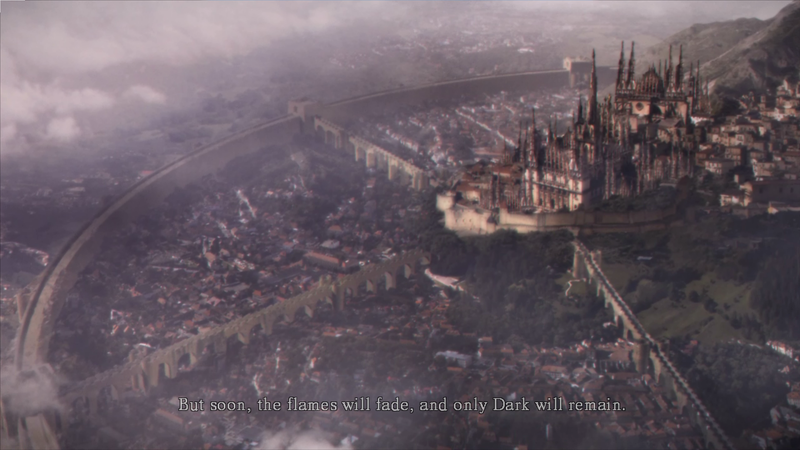
Lordran from Dark Souls

Lordran from Dark Souls

Death is an incredibly inescapable fact of life in From Software’s Dark Soulsgames. In the notoriously difficult franchise, it’s not just that every dead body in the world of Lordran has a story, it’s also the fact that they might have belonged to another real-world human player that magnifies the drama. Some adventurer just like you faced off the games’ ultra-tough enemies and suffered an ignominious end, leaving a cryptic note that could help or hurt your chances of survival. Hell, they might even invade your game to give you added grief. Truly no game series has ever offered as much sado-masochism as this one.

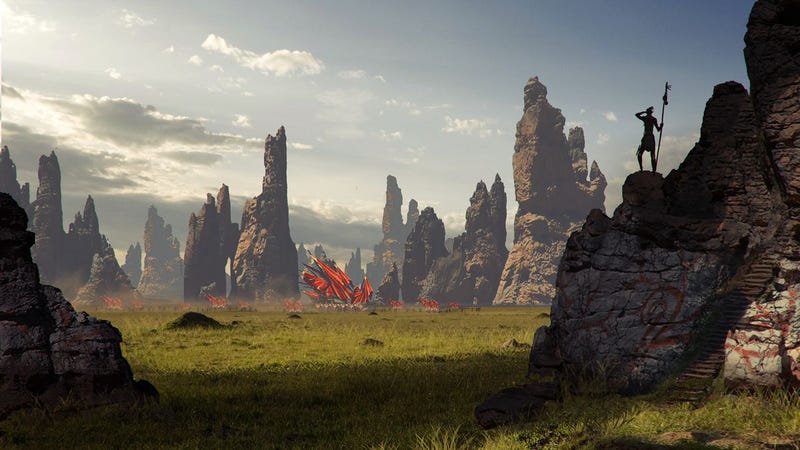
Thedas from Dragon Age

Thedas from Dragon Age

BioWare’s high fantasy universe grew in scale with every entry in the Dragon Age franchise. (Yes, even the recycled environments of Dragon Age 2 gave you loads of new people to meet and adventures to have.) By the time the dev studio delivered Dragon Age Inquisition, they’d made a game so giant that players had to be told that they should leave the game’s first playable environment. A game this big and particulate multiplied the inherent responsibility built into BioWare’s trademark sliding morality scale: You carried the fate of all of Thedas’ many groups of people on your shoulders. It’d take a real jerk to not care about screwing the lives of so many beings.

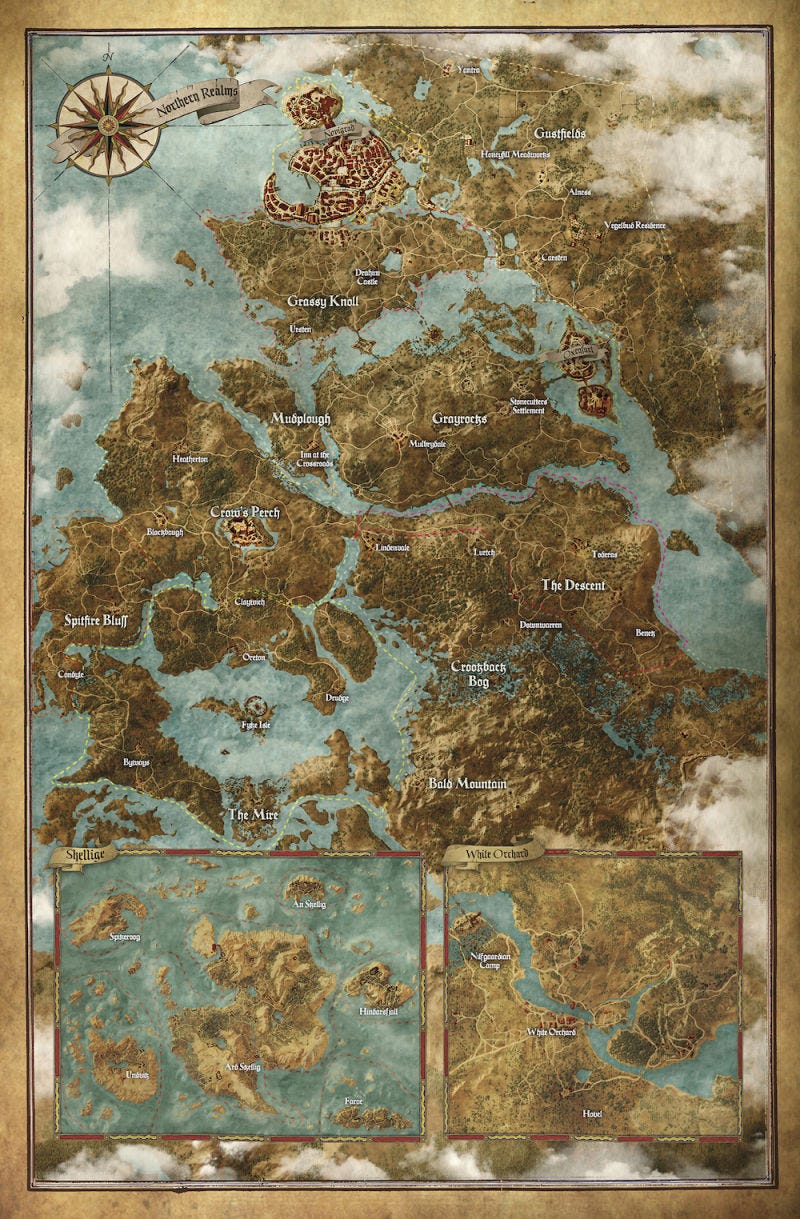
The Continent from The Witcher 3

The Continent from The Witcher 3

One of modern video games’ most towering achievements, The Witcher 3 is the kind of game where you’re better off not knowing the scope of what awaits. Suffice it to say, when you control mystically powered hero Geralt in CD Projekt Red’s opus, you’ll be doing everything from finding lost frying pans to solving murders to acting in a play. You’ll get stunned by the level of variety and depth of execution on your first playthrough. The Witcher 3 is the kind of game you could play for hours every day for weeks at a time... in a good way. When you go back to Geralt’s adventures again, it’ll be a little like going to an entire library full of books that you already know and love.

Planescape: Torment’s Sigil

Planescape: Torment’s Sigil

As lead character of Black Isle Studio’s seminal computer RPG, the Nameless One has lived a lot. And the endlessly reincarnated hero has done it in a place where you can do a lot of living: The city of Sigil, whose neighborhoods mirror the fiction’s Planes of Existence. These adjacent realms operate on the same axis of good/evil and lawful/chaotic that orders Dungeons & Dragons’ famous attitude alignment, in which you’re moving through a place that can let you access differentiated versions of right and wrong. Join the wrong faction and you’ll be saying, “The chaos is too damn high!”

source:Gizmodo

Nissan and DeNA will begin testing a self-driving taxi service in Japan next month
Nissan Motor and DeNA announced today that field tests of Easy Ride, the self-driving taxi service they developed together, will begin next month in Japan. This means that Nissan and DeNA now rank among Uber, Lyft, GM, Didi Chuxing and other companies pioneering self-driving taxi pilots, with the goal of launching commercially within the next few years.

DeNA is a Tokyo-headquartered online services company that is probably best known outside of Japan for a partnership with Nintendo that has produced mobile games like “Fire Emblem Heroes.” Its other services, however, encompass a wide range of verticals, including e-commerce, entertainment, healthcare, social networking and automotive tech. Two years ago, DeNA launched its first production vehicles with French autonomous vehicle company EasyMile, which are used to provide a driverless shuttle service called Robot Shuttle in Japanese cities.

Easy Ride’s first field test will begin on March 5 in Yokohama, the city to the south of Tokyo where Nissan’s global headquarters are located. Its self-driving taxis, which the companies call “robo-vehicles,” will take passengers along a 4.5 kilometer set route between the Yokohama World Porters shopping center and Nissan’s corporate complex. During the ride, passengers can try out Easy Ride’s concierge features by using a mobile app to ask for suggestions about local sightseeing destinations, which are then displayed on an in-car tablet screen, with coupons available for download. A remote monitoring center will oversee the cars during the field test and passengers will be asked after their ride to complete a survey about their experiences and how much they would be willing to pay for Easy Ride when it launches.

Nissan is one of several Japanese automakers that want to get self-driving vehicles on the road by the beginning of the next decade, motivated by the country’s aging population, which needs more transportation options, and the 2020 Summer Olympics in Tokyo. Prime Minister Shinzo Abe has said he wants self-driving vehicles to help with transportation during the games and also serve as a showcase for Japan’s manufacturing and technological prowess. The government is currently in the process of drawing up laws meant to make the process of testing and commercializing autonomous vehicle systems more efficient.

Nissan and DeNA say they plan to launch full service of Easy Ride in the early 2020s, after a limited rollout. The fields tests will be used to “develop service designs for driverless environments, expanded service routes, vehicle distribution logic, pick-up/drop-off processes and multilingual support,” the companies said in a release.

The taxi industry in major Japanese cities like Tokyo is heavily regulated and cab drivers are required to have special licenses, so companies there must focus on other services instead of ride-sharing. For example, earlier this week Sony announced that it will launch an AI-based taxi-calling app, while Uber chief executive officer Dara Khosrowshahi said the company wants to form partnerships with a taxi companies to put new life into its Japanese expansion strategy.

source:TechCrunch

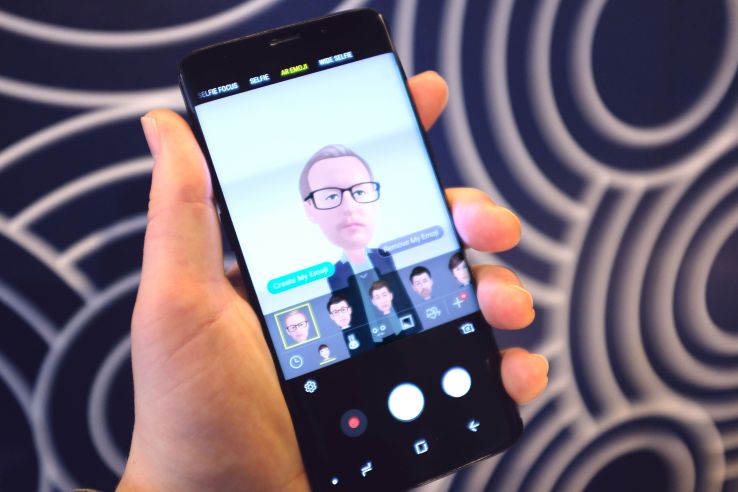
Samsung’s AR Emoji taps creepy avatars and Disney characters to compete with Animoji
We’ve known for a while that Samsung’s been planning an Animoji competitor for its latest handset. Now that we’ve actually seen (the admittedly clunkily named) AR Emoji in action, we can testify to the fact that it’s some combination of compelling and creepy.

Samsung’s AR Emoji taps creepy avatars and Disney characters to compete with Animoji
That last part first. Like the iPhone X, the Galaxy S9 takes advantage of its on-board face scanning technology to offer up an animated emoji that corresponds to the user’s facial movements, so you can send animated messages, sing cartoon character karaoke and the like. But, as is Samsung’s wont, the phone takes things an extra step, mapping more than 100 points in the user’s face and building a 3D avatar.

Once the scan is complete, users can customize it from a selection of hair styles, clothes, glasses and the like, before firmly taking up residence in the uncanny valley. The custom AR Emoji isn’t as adorable as Apple’s animals or benign as Nintendo’s Mii avatars. Instead, it straddles that uncomfortable line between cartoon and realistic 3D scan a bit uncomfortably.

It’s first generation, of course, and I’d expect that the company should smooth that line out a bit by the time the Galaxy S10 or even the new Note rolls around. For now, however, it’s a little uncomfortably creepy for my own taste. There’s good news on that front, however. The company’s offering up some default cartoon options — including a rabbit that’s a bit more anthropomorphic than Apple’s offering.

Samsung’s AR Emoji taps creepy avatars and Disney characters to compete with Animoji
But Samsung’s got one big secret weapon on its side. The company no doubt ruffled some feathers at Apple’s big glass spaceship today when it announced a partnership with Disney, bringing the entertainment goliath’s beloved cartoon characters to its emoji offering. The company’s bringing Mickey, Minnie and the Pixar’s Incredibles to the mix.

It seems like a bit of a curveball that Disney opted to partner with Samsung, rather than Apple this time out — after all, the two companies have worked together in the past on things like the Mickey Mouse watch face. And of course, there’s been a fair amount of executive overlap between the two companies, between Steve Jobs’ involvement with Pixar and the fact that Robert Iger currently sits on Apple’s board.

Of course, those sorts of things aren’t a guaranteed promise of partnership, and Disney looks like it’s not trying to play favorites with content partnership. Take, for example, the media company’s licensing of Star Wars content for AR stickers on the Pixel 2.

source:TechCrunch

MKRdezign

Contact Form

Name

Email *

Message *

Powered by Blogger.
Javascript DisablePlease Enable Javascript To See All Widget